

Every serious art movement started with someone breaking a rule they never knew existed. Naive art did something rarer still. It was built by people who never learned the rules in the first place, and the result changed everything.
You might have passed a naive art painting in a gallery without recognising it, felt something pull at you, and walked away unsure why. That pull is exactly what makes this style so quietly powerful.
Right now, at a cultural moment defined by algorithm fatigue and manufactured authenticity, naive art is surging back into galleries, design studios, and everyday conversation.
Table of Contents
Key Takeaways & The 5Ws
- You can identify naive art by looking for flattened spaces, saturated colours, and figures built from clean outlines rather than careful anatomical modelling.
- You should distinguish naive art from outsider art and folk art, since each describes a different relationship between the artist and their social or creative context.
- You can use emotional scale as a key interpretive tool, understanding that in naive art objects are sized by feeling and importance rather than physical reality.
- You will find that the absence of formal perspective in naive paintings makes every element equally present, creating an intensity that pulls your full attention across the canvas.
- You can appreciate naive art more deeply by learning about artists like Henri Rousseau and Grandma Moses, whose self-taught vision produced consistent and intentional bodies of work.
- Who is this for?
- Anyone curious about art history, self-taught creativity, or the cultural forces driving renewed interest in authentic and unmediated artistic expression will find this topic directly relevant.
- What is it?
- The article explores naive art as a distinct visual style created by self-taught artists whose work prioritises emotional truth over academic technique.
- When does it matter most?
- This understanding matters right now, at a cultural moment when algorithm fatigue and manufactured authenticity are pushing audiences toward more genuine and human forms of creative expression.
- Where does it apply?
- Naive art is most visible in galleries, design studios, art history conversations, and the broader cultural discourse around authenticity and creative freedom.
- Why consider it?
- Understanding naive art gives you a richer lens for reading visual culture and helps you recognise why work that ignores traditional rules can carry profound emotional and historical significance.

Defining Naive Art In Plain Terms
Forget the jargon. Naive art is work made by self-taught artists who never received formal academic training, and whose paintings carry the visual fingerprints of that freedom.
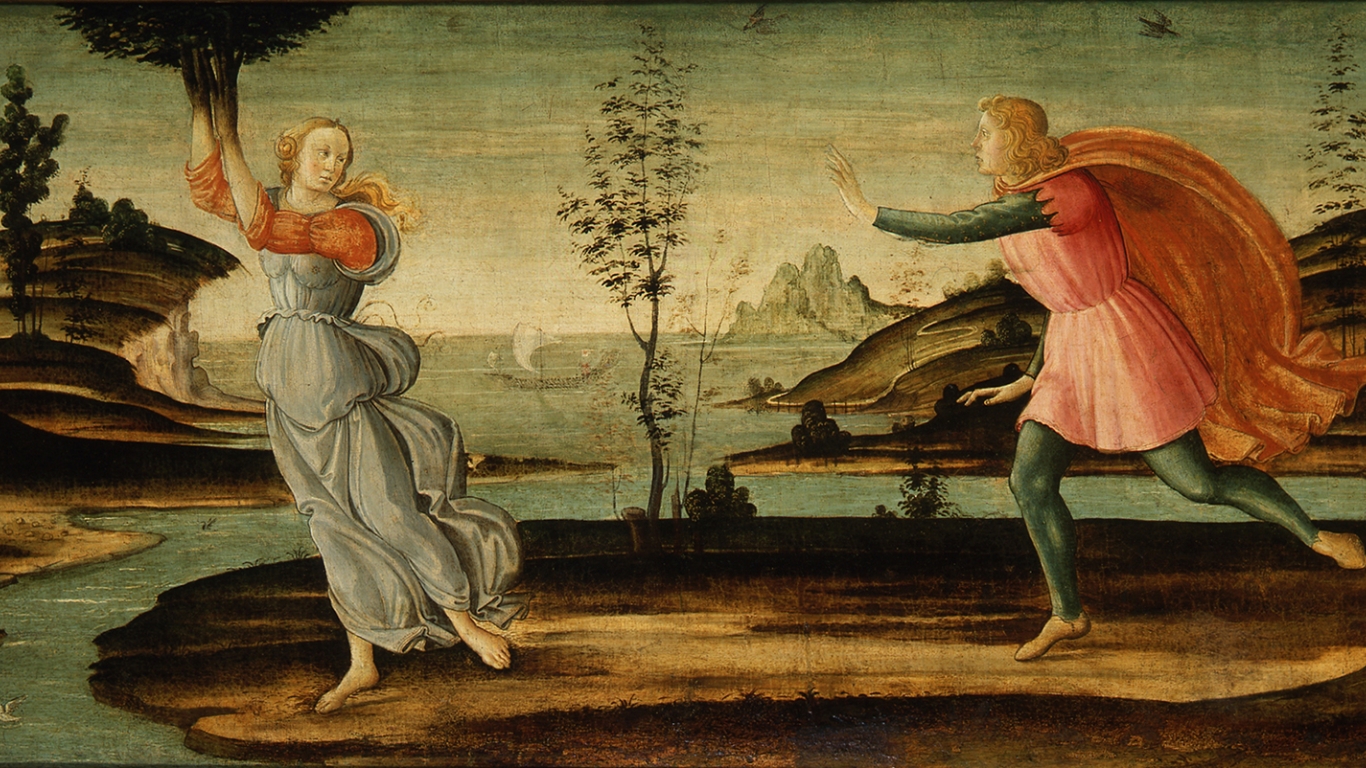
You see flat spaces where perspective should be, colours that feel emotionally true rather than technically accurate, and figures that communicate feeling before they communicate anatomy.
The term itself entered wider use in the late nineteenth century when European critics needed language for artists who sat outside institutional traditions. Older literature sometimes used the term primitive art, which you should treat as a historical marker rather than a value judgment, since it carries colonial assumptions that contemporary discourse has largely rejected.
What the word naive actually captures is a kind of visual innocence, an unmediated relationship between the artist’s inner world and the painted surface.
You will often see naive art and outsider art used interchangeably, but they describe different things. Outsider art typically refers to work made by people entirely outside mainstream society, including artists with mental illness or those living in extreme isolation, whose art often carries an urgency rooted in psychological necessity.
Folk art connects to specific cultural and community traditions, passed across generations with shared visual codes. Naive art occupies its own territory. The naive artist chooses to paint from personal vision rather than from training, but they exist within ordinary social life.
Henri Rousseau worked as a toll collector. Grandma Moses was a farmer. Their outsider status was creative, not social.

Key Characteristics That Make It Unmistakable
Once you know what to look for, you cannot unsee it. The most immediate naive art characteristic is the flattened picture plane, where objects stack vertically on the canvas rather than receding into a distant horizon the way academic training teaches.
Scale behaves according to emotional logic rather than physical reality, so a beloved cat might dominate a scene that dwarfs the surrounding buildings.
Colours arrive saturated and confident, reds that insist on themselves, greens that refuse to be subtle. Patterns repeat across surfaces with a rhythmic intensity that gives many naive paintings their almost hypnotic quality.
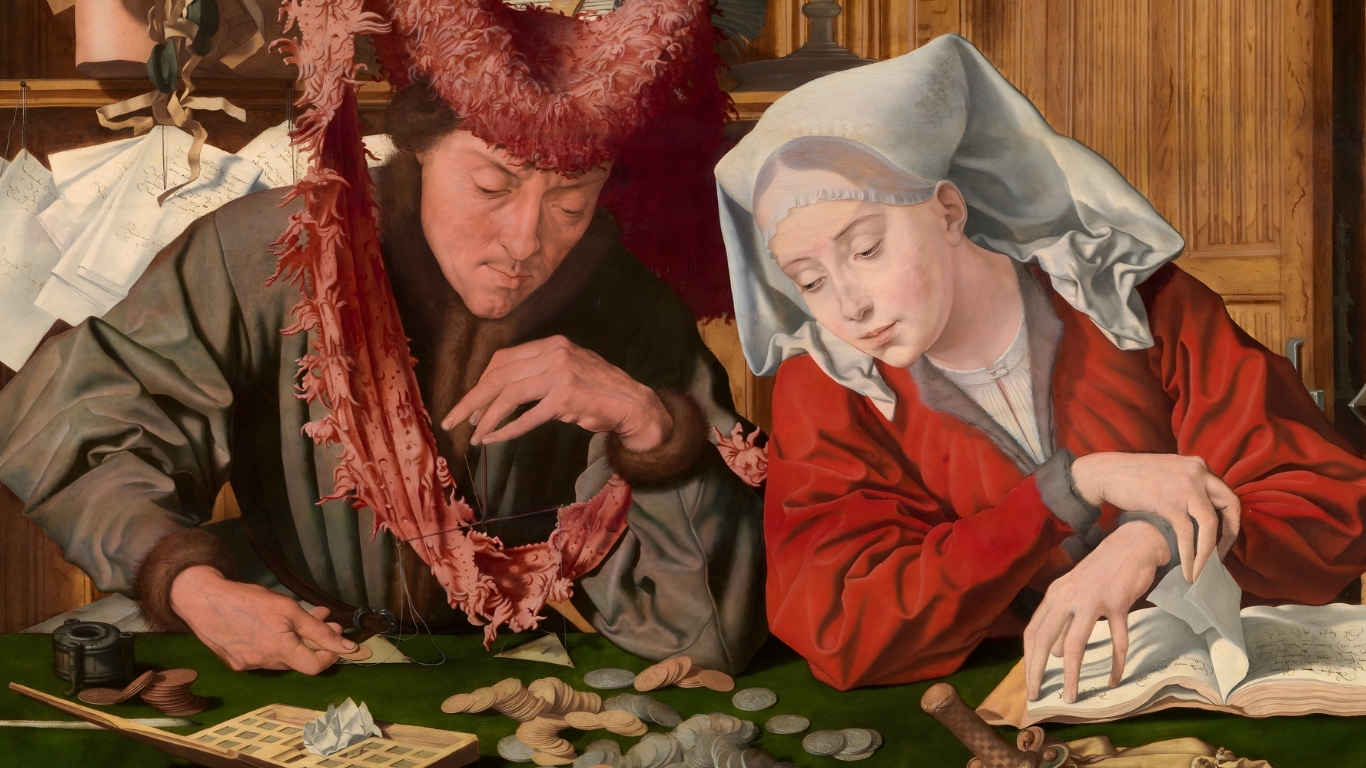
Figures often appear frontal, simplified to their essential gestures, built from clean outlines rather than careful modelling.
What strikes many viewers first as childlike quickly reveals itself as disciplined. These artists made consistent, intentional choices that you can recognise across entire bodies of work.
Academic perspective was invented to create the illusion of three dimensional space on a two dimensional surface. Naive artists ignore that contract entirely, and something unexpected happens as a result. Without the recession of space pulling your eye toward a vanishing point, the entire picture surface becomes equally present, equally alive.
Every element in the composition demands your attention at once. According to research published by the Tate Modern on audience engagement with self-taught artists, viewers report stronger immediate emotional responses to works with flattened perspective than to technically sophisticated academic paintings.
The painting meets you rather than inviting you into a simulated world. That directness is not a limitation. It is the whole point.
Famous Naive Art Artists Worth Knowing
The history of naive art is filled with figures whose biographies are as vivid as their canvases, and knowing them changes how you experience the work.
Rousseau retired from his job as a Parisian customs official in 1893 to paint full time, having taught himself everything he knew. Critics initially mocked his jungle scenes, those dense theatrical forests populated by lions, exotic flowers, and sleeping figures bathed in moonlight.
The Sleeping Gypsy, painted in 1897, showed a recumbent woman beneath a full moon while a lion sniffs at her side, and it is now one of the most studied paintings of its era. Pablo Picasso eventually hosted a banquet in Rousseau’s honour, recognising in his work a purity that formal training rarely produces. Rousseau became the undisputed founding figure of the naive tradition.
Grandma Moses began painting seriously at seventy eight years old, after arthritis made embroidery too painful. Her scenes of American rural life, complete with snowy farm landscapes and community gatherings, found audiences that numbered in the millions.
Ivan Generalić, a Croatian farmer, led the Hlebine School of naive painters in the 1930s and brought international attention to peasant life through work of extraordinary colour and compositional confidence.
Frida Kahlo, while not strictly a naive artist, drew deeply on naive and folk influences in her self-portraits, using flat patterning and personal symbolism in ways that parallel the naive tradition closely.

Why Naive Art Feels So Urgent Now
Something shifted in the cultural atmosphere recently, and naive art walked straight through the opening. According to a 2023 report from the Reuters Institute for the Study of Journalism, 36 percent of adults in surveyed countries actively avoid news because of the emotional toll of constant digital consumption.
That figure points toward something broader. Audiences are exhausted by polish, by optimisation, by content engineered to perform rather than to mean. Naive art offers the opposite of that. It offers sincerity without apology.
When you look at a Rousseau jungle or a Grandma Moses snowscape, you encounter a painting that has no interest in impressing you and every interest in communicating something real.
Contemporary illustrators have absorbed this lesson. According to a 2022 trend analysis by the design platform Behance, searches for flat, hand-drawn, and naive illustration styles increased by over 40 percent between 2020 and 2022, with brands from food companies to tech startups commissioning work in this aesthetic. Social media platforms reward the imperfect image because it reads as authentic in a feed full of filters.
The naive aesthetic, with its bold colours and unapologetic simplicity, translates perfectly into that environment. According to a 2021 study conducted by the University of Arts London, viewers rated naive-style digital illustrations as significantly more trustworthy and emotionally resonant than photorealistic alternatives. Naive art is not trending because it is nostalgic.
It is trending because it is honest, and honesty is the scarcest commodity in contemporary visual culture.
How To Collect Or Create Naive Art
Your interest in naive art can go in two directions, and both are worth pursuing seriously.
If you want to collect, start by looking at regional art fairs and online platforms such as Artsy or Saatchi Art, where self-taught artists sell directly. Authentic naive work tends to show consistency of style across the artist’s body of work, since trained imposters often struggle to maintain the intuitive visual logic that genuine self-taught artists develop organically.
Prices range widely, from a few hundred pounds for emerging contemporary naive painters to six figures for established names. Authentication for historical works depends on provenance documentation and expert appraisal through institutions such as auction houses with specialist departments.
Naive art has always been more radical than it looks. You are looking at work that refuses to apologise for what it is, that communicates directly and without mediation, that came from artists who trusted their own vision without institutional permission.
At a moment when authenticity has become the most coveted and most faked quality in culture, the naive tradition stands as proof that the real thing has always been available to anyone willing to pick up a brush and begin. Start looking more carefully at the flat canvases and bold colours around you. You will find naive art everywhere once you know what it is.