
Dubai has become one of the world’s most exciting real estate markets for global investors. With zero property tax, high rental yields, and a government fully committed to infrastructure and foreign investment, the emirate keeps pulling in buyers from every corner of the world.
But with rising property prices and a growing rental sector, many investors are now asking a critical question: is it better to rent or buy in Dubai in 2026?
The answer isn’t one-size-fits-all. Your investment goals, time horizon, risk appetite, and the type of property you’re targeting all shape the right call. Some investors are drawn to the long-term capital appreciation and Golden Visa benefits that come with ownership.
Others prefer the flexibility and lower commitment that renting offers, especially in a market that can shift quickly.
As Fahad Al Gergawi, CEO of Dubai Investment Development Agency, noted at a recent investor summit,
“Dubai’s real estate sector has matured to offer different entry points, not just for high-net-worth buyers but also for strategic long-term investors. Both rental and ownership models have their advantages depending on how you want to play the market.”
Table of Contents
Overview of the Dubai Real Estate Market in 2026
Dubai’s property market has been on a steady upswing since the second half of 2021, and heading into 2026 it shows strong signs of maturity and investor resilience. The emirate has become a magnet for capital from Europe, Asia, and the Gulf, thanks to its investor-friendly policies, tax-free environment, and strategic position as a global business hub.
According to the Dubai Land Department, real estate transactions surpassed AED 430 billion in 2024, with continued growth expected through 2026. Demand stays robust across both the luxury and mid-market segments, fueled by visa reforms, increased business migration, and a growing population of remote workers and digital entrepreneurs.
Rental demand is also at a historic high. Recent data from Property Finder shows that Dubai’s average apartment rents rose by 20% to 25% year-over-year in key districts like Business Bay, Downtown, and Jumeirah Village Circle. This surge is partly down to a supply lag in affordable housing, combined with a wave of white-collar relocation from high-tax jurisdictions like the UK, Germany, and India.
At the same time, the ownership market has seen a real shift. Off-plan sales now account for over 55% of all transactions, signaling growing investor confidence in developers and longer-term plays. Developers are offering more flexible payment plans, and investors are banking on continued capital appreciation, especially in waterfront projects and integrated communities.
Dubai’s real estate market also benefits from strong regulatory oversight. The Real Estate Regulatory Agency keeps implementing measures that sharpen transparency, including escrow account requirements and tighter project registration laws. These efforts have contributed to growing institutional interest, particularly from family offices and private equity funds across the MENA region. If you want a closer look at whether Dubai still holds up as a safe bet, this deep dive on parking luxury capital in Dubai is worth your time.
As Knight Frank Middle East noted in its 2026 outlook,
“Dubai’s real estate fundamentals stay strong, and the emirate is increasingly viewed not just as a lifestyle destination, but as a stable, long-term investment jurisdiction.”
Key Benefits of Buying Property in Dubai
Buying property in Dubai has become increasingly attractive for both local and international investors, and for good reason. The emirate’s tax-friendly framework, combined with rapid economic diversification and a dynamic lifestyle offering, makes ownership a strategic move for anyone looking to build long-term wealth.
One of the biggest draws is zero property tax. Unlike many global cities where homeowners face annual real estate taxes, Dubai gives you full ownership rights with no recurring taxes. That directly improves your net rental yields and total ROI as a property owner.
In 2026, gross rental yields in key neighborhoods like Dubai Marina, JVC, and Jumeirah Lake Towers average between 5% and 8%, according to the latest data from CBRE Middle East.
Another advantage is full foreign ownership. Since regulatory reforms in 2019, expats and international investors can purchase freehold properties in designated zones without needing a local sponsor or partner. Areas like Downtown Dubai, Palm Jumeirah, and Dubai Hills Estate offer freehold rights and rank among the most popular choices for global investors.
Buyers also gain access to residency-linked investment visas. Under the UAE’s property visa programs, if you invest AED 750,000 or more in property, you’re eligible for a 2 to 10-year residency visa, depending on the property value and other criteria.
That not only opens up lifestyle benefits but also simplifies business setup, banking, and long-term relocation planning.
Payment flexibility is another strong reason investors choose to buy. Many developers offer post-handover payment plans and interest-free installment schemes, making it easier to acquire real estate without heavy upfront capital. For off-plan properties, down payments as low as 10% to 15% are now common, letting you leverage capital across multiple units or developments.
And then there’s the long-term macro story. Dubai’s population is projected to reach 5.8 million by 2040, up from around 3.7 million in 2023, driven by government strategies to cement the city’s position as a global hub for finance, technology, and tourism.
As the population grows and land becomes scarcer, especially in prime areas, property owners are well positioned to see strong appreciation over the next decade.
Key Benefits of Renting Property in Dubai
Buying in Dubai has clear long-term appeal, but renting offers its own strategic advantages, especially if you prioritize liquidity, flexibility, or shorter holding periods.
One of the biggest upsides of renting is capital preservation. Rather than tying up a significant chunk of your money in a property purchase, you can deploy those funds across a broader range of assets. That might mean diversifying into global equities, alternative investments that delivered strong returns, or short-term business ventures.
In a market like Dubai, where entry costs for mid-range apartments can exceed AED 1 million, that flexibility can make a real difference when you factor in opportunity cost.
There’s also a strong mobility advantage. If you’re new to Dubai or unsure about long-term residency, renting lets you test different neighborhoods, lifestyles, and commute routes without locking yourself into a fixed asset. That’s especially useful in a city with constantly evolving districts and new developments coming online every quarter.
As of mid-2026, over 20,000 new residential units are expected to be delivered across the emirate, according to Asteco. For renters, that means more choices, newer amenities, and potentially more negotiating power at lease time.
From a cash flow perspective, renting can also improve your monthly liquidity. Without mortgage payments, maintenance fees, or service charges, you’re free from the fixed expenses that come with ownership. That frees up capital for higher-yielding or more liquid investments, especially in environments where returns on fixed-income assets can outpace net rental yields.
The absence of property-related legal obligations also simplifies your life considerably. You don’t need to worry about title registration, service charges, homeowners’ association fees, or legal compliance with building regulations. For international investors who don’t plan to spend much time in Dubai, this hands-off approach carries real appeal.
And don’t overlook market timing risk. Dubai is a fast-moving real estate market, and buying at the wrong moment during a peak can lead to slow appreciation or underperformance. Renting keeps you agile and lets you make a more informed purchase decision down the line.
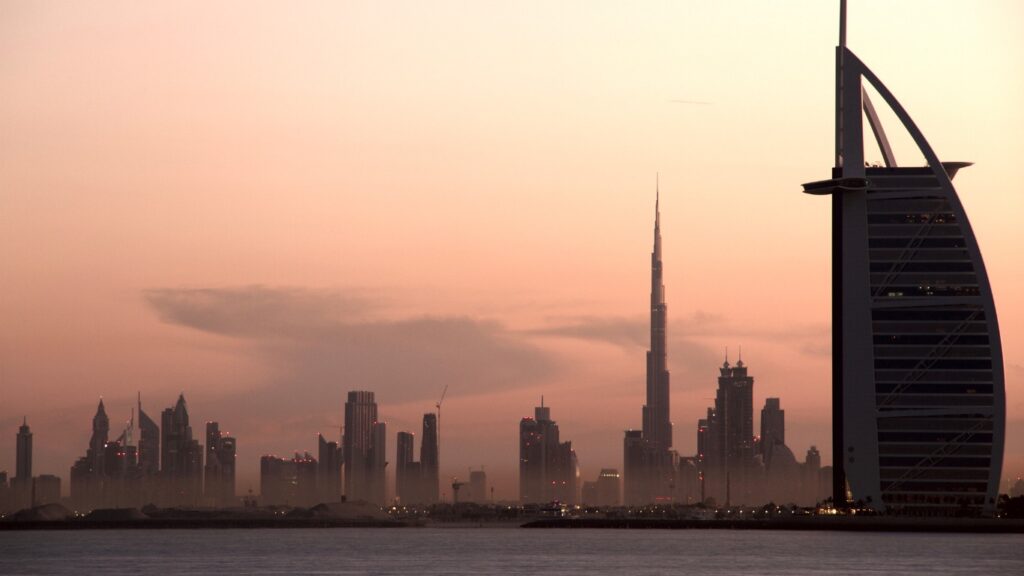
Comparing Costs and ROI Between Renting and Buying in Dubai
When it comes to financial performance, both renting and buying in Dubai come with their own cost structures and return profiles. Understanding those differences is crucial when you’re weighing short-term versus long-term strategies.
Start with ownership costs. Buying property in Dubai involves a 4% transfer fee paid to the Dubai Land Department, a 0.25% mortgage registration fee if you’re financing the purchase, and agent commissions that typically run between 2% and 5%.
Maintenance and service fees average AED 15 to 30 per square foot annually, depending on the building and location. These fees are mandatory for owners and get collected whether your property is rented out or sitting vacant.
Renting, on the other hand, requires minimal upfront capital, usually a 5% deposit and a few months of rent in advance. For investors who plan to stay temporarily or are still uncertain about long-term residence, that lower entry cost frees up capital for other uses.
But what about returns?
Dubai’s average rental yield for freehold residential properties runs between 5% and 7% annually, depending on location and property type. Communities like Jumeirah Village Circle, Dubai Silicon Oasis, and International City tend to sit at the higher end of that range, thanks to lower entry costs and steady tenant demand.
More established luxury areas like Downtown or Dubai Marina typically offer lower yields but attract stronger appreciation over time.
That said, net yields after maintenance, service charges, and management fees often land closer to 3.5% to 5%, making due diligence before any purchase absolutely essential. One insight from the 2026 Bayut and dubizzle Dubai Property Market Report put it well,
“While gross yields stay strong by global standards, savvy investors focus on total cost-to-income ratios. Net yield is where long-term profitability is decided.”
Renters avoid these maintenance and transaction costs entirely. But they also miss out on asset appreciation, which has been a real story in Dubai’s post-COVID recovery. Between 2020 and 2024, some districts recorded double-digit annual growth rates, driven by population inflow, limited prime inventory, and strategic government policies like long-term visas and 0% income tax. Understanding how to calculate your real estate cash flow before committing to either path will sharpen your decision significantly.
The trade-off is straightforward. Buyers invest for long-term capital gains and rental income, while renters maintain flexibility and short-term capital efficiency.
Who Should Consider Buying Property in Dubai in 2026
Buying property in Dubai isn’t just about owning a home. It’s about tapping into a globally recognized real estate market with consistent returns, tax-free advantages, and strong investor protection laws. But it’s not the right move for everyone. For certain profiles, though, buying makes real strategic sense in 2026, especially given current macro trends and the UAE’s long-term vision.
Long-term residents or frequent visitors with stable income streams are natural candidates. With Dubai’s 10-year Golden Visa program, many high-income expats and entrepreneurs are now looking at property ownership as a way to secure both lifestyle and residency stability.
As of mid-2026, over 150,000 Golden Visas have been issued, and a significant portion of recipients have opted to invest in real estate to meet visa requirements.
Cash-rich investors seeking to diversify outside of volatile equity markets are also turning to Dubai as a defensive asset play. Unlike stocks or crypto, real estate in Dubai gives you income stability through rental returns and the security of a tangible asset.
Data from CBRE’s 2026 H1 report shows that transaction volumes for luxury villas and branded residences rose 24% year-over-year, a clear signal that global high-net-worth investors are repositioning toward real assets.
Tax efficiency keeps driving the decision too. The UAE has no income tax on rental income, no capital gains tax, and no inheritance tax. For investors coming from high-tax jurisdictions in Europe or North America, that translates into net returns that are hard to match elsewhere. It’s also worth understanding how double taxation treaties can affect your real estate investments depending on where you’re based.
As Ramez Tabbalat, CEO of Property Monitor, recently noted,
“For many global investors, Dubai is no longer a speculative play. It’s a core allocation in a well-balanced real estate portfolio.”
Those looking for generational wealth preservation increasingly see Dubai as a safe jurisdiction too. The emirate’s push toward transparency, backed by strict escrow regulations and government-monitored developers, gives investors legal confidence that’s often missing in other emerging markets.