


A stop-loss is one of the most important tools in any trade exit strategy, and if you’re serious about risk management, you need to understand exactly how it works. Put simply, it triggers a sale when a security hits a specific price, cutting your losses before they spiral. But deciding where to set that level is the real challenge. Set it too far away and you absorb a painful hit. Set it too close and you get shaken out of a perfectly good trade before it has time to breathe.
Getting your stop-loss placement right starts with an honest look at your own risk tolerance. How much are you actually willing to lose on a single position before you walk away? Once you know that number, you can align your stop-loss with the natural volatility of whatever you’re trading. From there, the method you choose matters. Whether you go percentage-based, anchor to support levels, or use moving averages, each approach gives you a structured way to protect your capital without letting emotion drive the decision.
What Is a Stop-Loss Order?
A stop-loss order is your safety net in unpredictable markets. It automatically sells a security the moment its price drops to a level you’ve pre-set, capping your downside before things get ugly. Say you buy a stock at $100 and place a stop-loss 10% below your entry point. Your maximum loss is locked in at $90, no matter what happens overnight or while you’re away from your screen. For any trader managing positions that could move against them, this kind of discipline is non-negotiable.
Automated stop-loss systems take this a step further by executing orders instantly without you needing to be present. That’s a real advantage when you’re juggling multiple positions or simply can’t watch the market all day. The catch is that brief, shallow price dips can trigger these orders unintentionally, turning a temporary blip into an unwanted sale. Once your stop price is hit, the order converts to a market order, which means the actual execution price might be lower than you’d hoped, especially in fast-moving conditions.
Using stop-loss orders well means understanding how markets move and recover. Short-term traders often work with tight stops around 5%, accepting quick exits in exchange for precise risk control. Long-term investors, on the other hand, tend to give their positions more room, sometimes 15% or wider, to ride out the inevitable waves of volatility without getting knocked off a fundamentally strong trade.
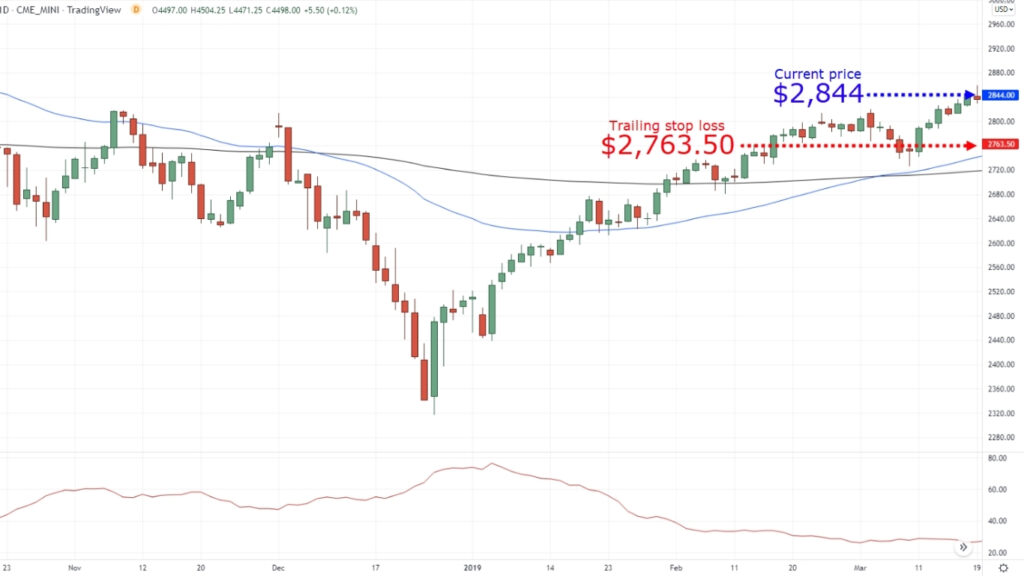
Choosing between a standard stop-loss and a stop-limit order adds another layer to your strategy. A stop-limit order lets you define both the trigger price and the minimum price at which you’ll sell, giving you more control over execution. But in a fast-falling market, the price can blow right past your limit, leaving the order unfilled and your losses growing. Trailing stop orders offer a smart middle ground, they move upward with the stock price as it rises, locking in gains while still protecting you if the trend reverses.
A stop-loss order is ultimately a proactive way to stay disciplined. There’s no cost to set one up, and the payoff is enormous in terms of keeping emotion out of your trading. You set your rules in advance, and the order does the work. No second-guessing, no panic selling, no staring at a position hoping it turns around.
| Strategy Type | Advantages | Disadvantages | Usage |
|---|---|---|---|
| Traditional Stop-Loss Order | Limits losses, cost-free, easy to implement | May trigger on temporary price dips, slippage risks | Short-term trades, active risk management |
| Stop-Limit Order | Guarantees specific price limit | Risk of non-execution during fast market movements | Strategic price controls in volatile markets |
| Trailing Stop Order | Locks in profits, dynamic adjustment | Complex setup, price adjustment risks | Long-term gains, profit protection |
Common Methods to Determine Stop-Loss Levels
Pinning down the right stop-loss level is one of those things that separates disciplined traders from those who eventually blow up their accounts. The method you choose should fit your trading style, your risk appetite, and the conditions of the market you’re operating in. Three approaches stand out as the most practical and widely used among serious traders, the Percentage Method, the Support Method, and the Moving Average Method.
The Percentage Method
The Percentage Method is about as straightforward as it gets. You pick a fixed percentage below your purchase price and that becomes your exit point. Buy a stock at $100 with a 10% stop-loss and your trigger sits at $90. Simple, clean, and easy to apply across any position in your portfolio.
Day traders and swing traders love this method because it makes it easy to maintain a healthy risk-reward ratio. Aiming for a 3:1 ratio means you’re willing to risk $1 to potentially make $3, which keeps your overall win rate requirements manageable. building a defensive stock strategy works well alongside this method, since both are about protecting capital systematically. Many traders use stop-loss calculators to dial in the exact percentage based on their position size and overall portfolio risk.
The Support Method
The Support Method uses the stock’s own price history as your guide. A support level is a price zone where a stock has repeatedly stopped falling and started climbing again, essentially a floor that buyers have defended over time. You place your stop-loss slightly below that floor, giving the stock enough room to breathe naturally while still protecting you if the bottom truly drops out.
This approach works best for traders who rely on technical analysis and are willing to study a chart carefully before entering a trade. The key is identifying genuine support levels, not just arbitrary round numbers. One important thing to keep in mind is that support levels shift as market conditions evolve, so you need to reassess them regularly rather than setting your stop and forgetting it. In volatile markets especially, placing your stop too close to the support line can result in getting shaken out right before the stock bounces.
The Moving Average Method
The Moving Average Method ties your stop-loss to one of the most widely watched indicators in technical analysis. By placing your exit point slightly below a moving average, typically the 200-day, you give yourself a buffer that reflects the stock’s long-term price trend rather than its short-term noise. The 200-day moving average is a benchmark professional traders and institutional investors at Bloomberg-tracked funds watch closely, which makes it a meaningful line in the sand.
Long-term investors tend to gravitate toward this method because it filters out the daily chop and keeps them focused on the bigger picture. For stocks or assets with a clear historical trend, it provides a sensible anchor point. If you’re managing a diversified portfolio and want a consistent, rules-based approach to downside protection, the Moving Average Method gives you exactly that.
| Method | Key Advantage | Common Usage | Example |
|---|---|---|---|
| Percentage Method | Simplicity | Intraday Trading | Setting stop-loss at 10% below purchase price |
| Support Method | Reliability | Technical Analysis | Setting stop-loss just below recent support level |
| Moving Average Method | Stability | Long-term Investing | Setting stop-loss below the 200-day moving average |
Strategies for Different Market Conditions
Markets don’t behave the same way every day, every month, or every year. A stop-loss strategy that works perfectly in a calm, trending market can get you chewed up in a volatile one. Adapting your approach to fit current conditions isn’t optional, it’s the difference between protecting your capital and watching it erode.
Risk-Reward Strategy
The Risk-Reward Strategy is the foundation of every sound trading plan. Before you enter any trade, you define exactly how much you’re willing to lose and what return would make that risk worthwhile. A 1:2 ratio means for every $100 you risk, you’re targeting at least $200 in return. A 1:3 ratio pushes that to $300. Set your stop-loss at the point where the trade is clearly no longer working, and size your position so that the potential upside justifies taking the risk.
In calmer market conditions, a stop-loss in the 1% to 3% range may be all you need. When volatility picks up and price swings get wider, stretching that to 5% to 10% keeps you from getting stopped out by noise alone. The beauty of this approach is that even if you lose more trades than you win, a strong risk-reward ratio means your winners still come out ahead overall.
Volatility Approach
The Volatility Approach takes the guesswork out of stop placement by anchoring it to actual market behavior. The Average True Range indicator measures how much an asset typically moves over a given period. From there, you set your stop-loss at a multiple of the ATR below your entry, so your exit point reflects what’s normal for that asset rather than an arbitrary number. In a highly volatile market, you might set your stop at twice the ATR below your entry to give the trade enough room.
This keeps you from being knocked out of a position by routine price action. By placing your stop outside the typical range of daily movement, you stay in the trade through the normal fluctuations while still having a clear exit if something genuinely changes. knowing how to profit in a bear market pairs well with this approach, since volatile and declining markets demand the most precise stop-loss discipline.
Support and Resistance Approach
The Support and Resistance Approach is rooted in reading how other market participants behave at key price levels. Support zones are where buyers historically step in and push prices back up. Resistance zones are where sellers historically appear and push prices back down. You position your stop-loss just below a support level on a long trade, so if that floor breaks, you’re out before the selling accelerates.
Say a stock has bounced repeatedly from the $50 level over the past year. A break below $50 isn’t just a bad tick, it signals that the buyers who were defending that level have stepped away, and the next move could be much lower. Setting your stop just below $50 captures that signal. Layering this with moving averages or trend line analysis sharpens the strategy further, giving you more conviction that you’ve identified the right level to defend.
Application in Varied Market Scenarios
Applying these strategies across different market conditions takes consistency and real discipline. Pick an approach, stick to it, and review your stops regularly as price action evolves. The traders who drift between methods based on emotion are the ones who end up overexposed at exactly the wrong moment.
- In Trending Markets: Using the Support and Resistance Approach with tight stop losses can help capture substantial gains while protecting profits.
- In Volatile Markets: The Volatility Approach can be particularly effective, allowing traders to stay in trades during market noise, only exiting when the price moves significantly beyond expected volatility.
- In Sideways Markets: The Risk-Reward Strategy ensures that trades are only taken when the potential reward justifies the risk, helping traders avoid unnecessary losses.
Tips to Set Stop-Loss for Portfolio Protection
Protecting your portfolio starts with knowing where your exits are before you ever enter a trade. Stop-loss orders are your first line of defense during market downturns, and when used well, they keep a bad trade from becoming a devastating one. Here are the practical tips that make the difference between a stop-loss strategy that actually works and one that just gives you a false sense of security.
1. Position Stop-Loss Orders Strategically
Where you place your stop-loss matters as much as whether you use one at all. A commonly effective range is 3% to 7% below the stock’s median trend line. That window is wide enough to avoid being triggered by normal daily noise, but close enough to protect you from a real breakdown. If a stock’s median price sits at $100, a stop-loss somewhere between $93 and $97 gives you meaningful protection without getting in the way of ordinary price movement. Think of it as giving the trade room to work while keeping a firm hand on the downside.
2. Utilize Stop-Limit Orders
Stop-limit orders give you more control over your exit price when markets get chaotic. Unlike a standard stop-loss that becomes a market order the moment your trigger is hit, a stop-limit order only executes within a price range you define. During sharp, sudden drops like the 2010 Flash Crash documented by Reuters, where the market shed nearly 1,000 points in minutes, a plain stop-loss could have sold your position at a price far worse than you intended. A stop-limit order prevents that kind of forced execution at distressed prices.
Set a stop price at $95 and a limit price at $93, for example, and your stock only sells if it can fetch somewhere between those two figures. You stay in control of the execution, even when the market is moving fast.
3. Consider the Duration of Stop-Loss Orders
A stop-loss order is only useful if it’s active when you need it. Day orders expire at the close of trading if they haven’t been triggered, while GTC (good til canceled) orders stay open until they execute or you manually cancel them. For investors who aren’t glued to their screens throughout the trading day, GTC orders offer the advantage of continuous, around-the-clock protection. You don’t have to re-enter the order every morning, and your positions stay covered even if you miss a session.
4. Avoid Over-Tightening Stop-Loss Levels
Placing your stop-loss too close to the current price is one of the most common and costly mistakes traders make. Markets breathe. Prices fluctuate within a normal daily range that has nothing to do with the longer-term direction of a stock. If a stock routinely moves 2% in either direction on any given day, a stop-loss set at 2% below the current price is essentially asking to be triggered, even on a day when nothing is fundamentally wrong.
A smarter approach factors in the stock’s historical volatility and its Average True Range. High-volatility stocks need wider stops to survive normal price swings. Stable, low-volatility names can justify tighter placement. The Financial Times has covered extensively how misaligned stop-losses during volatile periods led to unnecessary losses for retail investors who set their exits too close to the action.
5. Regularly Review and Adjust Your Stop-Loss Orders
A stop-loss you set six months ago may no longer reflect where the stock is trading or what the market is doing today. As a stock’s price appreciates, raising your stop-loss locks in gains while still keeping a floor under your position. If market conditions shift, your stop-loss should shift with them. building a diversified US and Europe stock portfolio means you’ll be managing stops across multiple positions and asset classes, so building a regular review cadence into your routine is essential. Think of stop-loss management not as a one-time setup but as an ongoing discipline that evolves with your portfolio.