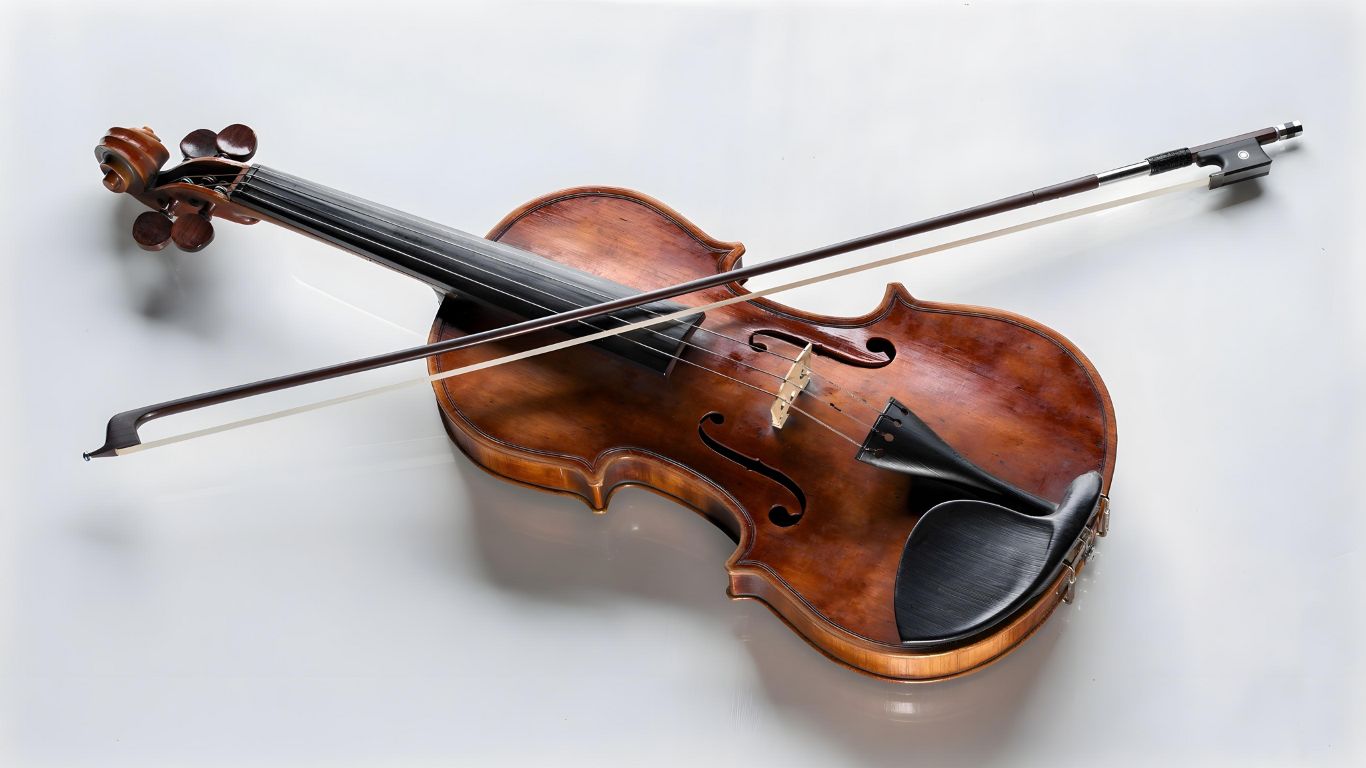

Passion investments have quietly transformed how sophisticated investors think about portfolio diversification beyond traditional stocks and bonds. Art collections, fine wine cellars, vintage watches, and classic cars have all evolved from hobbies into recognized alternative asset classes with dedicated indices, specialist dealers, and institutional participation. If you’ve been paying attention to where serious old money is flowing, you already know the category is maturing fast. And if you haven’t looked at rare violins yet, you’re missing one of the most quietly compelling corners of the entire space.
These tangible assets offer emotional returns alongside financial ones, combining the pleasure of ownership with the potential for capital appreciation.
Among these alternatives, rare violins sit in a uniquely compelling position as perhaps the most established yet least understood collectible category. Centuries of documented price history back them up, and the infrastructure supporting the market rivals traditional financial markets in its sophistication. Your art advisor probably hasn’t brought this up. That doesn’t mean it isn’t worth your attention.
The rare violin market isn’t emerging or speculative. Think of it as a mature asset class supported by specialist auction houses like Tarisio, global dealer networks that facilitate private transactions, institutional owners including museums and foundations, and a culture of meticulous documentation around certificates and provenance that would satisfy any serious auditor. This isn’t the wild west. The rules are clear, and the players who understand them have been profiting quietly for generations.
Table of Contents
Key Takeaways & The 5Ws
- Passion investments like art, wine, watches, cars—and now rare violins—have evolved into structured alternative asset classes with indices, specialist auctions, dealers, and institutional owners, not just hobbyist markets.
- At the top end, maker hierarchy and provenance drive outcomes: Stradivari and Guarneri del Gesù instruments can reach eight figures, while other elite makers trade far lower, and “Old Italian” masks huge internal price dispersion.
- Long-term studies suggest real returns of roughly 3.3%–6.9% per year for fine violins before transaction costs and carrying expenses, making them better suited as long-horizon, low-yield store-of-value assets than trading vehicles.
- Illiquidity and friction dominate the economics: sparse trading windows, specialist auction processes, trial periods, and total buy/sell costs that can reach 25%–30%, which pushes the holding-period logic toward decades, not years.
- Key risks include authentication uncertainty, small buyer pools, and high carrying costs (often 1%–2% per year for insurance plus maintenance/restoration risk), making rare violins a niche allocation that demands expert guidance and long time horizons.
- Who is involved?
- High-net-worth collectors, professional musicians, museums, foundations, specialist dealers, and auction houses such as Tarisio and Sotheby’s, plus a small circle of experts whose certificates and opinions shape legitimacy and liquidity.
- What is the asset?
- Rare violins as a mature passion-investment class, where value depends on maker (Stradivari, Guarneri del Gesù, Amati, and others), condition, provenance, and documentation, with top instruments spanning six to eight figures and lower tiers in the five- to low six-figure range.
- When does it matter?
- The market has centuries of documented price history, and recent headline sales underline ongoing demand for the best examples, even through modern financial cycles.
- Where does trading happen?
- In global hubs and specialist channels: curated auctions (Tarisio, Sotheby’s and peers), private dealer networks, and institutional collections worldwide, with liquidity clustering around auction seasons and curated sales rather than continuous markets.
- Why do investors buy them?
- For capital preservation, modest real returns, and the emotional dividend of owning historically important, playable instruments—while accepting high expertise requirements, significant costs, and thin liquidity, making them best as a small, passion-driven slice of a broader portfolio.

What Makes a Violin Worth Millions Instead of Thousands?
Value starts with the maker. Stradivari, Guarneri del Gesù, and a handful of peers sit at the top, and nothing else comes close. After that, condition, provenance, and documentation do the heavy lifting. Only a few hundred top-tier instruments survive, and many are locked away in museums or foundations, so the pool of instruments that actually trade hands is tiny. A clean certificate and an unbroken, well-documented ownership history can be worth millions on their own. Even superb Old Italian violins without ironclad paperwork trade at deep discounts. The wood matters. But the paper trail might matter more.
The violin market operates with a hierarchy of makers so clearly defined that expert collectors can estimate value within meaningful ranges based solely on attribution. You either know the name, or you don’t play at the top table.
At the absolute peak stand Antonio Stradivari and Giuseppe Guarneri del Gesù, whose instruments regularly trade in eight figures when they reach public auction. These aren’t just rare objects. They’re cultural artifacts with centuries of documented performance history attached to them.
Tarisio sold the 1714 “da Vinci, ex-Seidel” Stradivari for $15.34 million in June 2022, setting a benchmark that demonstrated sustained appetite for the finest examples even as broader financial markets faced uncertainty. The 1731 Guarneri del Gesù known as “Baltic” achieved $9.44 million at Tarisio in March 2023, while Sotheby’s moved the 1714 “Joachim-Ma” Stradivari for approximately $11.3 million in February 2025.
The Guardian notes that only around 600 Stradivari instruments survive today, and not all are violins. More critically, many live permanently in museums, sit in private collections that rarely trade, or need restoration work that makes them unsuitable for professional use. The tradable float at any given moment is vanishingly small compared to the global wealth chasing these assets. Supply is structurally frozen. Demand from ultra-high-net-worth collectors keeps growing.
When a documented Stradivari or Guarneri del Gesù comes to market in excellent condition with clean provenance, you’re witnessing an event that happens perhaps a handful of times per year worldwide. If you want one, you need to be ready before it appears.
The tier immediately below shows just how dramatically maker identity drives pricing. Nicolò Amati reflects craftsmanship that any serious collection would proudly display, yet his auction records typically land in the high six figures rather than eight. The name alone can mean a seven-figure swing.
Tarisio notes an Amati auction record around $654,588 from May 2013. This gap reflects genuine differences that professional musicians can articulate in sound characteristics, historical significance, and market depth.
The term “Old Italian” functions as a category label that obscures more than it reveals. Below the museum-grade makers, you find fine French, English, and later Italian luthiers whose work typically trades in the five-figure to low-six-figure range. Contemporary makers, even those winning international competitions, usually price between $10,000 and $50,000, reflecting material and labor costs more than investment potential. That gulf between levels isn’t shrinking. If anything, it’s widening as the top tier pulls further away. For more context on how trophy assets at the top of their categories behave, take a look at the world’s most expensive paintings and the pricing dynamics that govern them.
Authentication and provenance ultimately determine whether an instrument can command the prices its maker would suggest. Serious instruments require recognized expert certificates, catalog references, detailed ownership history, and exhibition or performance records. Without them, you’re holding a beautiful object that the market won’t fully trust.
The market rewards clean, documented lineage while punishing any ambiguity. Authentication uncertainty creates pricing discounts that can reach 30% to 50% of what the same physical instrument would command with ironclad documentation. The wood and craftsmanship might be identical. But the paper trail determines whether you can sell easily at fair value. This is where amateur buyers get hurt most often.
How Do Violin Returns Compare to Traditional Investments and Other Collectibles?
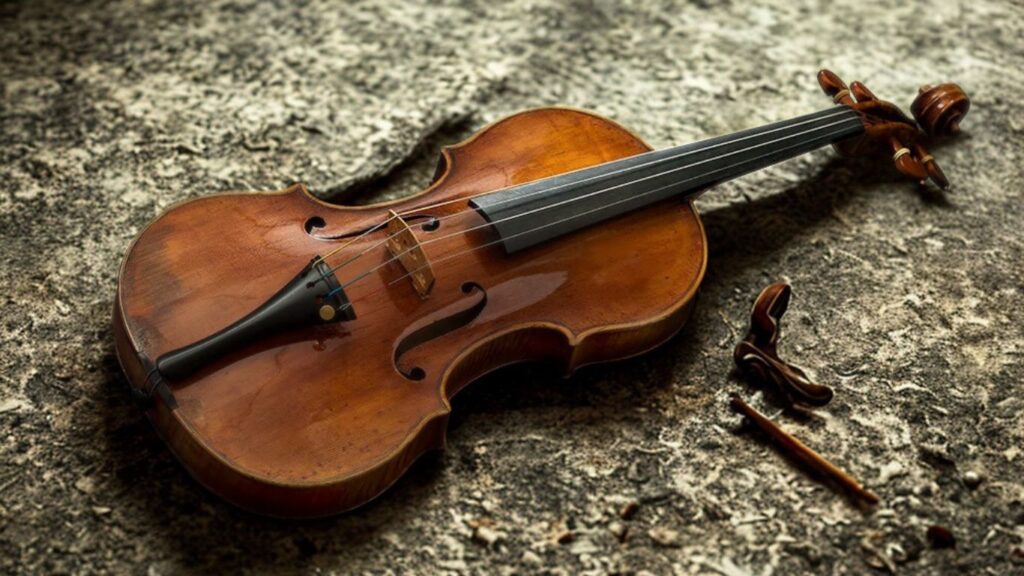
Long-run data points to fine violins delivering low to mid single-digit real returns, broadly in line with art indices but well below global equities and only modestly ahead of high-quality bonds. They generate no income, require ongoing insurance and maintenance, and can take years to buy or sell. That means violins function more as a slow-compounding, illiquid store of value than as a return-maximizing asset. You hold them for wealth preservation and passion. Not for yield.
Academic research using historical auction datasets tells a story of solid but unspectacular returns compared to equities. A widely cited study from Brandeis University finds long-run real returns around 3.3% annually after adjusting for inflation. Other research referenced by Tarisio frames fine stringed instruments as delivering somewhere in the 3.7% to 6.9% real return band, with meaningful variation depending on maker tier and historical period.
These figures need context. They represent averages across many decades and hundreds of transactions, meaning individual instruments can deviate dramatically. And they’re real returns after inflation but before transaction costs, which can easily consume several years of appreciation in a single buy-sell cycle. The headline number flatters the actual outcome for most buyers.
The return profile differs fundamentally from stocks or bonds because violins generate no income, require ongoing carrying costs, and deliver gains only through appreciation realized at sale.
Comparing violin returns to art markets reveals more similarities than differences at the trophy asset level. Blue-chip violins behave much like blue-chip paintings in that both reflect concentrated markets where a small number of recognized names command the vast majority of value. Both show relative insensitivity to mass-market economic sentiment. Private foundations reshaping the European art market illustrate exactly this dynamic, where institutional demand from non-commercial buyers props up prices regardless of broader economic conditions. The functional difference matters, though.
Rare Violins vs Other Investments — Market Snapshot
| Asset Class | Typical Real Return (p.a.) | Income Yield | Liquidity | Holding Period Fit | Key Role in Portfolio |
|---|---|---|---|---|---|
| Rare Violins (Top Tier) | ~3.3%–6.9% | None | Very Low | 15–30+ years | Store of value / passion |
| Global Equities | ~5%–7% | ~1.5%–2.5% | High | 5–20 years | Growth core |
| Investment-Grade Bonds | ~1%–3% | ~2%–4% | High | 3–10 years | Stability / income |
| Prime Real Estate | ~2%–4% | ~3%–5% | Medium–Low | 10–20 years | Income + inflation hedge |
| Fine Art (Blue Chip) | ~3%–6% | None | Low | 10–30+ years | Store of value / status |
| Fine Wine | ~3%–6% | None | Medium–Low | 7–15 years | Real asset diversifier |
A violin is a working musical instrument that professionals play, which creates demand from users who value performance characteristics alongside investment potential. That dual nature provides price support even during periods when discretionary collecting activity slows. A painting hangs on a wall. A Stradivari gets played at Carnegie Hall. That utility floor matters.
Comparing contemporary violins to emerging artists shows where risk-reward profiles diverge sharply. Buying work from a living luthier carries similar speculative characteristics to acquiring art from an artist whose career trajectory remains uncertain. If the maker achieves lasting recognition, early buyers can see substantial appreciation. If they remain relatively obscure, resale markets can be thin and prices may stagnate for a very long time.
Liquidity considerations reshape how violin returns should be evaluated in a serious way. Transaction windows cluster around specialist auction seasons that Tarisio and other major houses conduct, typically a few major sales per year. Private broker networks facilitate off-auction sales but operate with far less transparency. You don’t get to exit on a Tuesday afternoon when markets move against you.
The sale process itself involves approvals, trial periods where potential buyers play the instrument, and expert authentication checks that can extend for weeks or months.
Transaction costs add friction that must be overcome before the investment generates positive returns. Tarisio lists its buyer’s premium at 18%, capturing only one side of the transaction. Sellers typically pay commissions on top of that. Every round trip costs you more than most investors initially expect.
When you combine both sides of the transaction along with any restoration work needed, total costs can easily reach 25% to 30% of transaction value. An instrument must appreciate substantially just to break even after a full buy-and-sell cycle. That’s not a detail. That’s the central math you need to get right before committing.
This forces you to think in longer time horizons, holding for decades rather than years to allow appreciation to overcome these frictions. Patience isn’t optional here. It’s built into the asset class.
In practice, rare violins make sense as a 1% to 3% satellite allocation for ultra-high-net-worth investors, and a 0% allocation for anyone who doesn’t already have a multi-asset, liquid core portfolio firmly in place. If you’re still building your foundation, look elsewhere first. If you want to think about how alternative assets fit into a broader wealth structure, our guide on adding alternative exposures to your portfolio is worth your time.
What Are the Risks and Practical Realities of Investing in Rare Violins?
- Authentication risk: tiny changes in attribution language or missing certificates can cut value by 30–50% and make resale very difficult.
- Illiquidity: the buyer pool is small, sales cluster around specialist auctions, and exit timelines are measured in months or years, not days.
- High carrying costs: expect roughly 1–2% of value per year in insurance and maintenance, plus potentially large restoration costs after any damage.
- Information asymmetry: most investors rely on a small circle of experts and dealers whose incentives may not perfectly align with theirs, so neutral advice is critical.
Authentication risk towers over every other concern, especially at price points where seven or eight figures change hands based on attribution to a specific maker. High-value instruments attract fakes ranging from crude attempts to sophisticated forgeries requiring expert examination to detect. They also invite optimistic attributions where dealers stretch evidence beyond what rigorous analysis would actually support. The financial stakes make this a field where everyone has an angle.
Strings Magazine documents repeatedly how small differences in attribution language create enormous value implications. An instrument described as “by” a master maker commands vastly different pricing than one “attributed to” or “in the manner of” that same maker. Those three words can represent millions of dollars in either direction.
Missing certificates create liquidity penalties where selling becomes genuinely difficult, because serious buyers won’t commit serious capital without the documentation they need to feel confident about eventual resale. A gap in the paper trail doesn’t just reduce the price. It can freeze the sale entirely.
Most potential investors lack the specialized knowledge to evaluate attribution independently and must rely entirely on expert opinion. That creates dynamics where the expert’s incentives may not perfectly align with your interests, especially if the expert also deals in instruments. Building relationships with trusted advisors who have no financial stake in whether you buy a particular instrument isn’t just smart. It’s essential.
Seeking multiple independent opinions on significant purchases adds cost and time but can prevent expensive mistakes.
The carrying costs transform what might appear to be a passive appreciation play into an ongoing expense commitment. Insurance is the largest recurring cost, with premiums commonly running 1% to 2% of insured value annually. On a $5M instrument, you’re writing a check for $50,000 to $100,000 every single year before anything else happens.
For a $5 million instrument, that translates to $50,000 to $100,000 per year just to maintain coverage. Coverage requirements often specify conditions around usage, travel, and storage that create additional expenses you cannot avoid.
Maintenance costs layer on top of insurance. Professional setup and adjustment work might run $500 to $2,000 annually even for instruments that aren’t played regularly. More critically, any damage or condition issues require specialist repair that only a handful of luthiers worldwide are qualified to perform. The waiting list for those luthiers can be long, and their fees reflect exactly how exclusive their skills are.
Certain damage types, particularly cracks in critical structural areas, can slash value dramatically even when properly repaired. This reality makes insurance, careful handling, and climate control genuine necessities rather than areas where you can economize.
Market concentration creates the final major risk. The buyer pool for seven-figure instruments is genuinely small, perhaps a few hundred serious collectors, institutions, and dealers globally who are active at any given time. Compare that to stock markets where millions of participants provide continuous liquidity, or even to art markets where blue-chip paintings can attract thousands of potential bidders. In the violin market, if three key buyers step back simultaneously, the whole thing can stall.
Timing matters enormously. Selling outside major auction seasons or attempting emergency liquidation almost always proves expensive, sometimes brutally so. Your exit timeline is not fully in your control.
Should You Invest In Rare Violins?
Rare violins can work as a niche store-of-value asset with long-run, low to mid single-digit real returns and impressive resilience at the very top of the market. But illiquidity, 25% to 30% round-trip transaction costs, 1% to 2% per year in insurance and maintenance, and heavy reliance on expert authentication mean they make sense only as a small, passion-driven allocation for investors with long horizons, strong specialist advice, and absolutely no need for quick liquidity. If that describes you, the category deserves a serious look. If it doesn’t, other passion asset classes like discontinued luxury watches may offer a more accessible entry point into trophy collecting with a somewhat shorter investment horizon.
FAQ
Are rare violins a good investment compared with stocks or bonds?
Historically, fine violins have delivered solid but modest real returns, typically lower than diversified equity portfolios and only somewhat better than high-quality bonds, while requiring far more expertise and patience. They make more sense as a niche, passion-driven store of value than as a replacement for core stock or bond holdings.
Who should consider investing in rare violins?
Rare violins are best suited to high-net-worth collectors and institutions who already have a robust, liquid core portfolio, who value the cultural and emotional aspects of ownership, and who can access independent expert advice on authentication, condition, and pricing.
How much capital do you usually need to start investing in rare violins?
Serious investment-grade instruments typically start in the high five-figure range and quickly move into six and seven figures for sought-after makers. Below that level, most purchases are better thought of as collecting or supporting musicians rather than as financial investments.