
The U.S. dollar holds a position in global finance that no other currency can replicate. As the world’s reserve currency, it benefits from deep, liquid markets that run continuously across every time zone, giving traders and institutions the ability to convert massive positions at any hour without meaningful slippage.
That liquidity advantage comes from the dollar’s backing by the world’s largest economy and most powerful military. Together, those two pillars build a foundation of trust that outlasts any single policy decision or economic cycle.
Over 60% of global foreign exchange reserves remain denominated in dollars, while roughly 90% of all currency transactions involve USD on one side of the trade.
During periods of market stress, a predictable pattern plays out across global financial markets. Investors worldwide start liquidating risky assets, from emerging market equities to high-yield bonds, and rush toward the most trusted stores of value they can reach quickly. On its own, each investor is making a rational call. But collectively, that behavior creates powerful movements that can reshape entire markets within days or even hours when a crisis hits its acute phase. Wall Street’s growing attention to emerging markets makes understanding these flight-to-safety dynamics more important than ever.
And yet a fascinating paradox keeps showing up when you study historical crisis episodes. Even when the United States itself is the source of the trouble, whether through the subprime mortgage collapse in 2008, the Silicon Valley Bank failures in 2023, or the policy uncertainty surrounding elections and debt ceiling battles, the dollar often strengthens rather than weakens. That’s the opposite of what most global investors would intuitively expect.
Table of Contents
Key Takeaways & The 5Ws
- The U.S. dollar strengthens during market panic not because the U.S. is always “safe,” but because global debt, margining, and payment systems are wired in dollars—creating forced USD buying exactly when stress peaks.
- Over $13 trillion of dollar-denominated debt and dollar-based margin systems can turn volatility into automatic USD demand as corporates, governments, and leveraged funds scramble to service obligations and meet margin calls.
- In risk-off regimes, correlations compress: sharp S&P 500 selloffs, VIX spikes, and Treasury rallies often coincide with a stronger DXY as capital repatriates into U.S. assets and dollar-funded carry trades unwind.
- Traders can express and monetize this via short risk currencies versus USD, long DXY futures or dollar ETFs, and convex options structures that can pay out disproportionately when volatility and dollar strength surge together.
- Who is pulled into the dollar?
- Global corporates, emerging market sovereigns, hedge funds, asset managers, and retail traders—most of whom are tied to USD via debt, derivatives, trade invoicing, and margin requirements, whether they intend to be or not.
- What is the mechanism?
- A structural “flight to USD” where dollar debt servicing, margin calls, Treasury demand, and carry-trade unwinds combine to drive the dollar higher during crises, even when the shock originates in the U.S.
- When is it most visible?
- During acute risk-off episodes—financial crises, policy shocks, bank failures, geopolitical escalations—when volatility spikes, liquidity tightens, and leveraged positions are forcibly reduced over days to weeks.
- Where does it show up?
- Across global FX and capital markets: DXY, major pairs like EUR/USD, GBP/USD, AUD/USD, and USD/JPY, U.S. Treasury markets, and dollar-linked funding channels that transmit stress from local markets into global dollar demand.
- Why does USD win in panic?
- Because the dollar sits at the center of global funding and reserves. In a panic, investors care less about narratives and more about meeting obligations and preserving capital—and the fastest path to both usually runs through USD.

What Market Mechanisms Drive Dollar Strength During Risk-Off Events And Panic Selling?
The mechanics behind crisis dollar strength start with forced deleveraging dynamics that create automatic buying pressure completely disconnected from any fundamental view on the dollar. Global corporations and emerging market governments are sitting on over $13 trillion in dollar-denominated debt, most of it accumulated during years of cheap borrowing costs.
When stress hits, those entities must buy dollars to service interest payments and cover maturing obligations. That demand surge arrives precisely when markets are at their most unstable, pouring fuel on an already volatile fire.
A Brazilian company with dollar bonds cannot simply skip payments because the real has weakened; it must enter currency markets and purchase dollars at whatever exchange rate prevails, regardless of how unfavorable that rate has become.
This forced buying compounds through the global financial system as margin calls trigger fresh waves of liquidation. When asset prices fall, leveraged investors get margin calls that demand immediate capital. Since the dollar is the primary margining currency for most global trading, meeting those calls means buying dollars even for positions originally denominated in other currencies.
The cascade effect means each wave of selling creates the next wave of forced dollar buying. It’s a self-reinforcing cycle that can run for days or weeks until positions fully deleverage.
At the same time, cross-asset correlation patterns that normally operate independently break down during panic, with the equity-to-dollar inverse relationship intensifying sharply. When the S&P 500 sells off hard, posting declines of 5% to 10% or more, the DXY Dollar Index typically rallies 2% to 4% as investors exit growth assets and rotate into perceived safety.
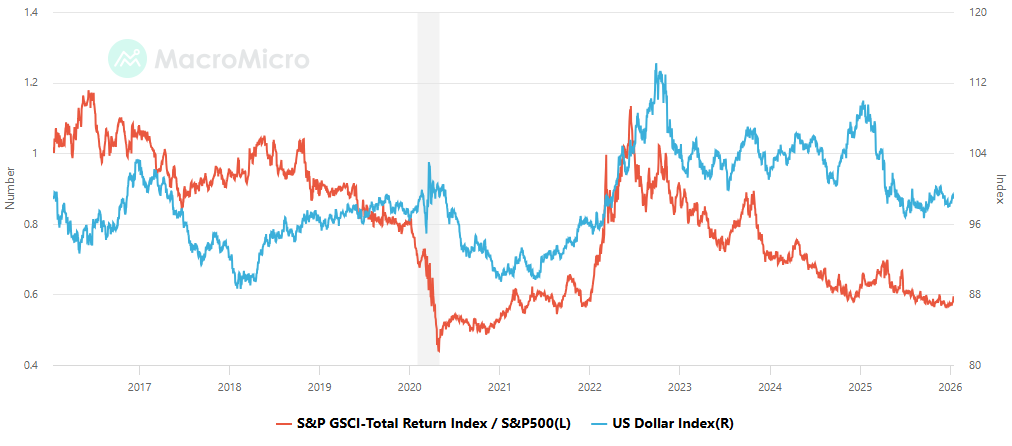
That negative correlation exists during calm markets too, but it stays muted. During acute panic, when the VIX volatility index spikes above 30 to 40 and signals extreme fear, the correlation intensifies dramatically. You can learn more about how bid-ask spreads widen during volatile periods, which directly affects how efficiently you can execute these trades.
The March 2020 COVID crash is the clearest recent example. The S&P 500 fell 34% from peak to trough while DXY rallied nearly 8% in just three weeks. That episode showed exactly how correlation strengthens at the precise moment portfolio diversification matters most.
Beyond equity market dynamics, Treasury demand creates its own dollar buying pressure through capital repatriation flows that amplify whenever uncertainty spikes. U.S. Treasuries remain the world’s deepest safe-haven bond market, with over $26 trillion outstanding and the capacity to absorb massive inflows without breaking down.
But foreign investors seeking to buy U.S. Treasuries must first convert their domestic currency into dollars. That conversion drives USD demand while simultaneously pushing bond yields lower, a coordinated flight to safety playing out on two fronts at once.
This Treasury-related dynamic connects to a broader pattern where carry trade unwind mechanics transform the dollar from funding currency to safe haven almost instantly. During calm periods when volatility stays suppressed, investors systematically borrow cheap dollars to buy higher-yielding assets, including emerging market bonds, dividend stocks, and commodity currencies like the Australian dollar. Those trades work beautifully when markets trend smoothly, generating consistent income from yield differentials.
But when volatility spikes and asset prices become unstable, those positions unwind with brutal speed as risk management systems trigger automatic exits. The forced unwinding requires traders to buy back the dollars they originally borrowed and sold, creating intense short-covering pressure that drives USD higher even when the fundamental case for dollar weakness might seem perfectly logical given the underlying crisis.
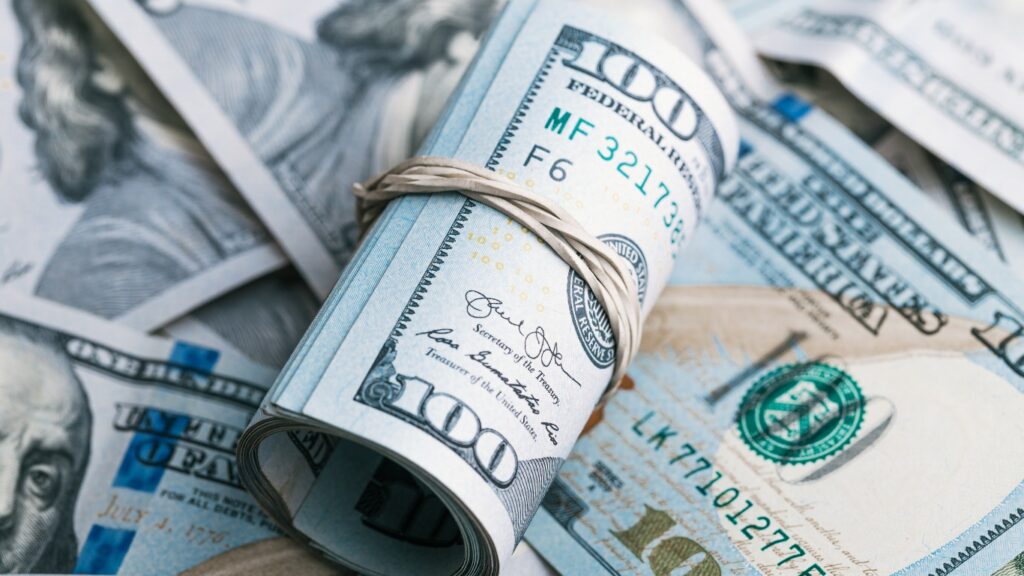
How Can Traders Profit From Dollar Strength During Market Panic Episodes?
Direct currency pair strategies offer the most straightforward approach, though execution timing and pair selection matter enormously for risk-adjusted returns. The USD/JPY pair carries particular complexity because both currencies carry safe-haven status, and historical patterns show the dollar typically dominates during acute stress.
Still, you should watch for breaks below key technical support levels during equity weakness. Those breakdown patterns often signal yen strength exceeding dollar strength, a relatively rare occurrence that’s worth fading when you spot it.
Short positions in EUR/USD, GBP/USD, and AUD/USD when the VIX spikes above 25 to 30 offer more reliable directional exposure. These risk currencies consistently weaken first when panic emerges, with the Australian dollar especially vulnerable given its tight ties to commodity prices and Chinese growth.
For traders who prefer simpler execution without juggling multiple currency pairs, DXY futures and dollar-focused ETFs deliver clean long-dollar exposure with transparent pricing. The Invesco DB US Dollar Bullish ETF, trading under ticker UUP, offers liquid access to dollar strength without requiring a futures account, making it accessible for retail traders and institutions managing smaller position sizes. The right ETF investing strategies can help you structure this exposure as part of a broader defensive portfolio.
DXY futures themselves provide more leverage and tighter spreads for larger positions. That said, they demand defined stop losses to manage risk, since crisis reversals can happen fast when central banks intervene or policy responses succeed in calming markets.
The most asymmetric risk-reward opportunities, though, often come through options strategies that give you enormous upside if panic materializes while capping your downside to the premium paid. Buying out-of-the-money USD call spreads or put spreads on EUR/USD with 30 to 45-day expiration, when equity markets show distribution patterns like declining volume on rallies or negative divergences in breadth indicators, sets up particularly attractive entries. The Financial Times markets desk tracks these macro stress signals in real time and is worth bookmarking.
The beauty of this approach is in the timing. Option premiums stay cheap during calm periods when implied volatility is compressed, yet payoffs become significant if panic hits and currency volatility explodes. Historical crisis episodes show potential for 10 to 20 times return on premium invested when your positioning and timing align. The catch is that you must accept that many attempts will expire worthless as predicted crises simply fail to materialize.
That reality also creates recurring trading opportunities during market stress periods, when mechanical flows overwhelm fundamental considerations and drive dollar strength regardless of whether U.S. policy or economic weakness was what triggered the crisis in the first place.
Traders who understand these dynamics and position appropriately, whether through direct currency trades, DXY futures, options strategies, or portfolio hedges, can profit from or protect against a paradox that keeps proving itself true. When global markets panic, everyone rushes toward the same exit marked U.S. dollar. Reuters currency markets coverage is one of the best places to track real-time dollar flows when the next panic arrives. And if you want to pair this knowledge with a broader view of building a balanced U.S. and Europe stock portfolio, understanding dollar behavior during stress periods will make you a sharper allocator.