
Get up to speed on crypto regulations across the United States, Europe, China, and Singapore, and walk away with a sharper understanding of what these rules mean for your money.
Cryptocurrency has changed the way people think about money. Built on decentralized networks and free from traditional banking infrastructure, digital currencies have attracted millions of investors worldwide. And as adoption accelerates, governments are no longer watching from the sidelines. Regulators across the globe are stepping in, crafting frameworks designed to protect investors, prevent fraud, and bring crypto into the mainstream financial fold.
Crypto Regulations in the United States
The U.S. regulatory picture for crypto is anything but simple. Multiple federal agencies each claim a piece of the oversight puzzle, and understanding who controls what matters when you’re putting real money to work. The SEC handles the issuance and trading of digital securities. The CFTC oversees cryptocurrency derivatives and futures trading. And FinCEN enforces anti-money laundering and know-your-customer rules for any business operating in the crypto space.

Sales regulation
Selling cryptocurrency in the U.S. triggers regulatory scrutiny under two main conditions. First, if the sale qualifies as the sale of a security under state or federal law. Second, if it counts as money transmission under state law or makes the seller a money services business under federal law. Beyond that, futures, options, swaps, and other derivative contracts tied to the price of a crypto asset that qualifies as a commodity fall under CFTC jurisdiction through the Commodity Exchange Act.
Securities laws
When the SEC and the courts want to know whether a token is an investment contract, they look at the substance of what’s actually happening, not just what it’s called on paper. The SEC has made its position clear. Even if a token issued in an initial coin offering carries genuine utility, it can still be classified as a security under the Securities Act if it satisfies the elements of the Howey test. That classification changes everything for how you invest and what protections apply.
Money transmission laws and anti-money laundering requirements
Under the Bank Secrecy Act, FinCEN regulates money services businesses. Back in March 2013, FinCEN issued guidance that brought two types of crypto operators under that MSB umbrella. A virtual currency exchange qualifies as one. An administrator of a centralized virtual currency repository who holds authority to both issue and redeem that currency qualifies as another.
FinCEN went further with this clarification in its guidance: any administrator or exchanger that accepts and transmits a convertible virtual currency, or buys and sells convertible virtual currency for any reason, is a money transmitter under FinCEN’s regulations. The only way out is if a specific limitation or exemption applies to your situation.
Crypto Regulations in Europe
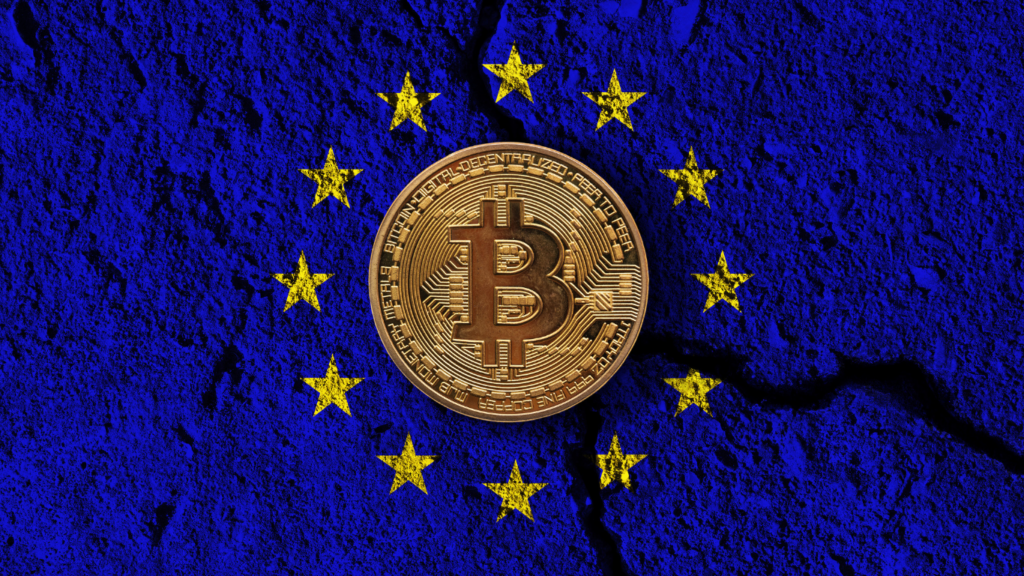
Across Europe, the regulatory picture shifts depending on which country you’re looking at. The EU has worked to bring consistency through the Fifth Anti-Money Laundering Directive, which requires crypto exchanges and custodian wallet providers to register with local authorities and put solid AML and KYC measures in place. It’s a meaningful step toward a unified framework, even if full harmonization is still a work in progress.
Some countries have gone well beyond the EU baseline. Germany, for instance, recognizes cryptocurrencies as financial instruments, adding another layer of regulatory requirements on top of the AMLD5 rules. But then you have Switzerland, Cyprus, and Malta, which have taken the opposite approach, building crypto-friendly environments designed to attract blockchain businesses and digital asset firms. Where you operate in Europe shapes everything about your compliance obligations.
Crypto Regulations in China
China took one of the hardest lines on crypto of any major economy. ICOs and domestic cryptocurrency exchanges were banned back in 2017, and the People’s Bank of China has moved aggressively against mining operations. But the ban hasn’t wiped out Chinese participation in the market. A large number of individuals and businesses simply shifted to overseas platforms to keep trading and mining. China may have closed the door domestically, yet its citizens remain deeply embedded in global crypto activity.
Crypto Regulations in Singapore
Singapore sits at the other end of the spectrum. The city-state has built one of the clearest and most crypto-friendly regulatory frameworks in the world. The Monetary Authority of Singapore requires exchanges to hold a license and meet strict AML and KYC standards, but the overall environment is welcoming rather than restrictive. That combination of clarity and openness has made Singapore a top destination for crypto businesses and blockchain startups looking to scale.
Impact of Cryptocurrency Regulations on Exchanges
Crypto exchanges sit at the center of the entire digital asset ecosystem. They’re where you buy, sell, and move your holdings, which makes them a primary target for regulatory attention. Compliance demands are real and growing. Exchanges must implement strong security measures, run thorough customer due diligence processes, and stay aligned with AML and KYC requirements at all times. According to Bloomberg’s crypto coverage, the compliance burden on exchanges has grown substantially as global frameworks tighten.
Yes, that compliance work adds cost and administrative complexity to running an exchange. But the flip side is that regulation also builds trust. When users know an exchange operates within a defined legal framework, confidence goes up, and that confidence is what ultimately drives wider adoption of digital assets.
Anti-Money Laundering (AML) Regulations for Cryptocurrencies
The pseudonymous nature of crypto transactions has always attracted scrutiny from regulators worried about illicit financial flows. Money laundering and illegal activity are the concerns that push governments hardest toward tighter oversight, and that pressure has produced a wave of AML rules specifically targeting the crypto space. If you want to understand how to operate strategically in crypto markets, understanding the AML environment is non-negotiable.
These rules require crypto businesses to verify customer identities, monitor transactions, and flag anything suspicious to the relevant authorities. By enforcing AML standards, governments are trying to close off the channels that bad actors use to move dirty money through digital assets. The goal is protecting the integrity of the broader financial system, and as a legitimate investor, stricter AML rules generally work in your favor.
Regulations on Cryptocurrency Mining
Mining is how new crypto transactions get validated and added to the blockchain, and it’s a process that draws serious regulatory attention for two reasons: energy consumption and environmental impact. China’s crackdown on unauthorized mining operations was largely driven by the desire to control electricity usage. On the other side of that equation, Iceland and Canada have become attractive mining destinations by offering clear regulatory frameworks alongside cheap, renewable energy. The Financial Times has tracked how energy policy is increasingly shaping where the world’s mining operations choose to set up. Where a country lands on energy regulation shapes the economics of mining just as much as the price of Bitcoin itself.
FAQ
Are Cryptocurrencies Controlled by a Central Authority?
One of the fundamental principles of cryptocurrencies is their decentralized nature, which means they are not controlled by a central authority, such as a government or central bank. However, governments can still exert influence over cryptocurrencies through regulations. By implementing regulations, governments aim to strike a balance between protecting their citizens and fostering innovation in the crypto industry.
Which Countries Banned Crypto?
Countries like Bolivia, Ecuador, and Bangladesh have banned cryptocurrencies outright, citing concerns about money laundering, fraud, and financial stability. However, it is important to note that even in countries where cryptocurrencies are banned, individuals can still participate in the crypto market through overseas platforms.