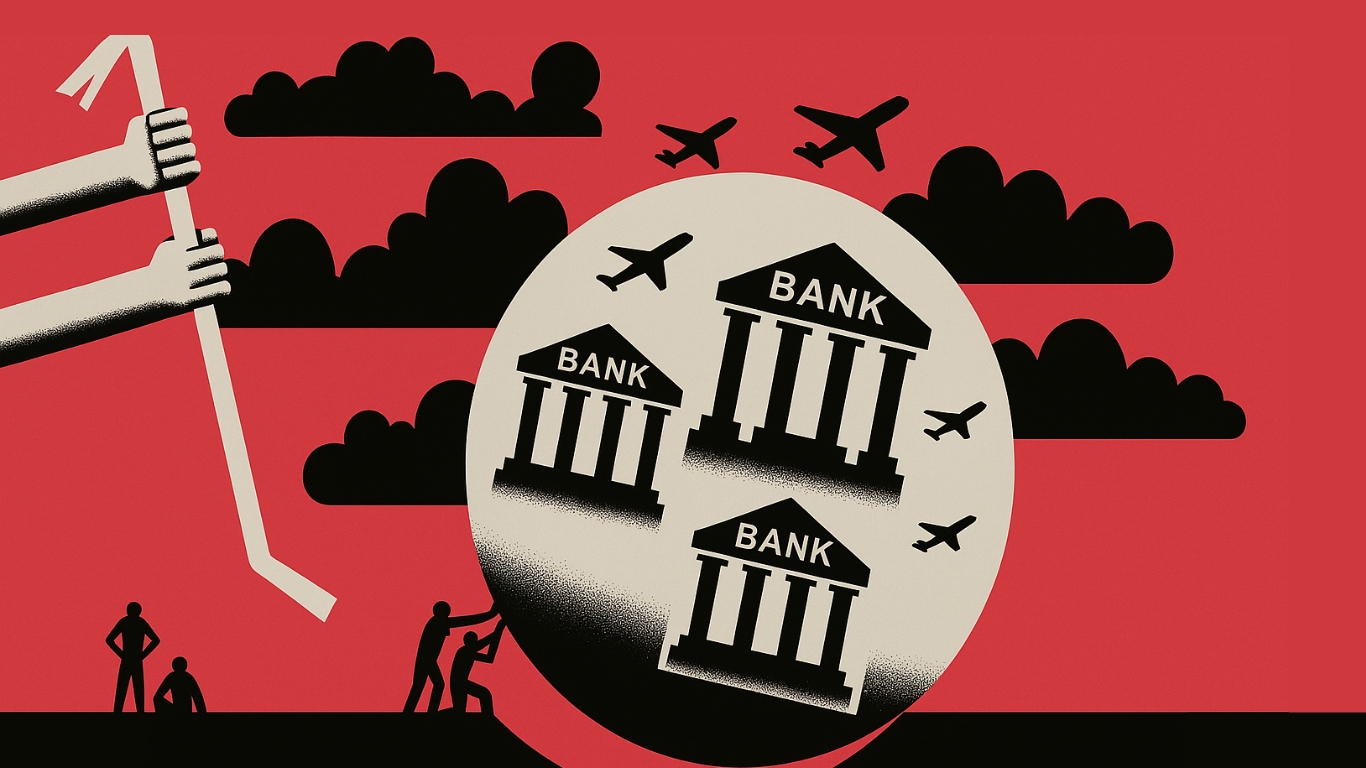

Political uncertainty creates an unusual situation in financial markets. Currency markets often see big, clear price movements during political chaos. Stock markets, on the other hand, tend to just bounce around without much direction as investors wait to see what will actually happen.
The difference comes down to what political events actually change. When political trouble hits, money immediately starts flowing between countries. You can see this right away in exchange rates. Stocks take much longer to react because investors need to figure out how political changes will affect company profits, consumer spending, and business investment over the next several months.
This gives currency traders a real advantage. They can act on political news immediately instead of waiting to see how it plays through the economy.
Political crises often push currency market volatility two to five times higher than normal. And the moves tend to go in one direction rather than just swinging randomly back and forth. Stock markets see higher volatility during the same periods, but without the clear direction that makes trading profitable.
Table of Contents
Key Takeaways
Navigate tabs- Political crises trigger immediate capital flows, making currency markets react within minutes while stocks take weeks or months to reflect earnings and macro impact.
- FX volatility becomes directional and trend-driven—often rising 2–5× normal levels—creating clearer, more sustained trading opportunities than the choppy, non-directional volatility in equities.
- Central bank intervention timelines give forex traders a predictable playbook, while stock-market adjustments unfold slowly across multiple earnings cycles.
- Currencies offer superior risk-reward setups, with 5:1 trend opportunities and cleaner conviction levels that support larger, more controlled position sizing.
- The information edge favors FX traders, where capital flow direction, fiscal credibility, and intervention risk are binary and transparent—unlike the complex, slow-moving earnings effects on equities.
- Political chaos turns uncertainty into opportunity for FX traders, while equities remain paralyzed until policy clarity returns.
- Who:
- Traders, hedge funds, and macro-focused investors exploiting political volatility for directional FX opportunities.
- What:
- A comparison showing that currencies outperform equities as tradeable assets during political instability due to clearer, faster-moving signals.
- When:
- Typically during elections, budget standoffs, government collapses, geopolitical tensions, and any event undermining fiscal credibility.
- Where:
- Most visible across major FX pairs—USD, GBP, EUR, JPY—and in politically shaken emerging markets.
- Why:
- Because capital flows respond instantly to political shocks, moving through bond and currency markets first, while equities require time, analysis, and earnings visibility before repricing.

Why Political Chaos Moves Currencies Faster Than Stocks
The speed advantage in currencies comes from how capital flows actually work. Political risk affects sovereign creditworthiness immediately. There’s no waiting period, no earnings cycle to discount it through. When investors lose confidence in a government’s fiscal credibility or political stability, they can exit that country’s assets within minutes. Government bonds and currencies absorb this flow first because they represent direct claims on the sovereign.
Stocks require a completely different evaluation process. Investors need to model how political changes will filter through to corporate earnings.
Will consumer confidence drop? Will business investment freeze? Will policy changes help or hurt specific sectors?
These questions take time to answer, and the answers often conflict across different companies and industries. This creates the choppy, directionless price action that makes equity trading during political crises so difficult.
The volatility structure differs fundamentally between the two asset classes during political events. Currency volatility during political crises tends to be directional, with large moves in one direction as capital exits or enters, while equity volatility tends to be oscillating, with large moves that reverse frequently as investors change their minds about policy impacts.
This difference shows up clearly in how options markets behave. Currency options during political crises show elevated implied volatility with skew favoring out-of-the-money puts or calls depending on the direction of capital flow. This tells traders exactly where hedging demand is concentrating. Equity options show elevated implied volatility across the board without clear directional bias, reflecting genuine uncertainty rather than anticipated directional moves.
Central bank response patterns add a predictable element to currency trading during political chaos. Political shocks that threaten fiscal stability or financial markets almost always trigger speculation about central bank intervention. Traders can position for these interventions because central banks follow relatively consistent playbooks.
When government bond markets start dislocating, central banks face pressure to intervene to prevent financial instability. Currency traders can anticipate where these interventions might occur and what form they’ll take.
Will the central bank defend the currency directly? Will they buy government bonds to stabilize yields? Will they signal interest rate changes? Each scenario creates specific trading setups.
The timeline for these interventions is also predictable. Central banks typically act within days, not weeks or months, when financial stability is threatened. This gives currency traders a defined window to position for the intervention and potential reversal. Equity traders have no comparable timeline because policy impacts on earnings unfold over quarters, not days.

Why Currencies Offer Better Risk-Reward During Political Chaos
The trending versus ranging behavior creates a massive difference in tradeable opportunity. Political uncertainty in currencies typically produces persistent trends lasting days to weeks. Traders can identify the direction of capital flow, enter positions, and ride the trend with clearly defined stop-losses based on technical levels or intervention points.
Political uncertainty in equities produces range-bound, choppy price action. Breakouts fail frequently as each new headline or analyst comment changes the narrative. Stop-losses get hit repeatedly as the market swings back and forth. Profit targets become impossible to define because there’s no clear end to the range until policy clarity emerges.
The mathematical edge becomes obvious when you calculate risk-reward ratios. A currency trending 500 pips on political risk over a week allows traders to risk 100 pips with reasonable stop placement for a 5:1 reward-risk ratio.
An equity index chopping 3% in both directions over the same week offers no comparable setup, as any reasonable stop gets hit before the position can profit, and the eventual direction remains uncertain.
Position sizing advantages also favor currency trading during political events. The directional clarity in currency moves allows traders to size positions more aggressively relative to account equity. When capital flows point clearly in one direction and central bank intervention levels provide defined risk points, traders can confidently allocate 2-3% risk per trade.
Equity positions during political uncertainty require much smaller sizing because directional confidence is lower and stop-losses less reliable. Traders might only risk 0.5-1% per trade given the high probability of getting stopped out by random volatility rather than genuine directional moves.
This position sizing difference compounds the return advantage that currencies already have from better trending behavior.
At the same time, currency markets offer high leverage specifically because price movements are typically smaller in absolute terms than equities. But during political crises, currency moves expand dramatically while the leverage remains available.
A 5% currency move over a week with 10:1 leverage produces a 50% return. The same 5% move in an equity index with typical 2:1 equity leverage produces a 10% return, and that’s assuming you caught the move directionally rather than getting whipsawed.
Lastly, technical analysis becomes more reliable in currencies during political events because the moves are driven by genuine capital flows rather than speculative positioning that can reverse quickly. Support and resistance levels, trend lines, and moving averages tend to hold better when backed by actual money flows.
Equities during political uncertainty often see technical levels violated repeatedly as algorithmic trading and conflicting fundamental narratives override pure technical setups.

The Information Advantage in Political Currency Trading
Political events also create an information edge for currency traders. The relevant information is simpler and more binary: Is capital flowing in or out? Is the government’s fiscal position credible or not? Will the central bank intervene or not? These questions have relatively clear answers that traders can research and monitor.
Equity investors face exponentially more complex information analysis. They need to evaluate how political changes affect dozens of variables across hundreds of companies. Different sectors react differently to the same political event.
Company-specific factors interact with political risk in unpredictable ways. Earnings estimates need constant revision as political situations evolve. This information complexity creates paralysis and conflicting signals.
The event-driven nature of political currency trading also allows for better preparation. Elections have scheduled dates. Budget announcements are calendared. Coalition negotiations follow predictable timelines. Traders can prepare positions in advance, study historical precedents, and have clear entry and exit plans ready before the event occurs.
Equity trading around political events lacks this preparation advantage. The impact on earnings is always uncertain until actual results appear quarters later.
Analysts’ estimates vary wildly. Sector rotation patterns remain unclear. There’s no historical template that reliably predicts which stocks will outperform or underperform during specific types of political events.
Political chaos will always create uncertainty. But in currency markets, that uncertainty becomes tradeable volatility and persistent trends driven by capital flows and central bank responses that follow predictable patterns. In stock markets, the same uncertainty creates paralysis as investors wait for clarity about policy impacts on earnings, clarity that won’t arrive for months.
For traders who understand how to read political risk and position accordingly, currencies offer opportunities that stocks simply can’t match when governments stumble and investors panic.
The combination of directional clarity, predictable response mechanisms, better risk-reward setups, and information simplicity makes currency trading the superior choice during political uncertainty.