
Greece was once the word for financial disaster. Austerity, bailouts, empty ATMs — for years, that was the story the world told about this country. But something shifted. What you’re watching now is one of the most compelling economic comebacks in modern European history, a journey from the edge of collapse to an economy that’s growing faster than most of its neighbors. Robust growth rates, a healthier budget, and a wave of renewed investor confidence have rewritten the narrative entirely. So let’s get into the real numbers behind Greece’s transformation and what it actually means for anyone paying attention.
Greece’s Economic Crisis
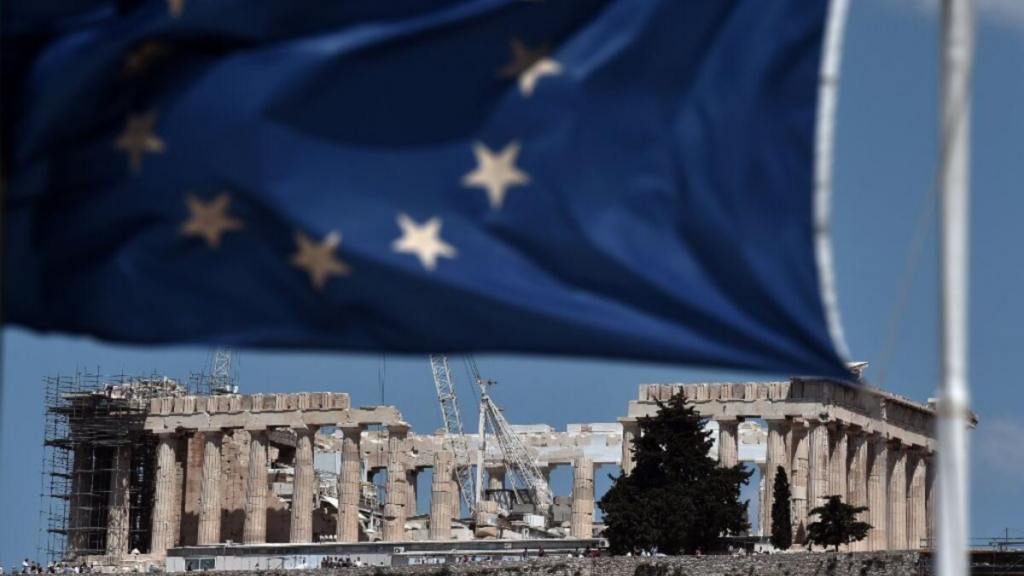
To appreciate how far Greece has come, you need to understand how bad things actually got. The 2008 global financial crisis hit Greece like a freight train, exposing years of fiscal mismanagement and deep structural problems that had been quietly building beneath the surface. By 2010, the country could no longer fund itself in the bond markets and needed a rescue package from the International Monetary Fund, the European Central Bank, and the European Commission — the group that became known as the Troika.
Key Statistics from the Crisis Era
- GDP Decline: Between 2008 and 2013, Greece’s GDP shrank by over 25%, the worst contraction in peacetime history for an advanced economy (Source: IMF).
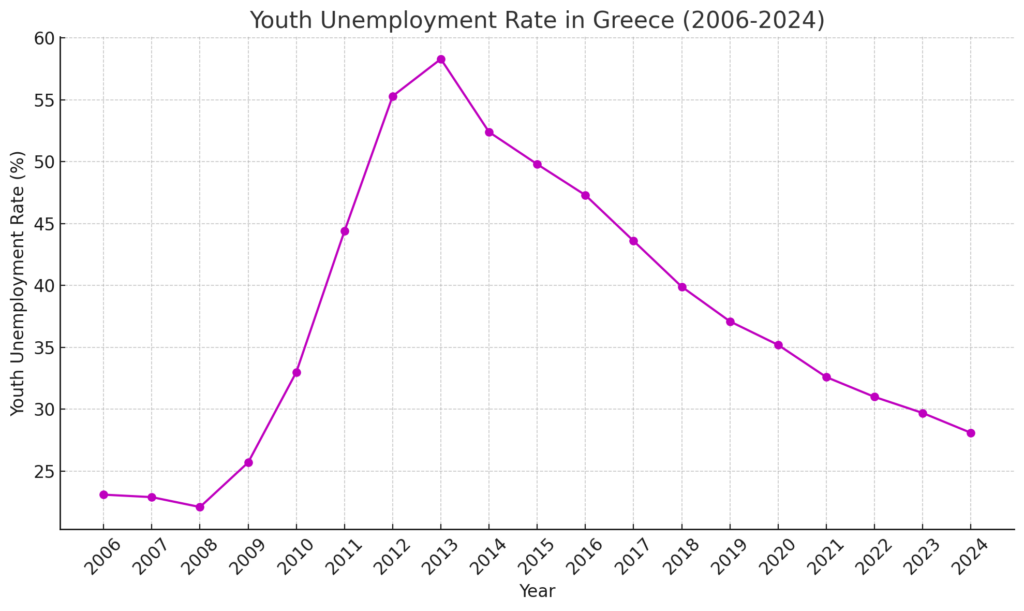
- Unemployment Rate: Peaking at 27.5% in 2013, youth unemployment soared above 50% (Source: Hellenic Statistical Authority).
- Debt-to-GDP Ratio: Greece’s public debt reached 177% of GDP in 2014, one of the highest in the world (Source: Eurostat).
Greece’s Economic Recovery
Robust GDP Growth
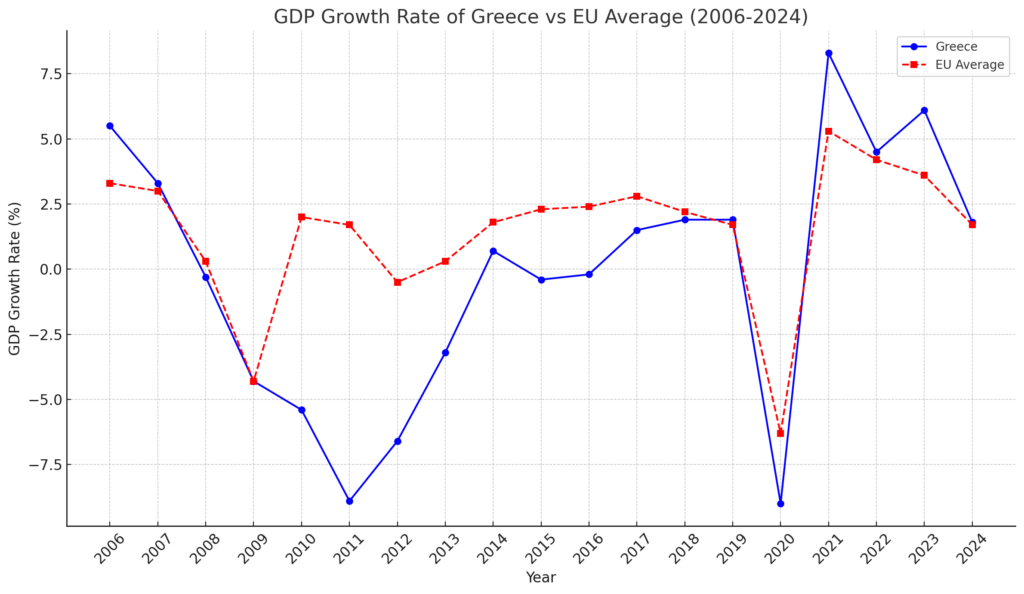
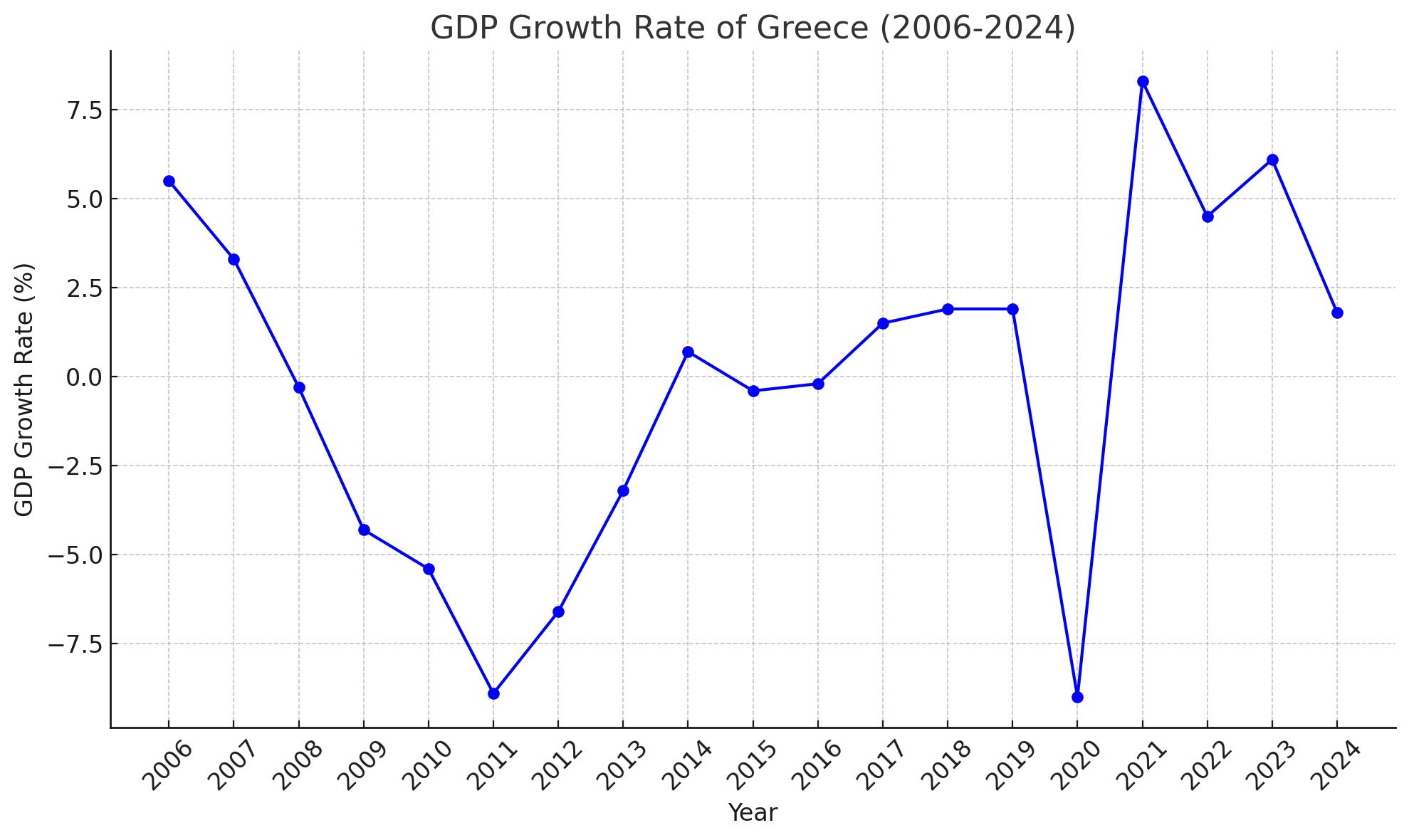
The most telling sign of Greece’s recovery is what’s happening to its GDP. The European Commission’s economic forecasts show Greece consistently outpacing both the EU average and the broader euro area in recent years. That’s not a one-off blip — it’s a trend that reflects genuine structural change in how the economy is functioning.
Key Figures:
- 2021 Growth: Greece’s GDP grew by 8.3% in 2021, one of the highest growth rates in the EU (Source: European Commission).
- 2022 and 2023 Projections: The GDP growth rate for 2022 was 5.6%, and for 2023 it is projected at 3.1% (Source: European Commission).
Fiscal Improvements
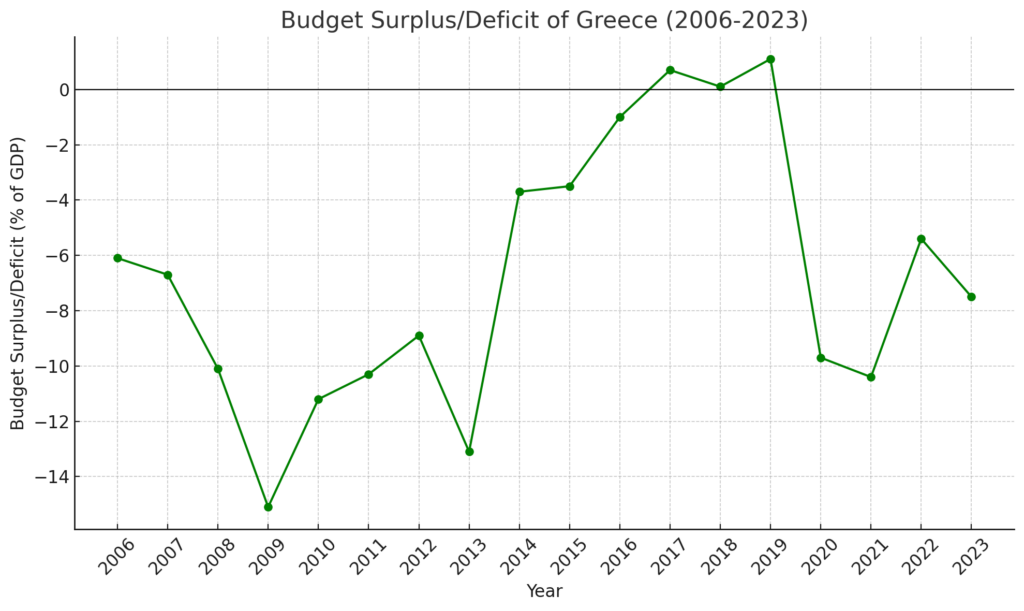
Greece’s public finances tell a story that would have seemed impossible just a decade ago. Strict fiscal discipline and a commitment to reform have turned chronic budget deficits into actual surpluses, giving the government breathing room it simply didn’t have during the crisis years. If you’re thinking about buying property in Greece or allocating capital there, this fiscal stability is exactly the foundation you want to see.
Key Figures:
- Budget Surplus: In 2023, Greece achieved a primary budget surplus of 1.9% of GDP, a significant turnaround from a deficit of 15.1% in 2009 (Source: Bank of Greece).
- Debt-to-GDP Ratio: While still high, Greece’s debt-to-GDP ratio has been on a downward trajectory, projected to fall to 166.8% by 2024 (Source: European Commission).
Employment and Labor Market Reforms
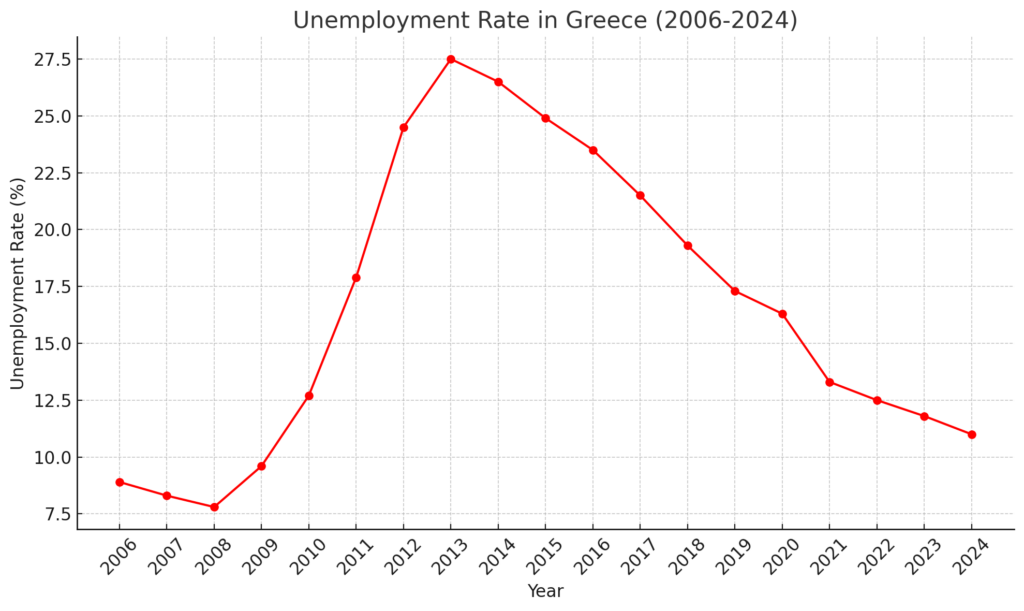
Labor market reforms don’t always make headlines, but their effects show up where it counts — in employment numbers. Greece has been steadily dismantling the rigidities that made hiring and firing so complicated, and the unemployment rate has been falling in a sustained way that goes beyond a simple economic upturn.
Key Figures:
The unemployment rate stood at 12.4% as of 2023, according to the Hellenic Statistical Authority. That’s a striking drop from the 27.5% peak hit back in 2013. Put those numbers side by side and you start to understand the human scale of this recovery.
Youth unemployment tells a more complicated story. The rate has come down meaningfully but still sits around 30%, per Eurostat data. Progress, yes — but also a reminder that the recovery still has ground to cover before it reaches everyone.
Foreign Investment and Business Climate
Smart money has been moving into Greece, and it’s not hard to see why. Structural reforms have made the country a genuinely more attractive place to do business, and that shift is showing up in hard investment figures rather than just sentiment surveys.
Key Figures:
Foreign direct investment into Greece reached €3.5 billion in 2022, the highest level recorded since the financial crisis, according to the Bank of Greece. That kind of number tells you that sophisticated investors are putting real capital to work — not just testing the waters.
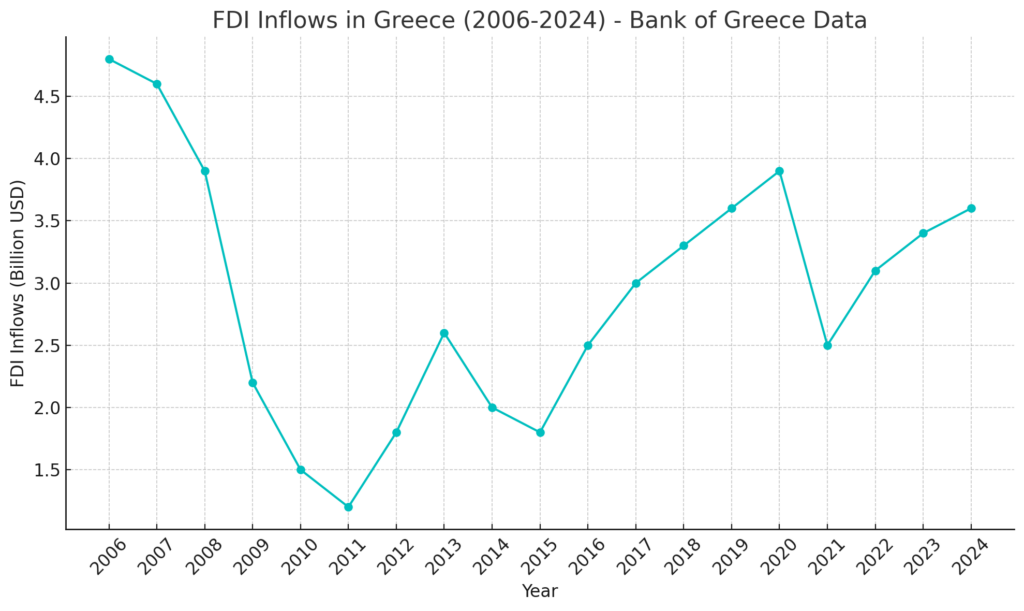
Greece’s ranking in the World Bank’s Ease of Doing Business index moved from 109th in 2010 all the way to 79th in 2020. That’s a dramatic climb that reflects real changes in how bureaucracy, regulation, and business formation work on the ground.
Sectoral Contributions to the Economic Miracle
Tourism
Tourism has always been part of the Greek story, but its role in the recovery has grown beyond what most people expected. Record visitor numbers and rising spend per tourist have made the sector a genuine engine of GDP growth, not just a seasonal boost. If you’re thinking about hospitality investments, understanding how smart investors approach hotel design and guest experience is worth your time in this market.
Key Figures:
- Tourism Revenues: In 2022, tourism revenues reached €18.2 billion, recovering strongly from the pandemic’s impact (Source: Bank of Greece).
- Tourist Arrivals: Greece welcomed 27 million tourists in 2022, nearly reaching pre-pandemic levels (Source: Hellenic Statistical Authority).
Shipping
Greek shipping is one of the most quietly powerful forces in the global economy, and it has been a steady anchor through the country’s recovery. Greek-owned fleets account for a substantial share of global merchant shipping tonnage, generating foreign exchange earnings and supporting a wide ecosystem of maritime services that most casual observers never think about.
Key Figures:
- Merchant Fleet: Greece controls about 21% of the world’s total merchant fleet, with 4,700 vessels (Source: Union of Greek Shipowners).
- Shipping Revenues: Shipping revenues contributed €17 billion to the economy in 2022 (Source: Bank of Greece).
Technology and Innovation
Greece is building something new in the tech space. A growing cluster of startups and established tech companies choosing Athens as a base has started to change the profile of the economy, adding a layer of high-value activity that didn’t exist before the crisis. The talent is there, the cost base is competitive, and the government has been actively courting investment in this space.
Key Figures:
- Startup Ecosystem: The Greek startup ecosystem has attracted over €500 million in investments since 2020 (Source: Endeavor Greece).
- Tech Sector Growth: The technology sector grew by 7% annually from 2018 to 2022 (Source: Greek Ministry of Digital Governance).
Government Policies and Reforms
Structural Reforms
None of this happened by accident. Greece’s recovery was built on a foundation of structural reforms that were, frankly, painful to implement. Cutting through decades of entrenched inefficiency and special interests required political will that many observers didn’t expect to materialize. But the focus on enhancing competitiveness and productivity has paid off in ways the data now confirms.
Key Areas of Reform:
- Pension System: Reforms have made the pension system more sustainable, reducing long-term liabilities (Source: European Commission).
- Tax System: Efforts to combat tax evasion and streamline tax administration have increased revenues and reduced deficits (Source: OECD).
- Labor Market: Reforms aimed at increasing labor market flexibility and reducing barriers to employment have contributed to lower unemployment rates (Source: IMF).
Financial Sector Stabilization
A functioning economy needs a functioning banking system. Stabilizing Greece’s financial sector meant recapitalizing the banks and tackling a mountain of non-performing loans that had built up during the crisis years. Getting those NPL ratios down was slow, grinding work — but it cleared the path for credit to flow again to businesses and households who needed it.
Key Figures:
- Bank Recapitalization: Greek banks have been recapitalized multiple times, with the most recent round injecting €14 billion in 2015 (Source: Bank of Greece).
- NPL Reduction: The NPL ratio has decreased from over 40% in 2016 to 10% in 2023 (Source: European Central Bank).
External Factors Contributing to the Recovery
European Union Support
Greece didn’t pull off this recovery alone. EU support — through financial assistance, debt restructuring, and policy guidance — gave the country the runway it needed to implement reforms without a complete economic collapse. That institutional backing also sent a signal to private investors that Greece had a credible path forward, which mattered enormously for restoring confidence.
Key Figures:
- EU Funding: Greece received over €260 billion in financial assistance from the EU and the IMF during the crisis years (Source: European Commission).
- Recovery and Resilience Facility: Greece is set to receive €30.5 billion from the EU’s Recovery and Resilience Facility to support its post-pandemic recovery (Source: European Commission).
Global Economic Environment
External tailwinds helped too. A period of low interest rates across the global economy reduced the cost of servicing debt, while a rebound in global trade lifted demand for Greek shipping services and exports. Greece caught some lucky timing in addition to doing the hard work — and a fair assessment of the recovery has to acknowledge both.
Key Figures:
- Interest Rates: The ECB’s low-interest-rate policy has reduced borrowing costs for Greece, facilitating debt servicing and fiscal consolidation (Source: ECB).
- Global Trade: The recovery in global trade has boosted demand for Greek exports, contributing to GDP growth (Source: WTO).
Future Prospects
Continued Reforms and Investments
Sustaining what Greece has built means staying on the reform path even when the pressure to do so eases. The countries that tend to backslide are the ones that declare victory too early. Greece needs to keep attracting foreign capital, keep improving its business environment, and keep building the kind of institutional credibility that makes long-term investors comfortable. Understanding how interest rate movements affect investment decisions is especially relevant for anyone allocating capital into Greek real estate or infrastructure right now.
Key Focus Areas:
- Digital Transformation: Investing in digital infrastructure and skills to boost productivity and innovation (Source: Greek Ministry of Digital Governance).
- Green Economy: Promoting sustainable development and green investments to align with EU climate goals (Source: European Commission).
- Education and Training: Enhancing education and vocational training to address skill mismatches and improve labor market outcomes (Source: OECD).
Challenges Ahead for Greece’s Economic Recovery
The recovery is real, but anyone telling you the hard part is over isn’t being straight with you. Greece faces a set of structural challenges that require clear-eyed planning and consistent execution to manage. The positive trajectory is worth protecting — and that means taking these headwinds seriously rather than dismissing them.
Demographic Trends
Demographics are among the most pressing long-term concerns. An aging population combined with low birth rates creates a slow-moving pressure on the economy that’s easy to ignore in good times but difficult to reverse once it takes hold. Greece is not alone in facing this across Europe, but its fiscal history means the consequences of getting it wrong are more acute.
Key Figures:
- Aging Population: Greece’s population aged 65 and over is projected to increase from 22% in 2020 to 33% by 2050 (Source: Eurostat).
- Low Birth Rates: The fertility rate in Greece stands at 1.3 children per woman, well below the replacement level of 2.1 (Source: Eurostat).
As the working-age population shrinks relative to retirees, the pressure on pensions and healthcare spending grows. That puts the public finances under a strain that could undo the fiscal progress Greece has worked so hard to achieve, unless productivity growth and workforce participation rise to compensate.
Public Debt
High public debt is the other elephant in the room. Greece’s debt-to-GDP ratio is still one of the highest in the developed world, and while it has been declining, it leaves the country vulnerable to any shift in market sentiment or global borrowing costs. Financial Times coverage of the Greek economy has tracked this risk closely, and it’s one that sophisticated investors keep front of mind.
Key Figures:
- Public Debt: Greece’s public debt was 193% of GDP in 2022, with projections suggesting it will decrease to 166.8% by 2024 (Source: IMF).
- Debt Servicing: In 2023, Greece allocated 6.5% of its GDP to servicing its debt, highlighting the significant fiscal burden (Source: Bank of Greece).
Keeping debt on a downward path requires both disciplined fiscal management and sustained economic growth firing at the same time. Either one alone is not enough. Greece needs both, consistently, over a long horizon — and that’s a high bar to clear.
Geopolitical Risks
The Eastern Mediterranean is not a quiet neighborhood. Regional instability and geopolitical tensions create a background risk that can flare up quickly and shake investor confidence when it does. For Greece, the stakes are higher than for a landlocked country insulated from these dynamics.
Key Issues:
- Regional Instability: Ongoing tensions in the Eastern Mediterranean, particularly related to territorial disputes and energy exploration, could disrupt economic activities and deter investment (Source: World Bank).
- Geopolitical Tensions: Broader geopolitical dynamics, including Greece’s relationships with neighboring countries and its role within the EU, may also impact its economic outlook (Source: World Bank).
Managing these risks means more than just defensive diplomacy. Greece needs to be an active participant in regional cooperation frameworks that reduce volatility and give investors the stability they need to commit capital over the long term. The economic miracle is worth defending — and that requires strategic engagement well beyond the country’s borders.