Investing in the hotel industry is one of the rare occasions where you get to bring genuine creativity to the table and actually enjoy the process far more than you…
Investing in the hotel industry is one of the rare occasions where you get to bring genuine creativity to the table and actually enjoy the process far more than you would with a typical investment. Who doesn’t love a great holiday? And who hasn’t, at least once, imagined their own perfect hotel that ticks every box?
That personal vision is exactly the element you should never lose sight of when entering this industry.
As a Hotel Concept and Strategy Consultant at Destsetters, my priority is always the same: helping clients find the balance between numbers and experience, and unlocking the human side of the investment. Whatever form it takes, the hotel becomes your guests’ temporary home. A place where they arrive expecting inspiration, comfort, and genuine care.
We’ve already explored in earlier pieces why the hotel concept matters and why hospitality investments hold such strong appeal for investors. Now it’s time to go deeper and unpack some of the real points of difference between hotels that thrive and those that merely survive. Get ready for ideas that go well beyond the usual investor tips, because once again, the focus won’t be on numbers.
It will be on the emotional ingredients of the success recipe.
How the Smartest Investors Design Hotels That Guests Can’t Resist
Key Takeaways
Navigate between overview and detailed analysis
Hotel investment is both analytical and emotional. Beyond ROI, success depends on how well the property captures a feeling, creating experiences rooted in inspiration, comfort, and authenticity.
The investor’s personal vision sets the foundation. A clear “dream-hotel recipe” ensures that design and budget decisions serve a coherent concept, not random compromises.
Architecture must express the brand story. As seen in Dubai’s Museum of the Future, form can embody narrative and set expectations before guests arrive.
Focus on people, not just design. Understanding guest and staff personas enables human-centered spaces that feel relevant, not formulaic.
Caring for staff multiplies returns. Well-designed operational areas improve retention, service quality, and long-term culture.
Emotional clarity drives profitability. Hotels aligning storytelling with design enjoy higher value perception, loyalty, and pricing power.
Who:
Hotel investors, developers, and consultants merging creativity, design, and emotional intelligence for profitable hospitality ventures.
What:
A guide to building hotels as living brands where concept, architecture, and human connection define sustainable success.
When:
At the concept and planning stage, when emotional vision can still influence architecture, operations, and brand identity.
Where:
Globally applicable, inspired by design-driven hospitality projects such as Destsetters Eco Hotel Concepts in Greece.
Why:
Because hotels are emotional ecosystems, guests buy feelings, not floor plans. Balancing data with emotion transforms an asset into a living, profitable experience.
Create the initial brief by writing down your dream-hotel recipe
It might sound unconventional, but this could be one of the most important steps you take toward shaping your hotel’s future experience. Writing down what you personally expect when you walk into a hotel keeps future investment decisions grounded in what truly matters to the guest. The aesthetics. The feeling. The experience. Not just the budget.
Say privacy and calmness matter deeply to you. Having that written down in your initial notes makes it far more likely you’ll invest properly in soundproofing, which directly translates into a superior guest experience. Now imagine building out an even more detailed list.
You might note the role of aesthetics in your own sense of comfort, the weight you give to design and functionality, how a great breakfast shifts your mood and shapes your entire review of a stay, or even the subtle touches that catch your eye while waiting in a hotel lobby.
The result is a more conscious, inspired selection of the right professionals. From the talented interior designer who translates aesthetics into comfort, to the F&B consultant who crafts a breakfast worth writing home about, and the technology experts who shape seamless in-room communication and guest interaction systems. Every hire becomes more purposeful.
All of those decisions trace back to a single starting point: your own authentic vision of what great hotel living feels like. That initial emotional clarity becomes the foundation for a concept that can then be developed strategically into a profitable, guest-centered investment. And that foundation, once set, is hard to shake.
The iconic building of Museum of Future
Design the hotel as a brand and not as a simple building
At the early stage of any new hotel investment, attention tends to drift toward the technical and structural side of the building. What often gets overlooked is the fact that, in a hotel, the building itself is a core part of the product. The real problem comes when the investor and the team fail to recognize that the building will be the most visible expression of the brand.
So you need to design the brand, not just the building.
That means defining the brand concept before the architectural design even begins. The building should reflect the brand’s values and experiential goals from the ground up. One example makes this point better than any theory could, and while it isn’t a hotel, it stands as a true masterpiece in how a building was designed as pure brand storytelling.
The case study is the Museum of the Future in Dubai, and it barely needs explaining. One image does the work. From the name alone, the promise is crystal clear.
Visitors expect to encounter something genuinely futuristic, and the investment team took that mission seriously at every turn.
The building itself isn’t just modern. At a single glance, it’s an architectural marvel that makes the boldest possible statement about what the project stands for. The job is done before you even step inside.
And of course, it doesn’t stop at the facade. Innovation carries through the interior in both technical and aesthetic dimensions, making it the most compelling case study of a building designed as a living brand.
Keep that example in mind as you shape your own hotel’s form and structure. When your building genuinely reflects your brand promise, one thing becomes almost inevitable: your hotel will be love at first sight.
Pay attention to the human side of the investment, focusing both on guest personas and the future staff community.
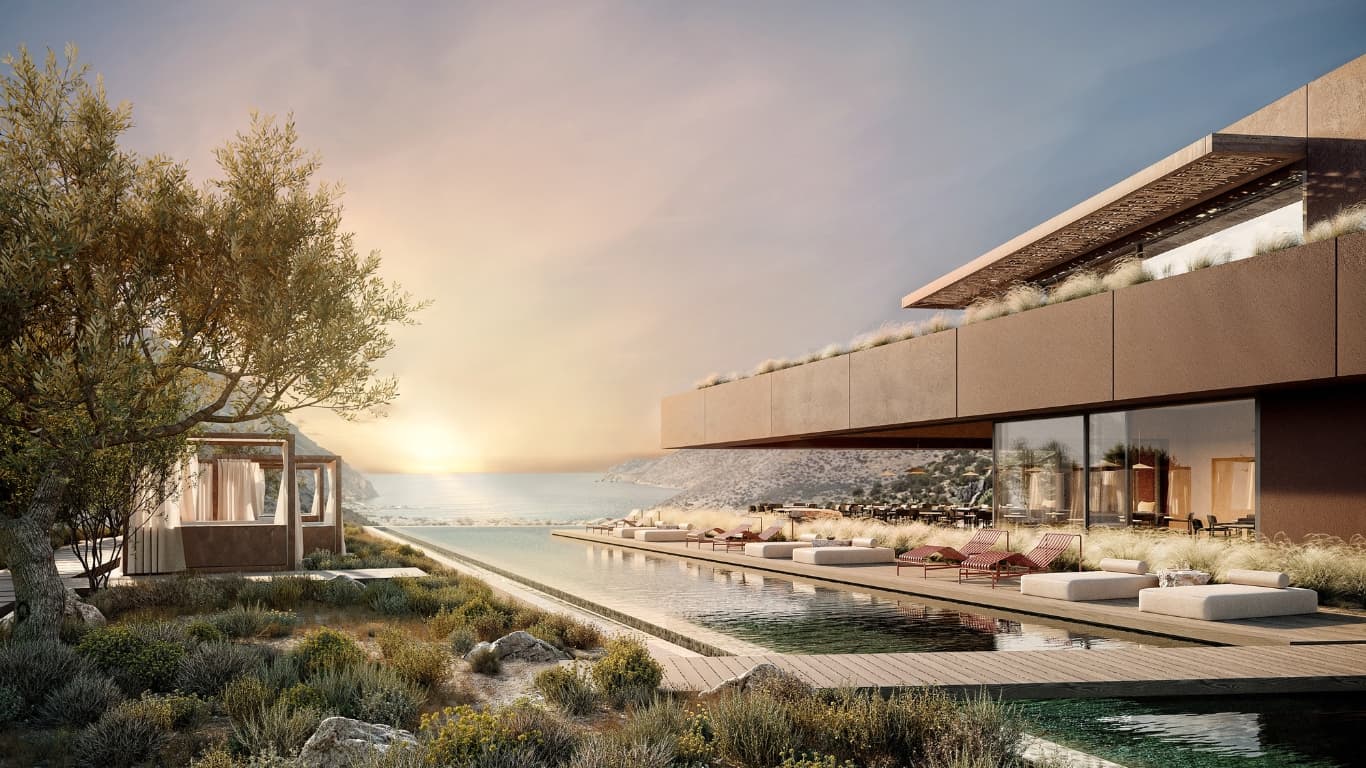
Design by KAAF Architects for a Destsetters Eco Hotel Concept in Greece
If there’s one thing to keep close as a hotel investor, it’s this: hotels are micro-societies. They’re composed of people who interact with the product, meaning the full hotel experience including the building and everything within it, and with each other. That makes it essential to think carefully about who will form your community, guests and staff alike.
Starting with the guest, the most important shift you can make is to move away from pure demographics such as nationality or age, and toward a persona focus that reveals character and expectations. Exploring personas surfaces insights you may never have considered on your own, and those insights will sharpen every decision you make for your hotel. As Hospitality Net has long argued, persona-driven design consistently outperforms demographic-only planning in guest satisfaction outcomes.
Say your guest mix includes design-field professionals, and trust me, that’s a strong and loyal persona. Ask yourself what would make your hotel genuinely irresistible to them. That question alone could guide your team toward stronger interior design storytelling, a conference hall that doubles as a gallery curated by local designers, or even cocktails inspired by architectural semiology.
Those elements turn your property into a destination for the design community and, naturally, a unique choice for everyone else too.
Much the same thinking applies to your hotel staff. Finding the right people is harder than ever right now, and keeping your future employees in mind from the start can be a real competitive edge. The basics are non-negotiable: thoughtful operational design that simplifies procedures and reduces friction, including carefully planned staff spaces and practical back-of-house layouts.
The more sophisticated approach connects employee personas directly to your hotel’s identity, so that retention becomes natural rather than forced. Take a common real-world scenario: a significant portion of your team are women with young children. Childcare has been a persistent challenge in hospitality staffing for decades, and most properties still ignore it entirely.
A small, well-designed space for kids’ recreation, even one that needs a part-time supervisor, could be the single competitive advantage that sets you apart in a tight labor market. It may sound ambitious, but that’s exactly the point. Think past the obvious and build real staff needs into your concept from day one.
Eventually, the Smartest Strategy Is Not to Forget Your Human Side
Some of what’s laid out here might sound idealistic to a more numbers-driven investor. But keep this in mind: your guests will never care about your financials. What they care about, deeply, is their own experience.
And that experience is what fills your rooms, drives your reviews, and builds the reputation your returns depend on. Forbes Business Council members in hospitality consistently point to experience design as the top driver of repeat bookings.
Even if getting into the granular details of concept and branding isn’t your natural instinct, recognizing its weight is essential. This way of thinking, what professionals call concept development and brand strategy, carries just as much importance to a hotel investment as the feasibility study, the architecture, and every other technical service on your roster. The ultra-wealthy approach all their major investments with this kind of strategic depth, and hospitality is no different.
For that reason, budget this process with the same seriousness you’d give any other critical workstream, and always bring in an experienced team even if you’re keen to contribute your own ideas. Concept development demands both methodology and genuine expertise. With the right professionals alongside you and a clear vision driving every decision, you’ll watch your hotel investment do far more than perform.
Why should investors start with their own emotional vision?
Because it’s the only way to align design and strategy around something authentic. When an investor begins with a clear emotional understanding of what a “great stay” means, every professional decision, from architecture to F&B, gains direction and coherence.
How can a building reflect a hotel’s brand?
By treating architecture as storytelling. The building should express the brand promise in its form, materials, and atmosphere. Guests should understand what the hotel stands for the moment they see it, long before they check in.
What is the most common mistake investors make when designing hotels?
Focusing on structure before identity. Many projects start with floor plans and budgets before defining the brand and the concept, which later leads to inconsistencies and costly redesigns.
Why is focusing on guest personas more important than demographics?
Because demographics show who people are, while personas reveal why they travel. Understanding motivation, character, and emotional triggers helps design experiences that people connect with, and are willing to pay more for.
How does caring for staff influence hotel success?
Hotels are living systems built on people. When the staff experience is positive, authentic, and aligned with the hotel’s concept, guest satisfaction and retention rise naturally. Employees who feel part of the story deliver it better.
Can emotional thinking really increase ROI?
Absolutely. Emotional clarity leads to consistent design, stronger storytelling, and higher perceived value. That combination directly translates into better pricing power, stronger brand loyalty, and long-term profitability.
Editor's note: Hospitality data referenced above draws on Bloomberg industry coverage and global travel reports we monitor each quarter.
Nikos Morantis writes the founder-and-operator interviews that anchor The Luxury Playbook's Voices section, sitting down with the people building the brands, platforms, and houses the magazine covers across luxury and lifestyle.
He has hosted conversations with operators across watchmaking, prime real estate, hospitality, and the alternative-asset world, and his pieces emphasize the operator's path and the working-day texture of running the business — the framing the magazine prefers over the strategist-and-deal-flow register.