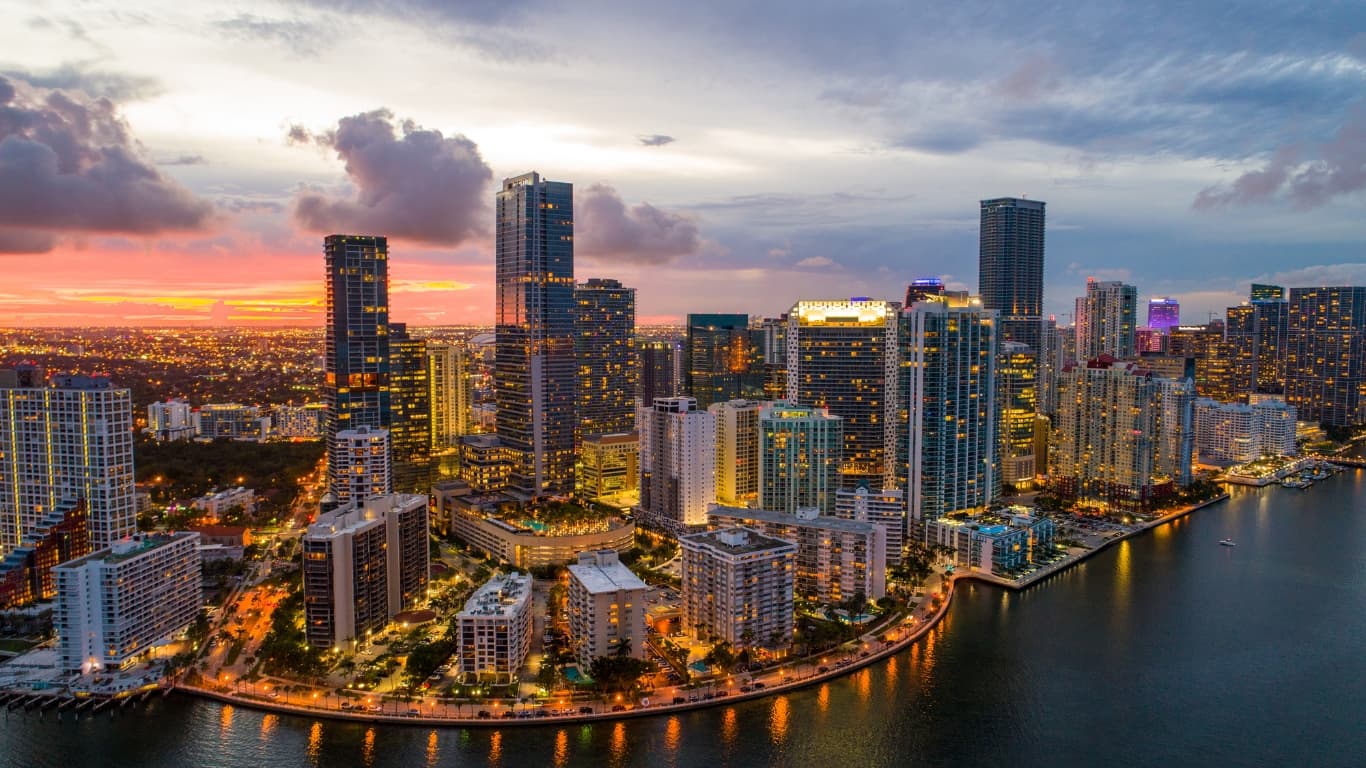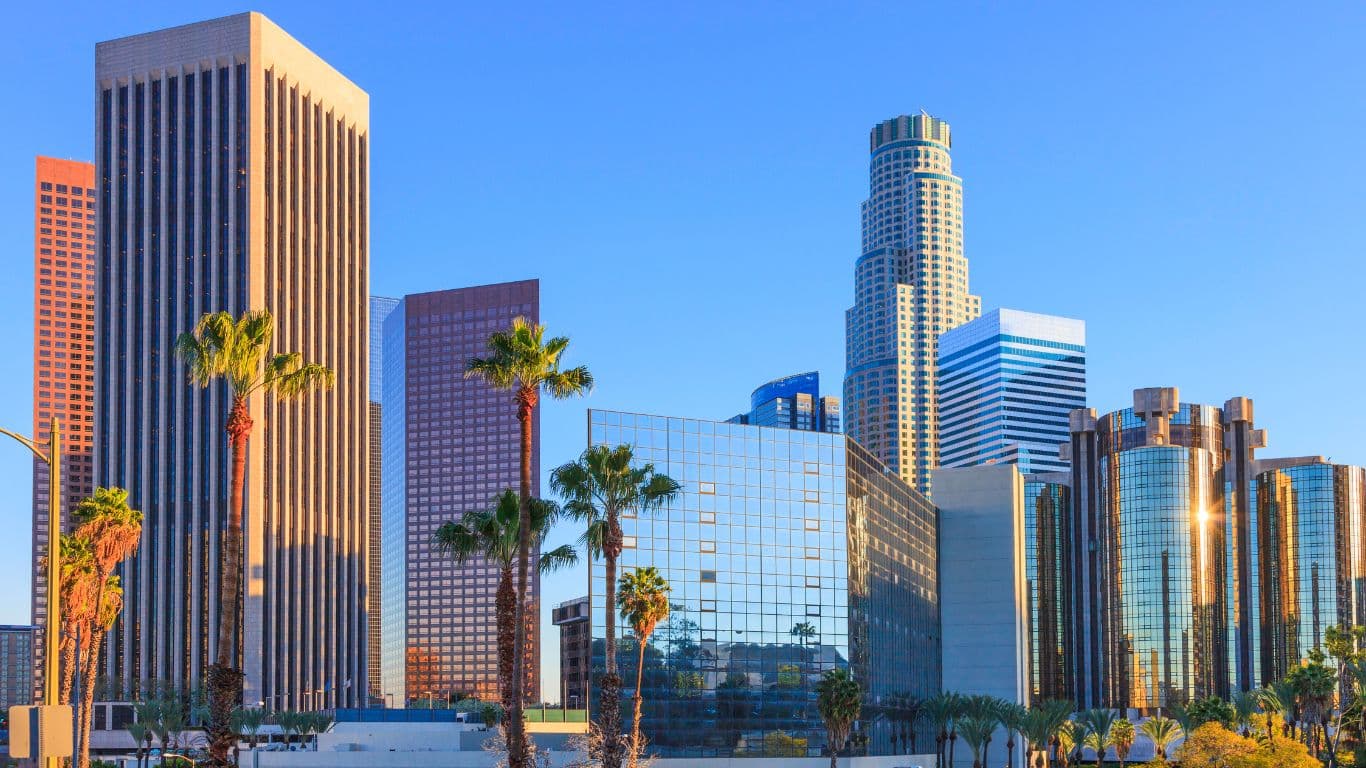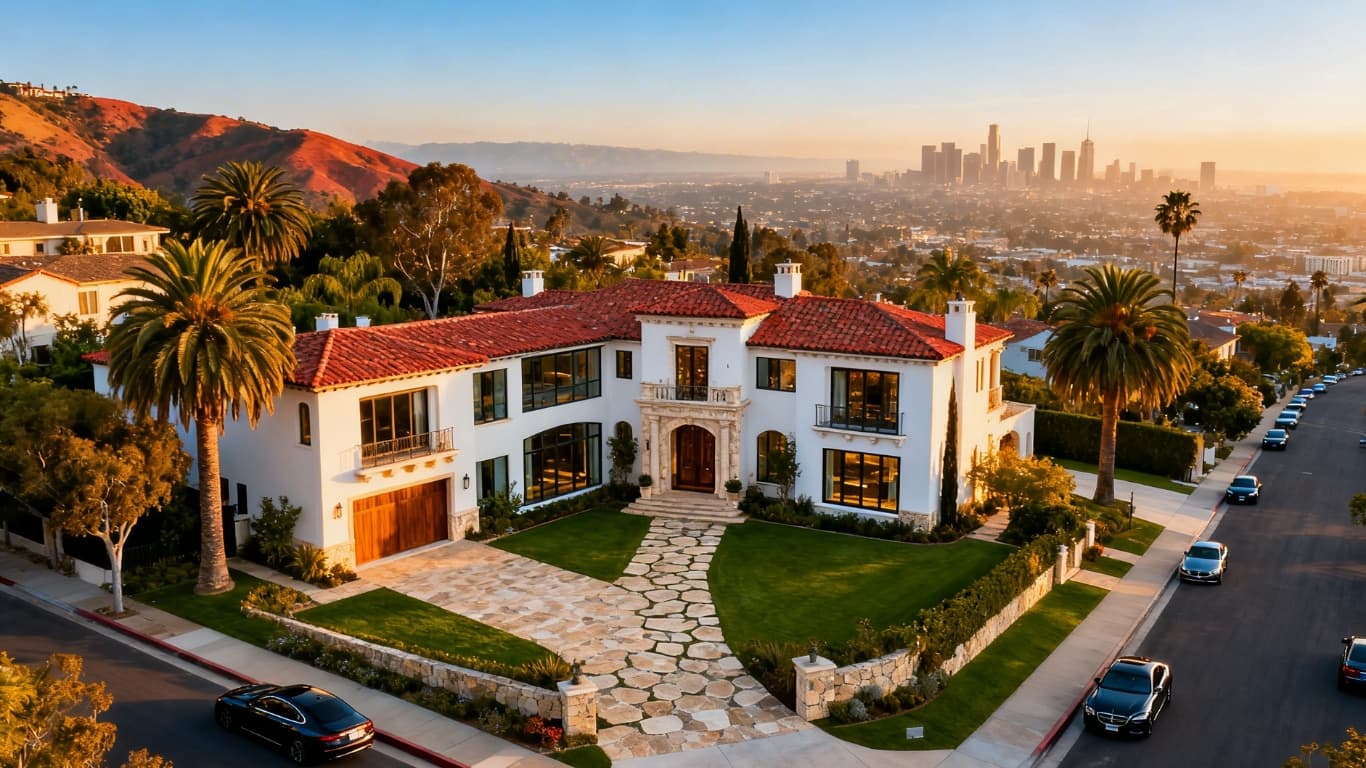
The U.S. luxury home market in 2026 splits cleanly into two clusters: the established coastal trophy markets where pricing has run hot, and the secondary metros where comparable square footage and amenity now trade at a meaningful discount. Knight Frank, Cushman and Wakefield and CBRE all map the same bifurcation, and the relative-value question is where the most disciplined buyer attention now sits.
Mansion Global and Bloomberg's Wealth desk have both flagged the same cluster of secondary metros as offering the strongest combination of architectural quality, supply discipline and cross-border buyer access. The Knight Frank Wealth Report for 2026 anchors the data: comparable luxury square footage in the secondary cities trades at 40 to 65 percent of the established prime markets.
- Several US cities continue to offer meaningful relative value for luxury home buyers in 2026, with prime inventory available at prices well below comparable New York, LA and Miami stock.
- We see Charleston, Savannah and the broader Lowcountry continuing to offer historic Southern luxury at attractive prices relative to peer prime coastal markets.
- Nashville, Charlotte and the broader Sun Belt prime enclaves offer modern luxury at meaningful discounts to the legacy coastal trophy markets, with corporate relocation tailwinds underpinning demand.
- Houston, Dallas and the Texas prime markets including Park Cities and Highland Park continue to offer significant relative value despite the property tax structure considerations.
- Boston, Philadelphia and the broader Northeast secondary markets offer prime urban access at materially more accessible prices than the top New York alternatives.
- For most considered luxury buyers we view value-oriented market selection as warranting explicit consideration, with patient capital often finding attractive entry points outside the obvious trophy markets.
- Who is this for?
- Luxury home buyers, investors and advisers evaluating US market selection, alongside the family offices, private bankers and brokers supporting prime market acquisitions.
- What is happening?
- A market analysis of which US cities offer the best value for luxury home buyers in 2026, covering Southern, Sun Belt, Texas and Northeast secondary markets with relative-value framing.
- When did this emerge?
- The article covers conditions through 2025 and 2026, with reference to the post-pandemic market dispersion and the latest prime segment pricing across regions.
- Where is this happening?
- The piece covers Charleston, Savannah, Nashville, Charlotte, Houston, Dallas, Boston, Philadelphia and the broader US prime market landscape.
- Why does it matter?
- Relative-value market selection often produces attractive luxury entry points in 2026, which is why patient capital benefits from considering options beyond the obvious trophy alternatives.
The Baseline Against New York and Los Angeles
The framing benchmark is New York's prime Manhattan inventory and Greater Los Angeles' Beverly Hills, Bel Air, and Pacific Palisades. Trophy product in these markets runs from 4,500 to 9,000 dollars per square foot for the best-located inventory, with peak transactions clearing materially above that band.
That is the baseline against which the value question is asked. Christie's International Real Estate and Sotheby's International Realty both publish comparative pricing data that makes the differential explicit.
The discount is not a quality discount in many cases. It is a geographic discount driven by buyer-cohort depth, brokerage concentration and the soft-power gravitational pull of the two coastal capitals.
Why Austin Now Leads the Secondary Luxury Conversation
The strongest secondary luxury market by aggregate metrics is currently Austin's prime Tarrytown and Westlake inventory. Knight Frank's U.S. residential desk and the Wall Street Journal have both flagged Austin as the secondary metro with the deepest institutional brokerage network now in place.
Pricing per square foot for prime Austin product runs in the 1,200 to 2,800 band, against the 4,500 to 9,000 of New York and Los Angeles prime. The infrastructure (international airport, federal and corporate hub status, restaurant ecosystem) now supports the cross-border buyer cohort that previously routed elsewhere.
FT Property and Bloomberg have both flagged Austin as the most plausible candidate to graduate fully into the coastal-tier pricing band within a five-year cycle.
The Houston River Oaks Thesis That Is Now Mature
The most defensible value play in U.S. luxury today is arguably Houston's River Oaks and Memorial inventory. The architecture is on par with the best of Bel Air, the lot sizes are larger, and the pricing per square foot runs at roughly 45 to 60 percent of comparable Los Angeles product.
Mansion Global and the Wall Street Journal's Houston coverage have both flagged River Oaks specifically as the trophy market where the buyer cohort is deep but the headline pricing has not yet reflected that depth. Christie's International Real Estate's Houston desk has reported a meaningful step-up in international inquiry through 2024 and 2025.
The structural argument is that Houston's energy-sector wealth has continued to compound, the cross-border family-office cohort is growing, and the inventory of architecturally significant trophy houses (1920s through 1960s) is finite and well-preserved.
Dallas Highland Park and Preston Hollow as the Quiet Trophy Bet
The third major Texas market, Dallas's Highland Park and Preston Hollow, sits as the most disciplined of the three. Pricing per square foot in Highland Park trophy product runs comparable to Houston's River Oaks at roughly 50 to 65 percent of Los Angeles prime equivalents.
What separates Dallas from the other Texas metros is the buyer-cohort discipline. The Highland Park bid book is dominated by long-tenured Dallas wealth, with a smaller cross-border presence than Austin or Houston. The result is steadier compounding and shallower drawdowns through the cycle.
Knight Frank's U.S. desk and Sotheby's International Realty's Texas coverage both flag Dallas as a structurally underpriced market relative to the comparable Atlantic and Pacific coast equivalents.
The Other Secondary Markets Worth the Search
Beyond Texas, the secondary luxury cluster that warrants explicit attention includes Nashville (the Belle Meade and Forest Hills bands), Charleston (the Battery and South of Broad), Charlotte (Myers Park and Eastover), and selected pockets of Greater Phoenix and Las Vegas. Each trades at 30 to 50 percent of comparable coastal prime pricing.
The Mountain West cluster - Aspen, Park City, Jackson Hole, Telluride - sits in a separate category. These markets have already graduated into the upper tier of U.S. luxury pricing, and the value argument no longer applies.
Bloomberg's Wealth desk and Mansion Global have flagged Nashville and Charleston as the most plausible candidates to follow Austin's pricing graduation over the next 24 to 36 months. The brokerage network is now in place and the cross-border cohort is growing.
The Buyer Cohorts Engaging the Secondary Cluster
The buyer cohort actively bidding in the secondary luxury markets is heterogeneous. U.S. tech-sector wealth, redirecting from California to lower-tax jurisdictions, is the largest single pool. Cross-border family-office capital from the UAE, Asia and selected European principals is the second.
The third is U.S. retirees from the coastal capitals who are repositioning into the secondary metros for tax and quality-of-life reasons.
Knight Frank's Wealth Report, FT Property and Bloomberg have all flagged the same pattern. The headline number that matters: secondary luxury inventory is now seeing 6-to-12-week time-on-market for trophy product, compressed from the 16-to-24-week range that prevailed in 2019.
What This Means for Buyers
Buyers seeking the strongest absolute trophy quality and the deepest secondary-market liquidity should concentrate the search in Austin, Houston and Dallas. The pricing discount versus coastal prime is meaningful, the brokerage network is mature, and the buyer-cohort depth is growing rather than shrinking.
For collectors of architecturally significant trophy houses, the Houston River Oaks and Dallas Highland Park inventory now offers the strongest combination of architectural quality and pricing arbitrage available in any major U.S. luxury market. The discount versus equivalent Los Angeles and New York prime is the alpha.
Christie's International Real Estate, Sotheby's International Realty, Engel and Voelkers and the long-tenured Texas brokerages are the right counterparties. The disciplined approach is structured legal counsel, explicit cross-border tax planning where applicable, and a willingness to commit to long-cycle holds in the trophy tier.
We last reviewed this analysis in May 2026.


Savvas Agathangelou
Savvas Agathangelou co-founded The Luxury Playbook and has spent years reporting from the prime postcodes the magazine covers — Mayfair, Knightsbridge, the Athens Riviera, Dubai's Palm crescents, and the southern Mediterranean coastlines where the world's wealthy keep coming back. His background is in international hospitality, and that frame shapes how he writes about property: the developer's choices, the architect's signature, the agency's bench of named brokers, the building's service standard once the buyer moves in. He files developer spotlights, agency profiles, and the seasonal "Properties That Defined" listicles, and he hosts the magazine's founder-and-leadership interviews on the Voices side.