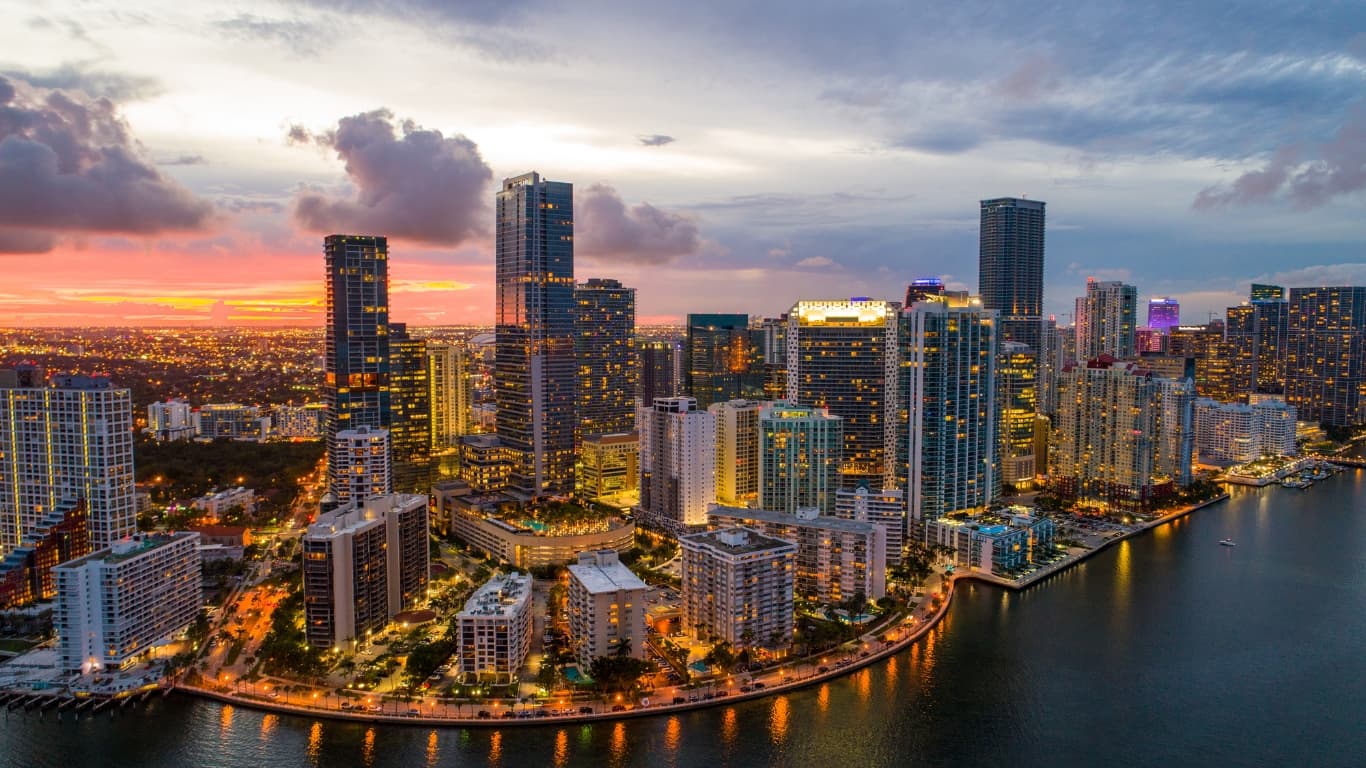
Houston has quietly outpaced the conventional wisdom on where the next-generation US property markets sit. The 2026 Houston real estate market opens with a median sale price of $335,000, a diversified employment base spanning energy, healthcare, tech and aerospace, and a regulatory regime that has not tipped against owners or landlords. The Houston real estate market still reads as one of the more accessible major American metros for buyers tracking value.
The Houston Association of Realtors, alongside the city brokerages that publish the cleanest monthly data (Compass, Coldwell Banker, Douglas Elliman in Texas), describes a market that cooled from its 2021-2022 peak without softening structurally. The median listing price sits at $329,900, down 1. 2 percent year-on-year.
The median sale price has climbed to $335,000, up 5. 7 percent.
That gap between listing and closing is the story buyers care about. Well-located move-in-ready homes are still being competed for, particularly in suburban pockets and inner-loop neighborhoods with strong school districts. National Association of Realtors data confirms Houston runs tighter than its sticker price suggests.
- Houston remains one of the most affordable major metropolitan markets in the United States, with median sale prices well below the national average despite consistent population growth.
- We see energy sector employment continuing to underpin Houston demand, although diversification into healthcare, aerospace and logistics has reduced the historical commodity cycle exposure.
- Inventory has loosened materially in 2026, with months-of-supply rising toward balanced-market territory across most submarkets after the post-pandemic crunch.
- Suburban masters including The Woodlands, Sugar Land and Katy continue to capture relocation demand, with newer build inventory expanding faster than the inner-loop stock.
- Property tax burden remains the structural drag on Houston ownership economics, with combined rates among the highest in the country offsetting the lower absolute prices.
- For most considered buyers we view Houston as one of the more accessible large-metro entry points in 2026, although tax planning warrants the same attention as the purchase itself.
- Who is this for?
- Buyers and investors evaluating Houston for primary residence or income property, alongside relocation clients and the brokers, lenders and tax advisers supporting Houston-area transactions.
- What is happening?
- A market overview and 2026 forecast for the Houston real estate market, covering price levels, inventory dynamics, employment drivers, submarket trends and the property tax considerations.
- When did this emerge?
- The article covers conditions through 2025 and 2026, with reference to the post-pandemic inventory cycle and the latest energy and broader sector employment data shaping demand.
- Where is this happening?
- The piece focuses on the Houston metropolitan area, including inner-loop neighbourhoods, The Woodlands, Sugar Land, Katy and the broader Harris County submarket landscape.
- Why does it matter?
- Houston offers affordability that few comparable large metros can match in 2026, which is why understanding the structural tax and submarket dynamics matters before committing capital here.
The Houston housing market today
Homes spend an average of 46 to 48 days on the market, slightly longer than 2024, but the sale-to-list price ratio of 99. 05 percent confirms that homes are closing close to asking. Inventory is broadly stable, with new listings keeping pace with slower transaction volumes.
Realtor.com tracks Houston in the upper tier of large-metro absorption rates for affordable inventory.
The most competitive segment, properties under $400,000 in fast-growing suburbs, continues to draw multiple offers from first-time buyers. The steady out-of-state in-migration that defines Houston is concentrated in this segment.
- Median listing price: $329,900, down 1.2 percent YoY
- Median sale price: $335,000, up 5.7 percent YoY
- Average days on market: 46 to 48 days
- Sale-to-list price ratio: 99.05 percent
- Strongest demand: affordable suburban homes and high-school-district pockets in the inner loop
Houston neighborhoods defining 2026
Houston is unusually large for a major American metro, which means the city operates as several distinct property markets stacked into one. The brokers tracking the prime-residential side (Compass and Coldwell Banker most consistently) distinguish between inner-loop heritage neighborhoods, redevelopment-driven submarkets, and the suburban edges where family buyers concentrate. We see a measured rotation from one to the next as cycle conditions shift.
The Heights
The Heights remains one of Houston's most sought-after neighborhoods, blending a historic streetscape with contemporary development. Walkable streets, boutique retail and proximity to downtown make it a magnet for both families and young professionals. The median home price sits at approximately $675,000, up 3.
8 percent year-on-year, with inventory tight enough that homes routinely sell above asking.
Architecturally, the Heights is where Houston's bungalow restoration culture lives. Interior designers and architects who specialize in turn-of-the-century preservation work concentrate here.
Montrose
Known for its eclectic culture and central location, Montrose appeals to creative professionals and urban-minded buyers who want character and convenience. A mix of period properties and new construction creates breadth across price points. The median sits at $580,000, up a steady 3.
2 percent annually.
Resale demand is consistent. Updated single-family homes and townhouses move quickly when listed correctly.
Midtown
Midtown attracts young professionals and Texas Medical Center employees who want urban living with easy access to nightlife and transit. Townhome developments have risen steadily over the past decade. The median price is around $395,000, up 2.
5 percent from 2024.
Spring Branch
Spring Branch has emerged as one of Houston's most dynamic redevelopment stories. Its proximity to major employment corridors paired with relative affordability against inner-loop neighborhoods has drawn steady buyer attention. The median home price sits near $365,000, up 4.
1 percent year-on-year.
Third Ward
Third Ward is one of Houston's oldest neighborhoods and one of its fastest-changing. Gentrification is moving quickly, driven by its location near the University of Houston and downtown. The median sits at around $275,000, a 5.
6 percent year-on-year increase.
Restoration is the dominant theme. Buyers here are typically working with architects on period homes rather than building new.
Median prices and price per square foot
| Neighborhood | Median Listing Price | Price per SqFt |
|---|---|---|
| The Heights | $675,000 | $340 |
| Montrose | $580,000 | $325 |
| Midtown | $395,000 | $310 |
| Spring Branch | $365,000 | $275 |
| Third Ward | $275,000 | $240 |
| Eastwood | $295,000 | $245 |
| West University | $1,250,000 | $430 |
| Sharpstown | $240,000 | $185 |
| Garden Oaks | $590,000 | $310 |
| Oak Forest | $510,000 | $290 |
Houston rental market in 2026
Affordability pressures in homeownership and elevated mortgage rates have pushed more residents into the rental market, and the demographic data backs the move. The average rent across Houston sits at approximately $1,395 per month, a 3. 4 percent year-on-year increase.
Rents remain comfortably below national averages given the city's economic weight.
Rents vary sharply by neighborhood. One-bedrooms in Montrose and the Heights now lease between $1,700 and $2,100, while Midtown averages around $1,850. Spring Branch one-bedrooms remain comfortably under $1,500, and Third Ward sits in the $1,100 to $1,300 range, supported by University of Houston student demand.
The vacancy rate of 6.2 percent is slightly below the prior year. The tightest occupancy clusters near major employment hubs and inner-loop neighborhoods.
What is shaping the Houston map in 2026
Several forces are pushing the Houston market in the same direction at once. Population growth remains the structural story. The metro added more than 120,000 residents in 2024, drawn by lower cost of living, the absence of a state income tax, and an expanding employment base.
US Census Bureau migration estimates and Bureau of Labor Statistics employment data both confirm Houston as a top-three large-metro destination.
The city's economy continues to anchor on energy, but healthcare around the Texas Medical Center, plus aerospace and logistics, has meaningfully diversified the demand profile. Buyer flows from Austin, Dallas and Los Angeles have shifted attention here over the past three years, and the pricing data backs the migration story.
Mortgage rates between 6. 5 and 7 percent on the 30-year fixed have shifted activity toward the rental sector and reduced competition in the $400K-$600K purchase range. That has eased price acceleration citywide without breaking it.
Houston's relatively lenient zoning regulations have not insulated the city from labor shortages, rising construction costs or limited central-area land.
Urban redevelopment continues to reshape parts of the inner loop. Mass-transit expansions, flood-mitigation works and mixed-use developments are revitalizing neighborhoods like Third Ward, Eastwood and Near Northside, where buyer attention has shifted noticeably over the past three years.
What this means for buyers
The picture for 2026 reads as measured, demand-driven growth rather than boom-cycle volatility. Home prices are projected to rise between 3 and 5 percent through 2026, with the strongest movement in the mid-priced suburbs and gentrifying neighborhoods near downtown and major employment zones. Spring Branch, Independence Heights and parts of the East End are likely to outperform citywide averages.
Rents are forecast to climb between 3.5 and 5 percent, with stronger growth in one- and two-bedroom units. Inventory below $400,000 will stay competitive, keeping pressure on the entry tier.
For the buyer who values proximity to a Tier-1 medical institution, a major energy economy, or one of the most active urban-redevelopment maps in the country, Houston still reads as one of the more accessible major American property markets. The buyer demographic is shifting, younger, more national and more design-driven, and the neighborhoods responding most clearly to that shift are the ones quietly outperforming the headline averages.
We last reviewed this analysis in May 2026.
Frequently asked questions
How is the Houston housing market evolving in 2026?
Home prices are projected to rise 3 to 5 percent, supported by population growth, employment stability and limited inventory in central neighborhoods. The Houston Association of Realtors data lines up with NAR's national-tier-2 metro forecasts.
Which Houston neighborhoods are seeing the most buyer attention?
Spring Branch, Third Ward, Independence Heights and parts of the East End are drawing the most consistent demand from buyers tracking ongoing redevelopment, transit expansion and flood-mitigation works.
How fast are homes selling in Houston?
Homes are averaging 46 to 48 days on market, with a sale-to-list ratio near 99 percent. Move-in-ready homes in school-anchored inner-loop pockets continue to sell above asking.
How does Houston compare on affordability against other major US cities?
Houston's home prices and rents remain meaningfully lower than Austin, Dallas, Los Angeles and New York while offering comparable economic opportunity. The absence of a state income tax sharpens the cost-of-living gap.


Savvas Agathangelou
Savvas Agathangelou co-founded The Luxury Playbook and has spent years reporting from the prime postcodes the magazine covers — Mayfair, Knightsbridge, the Athens Riviera, Dubai's Palm crescents, and the southern Mediterranean coastlines where the world's wealthy keep coming back. His background is in international hospitality, and that frame shapes how he writes about property: the developer's choices, the architect's signature, the agency's bench of named brokers, the building's service standard once the buyer moves in. He files developer spotlights, agency profiles, and the seasonal "Properties That Defined" listicles, and he hosts the magazine's founder-and-leadership interviews on the Voices side.