
The US property markets we read most closely in 2026 are the ones the headlines keep missing. The American property markets actually defining 2026 are not the headlines. The structural movement isn't in Manhattan or San Francisco, both of those have well-documented stories.
It's in a tier of cities that have crossed from "watched" to "established" over the past three years: Austin, Nashville, Charleston, Raleigh-Durham, Boise, the secondary South Florida markets beyond Miami Beach, and the upper Mountain West.
Mansion Global, Architectural Digest and Robb Report Real Estate have all written extensively about the buyer migration that has reshaped these markets. This piece is our editorial map.
Compass and Douglas Elliman, the two largest brokerage networks operating across the prime-residential American market, describe a pattern that has now been visible for several cycles: structural inbound migration from the coastal high-tax states (California, New York, Massachusetts) into the Sun Belt and Mountain West, with corresponding price discovery in the receiving cities. The buyer profile is more diverse than the early-pandemic relocations: not just remote-work professionals but multi-generation family relocations, fund-manager second-home buyers, and a steady flow of the international wealth that increasingly treats American secondary cities as a credible counterpart to traditional European prime.
- A handful of US markets including Austin, Nashville, Charlotte and the Florida coastal cities continue to define the broader narrative as the 2026 housing landscape takes shape.
- We see Sun Belt outperformance continuing to dominate the regional dispersion story, with the broader Northeast and coastal California working through their respective post-pandemic resets.
- Insurance availability and climate exposure have moved from background factors to active diligence considerations across the most exposed Florida, California and Gulf Coast markets.
- Mortgage rate normalisation around six to seven percent has reshaped affordability calculations across every market, with the lock-in effect of legacy debt still constraining inventory.
- Corporate relocation activity continues to drive market selection, with the most attractive employer destinations seeing meaningful housing demand support across cycles.
- For most considered buyers we view 2026 as a year where market selection matters more than at any recent point, with the regional dispersion creating both opportunities and risks.
- Who is this for?
- Buyers, investors, advisers and family office staff evaluating which US markets to allocate capital to, alongside relocation clients weighing market selection across the country.
- What is happening?
- A market analysis of the US property markets defining 2026, covering Sun Belt outperformance, climate and insurance dynamics, mortgage rate effects and corporate relocation drivers.
- When did this emerge?
- The article covers conditions through 2025 and 2026, with reference to the post-pandemic cycle, the mortgage rate normalisation and the latest regional dispersion patterns.
- Where is this happening?
- The piece covers Austin, Nashville, Charlotte, the Florida coastal cities and the broader US regional dispersion landscape across the Sun Belt, Northeast and coastal California.
- Why does it matter?
- Regional dispersion has widened materially in 2026, which is why explicit awareness of the markets defining the cycle matters more than national-average framing for any allocation.
The Sun Belt prime markets
Austin, Texas
Austin's prime-residential market sits at the top of the Sun Belt conversation. The neighborhoods reading most strongly into 2026 are Tarrytown, Westlake, Old Enfield and the Austin Country Club corridor, historic neighborhoods with mature tree canopy and discrete architectural quality. Compass's Austin office reports buyer profiles dominated by Bay Area and East Coast relocations, with a meaningful share of international (predominantly Mexican and European) interest.
Median home prices in the prime Austin neighborhoods sit between $2 million and $5 million, with the Westlake submarket producing the strongest 2025 transaction volume.
Nashville, Tennessee
Nashville's quietly maturing market is one of the more interesting reads. Belle Meade, Forest Hills and Green Hills are the long-established prime addresses; the East Nashville and 12 South neighborhoods have produced the more talked-about architectural inventory of the past three years.
The city's structural draw, no state income tax, an entertainment-industry economy that has thickened with the relocation of country music and adjacent businesses, has shifted Nashville from "rising" to "established".
Median home prices in Belle Meade now sit comfortably above $3 million.
Charleston, South Carolina
Charleston's prime market has been one of the steadiest performers of the Southeast, anchored by South of Broad and the historic district. The architectural depth, Federal-period and Greek Revival single houses, the carefully preserved street grid, distinguishes Charleston from the typical Sun Belt growth city. Prices in the historic district run $2 million to $7 million for the better single houses, with prime Mount Pleasant submarkets adding a complementary modern-build offer.
Miami and South Florida secondary markets
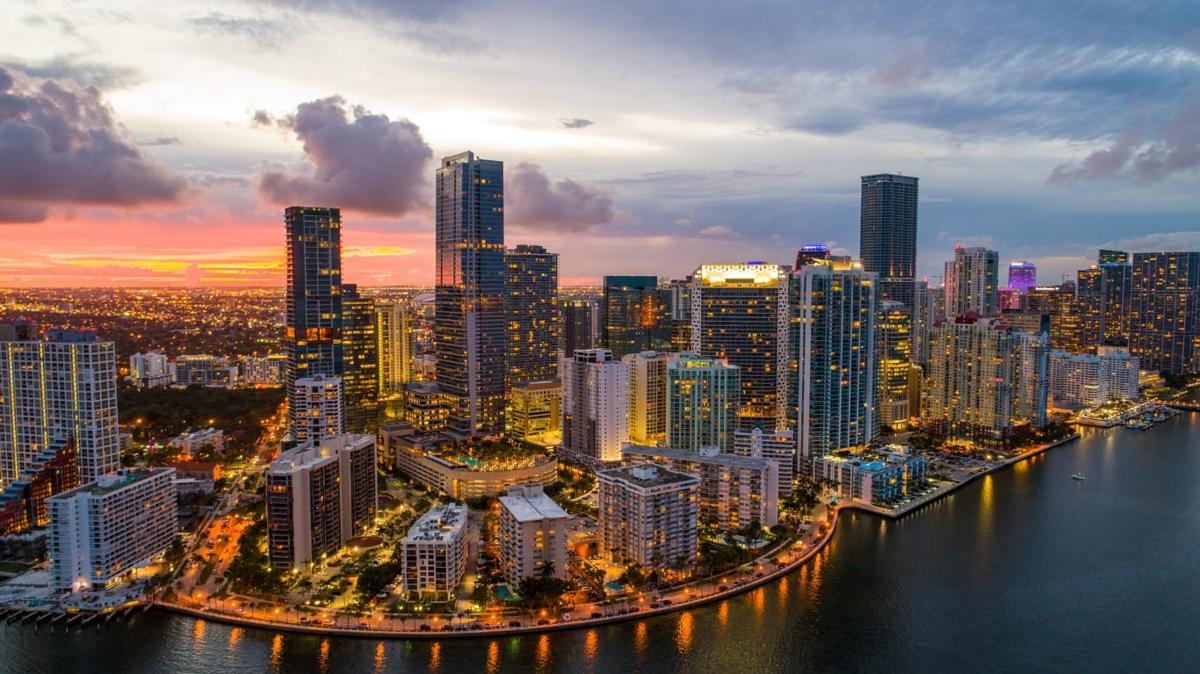
Beyond Miami Beach and Coral Gables, the secondary South Florida markets have come into clearer focus: Coconut Grove, Pinecrest, Key Biscayne, and (for the new ultra-prime tier) the Indian Creek and Bay Point pockets. Architectural Digest's Miami coverage has tracked the architectural shift carefully, the renewed interest in mid-century Miami modernism, the emergence of significant contemporary commissions by names like Carlos Ott and Renzo Piano.
Prices for the prime Coral Gables and Coconut Grove inventory now run $5 million to $20 million for the better-sited homes.
Raleigh-Durham, North Carolina
The Research Triangle has emerged as a credible East Coast tech-economy market. Cary, Chapel Hill and the historic Raleigh neighborhoods (Hayes Barton, Five Points, Boylan Heights) anchor the prime read. The combination of strong university anchors (Duke, UNC, NC State), a thickening biotech and tech employment base, and architectural inventory at meaningfully lower price points than the established Northeast or coastal California markets is the structural draw.
The Mountain West prime markets
Boise, Idaho
Boise's prime-residential market has produced some of the steadiest year-on-year movement of any American secondary city. The historic North End and East End neighborhoods, the foothills inventory along Bogus Basin Road, and the new Eagle and Meridian submarkets each tell a different part of the Boise story. Buyer profile leans heavily toward Bay Area, Pacific Northwest and Mountain West relocations.
Park City, Utah
Park City's prime-mountain inventory has thickened materially. Deer Valley, Old Town, the Promontory community and the Tuhaye golf-and-mountain community are the four main prime concentrations. Median price for the Deer Valley ski-in/ski-out inventory now runs $7 million to $25 million.
Bozeman and the Yellowstone Club, Montana
The Yellowstone Club's prime-residential inventory and the broader Bozeman/Big Sky market have produced some of the most-watched American mountain real estate transactions of the past five years. The Yellowstone Club's structural exclusivity (private ski/golf community) has produced a buyer base of the highest-end American and international wealth.
Sun Valley, Idaho
Sun Valley's discrete, low-key prime-residential market, Ketchum, Hailey, the Wood River Valley, has stayed studiedly understated. The architectural quality of the better houses (timber frame, mountain modern, the discrete houses set back from the road) is one of the more interesting Mountain West stories.
The Northeast secondary prime markets
Greenwich and Westchester County
The legacy Northeast prime markets, Greenwich, the Westchester County backcountry, the Hamptons, remain structural anchors of American prime-residential. Greenwich's deeper-back-country inventory (Round Hill Road, Lake Avenue) has held its character through cycles. The Hamptons' East Hampton, Southampton and Sagaponack continue to anchor the New York high-end.
The Berkshires and Litchfield County
The smaller Northeast country-house markets, the Berkshires, Litchfield County in Connecticut, the Hudson Valley, have come into clearer focus over the past five years. Architectural Digest has covered the architectural rediscovery of the better period houses extensively.
What's driving the structural movement
Several forces are pushing in the same direction. The first is the well-documented Sun Belt and Mountain West employment migration, driven by tax considerations, climate preferences, and the more flexible work-from-anywhere arrangement that has stuck for many high-income households.
The second is the architectural rediscovery of secondary American cities, which has shifted buyer interest toward markets with genuine architectural depth (Charleston, Savannah, the better Texas and Tennessee historic neighborhoods) and away from greenfield development.
The third is the broadening international interest, particularly Mexican, European and Asian buyers, in American secondary cities as a complement to (or replacement for) European prime.
Where the American prime market reads now
The story is no longer the migration itself; the migration is established. The story is which cities have the architectural and cultural depth to sustain prime-residential ownership through cycles. Austin, Nashville, Charleston, Park City, Greenwich, the Hamptons and the Yellowstone Club tier of mountain markets all read as structurally established.
The Coral Gables/Coconut Grove tier of South Florida, the Boise foothills, and the Raleigh-Durham research-triangle inventory read as the more interesting next-tier stories.
For the European counterpart conversation, our coverage of the European prime markets covers Mayfair, Paris's Sixth and Seventh, Lake Como, the Costa del Sol and Athens.
Frequently asked
Which American cities are seeing the strongest prime-residential activity?
Austin, Nashville, Charleston, the Park City and Yellowstone Club mountain markets, Coral Gables/Coconut Grove (South Florida secondary), and Boise read as the most-watched markets through 2026.
How are international buyers approaching American secondary cities?
Mexican, European and Asian buyers are increasingly treating American secondary cities as credible counterparts to European prime. Compass and Douglas Elliman both report material international interest in Austin, Miami secondary and Mountain West inventory.
Which neighborhoods anchor each prime market?
Austin: Tarrytown, Westlake, Old Enfield. Nashville: Belle Meade, Forest Hills, Green Hills. Charleston: South of Broad, the historic district.
Park City: Deer Valley, Old Town, Promontory. Greenwich: the deep back country.
What this means for buyers reading the US property markets
The US property markets that defined 2026 share two traits: structural supply tightness in the prime tier and concentrated international interest from Latin America, the Gulf and Asia. Buyers reading Miami, Austin, Nashville, the Hamptons and Palm Beach should anchor pricing to the Knight Frank Wealth Report and the Douglas Elliman / Miller Samuel quarterly reads rather than headline indices. Christie's International Real Estate and Sotheby's International Realty have published commentary worth tracking through Q4.
We last reviewed this analysis in May 2026.