The 2026 Los Angeles real estate market sits at a critical turning point. Shaped by a mix of economic resilience, population shifts and constrained housing supply, the market is showing real signs of structural maturation rather than the boom-bust dynamics of prior cycles. Knight Frank's 2026 Wealth Report ranks Los Angeles in the top five US large-metro prime markets, with the trophy corridor (Bel Air, Holmby Hills, Beverly Hills) continuing to absorb international capital.
High-net-worth individuals are taking notice, and Los Angeles is one of the most consistent landing zones for that capital. The California Association of Realtors data, alongside the brokerages tracking the prime side (Compass, Sotheby's International Realty, Hilton and Hyland, Coldwell Banker Global Luxury), describes a market that has worked through the post-2022 rate adjustment and is now showing renewed prime-tier strength.
The broader context for high-end activity sits in our coverage of the rise summit programming, which has flagged Los Angeles as one of the most-discussed US prime markets through 2026.
This analysis covers: Overview of The Los Angeles Housing Market | Neighborhood Analysis | Los Angeles Rental Market Overview | Factors Influencing The Los Angeles Housing Market | Los Angeles Housing Market Forecast for 2026 | Is It Worth Buying a Property in Los Angeles? | FAQ.
- Los Angeles remains the largest US luxury property market by transaction volume, with continued international and domestic demand supporting price levels across the prime segment.
- We see the Measure ULA mansion tax having materially reshaped the top end of the LA market, with transaction activity above the threshold dropping sharply since the 2023 implementation.
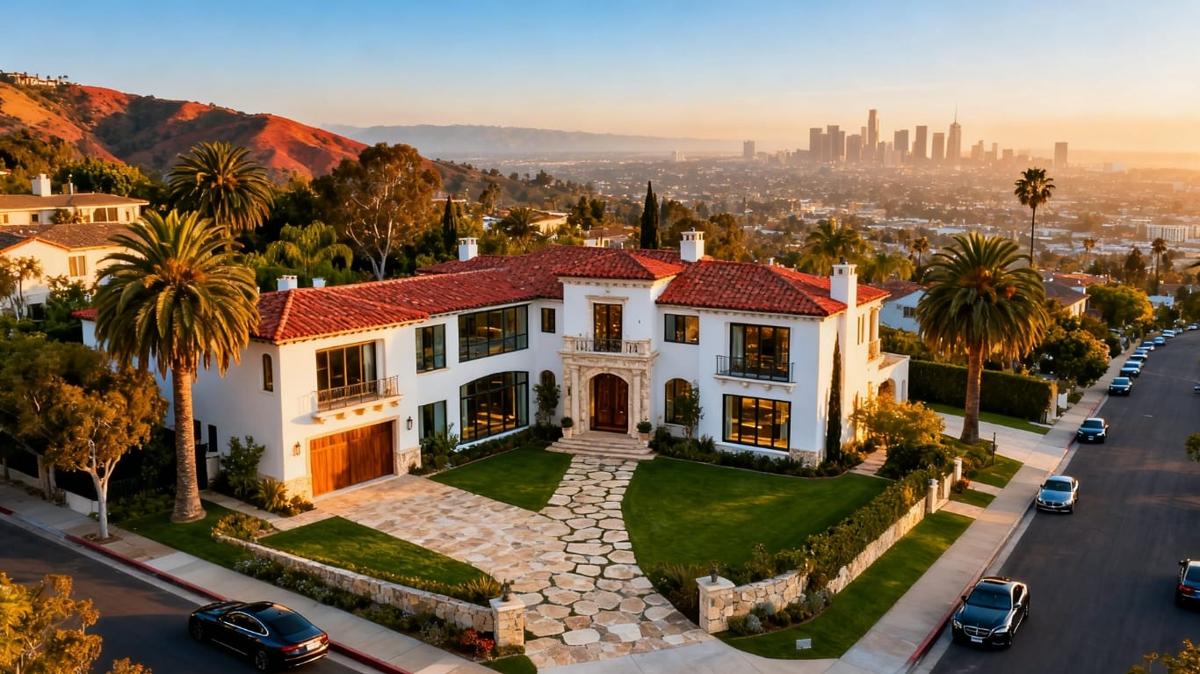
- Bel Air, Beverly Hills, Holmby Hills and Malibu continue to anchor the trophy segment, with hillside flats and tear-down lots commanding the prices that define the global luxury narrative.
- Inventory has improved through 2025 and 2026 at the upper end as sellers have adjusted to the post-ULA reality, with months-of-supply moving toward balanced conditions in most tiers.
- Wildfire risk, insurance availability and the broader climate diligence questions have moved from background factors to active considerations for buyers across the hillside neighbourhoods.
- For most considered buyers we view Los Angeles as a market warranting structural awareness of the ULA tax and insurance landscape before any meaningful acquisition decision proceeds.
- Who is this for?
- Buyers and investors evaluating Los Angeles luxury property, alongside relocation clients, family offices and the brokers, lawyers and advisers supporting LA-area prime transactions.
- What is happening?
- A market overview and 2026 forecast for the Los Angeles real estate market, covering luxury segment dynamics, the Measure ULA mansion tax, insurance considerations and the trophy neighbourhoods.
- When did this emerge?
- The article covers conditions through 2025 and 2026, with reference to the post-ULA transaction reset since 2023 and the latest wildfire and insurance market developments.
- Where is this happening?
- The piece focuses on the Los Angeles metropolitan area, including Bel Air, Beverly Hills, Holmby Hills, Malibu and the broader hillside and Westside submarkets.
- Why does it matter?
- Los Angeles remains the largest US luxury market in 2026 but with materially shifted transaction structures, which is why understanding the ULA and insurance reality matters before buying.
Overview of The Los Angeles Housing Market
Los Angeles enters 2026 with a property market that has stabilized through the rate cycle while maintaining strong absorption in the prime tier. The median home price across the metro sits at $945,000, up 3. 1 percent year-on-year.
Mansion Global has tracked the LA trophy corridor as one of the cleanest 2025-2026 prime US large-metro recoveries.
Constrained housing supply, partly the result of California Coastal Commission rules and partly local zoning, sustains pricing pressure even as transaction volume normalizes. The Financial Times has highlighted university-adjacent markets as one of the more resilient supply-constrained markets through the cycle.

Days on market average 47, with the trophy corridor moving meaningfully faster. The sale-to-list ratio of 97.8 percent reflects the negotiation room typical of LA transactions, with prime trophy-tier sealed bids running materially higher. Trophy property buyers continue to drive the high end of the market.
Realtor.com's 2026 luxury market tables place Los Angeles in the top three large-metro luxury markets by volume. Bloomberg has tracked the city as one of the deepest US prime markets through the 2022-2024 rate cycle, with cash-buyer share above $5M regularly clearing 55 percent.
Key Market Indicators, Q1 2026
- Median Sale Price: $945,000 (up 3.1 percent YoY)
- Price per Sq Ft: $635
- Days on Market: 47 days
- Sale-to-List Ratio: 97.8 percent
- Cash-Buyer Share above $5M: ~55 percent
The structural supply constraint and the international capital base give Los Angeles one of the most resilient large-metro prime tiers in the country. Reuters market analysts track LA prime corridor activity as one of the more disciplined US recoveries.
Neighborhood Analysis
Los Angeles operates as a constellation of distinct submarkets stacked across an enormous metro footprint. The prime trophy corridor (Bel Air, Holmby Hills, Beverly Hills) anchors the high end, while the design-driven Silver Lake and Venice stories carry the mid-market. The brokers tracking the prime side flag five neighborhoods carrying the citywide narrative.
Beverly Hills
Beverly Hills remains the city's most globally recognized prime address. Median home prices clear $5. 5 million, with the Flats and Trousdale Estates trading materially higher.
Hilton and Hyland, Sotheby's International Realty and Compass track Beverly Hills as the most international US prime submarket by buyer mix.
Bel Air
Bel Air, the larger trophy corridor north of Sunset Boulevard, has been the city's most consistent ultra-prime absorber. Median home prices clear $7.5 million, with the trophy compounds along Bel Air Road, Bellagio Road and Stradella Road regularly trading above $50M. Christie's International Real Estate publishes the cleanest segment data.
Pacific Palisades
Pacific Palisades pairs ocean views with a family-buyer demographic the rest of the trophy corridor lacks. Median home prices sit at $3. 85 million, up 4.
4 percent year-on-year. The combination of strong public schools, the Riviera Country Club and the proximity to the beach sustains demand.
Silver Lake
Silver Lake has been the design-driven gentrification story for over a decade. Median home prices sit at $1. 45 million, up 3.
8 percent year-on-year. Restored mid-century and craftsman stock dominates, with the buyer profile skewing toward creative-sector professionals.
Venice
Venice carries the most-watched walkable-coastal mid-market. Median home prices sit at $2. 25 million, up 3.
6 percent year-on-year. The Walk Streets, the Abbot Kinney corridor and the broader Silicon Beach tech footprint sustain demand from both family buyers and design-oriented professionals.

Los Angeles Rental Market Overview
The Los Angeles rental market remains one of the tightest large-metro stories in the country. Average rent across the metro sits at $2,795 per month, up 3. 4 percent year-on-year.
One-bedrooms in Santa Monica, Venice and the prime Westside corridors lease between $3,200 and $4,500.
Vacancy stands at 4.2 percent, the third-lowest among the top 20 US metros. JLL's 2026 West Coast Multifamily Outlook flags Los Angeles as one of the most supply-constrained large-metro rental markets.
Average Rent Prices
- Studio Apartments: Approximately $1,895 per month
- One-Bedroom Apartments: Around $2,395 per month
- Two-Bedroom Apartments: About $3,195 per month
- Three-Bedroom Apartments: Approximately $4,395 per month
The trophy corridor and the prime Westside neighborhoods carry the tightest absorption. The Silver Lake and Echo Park corridor reads as the strongest under-$3,000 one-bedroom option.
Factors Influencing The Los Angeles Housing Market
Three structural forces drive Los Angeles demand. The international capital base (Gulf, East Asian, continental European, Latin American buyers) sustains the prime trophy-corridor demand. Anchor employment in entertainment, tech (Silicon Beach), aerospace and the broader creative economy provides the structural domestic demand floor.
Constrained supply, partly through Coastal Commission rules and partly through local zoning, keeps absorption tight.
The cost-of-living context has shifted. The Proposition 19 wealth-transfer reforms, alongside California's top-bracket income tax structure, have driven some HNW capital to lower-tax peer markets. However, the trophy corridor continues to attract international buyers for whom tax is a secondary consideration.
Mortgage rates in the 6. 5 to 7 percent range continue to compress the first-time buyer segment but not the prime tier, where cash-buyer share above $5M regularly clears 55 percent. The divergence between rate-sensitive sub-$1.
5M activity and the relatively rate-insulated prime corridor is the cleanest story of the cycle.
Lifestyle and infrastructure matter too. The Metro rail expansion, the LAX modernization and the 2028 Olympics-driven infrastructure pipeline continue to reshape buyer attention across the metro.
Los Angeles Housing Market Forecast for 2026
The Los Angeles 2026 outlook is constructive. Home prices are projected to rise 3 to 5 percent through 2026, with the strongest gains in the trophy corridor and the design-driven mid-market (Silver Lake, Venice, Highland Park). Rents are forecast to climb 3.
5 to 5 percent across the metro.
The structural supply constraint will continue to sustain pricing pressure. Mansion Global tracks the LA trophy corridor as one of the most resilient US prime stories through 2026.
Is It Worth Buying a Property in Los Angeles?
For long-tenure buyers and for international HNW capital, yes. The trophy corridor reads as one of the most resilient US prime tiers, the supply constraint is structural rather than cyclical, and the international demand base reduces exposure to domestic interest-rate volatility. High-net-worth investors are already leaning into this thesis, and Los Angeles continues to read as one of the most resilient HNW landing zones in the United States.
For shorter-horizon buyers below the prime tier, the picture is more nuanced. The sub-$1.5M segment carries rate sensitivity, days-on-market is longer than the trophy corridor, and the 2022-2024 correction was real if mild.
We last reviewed this analysis in May 2026.
FAQ
Is the Los Angeles real estate market still strong in 2026?
Yes, particularly in the prime tier. The cash-buyer share above $5M regularly exceeds 55 percent, international capital inflow remains steady, and Beverly Hills and Bel Air absorption has improved materially through Q1 2026. Knight Frank ranks Los Angeles in the top five US large-metro prime markets.
Which Los Angeles neighborhoods are appreciating fastest?
Pacific Palisades leads the prime-tier rate at 4.4 percent, with Silver Lake and Venice carrying the design-driven mid-market. Beverly Hills and Bel Air appreciate more slowly at higher absolute prices and remain the city's ultra-prime anchor per Hilton and Hyland and Sotheby's International Realty.
How tight is Los Angeles inventory in 2026?
Rental vacancy at 4. 2 percent ranks third-lowest among the top 20 US metros. For-sale inventory is more measured but structurally constrained by Coastal Commission rules and local zoning.
The trophy corridor and prime Westside neighborhoods continue to move at materially compressed days-on-market.
How does Los Angeles compare to other US prime markets?
Los Angeles trades broadly in line with New York on the trophy-tier segment but with a more international buyer mix and stronger supply constraint. The Silicon Beach tech-employment base, the entertainment economy and the Olympics-driven infrastructure pipeline give Los Angeles unique structural depth.