The New York City real estate market is one of the most dynamic and closely watched property markets on the planet. As of Q1 2026, the market is showing clear signs of resilience amid shifting macroeconomic conditions, including interest rate stabilization, moderated inflation, and evolving buyer preferences.

Whether you’re an investor, a prospective homeowner, or simply keeping tabs on where the smart money is moving, understanding the current state and trajectory of this market is essential for making well-timed decisions.

Historically, New York City has been a stronghold of real estate value and appreciation, supported by its global economic influence, limited housing supply, and persistent demand across residential and rental sectors. But the post-pandemic market has brought real shifts in pricing trends, buyer behaviors, and neighborhood desirability that you need to understand before making any move.

In 2026, the outlook is more complex than it’s been in years. Median home prices, inventory levels, and days on market have all experienced meaningful changes, reflecting a recalibration from the rapid movements seen in previous years. On top of that, the city’s rental market is undergoing a transformation driven by demographic trends and migration patterns both within and outside the metro area.

This deep-dive covers the New York City housing market from every angle, giving you a clear picture of property values, rental yields, neighborhood dynamics, and where the real investment opportunities lie right now.

Overview of The New York City Housing Market

As of Q1 2026, the New York City housing market is navigating a phase of stabilization following several years of volatility. What you’re seeing now is moderate price growth, constrained inventory, and a more selective buyer pool than at any point during the pandemic era.

Median home prices have appreciated modestly, reflecting steady demand in prime boroughs and a cooling off in previously overheated submarkets.

According to the most recent data, the median home sale price in New York City sits at approximately $770,000, marking a 2.1% increase year-over-year. That’s a clear deceleration from the double-digit growth seen during the pandemic boom, yet it also shows just how well this market holds its value even when the rest of the country slows down.

Brooklyn and Manhattan are the two most active boroughs right now. Brooklyn posted a 3.8% rise in median home prices, while Manhattan came in with a more modest 1.5% gain.

Inventory levels have stayed tight, with active listings down by nearly 9% compared to Q1 2025. That scarcity keeps pricing power firmly in sellers’ hands, even as the pace of sales has moderated.

The average number of days on market has climbed to 62 days, up from 48 days a year prior. That tells you the market has found a more balanced footing, one that slightly favors well-capitalized buyers or anyone willing to act decisively on a well-priced property.

The market composition is also shifting toward smaller units. Condominiums and one-bedroom apartments are outperforming larger multi-bedroom properties in both turnover and pricing momentum. Affordability pressures are driving this, along with strong demand from younger professionals and investors looking for accessible entry points.

Price per square foot currently averages around $880 citywide, though that number swings widely depending on location, building type, and amenities.

New developments in Long Island City, Hudson Yards, and parts of Downtown Brooklyn are commanding premiums. Meanwhile, more mature markets like Upper Manhattan and Queens offer relative value for patient, long-term investors.

Put it all together and the New York City housing market in early 2026 is defined by a handful of clear themes worth keeping in mind as you assess your options.

  • Median home prices up 2.1% YoY.
  • Listings down 9% from Q1 2024.
  • Days on market rising to 62.
  • Higher turnover in condos and one-bedrooms.
  • Varying performance across boroughs.

This environment creates nuanced opportunities for investors. Price growth is more tempered, yes, but underlying demand is strong, particularly for well-located, competitively priced properties. If you know what you’re looking for, the signal is there. You can also explore the four phases of the real estate market cycle to better position yourself for what comes next.

New York City Real Estate Market

Neighborhood Analysis

New York City’s boroughs each have their own market dynamics, buyer profiles, and investment opportunities. From ultra-luxury condos in Manhattan to emerging rental hubs in the Bronx, knowing these neighborhood-specific trends is what separates smart buyers from those who overpay or miss the window entirely.

Manhattan

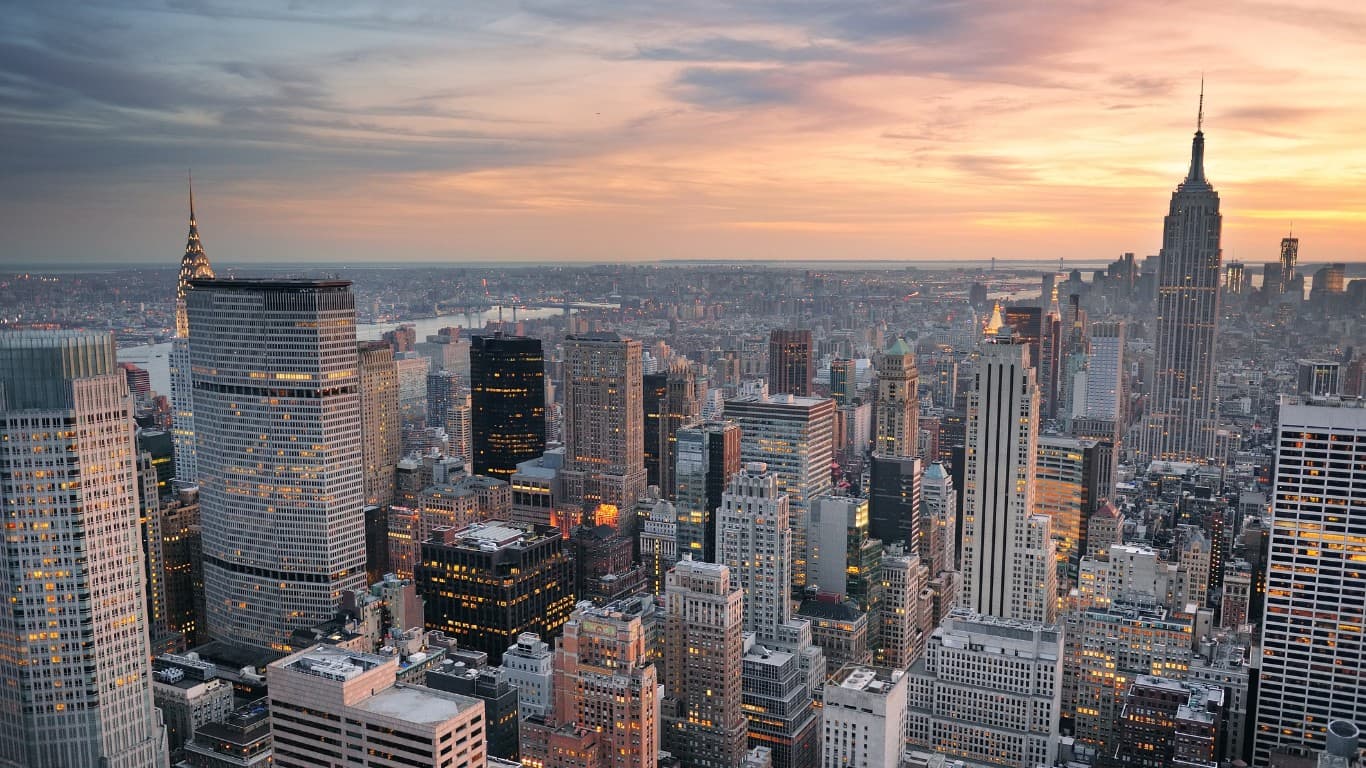
Manhattan sits at the top of the luxury real estate pyramid in the United States. Known for its prestigious addresses, cultural landmarks, and iconic high-rise skyline, it keeps drawing high-income buyers and international investors year after year.

The median home price in Manhattan currently stands at $1.23 million, reflecting a 16.7% increase from Q1 2025. While the pace of appreciation has moderated compared to pandemic peaks, demand for premium units near Central Park, the West Village, and SoHo stays strong. As Bloomberg has reported, Manhattan’s luxury segment continues to attract global capital despite elevated borrowing costs.

Homes in Manhattan command high price-per-square-foot values, averaging around $1,430 per square foot. Despite those elevated costs, well-priced properties in desirable pockets still move quickly.

Manhattan’s unmatched amenity access, global financial hub status, and long track record of appreciation make it a cornerstone for any serious long-term real estate portfolio.

Brooklyn

Brooklyn has evolved into one of the most dynamic real estate markets in the country. With a mix of historic brownstones, trendy lofts, and growing commercial corridors, it pulls in families, creatives, and tech professionals in equal measure.

The median home price in Brooklyn sits at approximately $875,000, up 3.8% year-over-year. Popular neighborhoods like Williamsburg, Park Slope, and Prospect Heights are fiercely competitive, with homes often drawing multiple offers within days of hitting the market.

Brooklyn properties average about $1,050 per square foot, though pricing shifts considerably based on location and condition. Demand is strong across both resale and new development inventory.

Brooklyn’s cultural energy, expanding employment base, and proximity to Manhattan continue to fuel both residential and investment demand with no sign of slowing.

Queens

Queens is gaining serious traction as a more affordable and spacious alternative to Brooklyn and Manhattan, especially among first-time buyers and young families. Strong transit connectivity and genuine ethnic diversity add to its appeal.

The median home price in Queens sits at around $700,000, showing a solid 12% increase year-over-year. Long Island City and Astoria are particularly sought after, thanks to their quick access to Midtown Manhattan and a growing pipeline of luxury developments.

At an average of $825 per square foot, Queens offers real relative value. The borough’s expanding condo supply and proximity to major employment hubs make it attractive for both owner-occupiers and rental investors.

Queens is rapidly moving from a secondary option to a primary destination for value-conscious buyers who refuse to compromise on location.

The Bronx

The Bronx is increasingly viewed as a high-upside investment area. Lower entry prices and the potential for strong future appreciation are the draws here, with redevelopment projects and infrastructure upgrades adding momentum.

The median home price in the Bronx sits at about $590,000, up 4.1% from the prior year. Neighborhoods like Mott Haven, Kingsbridge, and Pelham Bay are drawing fresh interest, fueled by affordability and a genuine shift in perception.

At $620 per square foot on average, the Bronx is the most affordable borough in the city. Investors focused on long-term rental yields and entry-level plays are turning here in growing numbers, and the window for best pricing may not stay open much longer.

Strategic development and improving commuter access are positioning the Bronx as one of the city’s most compelling value markets for patient investors.

Staten Island

Staten Island appeals to buyers looking for space, privacy, and a more suburban feel without leaving city limits. Its lower density and larger properties offer a strong contrast to the high-rise environments elsewhere.

The median home price in Staten Island sits at approximately $660,000, marking a 3.2% year-over-year gain. Areas like Tottenville and Great Kills remain popular among families who prioritize good schools and quieter communities.

Homes here average around $580 per square foot, the lowest price-per-square-foot of any borough. Demand is steadier than in other parts of the city, but the affordability factor keeps inventory moving at a consistent clip.

Infrastructure improvements, including ferry enhancements and expanded bus routes, are adding to Staten Island’s long-term growth story.

Neighborhood Median Prices and Price per Square Foot

Neighborhood/BoroughMedian Listing Home PriceListing Price per SqFt
Manhattan (avg.)$1.23M$1,430
Upper East Side$1.65M$1,520
SoHo$2.3M$2,050
Brooklyn (avg.)$875K$1,050
Park Slope$1.55M$1,230
Williamsburg$1.2M$1,100
Queens (avg.)$700K$825
Long Island City$980K$1,000
Astoria$780K$860
The Bronx (avg.)$590K$620
Mott Haven$495K$580
Fordham$515K$600
Staten Island (avg.)$660K$580
Tottenville$715K$590
Great Kills$685K$585

New York City Rental Market Overview

The rental market in New York City has seen major movement in early 2026, shaped by rising home prices, limited inventory, economic uncertainty, and shifting lifestyle preferences. As homeownership moves further out of reach for many residents, demand for rental units has intensified sharply, creating a fiercely competitive environment for both renters and landlords.

Average Rent Prices in New York City

As of Q1 2026, here’s what you can expect to pay for an apartment across different unit types in New York City.

  • Studio Apartments: Approximately $3,190 per month

  • One-Bedroom Apartments: Around $3,950 per month

  • Two-Bedroom Apartments: About $5,100 per month

  • Three-Bedroom Apartments: Approximately $6,250 per month

Those figures reflect a 4.2% increase compared to Q1 2025, showing consistent upward pressure across all unit types. Rising rents are a direct result of ongoing demand colliding with constrained supply, especially in prime neighborhoods where new inventory barely keeps pace.

Rent levels vary substantially depending on the borough and neighborhood. Luxury units in Manhattan regularly exceed $6,000 per month, while more affordable options can still be found in the outer boroughs, particularly the Bronx and Staten Island.

Rental Prices by Neighborhood

Rent prices across New York City shift widely by location, influenced by proximity to transit, neighborhood desirability, and the quality of building amenities on offer.

  • Downtown Manhattan: In neighborhoods such as Tribeca and SoHo, the average rent for a one-bedroom apartment is $6,100 per month. These areas command premium pricing due to their central location, luxury properties, and proximity to financial and cultural institutions.

  • Williamsburg (Brooklyn): In Williamsburg, one-bedroom units average $4,200 per month. Its trendy atmosphere, vibrant nightlife, and access to the L train continue to drive demand, especially among young professionals and remote workers.

  • Long Island City (Queens): The average rent for a one-bedroom apartment in Long Island City is around $3,750. The neighborhood’s rapid development, skyline views, and fast access to Midtown Manhattan contribute to rising rents.

  • Fordham (The Bronx): In Fordham, rents remain more affordable. A typical two-bedroom apartment rents for about $2,500 per month. Despite its lower prices, demand is increasing as buyers and renters look for value in underserved boroughs.

  • St. George (Staten Island): Average monthly rent for a one-bedroom in St. George is approximately $2,300. This area appeals to tenants seeking quieter surroundings with easy access to the Staten Island Ferry and Manhattan.

Vacancy Rates

The rental market is running at near-record tightness, with a citywide vacancy rate of approximately 1.9%, down from 2.2% a year earlier. That number alone tells you everything about the power dynamic between renters and landlords right now.

This tightening reflects both high tenant retention and slower turnover, especially in centrally located neighborhoods. When a unit does hit the market, it’s often gone within days, with multiple applications flooding in almost immediately.

Several converging factors are keeping vacancy rates this low, and understanding them helps you anticipate where the market goes from here.

New supply is simply not arriving fast enough. Although new residential developments are projected to bring over 34,000 additional apartments to market in 2026, that supply is still not keeping pace with rising demand. Construction approval delays and high development costs are limiting how quickly new units actually reach renters.

Homeownership barriers are pushing people back into the rental pool. With mortgage rates hovering in the 6.5% to 7% range and home prices holding firm, many prospective buyers have pivoted back to renting. That shift is especially pronounced among younger professionals and recent graduates who are effectively priced out of ownership for now.

Population growth and migration trends are also adding fuel to the fire. New York City keeps drawing professionals, remote workers, and international arrivals. Most of these newcomers choose to rent before exploring ownership, which adds steady volume to demand for centrally located, well-connected rental housing.

And beyond all of that, a growing share of residents simply prefer the flexibility renting provides, especially given economic uncertainty and evolving work arrangements. That mindset shift, most visible among high-income earners and mobile professionals, has propped up demand for premium rental units across the city.

New York City Real Estate Market

Factors Influencing The New York City Housing Market

Several forces are driving performance across the New York City housing market in 2026. Each one plays a direct role in shaping property values, buyer behavior, and investor activity across all five boroughs. If you want to identify the most profitable types of real estate in this environment, understanding these drivers is your starting point.

  1. High Mortgage Rates: Mortgage rates remain elevated, currently ranging between 6.5% and 7%. This has reduced purchasing power for many buyers and pushed a significant portion of demand into the rental market. High borrowing costs are also discouraging current homeowners from selling, which is tightening inventory further.

  2. Limited Housing Supply: Active listings are down by 9% compared to Q1 2024. Many homeowners are holding off on selling due to unfavorable refinancing options, and new construction is not keeping up with demand. This imbalance continues to drive price increases and competitive offers, especially for well-located or turnkey properties.

  3. Strong Population Growth: New York City’s population is rebounding due to both domestic migration and international interest. High-income professionals are returning, and foreign buyers are increasingly active—especially in Manhattan’s luxury segment. This influx is boosting both the sales and rental markets citywide.

  4. Economic Stability and Job Growth: The city’s economy is growing steadily, with strong employment in finance, tech, media, and healthcare. As of early 2025, job creation is supporting housing demand, especially in central employment hubs like Midtown, FiDi, and parts of Downtown Brooklyn. The return-to-office trend is also increasing demand in transit-connected neighborhoods.

  5. Rising Construction Costs: Construction and development remain challenged by high material and labor costs. Combined with strict zoning regulations and long approval timelines, this has slowed the delivery of new residential units—particularly in affordable and mid-market categories—further exacerbating supply issues.

  6. Institutional Investor Activity: Institutional buyers and private equity firms are expanding their presence in New York’s real estate market, especially in multifamily and value-add properties. While this investment brings capital to the market, it can also push prices higher and reduce inventory available to individual buyers.

  7. Shifting Buyer Preferences: There is a growing preference for smaller, more efficient units and properties with access to outdoor space or work-from-home amenities. Demand remains strongest in well-connected neighborhoods with lifestyle conveniences and quality schools, driving pricing divergence between boroughs.

New York City Housing Market Forecast for 2026

Looking at 2026, the New York City housing market is projected to stay competitive and resilient, though growth will likely moderate compared to the past few years. Persistent demand, limited housing inventory, and steady economic performance will shape market conditions across all five boroughs.

At the same time, evolving buyer behavior and interest rate dynamics may introduce subtle shifts in both pricing trends and sales activity that are worth watching closely.

Home Price Growth

Home prices in New York City are expected to rise steadily through 2026, but at a more controlled pace. Analysts forecast that the median home price may increase by approximately 4% to 6% year-over-year, pointing to healthy market momentum without the volatility of the earlier post-pandemic years. The Financial Times has flagged similar trends in other global gateway cities where supply constraints are keeping prices elevated despite affordability headwinds.

With the current median home price sitting at roughly $770,000, a 4% to 6% increase would push prices into a range of $800,800 to $816,200 by the end of 2026. That level of appreciation reflects a maturing market where demand still exceeds supply, particularly in the mid-tier price segment, but where affordability challenges and elevated borrowing costs are taking some heat off the top.

In outer boroughs like Queens and the Bronx, price growth may outpace the citywide average as first-time buyers and value-focused investors shift their attention to emerging neighborhoods with room to run.

Meanwhile, Manhattan’s luxury market is expected to see more moderate gains as it approaches pricing ceilings in certain prime pockets.

Inventory and Market Conditions

Inventory levels are likely to stay tight well into 2026. Active listings are already 9% lower than the prior year, and no major influx of new supply is expected to meaningfully change that trajectory in the near term.

Several large-scale developments are underway in Long Island City, Downtown Brooklyn, and Hudson Yards, but most of these projects are aimed at luxury buyers or renters. That leaves a persistent gap in affordable and middle-market housing that isn’t closing any time soon.

This ongoing supply shortage will keep supporting home values and intensifying competition, especially for move-in-ready properties in high-demand locations. Sellers are expected to maintain leverage throughout most of 2026, and buyers relying on financing may face longer searches, faster decision-making timelines, and increasingly frequent bidding wars.

Without a policy shift or a meaningful acceleration of construction in lower-priced segments, the city’s market will continue to favor sellers across most categories.

Rental Market Outlook

The rental market in New York City is projected to strengthen further through 2026, building on the momentum that’s been building since 2024.

Right now, the average monthly rent for a one-bedroom apartment sits at $3,950, while two-bedroom units average $5,100. Industry projections suggest rents will climb another 3% to 5% over the next 12 months, pushing average one-bedroom rates to between $4,068 and $4,147, and two-bedrooms to between $5,253 and $5,355.

Rising rents are being driven by multiple converging forces. High mortgage rates are keeping would-be buyers in the rental pool, while supply stays limited due to slow development cycles and strong tenant retention. Vacancy rates, currently around 1.9%, are expected to stay low across Manhattan, Brooklyn, and Queens, where turnover is fast and listings get absorbed almost immediately.

In-demand neighborhoods like Williamsburg, Long Island City, and the Upper East Side are likely to keep leading the market in both pricing and activity. Renters seeking more affordable options may increasingly look toward the Bronx and Staten Island, though even those areas are posting year-over-year rent increases.

If you’re renting in this city, expect a competitive market with limited negotiating power, especially during the warmer months when demand historically peaks.

New York City’s economic outlook plays a pivotal role in its housing market forecast. The city continues to benefit from strong job growth in finance, technology, healthcare, and professional services. Major employers like JPMorgan Chase, Mount Sinai, and Google remain active recruiters, supporting household income levels and stimulating housing demand across all price tiers. Forbes has consistently ranked New York City among the top markets for long-term real estate wealth creation, driven in large part by this employment diversity.

The return-to-office movement is another factor reshaping demand. As hybrid work arrangements stabilize and more professionals return to daily or part-time commuting, demand for centrally located housing in Manhattan and Downtown Brooklyn is rising again. Properties near major transit corridors, commercial hubs, and employment centers have regained value they temporarily lost during peak remote-work years.

Demographically, the city keeps drawing younger residents and professionals, particularly Millennials and Gen Z. Many of them are renters today but are expected to transition into ownership as they build income and equity over the next several years.

That growing population base, combined with continued immigration and sustained foreign buyer interest, will likely keep market demand healthy across both sales and rental sectors for the foreseeable future.

Potential economic headwinds like inflation, global instability, or further monetary tightening could introduce some caution. But New York City’s diversified economy and its standing as a global city are expected to provide a strong buffer against broader volatility. For context on how high-value portfolios are navigating today’s macro environment, this breakdown of the U.S.–China standoff as a stress test for wealthy investors is worth your time.

New York City Real Estate Market

Is It Worth Buying a Property in New York City?

Buying property in New York City is a worthwhile decision in 2026 for buyers who bring a long-term outlook, financial stability, and a clear strategy. The market is still driven by strong fundamentals, high demand, limited inventory, and steady appreciation. Property values are projected to grow by 4% to 6% over the next year, consistent with historical trends across most boroughs. If you’re thinking about what the optimal investment period for real estate looks like, New York City’s track record makes a compelling case for patience.

Despite high entry costs and elevated borrowing rates, tight supply keeps prices supported. Listings are down 9% year-over-year, and most new construction targets high-end or rental buyers, offering little relief in the mid-market. For you as a buyer, that means competition stays strong, especially for well-located, renovated units that check all the boxes.

Rental demand adds another layer of appeal. Vacancy rates are below 2%, and rents keep climbing, with average one-bedrooms now leasing at $3,950 and moving higher. For investors, neighborhoods in Queens and the Bronx are currently generating gross yields of 4% to 5.5%, backed by growing tenant demand and expanding infrastructure. You can also look at Reuters’ financial coverage for the broader macroeconomic context shaping these yield dynamics.

The biggest challenge is affordability. Steep closing costs, high monthly fees, and elevated mortgage rates all hit your bottom line from day one. Still, buyers who move now could benefit from refinancing when rates eventually ease, all while locking in prices before further demand pushes values even higher.

The short answer is yes, buying in New York City is still worth it. The key is choosing the right neighborhood, committing to a multi-year hold strategy, and going in with a clear understanding of the trade-offs between short-term costs and long-term value.

Other Market Forecasts and Overviews


FAQ

What is the current median home price in New York City?

As of Q1 2025, the median home price is approximately $770,000, with prices expected to rise 4% to 6% over the next year.


Is the New York City housing market slowing down?

No. While growth has moderated, prices continue to rise steadily due to low inventory and strong demand across all boroughs.


Is it a good time to invest in NYC real estate?

Yes. High rental demand, low vacancy rates, and long-term appreciation make NYC a strong market for buy-and-hold investors.


Which boroughs offer the best ROI right now?

Queens and the Bronx offer the most favorable rental yields, averaging 4% to 5.5%, especially in up-and-coming neighborhoods.


What are average rent prices in New York City?

Average monthly rents are approximately $3,950 for one-bedroom units and $5,100 for two-bedroom apartments, with continued growth projected in 2026.


Are property values expected to increase in 2026?

Yes. Forecasts indicate a 4% to 6% increase in median home prices, driven by limited housing supply and consistent demand.


Is it cheaper to rent or buy in NYC right now?

Renting remains more affordable in the short term due to high interest rates, but buying offers long-term equity and stability for financially prepared buyers.

Japanese Giants Spend Billions To Take Over The US Homebuilding Industry
Japanese Giants Spend Billions To Take Over The US Homebuilding IndustrySpotlight

Japanese Giants Spend Billions To Take Over The US Homebuilding Industry

America built roughly 1.4 million new homes in 2023, yet the country still faces a…
Is The US Housing Market Crashing Or Simply Correcting In 2026?

Is The US Housing Market Crashing Or Simply Correcting In 2026?

US home prices shot up more than 47 percent between 2020 and 2023, creating one…
Global Tensions In Iran in 2026 Are Forcing U.S. Home Buyers To Delay Purchases

Global Tensions In Iran in 2026 Are Forcing U.S. Home Buyers To Delay Purchases

Every major geopolitical crisis in modern history has left fingerprints on the American housing market,…