
US luxury property is outpacing the wider market in 2026, and the gap has widened materially across the past four quarters. The typical U.S. luxury home traded at roughly $1. 26 million in September 2025, climbing 4.
8 to 5. 0 per cent year over year, more than double the 1. 8 per cent growth rate for the wider $372,000 median market.
That divergence (luxury moving up while the rest of the market sits flat to slightly weaker) has historical parallels worth thinking carefully about.
Redfin, Compass, Sotheby's International Realty, and Brown Harris Stevens have each tracked the divergence. Mansion Global has covered it with the most analytical depth, and the headline numbers from the various brokerage-network indices line up reasonably well: luxury defined as the top 5 per cent of metropolitan-area transactions ran 250 to 280 basis points above the broader market growth rate through most of 2025.
- US luxury property has continued to outperform the broader housing market in 2026, with prime segment pricing holding up while the entry and mid-market work through corrections.
- We see the divergence reflecting both wealth effect from broader asset appreciation and the structural supply constraint in the most desirable luxury enclaves.
- Cash and jumbo financing dominate at the top end, with the prime segment less sensitive to mortgage rate shifts than the broader rate-sensitive market.
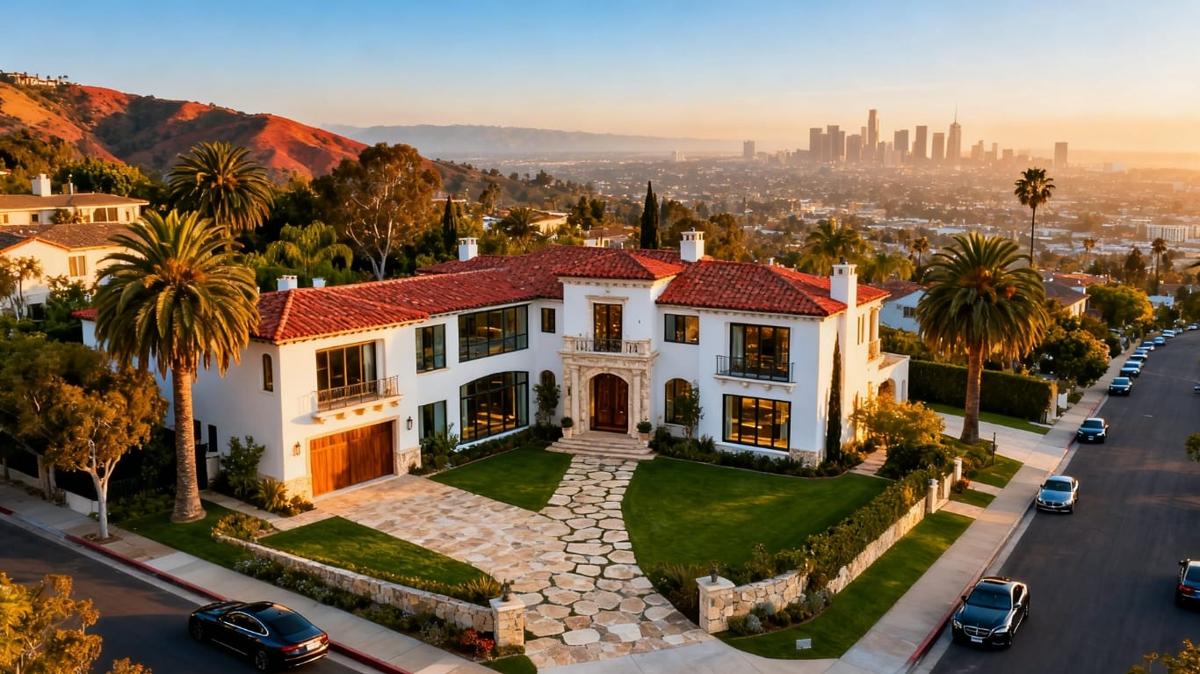
- International and domestic ultra-high-net-worth demand has continued to support trophy properties in New York, Los Angeles, Aspen and Palm Beach across the cycle.
- The dispersion between luxury and broader market performance has widened to a structural feature, with prime segment outperformance now extending into a multi-year pattern.
- For most considered luxury buyers we view the prime segment as warranting continued attention given the structural drivers, although market-specific dynamics matter more than the broader trend.
- Who is this for?
- Luxury property buyers, investors and advisers tracking the US prime market outperformance, alongside the family offices and private bankers structuring trophy acquisitions.
- What is happening?
- A market analysis of why US luxury property is outpacing the wider market in 2026, covering the wealth effect, supply constraints and the cash and jumbo financing dynamics.
- When did this emerge?
- The article covers conditions through 2025 and 2026, with reference to the multi-year prime segment outperformance pattern.
- Where is this happening?
- The piece covers the US luxury property market broadly, with reference to trophy markets including New York, Los Angeles, Aspen, Palm Beach and the broader prime enclaves.
- Why does it matter?
- Luxury segment outperformance has become a structural feature in 2026, which is why awareness of the divergence matters for buyers comparing prime acquisitions against broader market trends.
What is driving the divergence
Three structural forces have produced the gap. The first is the rate-environment asymmetry. Luxury buyers, particularly at the trophy end, have been less rate-sensitive than the broader market.
Cash purchases, securities-backed financing through private banks, and family-office acquisition activity have been less affected by the jumbo-mortgage rate trajectory than the conforming-loan environment that drives the median market. As rates ticked higher through 2023 and into 2024, the median market softened while the luxury segment held.
The second is the supply-side compression at the trophy end. We have covered the U.S. luxury supply story in detail elsewhere (the construction-cost stack, the labour-market constraints, the permitting calendars) and the cumulative effect has been to constrain the new-completion pipeline of high-end inventory. With supply tighter than buyer activity, luxury pricing has held while the broader market saw inventory accumulation.
The third is the international and second-home buyer flow. Knight Frank's International Buyers Index tracked sustained foreign demand across the U.S. luxury markets through 2024 and 2025, with Mexican, European, and Gulf buyers adding meaningful demand to the Manhattan, Miami, and Mountain West markets. Second-home buyer activity, particularly in the Florida and Mountain West premium destinations, has remained meaningful even as primary-home transactions softened.
The historical parallels
The closest historical comparison is the 2005 to 2007 luxury divergence, when the U.S. luxury market continued upward for several quarters while the broader housing market began its early softening. That divergence ended badly: the 2008 to 2010 luxury correction was eventually as deep as the broader market correction, with prime markets in Manhattan, Miami, Aspen, and the Hamptons taking 25 to 40 per cent peak-to-trough drawdowns over a 24-month window.
The 2005 to 2007 setup, though, had structural features that the current divergence does not share. The earlier cycle was driven by aggressive credit expansion at both ends of the market, with jumbo-mortgage credit standards loosening alongside the conforming market. The current divergence runs on relatively conservative jumbo credit standards and substantial cash-purchase activity at the upper end, so the buyer profile is meaningfully different from 2006.
A second relevant parallel is the 2017 to 2018 luxury softening, when the trophy markets repriced 10 to 20 per cent in selected addresses (notably Manhattan trophy condos and the high-end Hamptons trophy inventory) while the broader market remained stable. That episode resolved without a broader contagion, in part because the underlying buyer profile remained intact and the supply-side adjustment was orderly.
Where the correction risk concentrates
The luxury markets we would flag as more vulnerable to a re-pricing are the ones with the thinnest buyer profiles relative to their inventory pipeline. Manhattan's trophy-condominium pipeline through 2025 and 2026 includes several major launches at price points that test the buyer pool's depth, including the upper West Side trophy launches, several of the Billionaires' Row floors that have come back to market, and the supertall trophy listings that have struggled to clear at original-launch ask. Brown Harris Stevens' trophy-condo coverage describes the absorption rate at the upper tier as extended.
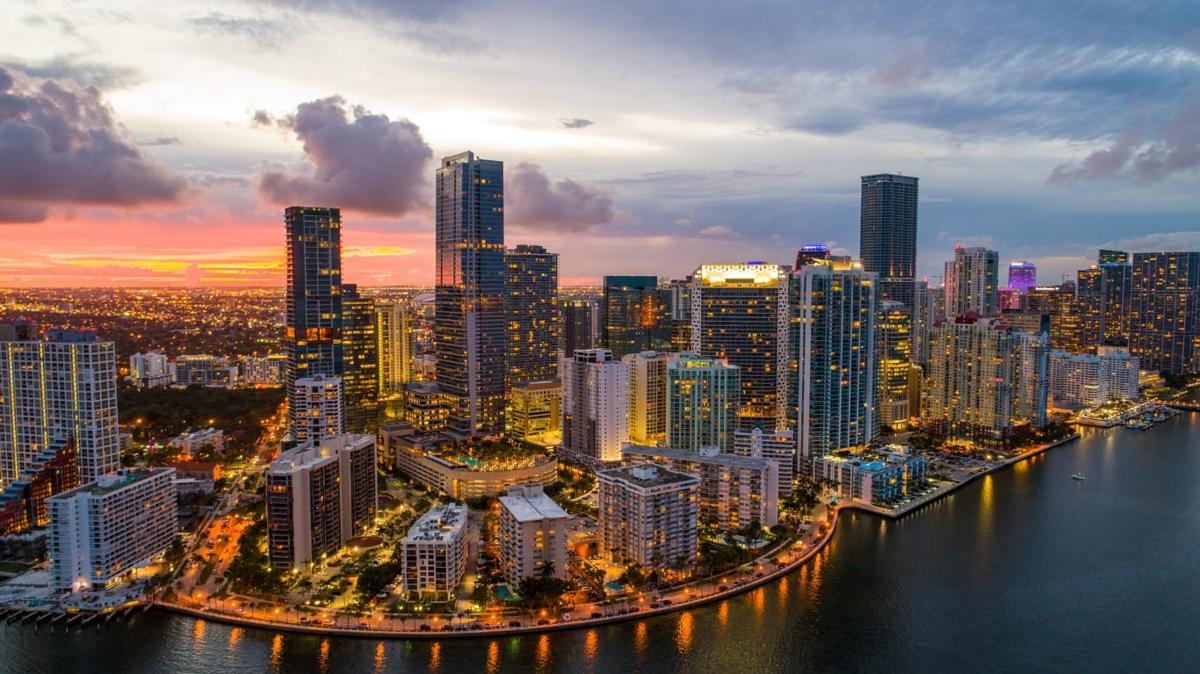
South Florida's trophy market has run on sustained buyer flow but has its own concentration risk. The Miami Beach and Bal Harbour trophy condo launches through 2024 and 2025 added meaningful supply, and the absorption rate at the upper tier (above $30 million) has slowed compared with the 2021 to 2022 peak. The secondary South Florida markets (Coral Gables, Coconut Grove) have continued to clear more steadily.
The Mountain West premium ski markets have largely held, but the Aspen West End and Red Mountain trophy-house pricing has stretched against the historical relationship to underlying square-footage and land-share metrics. Sotheby's International Realty Aspen has described the trophy market as more selective than two years ago, with Cushman & Wakefield's Mountain West tracker corroborating the read.
The Hamptons trophy market, conversely, looks structurally tighter. The inventory has been absorbed, the new-construction pipeline is constrained, and the buyer profile (financial-services and family-office activity) has remained engaged, so Compass East End's late 2025 read suggests the Hamptons is not where the correction risk concentrates.
What experienced market observers are watching
Compass, Douglas Elliman, Sotheby's International Realty, and Brown Harris Stevens, across their 2025 mid-year and end-year market notes, have flagged three indicators worth tracking. The first is the days-on-market trend at the trophy tier ($20 million-plus), which extended through 2024 and into 2025. The second is the listing-to-sale price spread, which has widened in selected markets.
The third is the new-launch absorption rate, which the brokerages describe as the most sensitive forward indicator. None of these signals has yet flashed in a way that suggests an imminent broader luxury correction. What they do suggest is that the luxury divergence has matured into a phase that warrants caution from buyers and sellers alike.
What this means for buyers
U.S. luxury property's outperformance against the broader market has been real and structurally explainable. The historical parallels suggest that the divergence can resolve in either direction, through orderly soft-landing repricing or through a more material correction, and the deciding factors will be the depth of the buyer pool relative to the inventory pipeline, the durability of cash-buyer activity, and the international flow into the U.S. premium markets.
Further reading
The buyers we follow are pricing the divergence carefully. The trophy end remains transactable, but the discipline around price has tightened compared with the 2021 to 2022 momentum-driven phase. Sellers who price thoughtfully into the current market are clearing; sellers anchoring on 2022 peak pricing are facing extended marketing calendars, and that is a healthier configuration than the run-up phase even if it does not satisfy buyers waiting for a clean correction signal that may not arrive.
We last reviewed this analysis in May 2026.