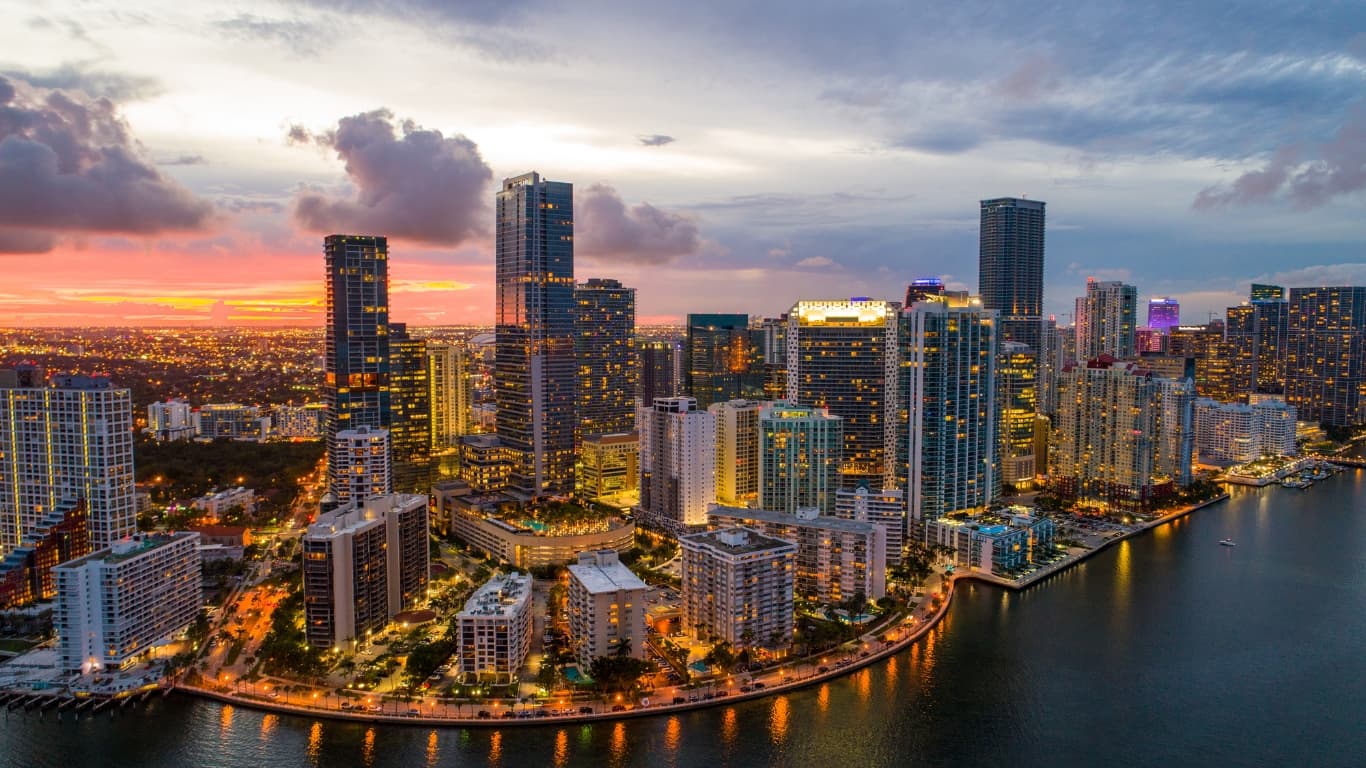
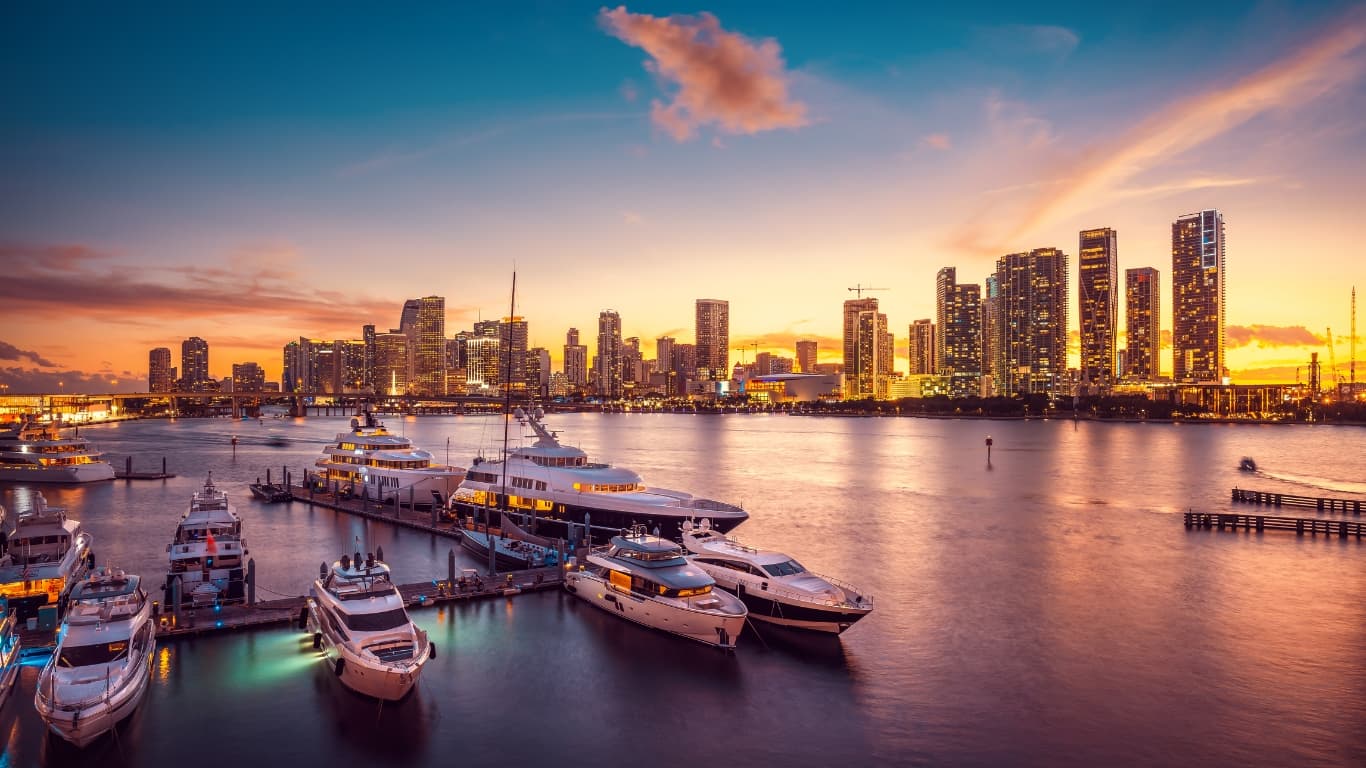
Miami's red-hot housing market is looking like a bubble, and the data has finally caught up with what the brokerage networks have been describing off the record for a year. After years of relentless price increases fuelled by pandemic migration, foreign capital, and speculative fervour, the market is now flashing warning signs that experienced operators recognise from previous housing cycles. Knight Frank, Savills, and Mansion Global have each flagged the divergence in their late 2025 dispatches.
What looked like unstoppable momentum just two years ago has morphed into something more concerning. We are now looking at a market where prices in some segments keep climbing even as transaction volumes collapse, inventory piles up, and local buyers find themselves priced out entirely.
- Miami's housing market has shown some classic bubble characteristics in 2025 and 2026, with rapid price appreciation, speculative investment activity and inventory expansion raising sustainability questions.
- We see waterfront and Brickell condo inventory having expanded materially, with new build supply potentially outpacing the genuine end-user demand growth across the cycle.
- Insurance availability and pricing have moved from background factors to active diligence considerations, with Florida hurricane exposure shaping the all-in ownership cost calculation.
- International buyer demand remains a meaningful driver, although the recent dollar strength and global political uncertainty have moderated the flow of foreign capital into the market.
- Property tax structure under the Florida Save Our Homes cap creates significant differentials between long-tenured owners and recent purchasers across the metropolitan area.
- For most considered buyers we view Miami in 2026 as warranting careful underwriting discipline, with the bubble characteristics demanding explicit weight in any acquisition decision.
- Who is this for?
- Buyers and investors evaluating Miami property, alongside relocation clients, family offices and the brokers, lawyers and advisers supporting South Florida transactions.
- What is happening?
- A market analysis questioning whether Miami's housing market looks like a bubble, covering price appreciation, inventory expansion, insurance considerations and the international demand dynamics.
- When did this emerge?
- The article covers conditions through 2025 and 2026, with reference to the post-pandemic price cycle and the latest Florida insurance market developments.
- Where is this happening?
- The piece focuses on the Miami metropolitan area, including Brickell, the waterfront condo inventory and the broader Miami-Dade County submarket landscape.
- Why does it matter?
- Miami shows bubble characteristics in 2026 that warrant explicit caution, which is why careful underwriting discipline matters more here than in markets with more conventional fundamentals.
From skyrocketing prices to signs of overheating
Understanding what is actually happening with Miami prices means piecing together conflicting signals from different data sources. That conflict itself tells you something important about market instability. Rocket Mortgage tracked May median prices around $589,216, showing roughly 6.
4 per cent annual growth.
By August, Redfin reported median sales hitting $670,000, which translates to 8. 9 per cent annual appreciation. Meanwhile, Zillow's methodology showed average values at $577,205, down 2.
4 per cent over the past year, suggesting actual softening rather than growth.
For investors trying to value their holdings or evaluate new purchases, this data divergence creates serious problems. When you can’t get agreement on whether prices are up 9%, up 6%, or down 2%, you’re operating blind.
The Federal Reserve's official house price index offers some grounding, showing Q2 2026 at 663. 30 compared with 647. 11 in Q1 and 649.
07 in Q4 2025. That points to modest overall appreciation but does not capture the wild variance playing out across different property types and neighbourhoods.
The luxury segment operates in its own reality, largely disconnected from median price trends. Real estate debt investors should pay attention here. HousingWire reports average luxury listings around $1. 13 million, with new construction averaging $2.
29 million.
CondoBlackBook data shows luxury condos hitting $1,080 per square foot in Q1 2026, up 9.2 per cent year over year, while Sunny Isles Beach exploded from $948 to $1,279 per square foot. That 35 per cent single-year jump cannot be explained by construction costs, location improvements, or any fundamental value driver, and reads as pure speculation with buyers betting they can find someone willing to pay even more.
What makes this especially concerning is the transaction volume story unfolding beneath the price headlines. Miami Realtors data covered by the Miami Herald shows existing condo sales dropping to just 921 units in July 2026 from 1,114 the year before, a 17. 3 per cent decline that accelerates when you look at earlier months.
February saw Miami-Dade condo sales fall 21. 7 per cent year over year, from 941 down to 737 transactions.
The implication is straightforward but uncomfortable. When prices rise as volume collapses, sellers are holding asking prices while the buyer pool shrinks. Eventually, sellers who need liquidity will cut prices to meet the market, and those cuts will reset comparable sales that affect everyone's valuations.
Single-family homes show slightly more reasonable dynamics, with Miami Realtors reporting medians reaching $675,000 in May 2026, up 3.85 per cent from $650,000 the year before. That more modest appreciation suggests the middle market is hitting affordability constraints that prevent the kind of speculative excess playing out in luxury condos.
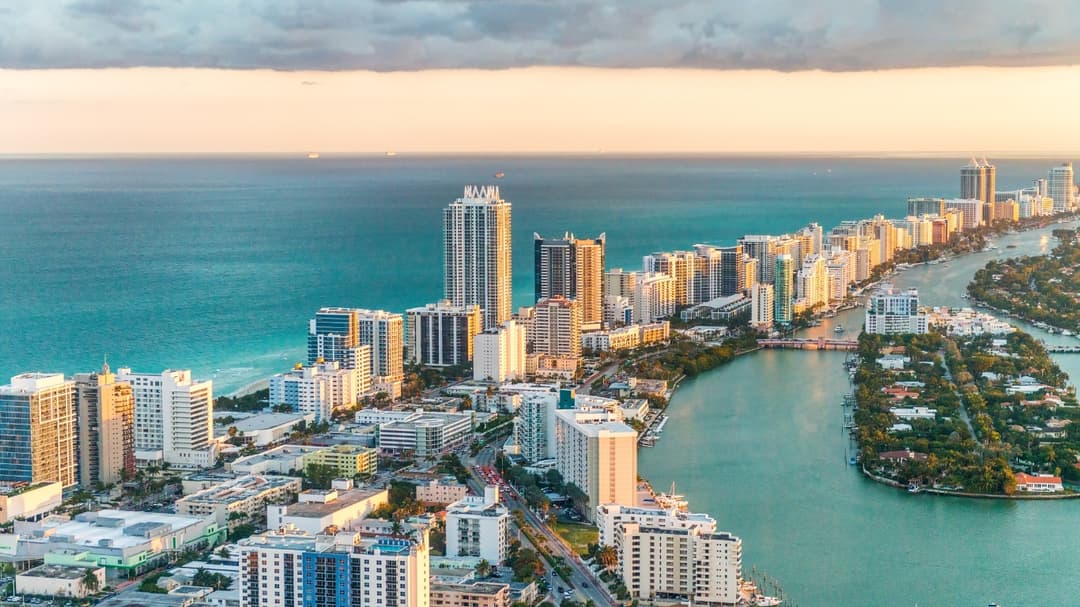
Investor frenzy is driving speculation
The foreign buyer retreat ranks among the most serious warning signs to track, because international capital has historically provided the floor under high-end pricing. Miami Realtors data covered by the Financial Times shows foreign purchases falling to $3. 1 billion in 2025 from $5.
1 billion in 2024. Bisnow reports international buyers dropped to just 10 per cent of transactions in 2025 from 18 per cent in 2024.
Foreign buyers typically pay cash and compete aggressively, so when that cash exits, the remaining buyer pool consists primarily of locals who face income and financing constraints that make current prices unsustainable. Norada Real Estate shows Miami capturing only 8.7 per cent of international buyer interest in U.S. markets during Q1 2026, suggesting Miami's relative attractiveness has genuinely deteriorated.
The luxury transaction data reveals a troubling split. Miami Realtors notes condo sales above $1 million jumped 88 per cent compared with pre-pandemic levels, moving from 95 sales in April 2019 to 179 in April 2026, while everything below has contracted.
When only ultra-wealthy buyers are active while everyone else has been priced out, you’ve created a fragile market structure where any disruption to high-end demand triggers cascading effects.
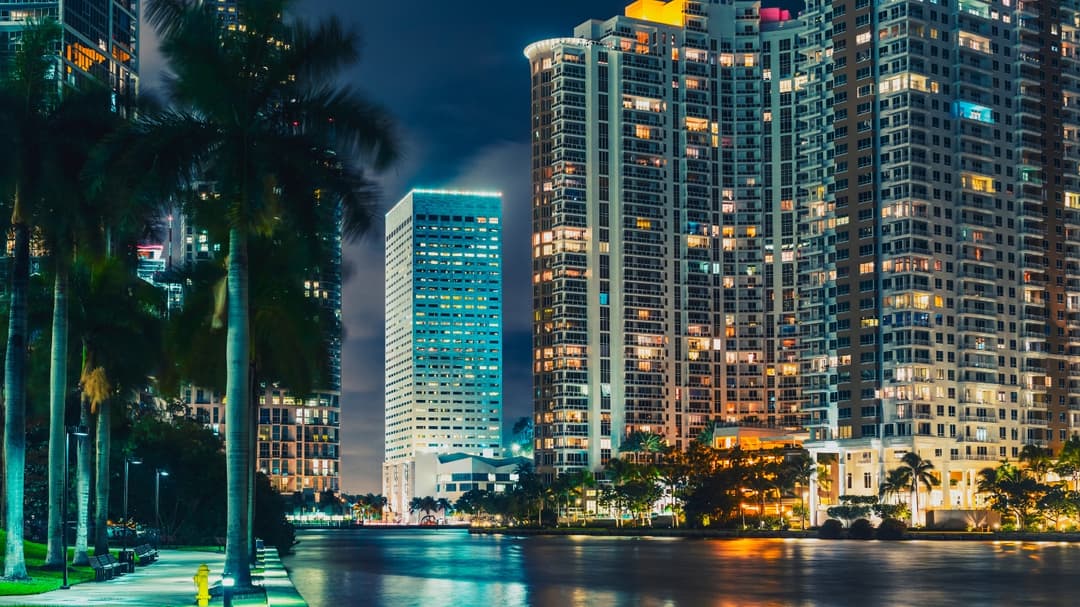
Are we seeing classic bubble warning signs?
Double-digit year-over-year gains in key segments alongside falling transaction volumes is the classic decoupling from fundamentals that defines bubble conditions. When prices rise as volume falls, a small group of buyers is setting marginal prices that do not reflect broader market depth, and that is a fragile foundation to stand on. Bloomberg's Miami coverage has documented the pattern across each of the past four quarters.
Inventory accumulation gives perhaps the clearest warning signal of all. BRG International data highlighted by Bloomberg shows that in June 2026, inventory in Miami-Dade rose 46 per cent year over year, with Broward up 44 per cent and Palm Beach up 30 per cent.
These inventory surges indicate sellers are bringing properties to market but buyers aren’t absorbing them at asking prices, creating the supply overhang that typically forces price adjustments.
Ultra-luxury inventory metrics offer a more nuanced picture. Miami Ultra Lux Condos reports months of supply for properties priced above $3 million sitting at approximately 6. 2 months, which reads as a balanced market rather than oversupply.
The very top tier holds relative equilibrium while everything below faces growing pressure.
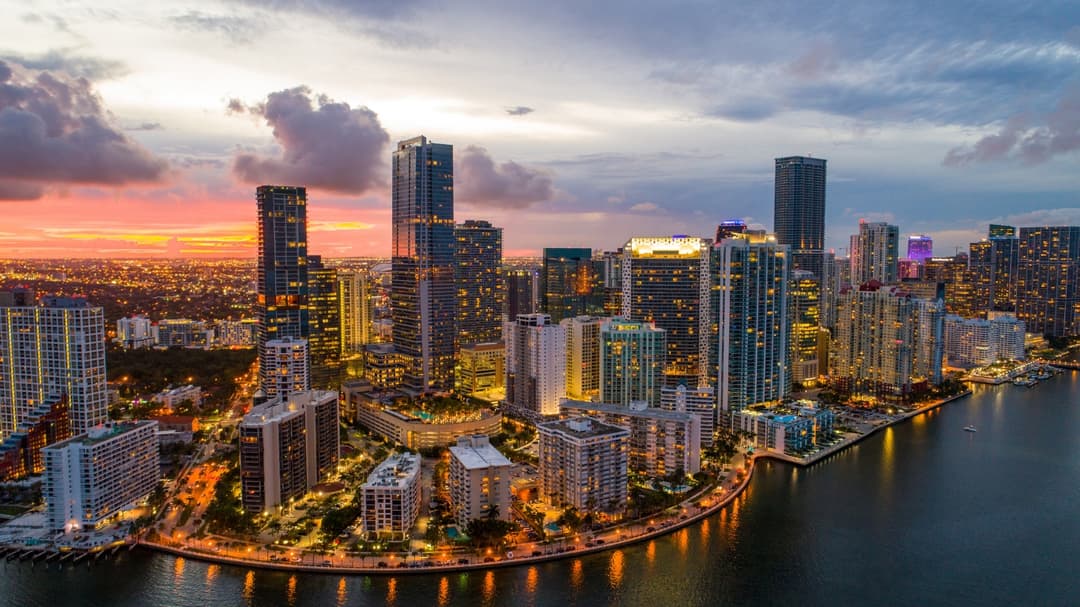
Affordability crisis is putting pressure on the market
The income math in Miami has reached levels that fundamentally limit the market's buyer pool. If your investment thesis depends on local demand rather than international capital, this is where the risk lives.
Axios reports homebuyers need to earn roughly $151,039 while renters need $96,400, creating a $55,000 annual income gap.
This gap means homeownership has become accessible only to households in roughly the top 20 per cent of local income distribution, which severely constrains the potential buyer base. Properties that would historically appeal to first-time buyers or move-up purchasers now sit empty or rent below their carrying costs because the natural buyer base has been priced out.
The entry-level market collapse documented by the Wall Street Journal gives the starkest illustration of this dynamic. Sales under $500,000 fell 79.6 per cent from 2019 to 2025 in Miami, essentially eliminating the bottom rung of the housing ladder, which disrupts the entire chain of household formation and move-up buying that healthy housing markets depend on.
Current homeowners can’t find buyers for their properties because the people who would normally buy have been priced out or stuck in rentals.
The risk of a sharp correction in Miami real estate
The volume collapse across the condo sector gives the most concrete evidence that demand has genuinely dried up rather than simply paused. Miami Realtors data showing May condo sales falling 20. 2 per cent year over year, from 2,397 to 1,913 transactions, builds on the July decline of 17.
3 per cent to create a clear pattern of sustained buyer withdrawal. You can also explore how real estate debt investing behaves differently during correction cycles like this one.
These are not typical seasonal fluctuations or short-term hesitation. We are looking at a fundamental reassessment of value and willingness to transact at current prices, with transaction volume offering earlier and clearer signals than price data.
Sellers typically resist cutting prices until forced by mounting inventory and carrying costs. The current volume declines suggest Miami is in the early stages of a correction where buyers have stepped back but sellers have not yet adjusted their expectations, a phase that typically lasts several quarters before enough sellers capitulate to push prices down meaningfully.
The continued strength at the ultra-luxury level actually raises overall market risk rather than reducing it. Markets where only the highest tier shows strength while everything below contracts are more fragile than markets showing uniform weakness, because the entire structure depends on a tiny buyer pool that can shift sentiment quickly. Christie's International Real Estate's Miami desk corroborates the texture.
What this means for buyers
The investment decision framework for Miami real estate comes down to one question. Do current conditions reflect a temporary adjustment that will resolve with lower rates and renewed demand, or do they signal fundamental overvaluation that requires substantial price correction to restore market balance?
The data points toward the latter on the condo side and toward selective resilience at the single-family level. The buyers we watch are pulling back on Miami condo exposure while remaining selectively interested in the single-family inventory below the speculative tiers. That is the position we would build for the coming twelve months.
We last reviewed this analysis in May 2026.


Savvas Agathangelou
Savvas Agathangelou co-founded The Luxury Playbook and has spent years reporting from the prime postcodes the magazine covers — Mayfair, Knightsbridge, the Athens Riviera, Dubai's Palm crescents, and the southern Mediterranean coastlines where the world's wealthy keep coming back. His background is in international hospitality, and that frame shapes how he writes about property: the developer's choices, the architect's signature, the agency's bench of named brokers, the building's service standard once the buyer moves in. He files developer spotlights, agency profiles, and the seasonal "Properties That Defined" listicles, and he hosts the magazine's founder-and-leadership interviews on the Voices side.