

Art has quietly become one of the most formidable asset classes available to serious investors, outpacing stocks and real estate over the long run. Blue-chip artists have averaged annual appreciation of 8% to 11%, and high-profile contemporary names push that figure even higher. These aren’t outliers. They’re a pattern.
Demand for fine art keeps climbing, driven by institutional acquisitions, private collectors with deepening pockets, and the expanding reach of digital marketplaces bringing new buyers into the fold every year.
Heading into 2026, choosing the right artists to invest in is everything. The most lucrative picks share a common profile: strong historical auction performance, rising market demand, and real institutional recognition. Classic blue-chip figures like Pablo Picasso and Andy Warhol still dominate the high-end segment, while contemporary names like Banksy and Loie Hollowell have built serious momentum, driving substantial value appreciation in recent years.
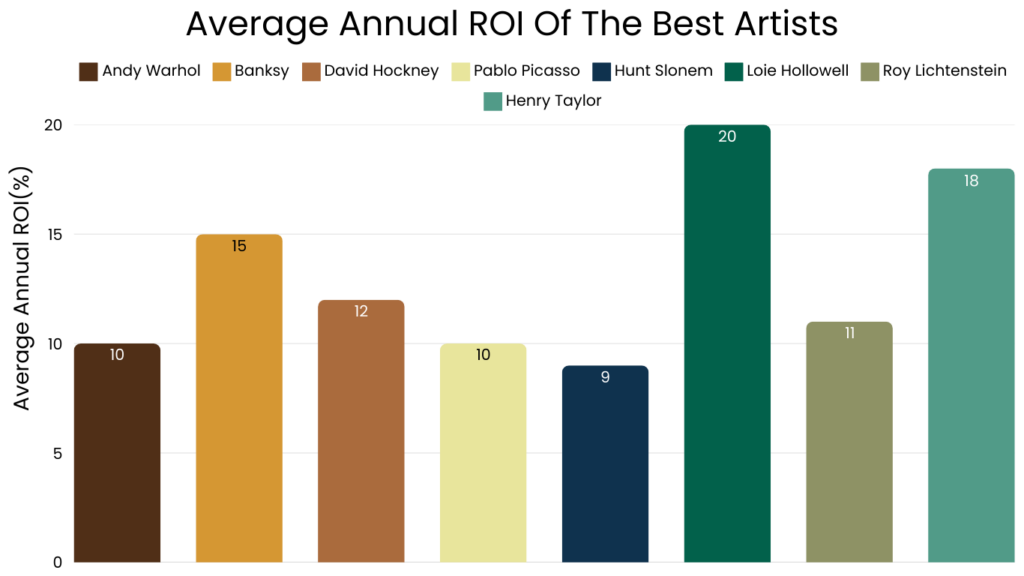
Table of Contents
Andy Warhol
Few artists have shaped the modern art market the way Andy Warhol has. His name is synonymous with Pop Art, a movement that rewired how the world thought about fine art by pulling it straight from mass media and consumer culture. Warhol’s influence goes far beyond aesthetics. His work sits at the cornerstone of the global art investment market, regularly pulling record-breaking numbers at auction.
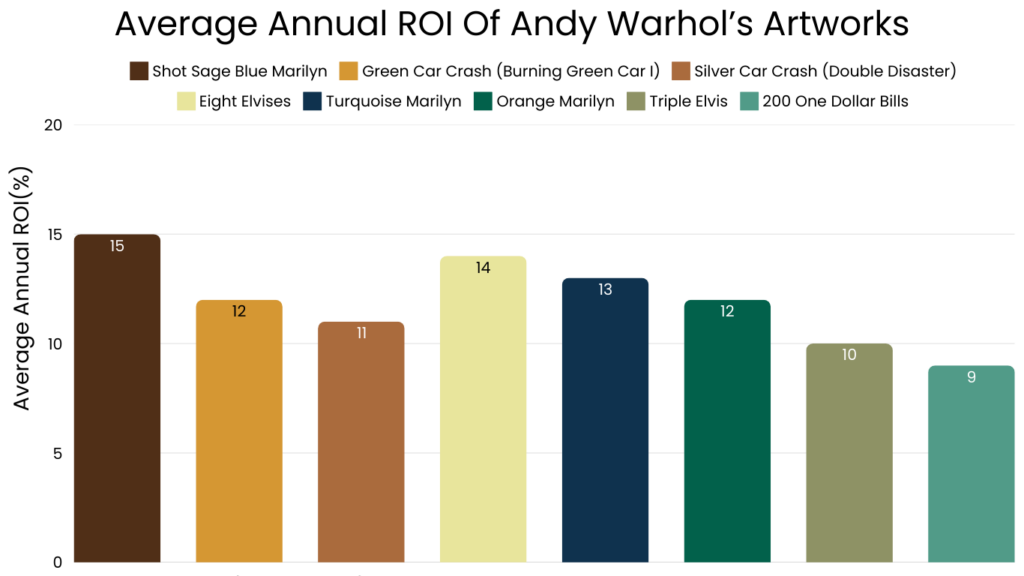
The financial data behind Warhol is hard to argue with. In 2022, his “Shot Sage Blue Marilyn” sold for $195 million at Christie’s, setting the record for the most expensive 20th-century artwork ever sold. That kind of sale isn’t a fluke. His paintings have posted annual appreciation of 10% to 15%, putting them among the most reliable assets the art world has to offer.
Warhol’s works have averaged 10% to 15% annual growth, with top-tier paintings frequently doubling in value within a decade. The auction turnover alone tells a compelling story. In 2023, his total auction sales surpassed $450 million, cementing his dominance in the secondary market. That’s not just cultural prestige. That’s real, trackable financial performance.
Institutional demand keeps rising, with major museums and private collectors actively hunting for his works. As supply tightens, valuations climb. Warhol’s art has become one of the most sought-after blue-chip assets in the world, and the scarcity factor only strengthens the case for holding long term.
Notable Artworks and Pricing (2026)
- “Shot Sage Blue Marilyn” – Last sold for $195 million (2022), projected to exceed $250 million in future auctions.
- “Green Car Crash (Burning Green Car I)” – Sold for $71.7 million at Christie’s (2007), current market valuation $120+ million.
- “Silver Car Crash (Double Disaster)” – Originally purchased for $105 million (2013), estimated to be worth $140-160 million today.
Warhol’s market position makes him one of the strongest artists you can invest in right now. His works aren’t just cultural icons. They’re appreciating financial assets that draw institutional and private capital from every corner of the globe. If you want a blue-chip anchor for your art portfolio, Warhol is the standard other artists are measured against.
Banksy
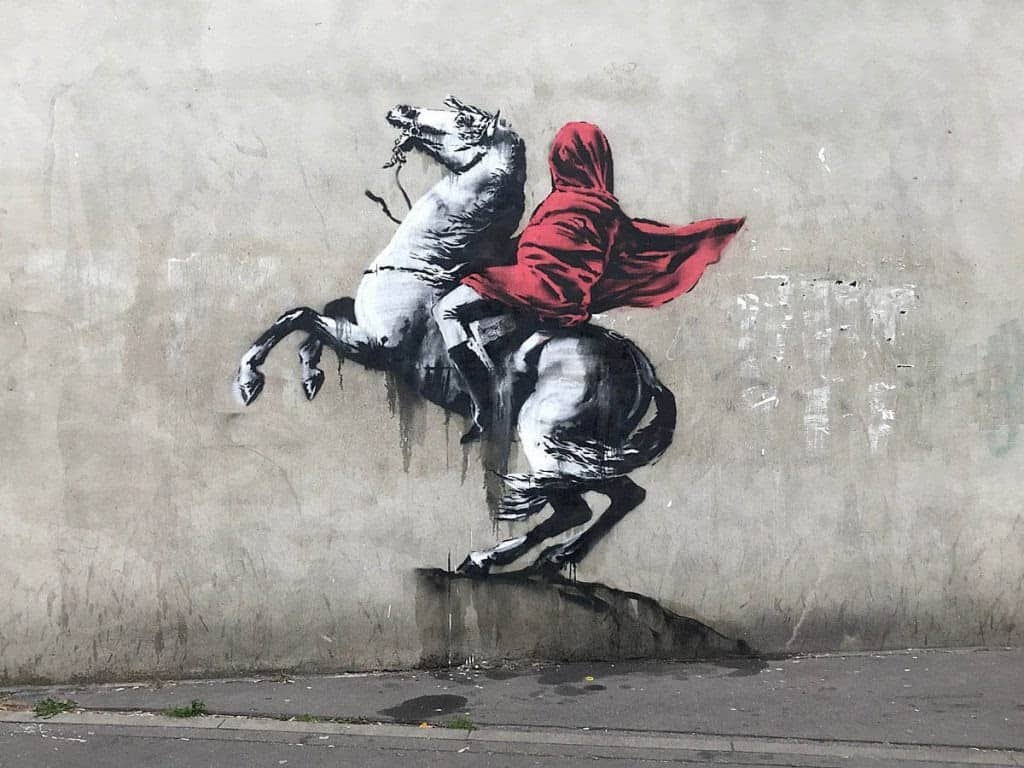
Banksy emerged from the underground street art scene in the 1990s, but his works have since crossed firmly into the fine art world. His stencil-based technique and sharp commentary on war, capitalism, and political corruption have resonated with audiences everywhere. That blend of art and activism has generated relentless media coverage, and the exposure has fed directly into his market value.
The price appreciation on Banksy’s work has been extraordinary. Unlike traditional blue-chip artists whose markets matured over generations, Banksy’s rise happened in under two decades. Rapid demand growth, combined with a tight supply of authenticated pieces, has produced valuations that keep moving in one direction.
Notable Artworks and Market Performance
Several of Banksy’s most iconic works have set records at auction, and each sale strengthens his reputation as a high-return investment artist worth serious attention.
- “Love is in the Bin” (2018) – Originally titled Girl with Balloon, this piece famously self-destructed in a Sotheby’s auction after selling for $1.4 million. In 2021, it was resold for $25.4 million, reflecting a staggering return on investment.
- “Devolved Parliament” (2009) – This large-scale painting depicting chimpanzees in the UK Parliament was auctioned for $12.2 million at Sotheby’s in 2019, surpassing its estimate by over 500%.
- “Game Changer” (2020) – Created during the COVID-19 pandemic, this painting sold for $23.1 million at a Christie’s auction, marking another milestone in Banksy’s rapidly appreciating market.
Investment Potential and Historical ROI
Banksy’s art market track record is built on consistent appreciation, even when the broader economy stumbles. From 2011 to 2023, the average annual appreciation rate on his works ranged between 10% and 25%. Major auction houses routinely clear sales well above their high estimates, which tells you everything about where collector demand sits.
In 2024, Sotheby’s and Christie’s sales data showed a 20% year-over-year increase in Banksy artwork valuations, a strong signal of resilience in an otherwise volatile market.
Scarcity is one of the biggest drivers behind Banksy’s investment case. Most of his work exists as street art, which means the pool of authenticated, privately owned pieces is genuinely small. That rarity pushes value up. Screen prints like “Turf War” and “Laugh Now” have seen secondary market growth of 8% to 15% per year. And institutional interest keeps expanding, with major galleries and museums adding his works to their programs, which sustains long-term demand. His recent works average an ROI of 4% to 6%, with signed pieces showing strong year-over-year gains.
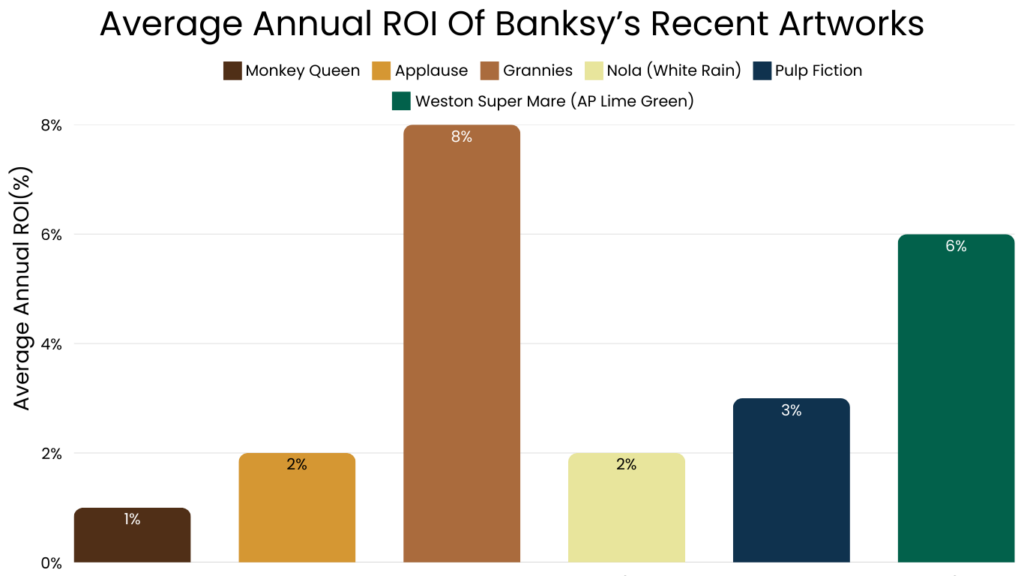
The outlook for Banksy stays strong. The urban contemporary art sector is growing, and as the defining figure of that movement, he’s positioned well for further appreciation.
Analysts expect top-tier Banksy pieces to post annual growth of 15% or more, especially those with verified provenance. If you can source an authenticated work, the fundamentals are hard to beat. You can also explore how alternative asset due diligence applies equally well when vetting art purchases.
David Hockney
Hockney’s influence cuts across multiple art movements, from Pop Art all the way through to digital experimentation. His ability to evolve stylistically without losing artistic credibility has kept his work in continuous demand. His California swimming pool paintings in particular have become iconic markers of post-war modernism.
His willingness to push into new media, including iPad drawings and photography, has locked in his relevance for a generation of collectors who might otherwise overlook painters of his era. That adaptability is a genuine investment signal. Museums and collectors aren’t just buying his past. They’re buying an artist who never stopped moving forward.
Notable Artworks and Market Performance
Several Hockney pieces have set outright auction records, and each one reinforces the investment case for his broader body of work.
- “Portrait of an Artist (Pool with Two Figures)” (1972) – Sold at Christie’s for $90.3 million in 2018, setting a record for the highest price ever paid for a work by a living artist at the time.
- “Nichols Canyon” (1980) – Sold for $41 million at Phillips in 2020, reinforcing strong demand for his landscape works.
- “Henry Geldzahler and Christopher Scott” (1969) – Sold for $49.5 million at Sotheby’s in 2019, reflecting continued market confidence in his early figurative works.
Investment Potential and Historical ROI
Hockney’s work has delivered consistent appreciation over the past decade. Major paintings have grown at an average annual rate of 10% to 15% since 2010. Even his limited edition prints and works on paper have held up well, appreciating by 5% to 8% per year. That range gives you real optionality depending on your entry budget.
Institutional backing is a core part of his story. The Tate Britain, the Centre Pompidou, and The Met have all mounted major retrospectives of his career, driving public awareness and stoking collector demand each time. When museums put their weight behind an artist, the secondary market responds.
High-net-worth collectors who want stable, long-term art market exposure gravitate toward Hockney precisely because liquidity on his paintings stays strong. The secondary market regularly sees competitive bidding for his signature works, which keeps price momentum intact.
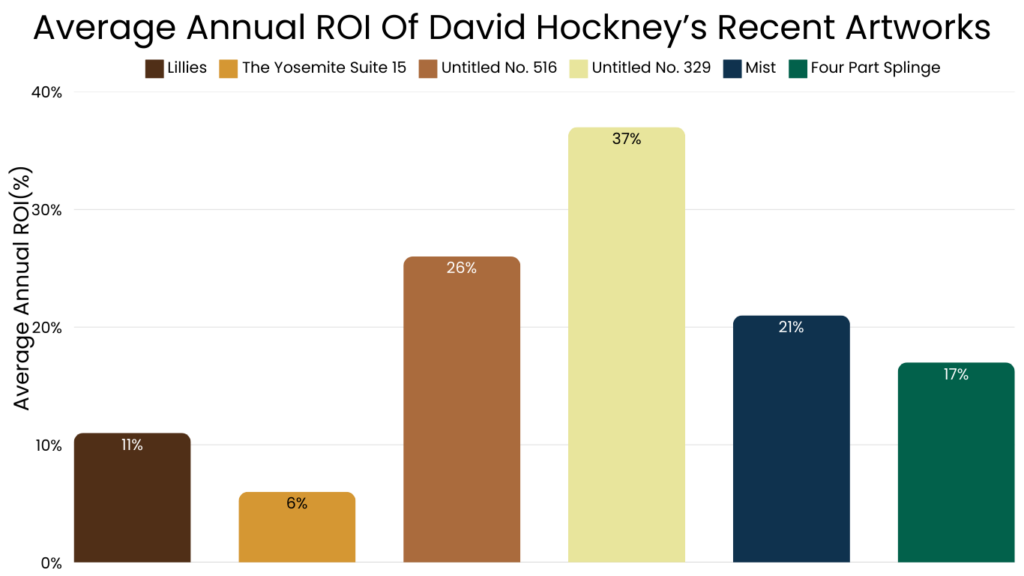
His market outlook stays highly positive. As one of the few living artists with confirmed blue-chip status, his works are expected to keep appreciating. Analysts point to 10% to 20% annual growth for his larger paintings, with his swimming pool and Yorkshire landscape series leading the charge.
Pablo Picasso
Picasso’s versatility, his extraordinary output, and his historical weight all feed into the enduring strength of his market. He produced over 50,000 works spanning paintings, sculptures, ceramics, and prints. Many of those pieces have become cultural landmarks. His innovations in abstraction and portraiture still influence artists working today, and that ongoing relevance keeps collector demand high.
As one of the most frequently traded artists in the secondary market, Picasso’s works offer exceptional liquidity. Museums, institutions, and private collectors all compete for his pieces, which reinforces his status as one of the safest art investments you can make.
Notable Artworks and Market Performance
- “Les Femmes d’Alger (Version ‘O’)” (1955) – Sold for $179.4 million at Christie’s in 2015, setting a world auction record at the time.
- “Garçon à la Pipe” (1905) – Sold for $104.2 million in 2004, marking one of the earliest nine-figure sales for an artwork.
- “Femme assise près d’une fenêtre (Marie-Thérèse)” (1932) – Sold for $103.4 million in 2021, highlighting continued demand for his portrait works.
- “Femme nue couchée” (1932) – Sold for $67.5 million in 2022, reinforcing appreciation for his later works.
Investment Potential and Historical ROI
Picasso’s market has held strong for decades, with paintings appreciating at an average annual rate of 8% to 12% and works on paper and ceramics posting 5% to 10%. His blue-chip standing is unrivaled. His works generate high returns across every auction category, year after year.
His dominance in the major art indices says a lot. His name appears regularly in the Artprice100 Index, and his works account for some of the highest-grossing sales in Sotheby’s and Christie’s history. That kind of benchmark presence signals deep, durable market confidence.
His pieces also hold up well in times of economic uncertainty, when investors naturally rotate into tangible assets with stable, long-run appreciation. Picasso functions as both a prestige purchase and a genuine financial hedge.
Analysts project that his Cubist and Blue Period paintings will keep commanding strong growth, with top-tier pieces expected to appreciate at 10% to 15% per year. Even his smaller works and sketches see regular appreciation, which makes them a sensible entry point if you’re building out your art portfolio for the first time.
Demand for Picasso’s work shows no sign of cooling. Collectors and institutions continue to prioritize historical significance and artistic innovation, and the auction market has shown consistent resilience through economic cycles. Private sales have also trended up steadily.
As his major pieces grow rarer in the open market, prices for mid-tier and lesser-known works are likely to follow. If you’re focused on maximum appreciation potential, his pre-1940s works, particularly Cubist and Blue Period pieces, are where analysts expect the strongest gains.
High-profile Picasso sales are expected to exceed $200 million within the next decade, which only reinforces his position as a top-tier investment in fine art.

Hunt Slonem
Slonem’s work draws serious collector interest thanks to its distinctive aesthetic, regular museum exhibitions, and wide appeal across both traditional buyers and newer investors. His iconic bunny series has become a signature of his practice, with collectors frequently acquiring multiple pieces once they enter his market.
A key part of his investment case is accessibility. His work spans multiple price points, from large-scale paintings down to limited edition prints and sculptures. That range opens the door for investors at different capital levels. His commercial collaborations and strong presence in luxury interior design have expanded his market reach well beyond traditional gallery walls.
Notable Artworks and Market Performance
- “Bunny Wall” Series – One of Slonem’s most recognizable works, frequently featured in private collections, luxury hotels, and corporate spaces. Prices range from $15,000 to $60,000, depending on size and medium.
- “Macaw” Series – A vibrant depiction of exotic birds, reinforcing his fascination with nature. Typically sells for $10,000 to $50,000 at auction.
- “Butterfly Grid” – Represents transformation and movement, often commanding prices between $20,000 and $70,000 for larger canvases.
- “Louisiana Plantation Series” – A collection of historical-themed works reflecting Slonem’s interest in architecture and preservation. Prices range from $25,000 to $100,000 for larger pieces.
Investment Potential and Historical ROI
Slonem’s art has appreciated steadily over the past decade, averaging 8% to 12% annual ROI on larger paintings and 5% to 10% on smaller pieces and prints. His strong foothold in interior design and luxury collections has helped his works retain value across a broad audience, which is a meaningful differentiator in the mid-market segment.
Auction appearances have become more frequent, and demand consistently outpaces supply. Limited edition pieces and unique works tend to sell at the upper end of estimates. His ongoing collaborations with brands, hotels, and design firms have also strengthened his profile as an artist whose work bridges fine art and commercial appeal without losing either.
As more collectors search for vibrant, unique pieces that carry both decorative and investment value, Slonem’s market is set to grow. His expanding presence in blue-chip galleries and museum exhibitions points toward a continued upward trajectory.
Analysts predict his bunny paintings, exotic bird series, and large-scale works will appreciate at 10% to 15% annually, which makes them a solid mid-tier position in any diversified contemporary art portfolio.
Loie Hollowell
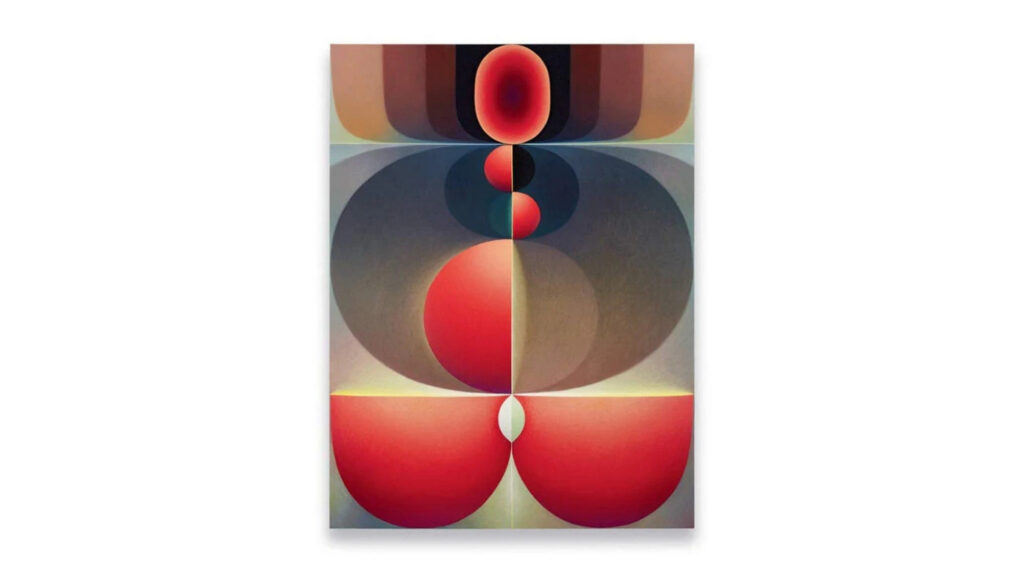
Hollowell’s rise has been accelerated by her association with Pace Gallery, one of the most prestigious blue-chip galleries in the world. That backing has done real work for her reputation, ensuring consistent placement in high-profile exhibitions and acquisition by major institutions.
One of the sharpest drivers of her investment potential is scarcity. Her works rarely surface on the secondary market, and when they do, auction prices climb fast. The collector base chasing her pieces is deep and competitive.
Her ability to merge abstract minimalism with deeply personal themes has made her a go-to name for collectors who move across both contemporary and conceptual art. And as female artists gain greater recognition and institutional support across the global art market, Hollowell stands out as one of the most compelling figures of her generation.
Notable Artworks and Market Performance
- “Split Orbs” Series – A signature work featuring soft-edged geometric forms, often representing themes of pregnancy and transformation. Prices range from $150,000 to $400,000 at auction.
- “Standing in Red” – One of her most well-known large-scale paintings, which sold for over $500,000 in recent years.
- “Point of Entry” – Features her signature circular and ovular forms with deep color contrasts, typically selling in the $200,000 to $450,000 range.
- Works on Paper – While her large canvases command high prices, her smaller drawings and works on paper are more accessible, often ranging from $40,000 to $80,000.
Investment Potential and Historical ROI
Hollowell’s market has seen exponential growth over the past five years, averaging 15% to 25% annual ROI and placing her among the fastest-appreciating contemporary artists you can track right now.
Her paintings routinely outperform auction estimates, with some works selling for three to five times their initial valuations. A 90%-plus sell-through rate at auction tells you this isn’t speculative froth. It’s a strong, competitive market with real depth behind it.
Collectors and institutions are actively competing for her works, sustaining the upward momentum. Many serious investors treat her as a long-term hold, with the expectation that her trajectory keeps improving as her career develops internationally.
Experts predict her market will keep expanding, particularly as international recognition accelerates. Given her rising auction results and gallery backing, prices for her large-scale paintings are expected to surpass the $750,000 mark within the next five years. Getting in early still makes sense.
Roy Lichtenstein
Lichtenstein’s art functions as sharp commentary on mass media, consumer culture, and the nature of artistic originality. That conceptual depth, combined with his bold visual language, keeps his work in high demand among institutions and private investors alike. His paintings and prints sit in major museums including MoMA and Tate Modern, which reinforces both their cultural standing and their long-term financial value.
Despite being a pillar of post-war American art for decades, his market hasn’t gone stale. Auction turnover stays high, and demand for rare pieces keeps climbing. Christie’s and Sotheby’s regularly post record-breaking results for his work, year after year.
The limited supply of original Lichtenstein paintings, combined with growing institutional appetite for Pop Art as a collectible asset class, keeps liquidity strong on the secondary market. That’s exactly what you want in a long-term art holding.
Notable Artworks and Market Performance
- “Masterpiece” (1962) – Sold for a staggering $165 million in 2017, making it one of the most expensive pop art pieces ever.
- “Woman with Flowered Hat” (1963) – Fetched $56 million at auction, reinforcing Lichtenstein’s position among the world’s most valuable artists.
- “Nurse” (1964) – Sold for $95.3 million, showcasing the high demand for his classic comic book-style works.
- Limited-Edition Prints – His screen prints and lithographs, such as “Crying Girl” (1963) and “Sweet Dreams, Baby!” (1965), sell for $100,000 to $1 million, depending on rarity and edition number.
Investment Potential and Historical ROI
Lichtenstein’s market has delivered consistent double-digit growth over the past two decades, averaging 8% to 12% annual ROI. Sell-through rates exceed 90% for both paintings and prints. Many of his top works have appreciated over 500% in value since the early 2000s. Those are numbers worth paying attention to.
His limited-edition prints also offer a more accessible entry point, with some increasing in value by 200% to 300% within a decade. As blue-chip art keeps proving itself as a hedge against inflation, Lichtenstein’s historical track record makes him one of the more reliable long-term positions in the market.
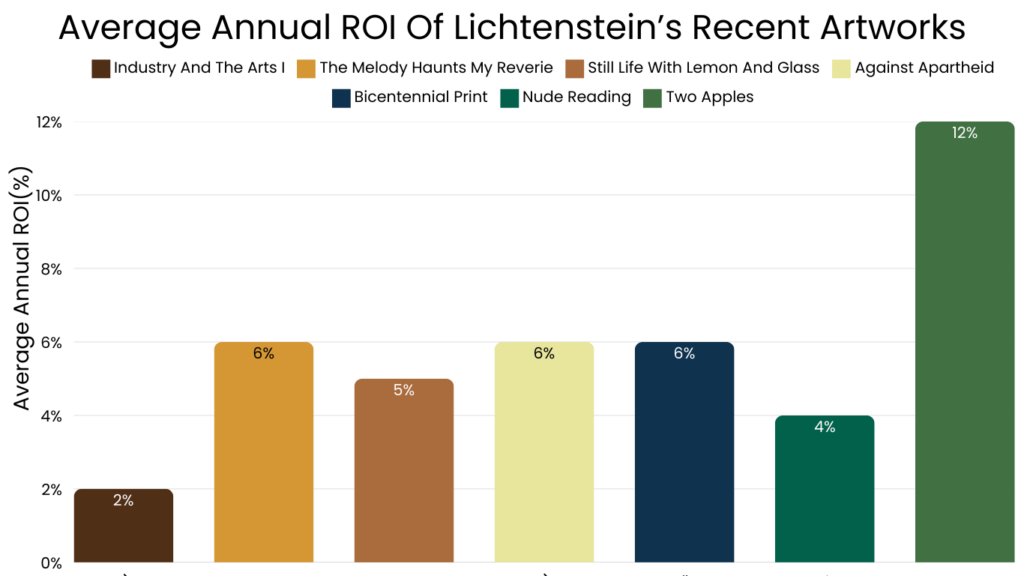
Analysts predict his high-value paintings will continue appreciating steadily, with museum-quality pieces expected to surpass the $200 million mark within the next decade.
Henry Taylor
Taylor’s work is defined by raw emotional depth and cultural weight, often depicting historical figures, everyday life, and Black American experiences. His paintings have been shown at The Whitney Museum, The Hammer Museum, and The Museum of Contemporary Art Los Angeles, each appearance adding further validation to his standing in the contemporary art world.
Major collectors and institutions have moved aggressively into his market in recent years, and that institutional momentum has driven prices sharply upward. His works trade regularly at auction, with sales records showing strong appreciation and a fast-growing collector base.
Taylor’s limited supply of original paintings, paired with surging interest in Black contemporary artists, positions his work as a high-growth asset. His role as one of the leading voices in socially relevant contemporary art guarantees sustained demand and strong resale value for years to come. If you want to understand how alternative investments fit into a broader wealth strategy, it’s worth exploring other undervalued asset classes alongside art.
Notable Artworks and Market Performance
- “I’ll Put a Spell on You” (2004) – Sold for $2.1 million at a Sotheby’s auction, reflecting the rapid appreciation of Taylor’s early works.
- “Cecily and Miles Visit the Obamas” (2017) – Fetched $1.7 million, significantly exceeding its pre-auction estimate.
- “Cultural Exchange” (2018) – One of Taylor’s most recognized works, regularly valued at over $1 million in private sales.
- Limited-Edition Prints – Taylor’s prints and smaller works have increased in value by 150-300% over the past five years, with auction results consistently outperforming estimates.
Investment Potential and Historical ROI
Taylor’s work has posted exceptional market growth, averaging 15% to 20% annual ROI and placing him among the fastest-appreciating names in contemporary art. Sell-through rates exceed 95% at auction, and pieces regularly clear well above their estimates. That kind of consistent outperformance signals genuine, durable demand.
From 2018 to 2024, the value of Taylor’s works climbed by over 500%, with his paintings routinely commanding six- to seven-figure prices at major auction houses. That’s one of the strongest appreciation curves in the contemporary market over that period.
Analysts expect Taylor’s works to keep appreciating at a double-digit rate, particularly as collector and institutional interest in contemporary Black artists continues to accelerate globally. Getting positioned now, before that wave fully crests, is the kind of move your future self will thank you for.
FAQ
What factors make an artist a strong investment?
Key factors include market demand, auction performance, institutional recognition, rarity of works, and cultural relevance. Artists with frequent museum exhibitions and increasing auction records typically show strong investment potential.
How do I start investing in blue-chip contemporary artists?
Begin by researching market trends, auction results, and gallery prices. Buying from established galleries, major auction houses, or online art platforms ensures authenticity and provenance. Diversifying across different artists and art periods can help reduce risk and maximize returns.
How does contemporary art compare to other investment assets?
Contemporary art has historically outperformed stocks, bonds, and gold in terms of long-term appreciation. Blue-chip artists like Taylor provide portfolio diversification and hedge against market volatility, making art a valuable alternative investment.