
The Bristol real estate market in 2026 is one of the UK’s most sought-after regional markets, combining steady price growth, solid rental demand, and long-term urban development. As a core city in the South West with strong transport links, a thriving knowledge economy, and a high quality of life, Bristol keeps drawing both domestic and international investment year after year. If you’re looking at the UK’s regional property story, Bristol belongs near the top of your list.
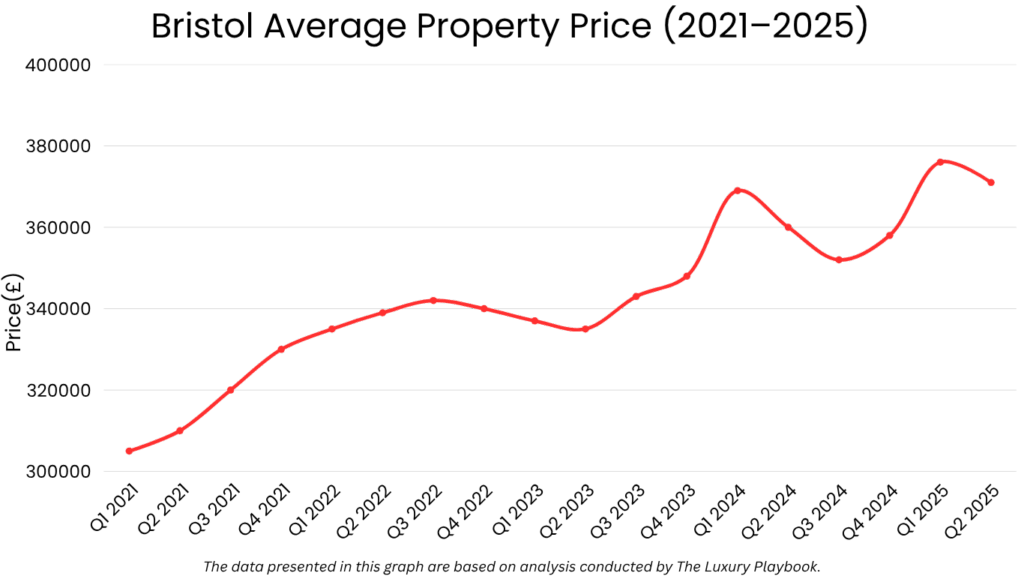
As of Q2 2026, the average property price in Bristol sits at approximately £371,000, showing a modest yet stable 3.0% year-on-year increase. That kind of resilience follows a broader national slowdown and reflects the city’s structural undersupply, consistent inward migration, and a tight planning environment that simply won’t loosen up anytime soon.
Rental performance is a key attraction you’ll want to pay attention to. Gross yields across the city average between 4.5% and 5.5%, with the strongest income performance found in value-growth districts such as Easton, St. George, and Bedminster. These areas consistently outperform because tenant affordability in the more expensive north and west Bristol postcodes keeps pushing renters toward them. If yield is your priority, that’s where you look first. You can explore how Brexit shaped the UK real estate market and why cities like Bristol proved more resilient than most expected.
Backed by ongoing regeneration projects including the Temple Quarter Enterprise Zone and Western Harbour masterplan, Bristol gives you a favourable mix of yield, stability, and mid-term appreciation potential that few UK cities can match right now.
Table of Contents
Overview of The Bristol Real Estate Market
The Bristol real estate market in 2026 demonstrates stability and long-term resilience, backed by strong local employment, supply-side restrictions, and sustained demand from both owner-occupiers and renters. As one of the UK’s most undersupplied housing markets, Bristol has held its price strength even as national economic volatility created turbulence elsewhere. That’s not an accident. It’s structural.
As of Q2 2026, the average house price in Bristol sits at approximately £371,000, marking a 3.0% increase year-on-year.
Growth has moderated compared to the post-pandemic surge, but Bristol still outprices Leeds, Manchester, and Birmingham as one of the UK’s most expensive regional cities. Limited land availability and strict planning constraints are the core reason why that premium holds.
Price stability here is supported by high demand across key employment sectors such as aerospace, finance, tech, and education. Bristol’s role as a regional capital ensures consistent buyer activity from professionals, families, and relocating workers. And the city’s vibrant student population adds another layer of strength to both the sales and rental markets. The Financial Times has tracked Bristol’s economic rise as one of the UK’s most diversified regional economies outside London.
Transaction volumes stay strong in the £300K to £450K range, particularly in districts where demand from young professionals and first-time buyers is highest. That’s your sweet spot if you’re targeting the broadest pool of buyers or tenants.
Limited new-build supply keeps putting upward pressure on resale stock, especially in centrally located areas where regeneration projects are actively underway. Less supply, more competition. That equation works in your favour as an investor.
Key market characteristics in 2026 worth understanding before you commit capital
- Average property price: £371,000
- Annual price growth: 3.0% (2024–2025)
- Buyer segments: First-time buyers, professional relocations, landlords, downsizers
- High-demand zones: Bishopston, Redland, Easton, Southville, Clifton
- New housing supply: Limited; concentrated around Temple Quarter and fringe developments
- Rental demand correlation: High in job-rich areas and university-adjacent neighbourhoods
In short, the Bristol housing market holds its position as a high-demand, high-barrier city with steady performance and long-term investment appeal. This isn’t a speculative play. What it offers you is consistent returns, tenant security, and exposure to one of the UK’s most economically resilient urban centres. If you’re weighing whether an independent real estate analyst could sharpen your entry strategy here, it’s a conversation worth having before you move.

Neighborhood Analysis
Bristol’s property market is shaped by its varied neighbourhoods, each with unique investment potential, tenant profiles, and price dynamics. You can choose from high-yield regeneration zones, established family-friendly suburbs, or prime resale districts built around capital preservation. Knowing which fits your strategy matters more than just picking a postcode.
Easton
Easton keeps attracting investors and first-time buyers thanks to its affordability, strong rental demand, and proximity to the city centre. Known for its cultural diversity and independent high street, Easton is mid-gentrification right now, which means the window to buy at reasonable prices is open but it won’t stay that way forever.
Average prices here sit around £305,000, or approximately £3,400 per square metre, with gross yields of 5.5% to 6.0%. Your typical tenant profile includes young couples, remote workers, and graduate professionals who want character and convenience without Clifton prices.
Bedminster
Located south of the River Avon, Bedminster has seen considerable development and rising prices over recent years. Its close proximity to the Harbourside and Temple Meads Station makes it a genuine draw for commuters and families who want access without the premium postcode.
Prices range between £350,000 and £390,000, with per-square-metre values around £4,100. Rental demand stays consistent, and gross yields land between 4.5% and 5.2% depending on property type and finish.
Redland
Redland ranks among Bristol’s most desirable and stable residential areas. Professionals and families are drawn here by the green space, excellent schools, and Georgian architecture that simply can’t be replicated. You pay a premium, but value retention is as solid as it gets in this city.
Average home prices exceed £500,000, with values approaching £5,000 per square metre. Rental yields are lower, typically 3.8% to 4.2%, but void periods are minimal and demand stays consistent. This is capital preservation territory.
St. George
St. George, particularly around Church Road, has built real momentum as a buy-to-let hub for investors priced out of central Bristol. Budget-conscious renters are moving here, and the mid-range returns make it attractive for income-focused buyers who want volume without sacrificing quality.
Property prices average £295,000, or about £3,200 per square metre, with yields ranging from 5.5% to 6.2%. That makes St. George one of the most attractive areas for pure income strategies right now.
Clifton
Clifton is Bristol’s most prestigious and expensive area, full stop. Georgian squares, independent boutiques, and proximity to the University of Bristol make it ideal for capital preservation and high-quality tenancies. Your tenants here are professionals, academics, and high earners who treat the place well and stay longer.
Prices average over £600,000, with per-square-metre values between £5,500 and £6,200. Yields are modest at 3.0% to 3.5%, but Clifton operates as a low-risk, high-liquidity market. You’re not here for income. You’re here to hold.
Neighborhood Median Prices and Price per Square Metre
Bristol_Neighborhood_Investment_Data_2025.csv
Bristol Rental Market Overview
The Bristol rental market in 2026 ranks among the strongest in the UK, driven by limited housing supply, high tenant demand, and steady population growth. The city’s pull on young professionals, students, and relocating families keeps occupancy levels high and rents rising across nearly all property types and districts. If you’re an income-focused investor, this market hands you a lot to work with.
Rental performance in Bristol is defined by structural undersupply, rising affordability pressures, and an expanding economic base. That combination makes it close to ideal for long-term income-focused property investment. Rightmove’s rental market data consistently places Bristol among the UK cities seeing the most sustained upward pressure on asking rents.
Average Monthly Rent by Property Type (2026)
- 1-Bedroom Apartment: £1,000 – £1,200
- 2-Bedroom Apartment: £1,300 – £1,500
- 3-Bedroom Apartment: £1,500 – £1,850
- Student HMO (per room): £575 – £700
- City Centre Luxury Units: £1,800 – £2,400+

As of Q2 2026, the average monthly rent in Bristol sits at approximately £1,749. That number has been climbing steadily, and the direction of travel isn’t changing.
The tightest markets are in central areas like Redcliffe, Southville, and Clifton, where tenant competition runs hot, particularly for one- and two-bedroom furnished flats. If your unit is well-presented and well-located, you won’t be waiting long.
Demand is also surging in outer areas like Horfield, Easton, and St. George, where rents stay more accessible but quality supply is genuinely limited. These districts are seeing above-average rental increases as professional tenants migrate outward in search of affordability and space. That migration is your opportunity.
Yield Performance and Tenant Demand
Rental yields across Bristol average between 4.5% and 6.2%, depending on district, property condition, and configuration. HMOs and converted Victorian terraces tend to outperform, particularly in Easton, Horfield, and St. George, where per-unit costs stay reasonable and tenant demand stays strong.
- High-Yield Zones: St. George, Easton, Fishponds (5.5%–6.2%)
- Balanced Performance: Horfield, Bedminster, Southville (4.8%–5.5%)
- Capital Preservation Zones: Clifton, Redland (3.2%–4.2%)
Tenant demand in Bristol is genuinely diversified, covering a wide spread of profiles that keeps your occupancy risk low across economic cycles.
- Young professionals working in aerospace, finance, tech, and healthcare
- Students attending the University of Bristol and UWE
- Families relocating from London or the South East
- Digital nomads and hybrid workers seeking lifestyle-rich rental hubs
Most leases run as 12-month ASTs, though mid-term corporate tenancies and student pre-lets are also popular. EPC-compliant units with energy efficiency upgrades, fast internet, and outdoor space consistently top tenant wish lists. If your property checks those boxes, you’re ahead of most of the competition.
Bristol doesn’t enforce rent caps, but it operates additional and selective licensing schemes for HMOs in many zones, particularly Ashley, Easton, and Lawrence Hill. Licensing compliance, minimum energy standards, and planning considerations for larger HMOs all need to be factored into your investment decisions before you commit.
Short-term letting stays legal but is subject to local planning restrictions in certain conservation areas. For most investors, long-term and professional lettings continue to offer the most stable and scalable model. The numbers bear that out.
The Bristol rental market sits on solid fundamentals. Limited stock, rising rents, and consistent tenant demand mean Bristol keeps offering strong income prospects for landlords who target well-located, well-managed, and regulation-compliant properties. Get those three things right and this market works hard for you.

Factors Influencing the Bristol Housing Market
The Bristol housing market in 2026 is driven by a blend of economic growth, limited land availability, and demographic shifts. These elements have combined to create a high-demand, low-supply environment that keeps supporting both property values and rental growth across the city. Understanding what’s driving that equation helps you position your capital more precisely.
- Strong Local Economy and Job Market: Bristol has one of the UK’s most dynamic regional economies, with a strong presence in aerospace, finance, digital tech, engineering, and media. Major employers like Airbus, Rolls-Royce, and the NHS continue to attract skilled professionals to the area, sustaining consistent housing demand across both rental and ownership sectors.
- Undersupplied Housing Stock: Bristol faces chronic housing undersupply, with planning restrictions and land constraints limiting the pace of new development. The city’s greenbelt and conservation areas restrict horizontal expansion, keeping resale stock in high demand and intensifying competition in key inner suburbs like Southville, Redland, and Bishopston.
- High Levels of In-Migration: Internal migration from London and the South East continues to push demand higher. Bristol’s relative affordability, lifestyle appeal, and growing employment opportunities make it a popular choice for remote and hybrid workers. This trend has placed additional pressure on the mid-market price segment, particularly for 2- and 3-bedroom family homes.
- Student and Graduate Retention: With over 50,000 students enrolled across the University of Bristol and UWE, the city maintains a strong base of short- and medium-term renters. Importantly, Bristol also retains a high number of graduates, many of whom stay in the city post-study to work in tech, education, and public health sectors—reinforcing demand in the £275K–£400K price range.
- Regeneration and Infrastructure: Ongoing regeneration in the Temple Quarter Enterprise Zone, Western Harbour, and around Temple Meads station is transforming underutilised sites into residential and mixed-use hubs. These developments are drawing investors to fringe areas such as Brislington, Barton Hill, and St. Philip’s Marsh, where long-term value appreciation is expected.
- Limited Affordability for Local Buyers: Despite high demand, affordability remains a challenge for many residents. Bristol’s average home price is 9.5 times the local average salary, placing it among the least affordable UK cities outside London. This imbalance supports rental demand but may cap short-term price growth in more saturated, high-end districts.
Bristol Housing Market Forecast for 2026
The Bristol housing market is set to maintain its trajectory of steady growth through 2026, with price appreciation underpinned by limited supply, consistent buyer demand, and expanding infrastructure. Growth will stay moderate compared to the post-pandemic surge, but both capital values and rental income are forecast to rise across most districts. That’s a reassuring profile for anyone with a longer time horizon.
For long-term investors and income-focused landlords, Bristol stays a resilient and fundamentally strong market with sustainable upside and low volatility. Not flashy. Just reliable.
Property prices in Bristol are forecast to rise by 3.5% to 5.0% through 2026. Growth will be led by outer-ring neighbourhoods benefiting from regeneration and infrastructure connectivity, including Brislington, Barton Hill, Horfield, and parts of St. George. These areas are expected to outperform due to relative affordability and expanding tenant demand that keeps pressing outward from the centre.
Citywide, the average property price is expected to climb from £371,000 to between £390,000 and £395,000 by the end of 2026, with centrally located family homes and energy-efficient flats holding the strongest resale values.
Premium districts like Clifton, Redland, and Cotham will likely grow at a slower pace of 2.5% to 3.5% due to their already mature pricing and smaller buyer pools. But demand for well-maintained, character-rich homes in these areas stays strong. You’re buying stability, not a sprint.
Rental prices are projected to increase by 4.5% to 6.0%. The city’s housing undersupply, rising population, and ongoing student and professional in-migration will keep pressure on the rental market. Central and fringe neighbourhoods with good transport links and high EPC-rated properties will feel the strongest gains. Savills’ UK residential research points to cities like Bristol as particularly well-positioned for rental income growth through the mid-2020s.
- 2-bedroom apartments are expected to average £1,600–£1,650/month
- 3-bedroom homes in high-demand suburbs could reach £1,800–£2,000/month
- Student HMOs and multi-lets will continue to generate strong income, particularly in Horfield, Bishopston, and Easton
Yields will stay stable or improve slightly in emerging districts, with gross returns of 5.5% to 6.2% achievable in high-demand but relatively low-cost neighbourhoods. That’s a sweet spot for income-focused investors who want yield without taking on excessive risk.
New development will stay constrained. Planning bottlenecks, greenbelt restrictions, and cost pressures will continue to limit large-scale housing delivery. Most new inventory will come from brownfield redevelopment near Temple Meads and fringe urban districts, rather than any widespread suburban expansion.
That limited pipeline directly supports ongoing appreciation in the resale market, particularly for energy-efficient, tenant-ready homes. Scarcity is working in your corner here.
Investor sentiment stays cautiously optimistic. Affordability ceilings and tighter regulation may limit aggressive capital gains, but Bristol sits among the UK’s most structurally sound markets. Investors targeting mid-tier properties in emerging corridors can reasonably expect stable occupancy, increasing rents, and capital preservation over a five to ten year horizon.
In short, the Bristol housing market in 2026 is forecast to offer measured capital growth and healthy rental gains. Investors focused on income and long-term asset quality, especially in regeneration-linked or mid-range zones, will keep finding strong opportunities across the city. The fundamentals point in one direction.

Is It Worth Buying a Property in Bristol?
Yes, and with the right strategy and location, Bristol makes a smart choice for property investors heading into 2026. This isn’t a market built for aggressive short-term gains. What it gives you is a combination of long-term capital stability, consistent rental demand, and economic fundamentals that keep outperforming national benchmarks. That’s a profile worth serious attention.
Bristol’s appeal lies in its balance. You benefit from a well-educated workforce, strong tenant diversity, and a housing market that holds its value even when broader conditions turn tough.
Average yields across the city range from 4.5% to 6.2%, with above-average returns found in emerging regeneration corridors such as St. George, Easton, Horfield, and Brislington. If you’re prioritising capital preservation and low tenant turnover, Clifton, Redland, or Bishopston are where you look. Price growth is slower there, but voids are rare. Understanding how Brexit reshaped UK property investment flows gives you useful context on why Bristol’s international appeal has held up better than many predicted.
Before you commit, there are a few things worth weighing carefully as part of your due diligence.
- Capital growth is likely to be modest in fully priced central neighborhoods like Clifton and Redland.
- Licensing requirements are active in many high-density HMO zones, adding administrative cost and complexity.
- Planning constraints and Bristol’s tightly defined urban footprint limit access to large development sites.
- Affordability pressure may impact buyer demand in the short term, particularly in premium segments.
Despite those limitations, Bristol consistently ranks among the most investable UK cities because of its lifestyle appeal, steady job creation, and infrastructure pipeline that keeps delivering over time. Knight Frank’s Bristol residential research places the city in the upper tier of UK regional investment destinations for a reason.
Investors focused on well-maintained, EPC-compliant resale stock in high-demand rental areas will find this market offers low volatility, stable returns, and the security of long-term urban growth. Get the asset selection right, and Bristol rewards patience.
Other Market Forecasts and Overviews
London Real Estate Market Overview and Forecast
Manchester Real Estate Market Overview and Forecast
Liverpool Real Estate Market Overview and Forecast
Derby Real Estate Market Overview and Forecast
FAQ
Is Bristol a good place to invest in property in 2025?
Yes. Bristol offers stable capital growth, strong tenant demand, and consistent rental yields.
What is the average house price in Bristol in 2025?
Approximately £371,000, with prices higher in Clifton and Redland, and lower in Easton and St. George.
Where are the best areas to invest in Bristol?
St. George, Easton, Bedminster, Horfield, and Brislington offer solid rental returns and growth potential.
What rental yields can I expect in Bristol?
Yields typically range from 4.5% to 6.2%, depending on location and property type.
Is Bristol a good market for buy-to-let investors?
Yes. Demand from students, professionals, and families supports year-round occupancy and rising rents.
Are there rent controls in Bristol?
No. Bristol currently has no rent caps, but certain areas require licensing for HMOs and multi-lets.
Can foreign investors buy property in Bristol?
Yes. The UK allows foreign ownership of residential property with no restrictions.
Is short-term letting allowed in Bristol?
Yes, but local planning rules apply in conservation zones. Long-term and mid-term lets are more stable.