


Gold just lost its crown as the default safe-haven metal for institutional portfolios. The industrial metals outlook for 2026 tells a story most traditional commodity investors are still catching up to: copper, platinum, and cobalt are quietly delivering returns that gold and silver simply cannot match this cycle.
Global green infrastructure commitments now exceed $1.7 trillion annually, and every dollar spent on wind farms, EV charging networks, and hydrogen hubs flows directly into demand for these three metals. The shift is structural, not cyclical.
Supply deficits are widening faster than mining capacity can respond, and Western governments are scrambling to secure long-term offtake agreements before the gap turns critical. If you are watching commodity markets in 2026, these three metals deserve your full attention.
Table of Contents
Key Takeaways & The 5Ws
- You should consider shifting a portion of your commodity portfolio toward copper, platinum, and cobalt as their structural demand drivers outpace traditional safe haven metals like gold in 2026.
- You need to understand that the copper supply deficit is accelerating faster than mining capacity can respond, with Goldman Sachs projecting prices between $10,500 and $12,000 per metric ton this year.
- You can use green infrastructure spending trends as a leading indicator for industrial metal demand since every wind farm, EV charging network, and hydrogen hub requires significant quantities of these three metals.
- You should monitor Chilean copper output closely because water scarcity, ore grade decline, and permitting delays in this single region directly impact 27% of global copper supply.
- You must factor in the 16 year average lead time from copper discovery to first production when evaluating supply outlooks, as no meaningful new supply wave is positioned to relieve current deficits soon.
- Who is this for?
- Commodity investors, institutional portfolio managers, and corporate procurement teams seeking to understand and act on the shifting dynamics in industrial metal markets are the primary audience for this analysis.
- What is it?
- The main subject is the structural outperformance of copper, platinum, and cobalt over traditional metals in 2026, driven by decarbonization infrastructure spending and widening supply deficits.
- When does it matter most?
- This analysis is most urgently relevant throughout 2026 and into the early 2030s as green infrastructure capital commitments lock in long term physical metal demand that cannot be delayed or substituted.
- Where does it apply?
- These dynamics are most directly felt across North American, European, and Southeast Asian commodity markets, mining regions in Chile and beyond, and the global EV and clean energy supply chains.
- Why consider it?
- Understanding the industrial metals outlook 2026 matters because investors and procurement teams who recognize this structural shift early can secure better pricing, stronger returns, and more resilient supply agreements before deficits become critical.

Industrial Metals Outlook 2026 Defies Expectations
The 2026 commodity cycle breaks from every playbook written in the past two decades. Previous metal booms were driven by Chinese construction demand and speculative momentum. This one is fueled by something far more durable: the physical requirements of decarbonization infrastructure, which cannot be substituted or delayed.
Global manufacturing PMIs in major economies returned to expansion territory in late 2024, and capital expenditure on grid upgrades and clean energy installations accelerated through 2025. Unlike previous cycles, demand is now being pulled simultaneously from North America, Europe, and Southeast Asia rather than concentrated in a single geography.
Supply chains are also being redrawn. Post-pandemic reshoring strategies and geopolitical tensions with China have forced corporate procurement teams to secure metal supply closer to home, tightening spot market availability and pushing forward prices higher. If you want a broader view of how geopolitical pressures are reshaping commodity exposure, the case for watching fossil fuel dynamics alongside critical minerals is worth your time.
How Green Infrastructure Spending Is Reshaping Metal Demand
The International Energy Agency estimated in 2024 that clean energy transitions will require a quadrupling of critical mineral demand by 2040. That is not a distant forecast. The capital being deployed right now is locking in physical metal requirements for projects that will run through the next decade. Copper wiring runs through every solar array. Platinum sits inside every hydrogen electrolyzer.
Cobalt anchors the battery chemistry powering the storage revolution.
Copper Price Forecast 2026 Signals Major Upside
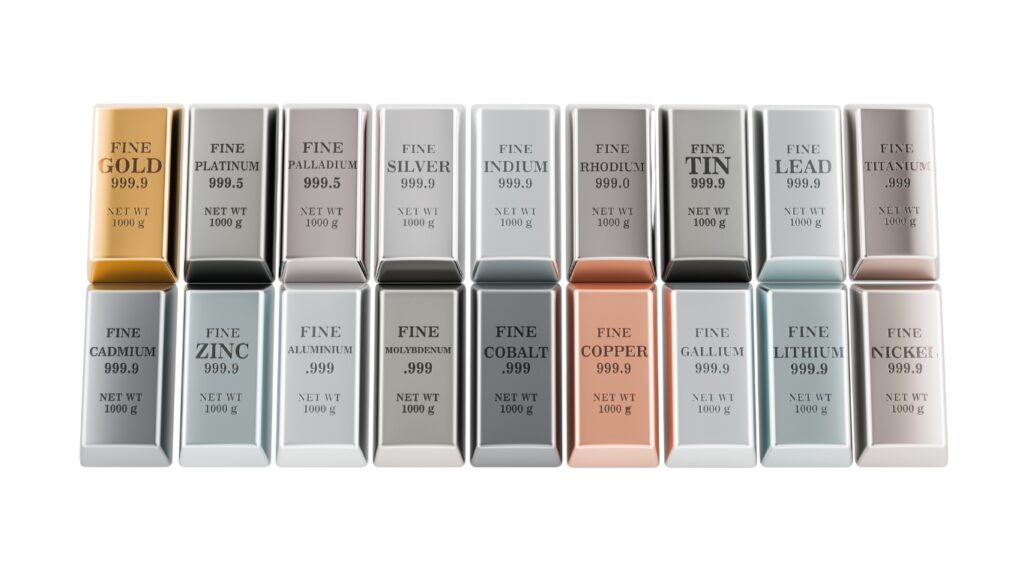
Copper is the metal that powers electrification, and electrification is the defining infrastructure project of this decade. The copper price forecast for 2026 from Goldman Sachs projects a price range between $10,500 and $12,000 per metric ton, citing a structural supply deficit the firm believes will persist well into the 2030s.
EV production alone now demands far more copper per vehicle than a conventional internal combustion engine car. A single electric vehicle uses roughly 83 kilograms of copper compared to 23 kilograms in a traditional vehicle. Scale that across the 40 million EVs projected to be sold globally in 2026, and the math becomes immediately obvious.
On the supply side, major mining regions are struggling to keep pace. Chilean output, which accounts for roughly 27% of global copper production, has been constrained by water scarcity, ore grade decline, and permitting delays. New project lead times average 16 years from discovery to first production, which means no new supply wave is coming anytime soon.
Why The Copper Supply Deficit Is Accelerating Faster Than Expected
According to Wood Mackenzie’s copper market analysis, the cumulative supply deficit through 2030 could exceed 10 million metric tons. That figure is larger than the entire current annual global consumption base. Power grid expansion alone, driven by data center buildouts and industrial electrification, added unexpected copper demand layers that analysts were not fully pricing in as recently as 2023. And if you are thinking about how alternative assets are performing alongside commodities, a look at which alternative assets delivered the best returns recently puts the copper opportunity in sharp context.
Platinum Outperforming Gold In 2026
Platinum spent years trading at a deep discount to gold, which was a genuine historical anomaly. The gold-to-platinum ratio peaked above 2.0 in recent years, meaning gold traded at more than double the price of platinum. Platinum outperforming gold in 2026 is no surprise to analysts who tracked hydrogen fuel cell adoption curves and South African mining output data closely.
Platinum currently trades near $1,100 per troy ounce while gold sits above $3,100, but the gap is narrowing at a pace institutional investors are now actively positioning around. Automotive demand still forms the foundation, with catalytic converters consuming roughly 40% of annual platinum supply. The hydrogen economy adds an entirely new demand vector that did not exist at scale even three years ago.
South African mines, which produce approximately 70% of global platinum supply, have faced persistent electricity shortages, labor disputes, and capital underinvestment. That supply constraint combined with rising hydrogen infrastructure demand creates the conditions for sustained price appreciation.
BloombergNEF’s hydrogen market projections show global electrolyzer capacity growing from under 1 gigawatt in 2023 to over 130 gigawatts by 2030. Each megawatt of proton exchange membrane electrolyzer capacity requires between 0.3 and 0.6 kilograms of platinum.
The compounding effect of this demand on a supply-constrained market is a scenario that portfolio managers specializing in precious metals are treating as a generational opportunity.
Cobalt Demand Accelerates Due To Clean Energy Boom
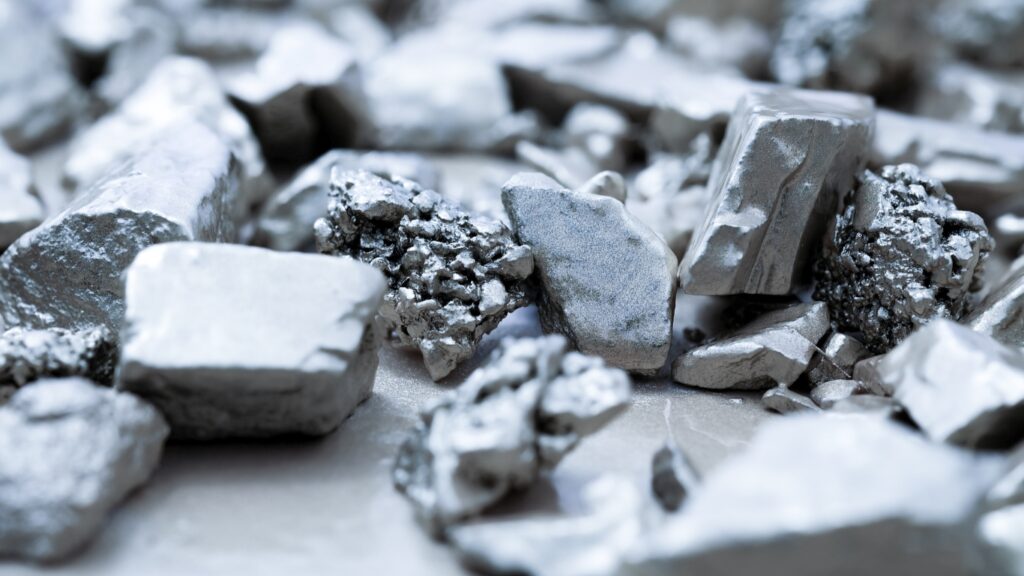
Cobalt demand from the clean energy sector has moved from a niche concern to a boardroom priority inside the world’s largest battery manufacturers. Global cobalt demand is projected to reach 230,000 metric tons by 2030, up from approximately 175,000 metric tons in 2024, driven almost entirely by battery storage and electric mobility applications.
The Democratic Republic of Congo supplies roughly 70% of global cobalt, a concentration risk that is forcing every major Western government and automaker to diversify sourcing strategies aggressively. The United States, European Union, and Australia have all launched critical minerals partnerships targeting cobalt supply chain resilience.
Next-generation solid-state batteries, which several manufacturers plan to commercialize between 2026 and 2028, still incorporate cobalt in their cathode chemistry. The narrative that cobalt would be engineered out of battery supply chains entirely has proven premature, as performance and energy density requirements keep favoring cobalt-containing formulations at the premium end of the market.
Ford, General Motors, and multiple Asian battery suppliers signed multiyear cobalt offtake agreements in 2024 and 2025 that locked in supply at prices well above spot rates at the time. According to the IEA’s Critical Minerals 2025 report, battery gigafactory buildouts across North America and Europe will require an additional 45,000 metric tons of cobalt annually by 2028. Companies that wait for spot market availability rather than securing forward contracts are already facing procurement constraints.
Smart Investors Are Positioning In These Metals
Institutional money is not waiting for mainstream consensus. ETF flows into copper and platinum-linked vehicles accelerated sharply through the first half of 2025, with the Global X Copper Miners ETF and Aberdeen Standard Physical Platinum Shares ETF both seeing double-digit inflow growth. Futures markets show backwardation in copper contracts, a structure that signals physical demand is outpacing near-term supply.
Mining equity investors are rotating toward producers with long-reserve-life assets in politically stable jurisdictions. Companies like Freeport-McMoRan for copper, Sibanye-Stillwater for platinum, and Glencore for cobalt are appearing with increasing frequency in institutional portfolio disclosures. If you are building a broader alternative investment strategy around hard assets, understanding which alternative assets have delivered the strongest returns will sharpen your allocation thinking.
Risk management is still essential in this space. Geopolitical disruptions in major producing regions, regulatory changes affecting mining permits, and any unexpected softening in EV adoption rates all qualify as legitimate tail risks. Diversifying across all three metals rather than concentrating exposure in one reduces single-commodity volatility by a meaningful margin.
Top Mining Stocks And ETFs Gaining Traction In 2026
- Freeport-McMoRan (FCX): The largest publicly traded copper producer with significant long-term reserve depth in the Americas
- Sibanye-Stillwater (SBSW): A leading platinum group metals producer with South African and North American operations
- Glencore (GLEN): The dominant cobalt trader globally with direct DRC mining exposure and recycling infrastructure
- Global X Copper Miners ETF (COPX): Broad exposure to diversified copper producers without single-stock concentration risk
- Aberdeen Standard Physical Platinum Shares ETF (PPLT): Direct platinum price exposure backed by physical metal holdings
Goldman Sachs research identified copper as the most critical single commodity for the energy transition, calling it “the new oil” and projecting that no realistic technology substitution exists at the scale and timeline required by global decarbonization commitments.
The window for positioning ahead of the next major leg up in the industrial metals story for 2026 is narrowing fast. Supply deficits are already confirmed, demand growth is accelerating, and the institutional money that moves markets is already repositioning. Your next move in this space should be informed, deliberate, and sooner rather than later.
Frequently Asked Questions
What is the copper price forecast for 2026 and why is it bullish?
The copper price forecast for 2026 ranges from $10,500 to $12,000 per metric ton according to Goldman Sachs projections. The bullish case rests on a structural supply deficit driven by EV infrastructure buildout, power grid expansion, and data center electrification. Chilean mine output constraints and 16-year average lead times for new copper projects mean no significant new supply is available to close the gap in the near term.
Why is platinum outperforming gold in 2026?
Platinum is outperforming gold in 2026 because of two converging forces: South African supply constraints limiting production and rising demand from hydrogen fuel cell electrolyzer installations. The gold-to-platinum ratio had reached historically extreme levels, making platinum deeply undervalued relative to its industrial utility. As hydrogen economy investment accelerates, platinum’s unique catalytic properties place it at the center of a demand wave that gold simply does not benefit from.
How does cobalt demand from clean energy affect long-term supply agreements?
Cobalt demand from clean energy applications, particularly battery storage and EV gigafactories, is projected to grow from 175,000 metric tons in 2024 to 230,000 metric tons by 2030. This surge in the industrial metals outlook has pushed major automakers and battery manufacturers to sign multiyear offtake contracts directly with DRC producers and alternative suppliers in Australia and Canada, bypassing spot markets and locking in supply security years in advance.