

Auction records once owned by abstract expressionism are starting to crack. In 2024, figurative and portrait works accounted for nearly 58% of total fine art auction hammer prices in the mid-market segment, according to Artprice’s annual art market report. That is not a blip. That is a structural shift you should be paying attention to.
That shift did not happen overnight, and it did not happen by accident. Contemporary portrait art sits at the intersection of identity, technology, and cultural urgency in a way that no other category quite matches right now. If you are building a serious collection, that intersection is exactly where you want to be looking.
Collectors who ignored portraiture five years ago are now chasing the same names they once dismissed. The window to buy ahead of that curve is still open, but it is closing faster than most people realize.
Table of Contents
Key Takeaways & The 5Ws
- You should track emerging portrait artists with distinctive techniques before auction houses drive their prices beyond your budget.
- You can use secondary market activity to confirm whether an artist’s primary market pricing reflects genuine collector demand.
- You need to look for artists with consistent exhibition histories and growing institutional recognition as early signals of collectible value.
- You should consider contemporary portrait art as an entry point if your collecting budget falls between five thousand and fifty thousand dollars.
- You can strengthen your buying decisions by following gallery sell-out rates and museum acquisition patterns for portrait artists you are considering.
- Who is this for?
- This topic is most relevant for new and mid-level collectors who want to build a meaningful fine art collection with strong growth potential.
- What is it?
- The main subject is the rapid rise of contemporary portrait art as one of the most collectible and financially rewarding fine art categories in 2026.
- When does it matter most?
- This matters right now in 2026 as auction records shift toward figurative work and emerging portrait artists are still priced within reach of younger collectors.
- Where does it apply?
- This applies most directly in the global mid-market fine art segment including major auction houses, international art fairs, and leading contemporary galleries.
- Why consider it?
- This matters because understanding what drives portrait art demand helps you buy strategically, avoid costly mistakes, and position your collection ahead of broader market recognition.

Why Contemporary Portrait Art Dominates Now
The numbers tell part of the story. Figurative art sales on Artsy grew by 34% between 2022 and 2024, with portrait works leading that growth. But behind those numbers sits a broader cultural reckoning with representation, identity, and whose face gets remembered. That kind of cultural momentum does not reverse quickly.
Social media changed portraiture permanently. Platforms built around the face, from Instagram to TikTok, rewired how audiences relate to images of people. Collectors raised on these platforms gravitate toward work that engages directly with the human subject rather than abstracting it away. Your eye has been trained by the feed whether you realize it or not.
Identity politics accelerated this gravitational pull. Artists interrogating race, gender, diaspora, and belonging found portraiture to be their most direct language. Institutions responded. The National Portrait Gallery in London reopened in 2023 after a three-year renovation and reported record visitor numbers within its first six months, signaling mainstream appetite that galleries and auction houses simply could not ignore.
The figurative art revival also has an economic dimension. Abstract works at the top of the market require deep institutional knowledge to evaluate. A compelling portrait communicates value immediately, making it far more accessible to the expanding class of younger collectors entering the market with budgets between five thousand and fifty thousand dollars. That accessibility is accelerating demand from below, which always feeds upward pressure on prices.
Top Artists Creating Collectible Portrait Artwork
Knowing which artists produce genuinely collectible portrait artwork separates disciplined collectors from impulsive buyers. The most sought-after names in 2026 share certain qualities: consistent exhibition histories, growing institutional recognition, and secondary market activity that confirms primary market pricing. All three signals need to be present before you commit serious capital.
Portrait painters like Toyin Ojih Odutola, whose works now command six-figure prices at Christie’s, demonstrate how fast trajectories can move. Her layered ballpoint pen portraits attracted academic attention before auction houses noticed, and that pattern is worth tracking in artists still priced under ten thousand dollars. The academic attention comes first. The auction prices follow.
Amoako Boafo built a similar arc. His soap-on-canvas technique became a visual signature that collectors and institutions recognized almost simultaneously, and his prices reflected that consensus quickly. Artists developing similarly distinctive technical approaches in 2026 include Somaya Critchlow, whose intimate small-scale portraits sell out consistently at Stephen Friedman Gallery, and Otis Kwame Kye Quaicoe, whose figurative work bridges Portland and international art fairs with real crossover appeal. Understanding how the primary and secondary art market work together will help you time your entry points with these names far more effectively.
- Toyin Ojih Odutola: six-figure auction results, strong institutional acquisition history
- Amoako Boafo: distinctive technique, rapid secondary market growth, global gallery representation
- Somaya Critchlow: consistent sell-out shows, growing museum interest, accessible entry price points
- Otis Kwame Kye Quaicoe: art fair presence building, critical recognition accelerating
- Shara Hughes: not strictly portraiture but her figurative environments attract the same collector base
Smart Ways To Buy Contemporary Portraits
You have more buying channels available than any previous generation of collectors, and that abundance creates its own risks. Knowing where to buy contemporary portraits matters as much as knowing what to buy. The wrong channel can cost you both money and provenance.
Online platforms including Artsy, Saatchi Art, and 1stDibs expanded the accessible market dramatically. The Hiscox Online Art Trade Report for 2024 found that 62% of collectors under forty made their most recent art purchase online, with portrait works among the top three categories purchased. Speed and inventory breadth are genuine advantages here, but condition reports and provenance documentation require extra scrutiny when you are buying without seeing the work in person.
Gallery buying offers something platforms cannot replicate: relationship, context, and provenance built in real time. A gallery that represents an artist controls the narrative around that work, which directly affects resale value later. First-time buyers often underestimate how much that institutional framing matters at auction. Walk in, ask questions, and build those relationships before you need them.
- Verify provenance documentation before committing to any purchase above five thousand dollars
- Request a certificate of authenticity and confirm it references the specific work, not just the artist
- Check whether the artist or gallery will support future resale by providing condition reports
- Review the artist’s exhibition history on their gallery’s website and cross-reference with art fair records
- For online purchases, request additional high-resolution images and a physical condition report before payment
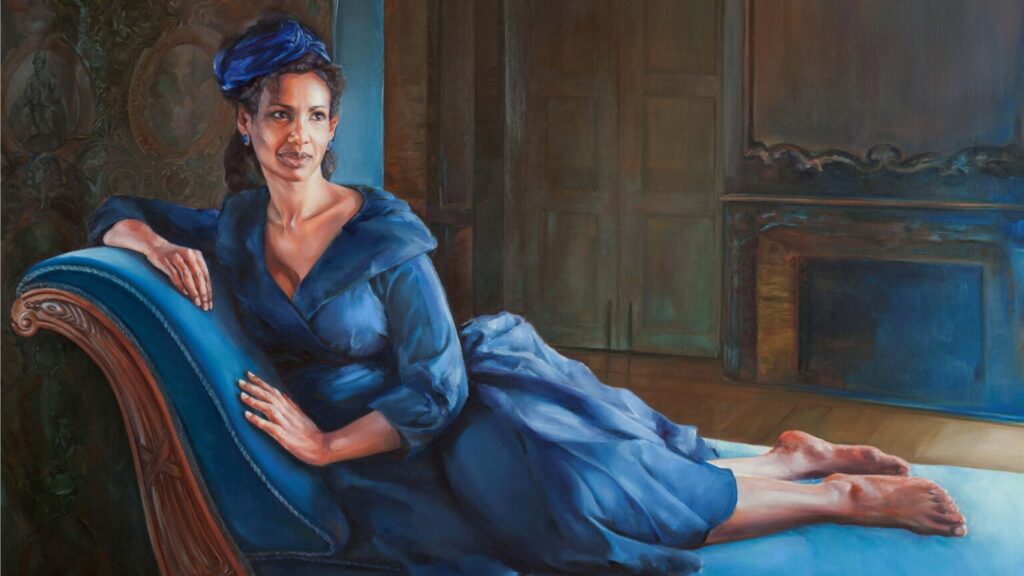
Portrait Art Investment Signals Collectors Should Know
Portrait art investment requires a different analytical lens than stocks or real estate, but the underlying logic of spotting value early is recognizable. You are looking for the gap between current pricing and likely future demand, and several reliable signals consistently point toward that gap. Art’s unique illiquidity, often seen as a weakness, is actually what makes it such a compelling long-term play when you enter at the right moment.
Museum acquisitions are the most reliable leading indicator available. When a public institution acquires an artist’s work, it validates them for the next tier of private collectors. Track acquisition announcements from institutions like the Hammer Museum, Tate Modern, and the Studio Museum in Harlem. Artists entering those collections while still priced accessibly represent exceptional positioning for patient buyers.
Art fair placement is a secondary signal worth watching closely. An artist moving from a booth at Untitled Art Fair to a primary position at Frieze Los Angeles within two years is following a trajectory that historically precedes price acceleration. Secondary market activity confirms the thesis: if works are appearing at auction before an artist’s primary gallery has raised prices, demand is outpacing supply. That gap is where your opportunity lives.
| Signal | What It Tells You | Reliability |
|---|---|---|
| Museum acquisition | Institutional validation, future price floor | High |
| Art fair tier upgrade | Gallery confidence, growing collector demand | Medium-High |
| Secondary market appearance | Demand exceeding primary supply | Medium |
| Critical press volume | Cultural momentum building | Medium-Low |
| Social media following growth | Broader awareness, potential speculative interest | Low |
Risk factors are real and deserve equal attention. Speculative buying driven by social media alone produced a cohort of overpriced works in 2021 and 2022 that corrected sharply, as Bloomberg’s art market coverage documented in detail. Artists with auction records built primarily on a single collector or dealer relationship carry concentration risk that any diversified collection should actively avoid.
Building A Portrait Collection That Lasts
A single brilliant purchase does not make a collection. The collectors whose holdings appreciate most reliably over time build with intention, acquiring works that speak to each other across artists, periods, and price points. Coherence is what transforms a group of purchases into something with genuine cultural and financial weight.
Thematic coherence adds value beyond aesthetics. A collection focused on contemporary portraits of the African diaspora, or on women artists depicting female subjects, carries curatorial weight that attracts institutional attention and loan requests. Those institutional relationships feed back into the provenance and exhibition history of every work you own, compounding their value over time.
Practical stewardship matters as much as acquisition strategy. Art Business Info recommends insuring works at current market replacement value rather than purchase price, a distinction that matters enormously for artists whose values have risen quickly. Conservation-quality framing and UV-filtering glass protect works on paper and canvas from light damage that is both irreversible and deeply value-destroying. Get this infrastructure right before you scale your buying.
Diversify across price points deliberately. Anchor your collection with two or three higher-value works by mid-career artists, then surround them with emerging voices priced under five thousand dollars. That structure builds resilience. If the emerging works appreciate, your collection gains across the board. If they do not, your anchor holdings carry the overall value. Think of it the same way you would rebalancing any serious investment portfolio.
The best portrait collections are not assembled quickly. They are built through sustained looking, disciplined research, and relationships with galleries and artists that deepen over years. Start that process now, because the artists whose prices feel uncomfortable in 2026 are the ones whose early works will define the collections people remember in 2036.
Frequently Asked Questions
Is contemporary portrait art a good investment in 2026?
Contemporary portrait art has shown strong secondary market performance over the past four years, with figurative works outperforming several abstract categories in the mid-market segment. Like any art investment, results depend heavily on artist selection, purchase price relative to market demand, and holding period. Collectors who research institutional acquisition patterns and buy artists with genuine critical traction rather than social media hype tend to see the most consistent returns.
Where is the best place to buy contemporary portraits online?
Artsy, Saatchi Art, and 1stDibs are the three most established online platforms for buying contemporary portrait artwork. Artsy offers the broadest range of gallery-represented works with provenance documentation. Saatchi Art provides better access to emerging artists at lower price points. Always request a condition report and certificate of authenticity before purchasing any work above a thousand dollars, regardless of platform.
Which contemporary portrait artists are most collectible right now?
Toyin Ojih Odutola, Amoako Boafo, Somaya Critchlow, and Otis Kwame Kye Quaicoe consistently appear on serious collectors’ radar in 2026. Each has demonstrated the combination of institutional recognition, gallery support, and secondary market activity that signals durable collectibility. For collectors with smaller budgets, tracking artists recently acquired by mid-tier public institutions offers a reliable path to finding the next generation of sought-after contemporary portrait painters.