
There’s a moment that captures everything about how Dubai rewrote the rules of luxury real estate through branded residences.
In 2024, a penthouse at Dorchester Collection’s Lana Residences traded hands for AED 139 million – roughly $38 million – in a building that didn’t even exist fifteen years ago, in a neighborhood that was still sand a generation before that.
The buyer wasn’t speculating on Dubai’s growth potential or betting on tourism numbers. They were buying into a globally recognized luxury brand that happened to be attached to a building, treating real estate the same way you might acquire a rare Patek Philippe or a blue-chip artwork.
Dubai essentially turned luxury property into a branded asset class where the name on the building matters as much as the address, the view, or even the architecture itself. And once you understand that shift, the market’s performance starts to make complete sense.
Table of Contents
Key Takeaways
Navigate between overview and detailed analysisKey Takeaways
- Dubai has transformed luxury real estate into a branded asset class, where the name on the building—Armani, Bulgari, Dorchester Collection—carries as much investment weight as the location or architecture.
- Branded residences in Dubai command average premiums of 38% over comparable non-branded luxury projects, outperforming the 30–33% global average, according to Savills.
- The market’s depth is extraordinary: 435 transactions above $10 million in 2024, with Q2 2025 volume hitting $2.6 billion, driven by family offices and international wealth treating property as an allocation-grade hard asset.
- Supply constraints and sustained demand have fueled 147% prime price appreciation since 2019, while inventory fell 40–65% in 2024 even as sales hit records—signaling genuine structural strength rather than speculation.
- With more than 50 active branded schemes and a pipeline expanding 59% by 2029, Dubai has become the global epicenter for branded residences, redefining real estate as a lifestyle-investment hybrid blending yield, prestige, and scarcity.
The Five Ws Analysis
- Who:
- Global ultra-high-net-worth buyers, family offices, and institutional investors allocating capital into branded Dubai real estate.
- What:
- The rise of branded residences—developments partnering with luxury names like Armani, Bulgari, and Dorchester Collection—that combine lifestyle prestige with investment resilience.
- When:
- Accelerating from 2010’s Armani Residences to the 2024–2025 boom, with record transactions and sustained premium pricing.
- Where:
- Primarily Dubai’s elite districts—Downtown, Jumeirah Bay, and Business Bay—now home to the world’s highest concentration of branded luxury projects.
- Why:
- Because branding delivers instant trust, liquidity, and resale performance, turning property into a globally recognized store of value rather than a purely local real-estate play.
The Origins of Dubai’s Branded Boom
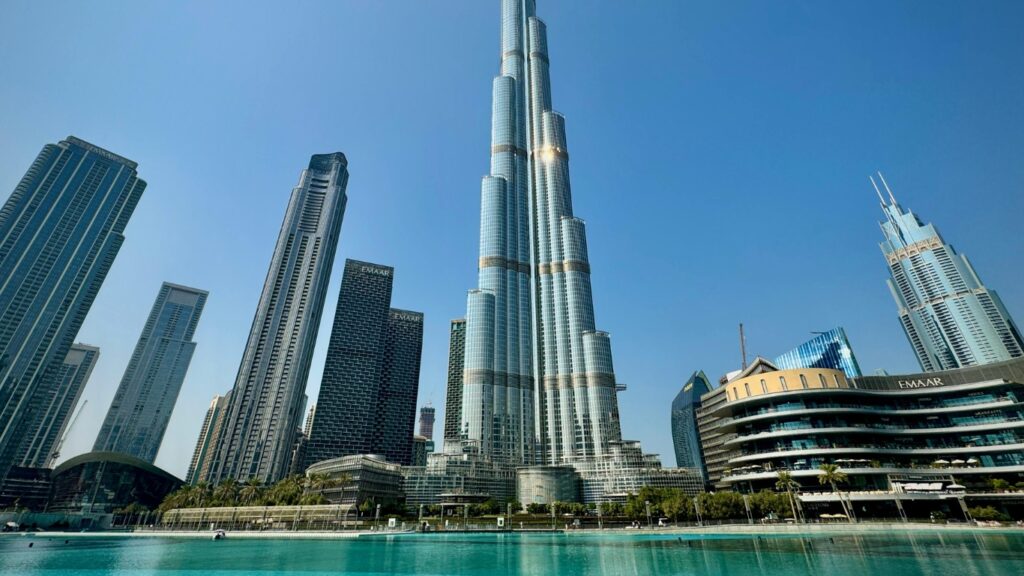
The blueprint was laid surprisingly early, back in 2010 when Armani opened its residences at Burj Khalifa. At the time, it seemed almost gimmicky. Did anyone really need Giorgio Armani’s name on their apartment?
But the project solved a real problem that Dubai faced as a new luxury destination. Traditional prestige markers simply didn’t exist here. No centuries-old neighborhoods with established cachet, no streets where old money had lived for generations, no addresses that conferred automatic status the way Mayfair or Fifth Avenue did.
What Dubai did have was the ability to import prestige wholesale by partnering with brands that already carried global recognition. When Armani attached its name to residences, it brought decades of fashion luxury credibility that instantly communicated quality and exclusivity to international buyers who might never have heard of the developer but certainly knew what Armani stood for. If you’re curious how this compares to other markets where outside buyers are reshaping pricing, Switzerland’s experience tells a cautionary parallel story.
The template worked brilliantly. Soon other luxury brands realized they could extend their reach into real estate in ways that benefited both sides. Developers got instant credibility. Brands got licensing revenue and deepened relationships with their wealthiest customers.
By 2024 and running into 2026, this strategy had worked so completely that Dubai became the world’s busiest market for properties above $10 million, as Knight Frank’s Wealth Report documented.
But here’s what makes this striking. Luxury inventory actually fell somewhere between 40% and 65% across 2024 even as transaction volumes hit records. Properties weren’t sitting on the market waiting for buyers. They were moving quickly, often to international buyers who’d never set foot in Dubai but trusted the brand name enough to wire eight figures based on renderings and the reputation attached to the project.
Why Branded Residences Command a Premium
The price premium tells you exactly how much buyers value having a recognized name attached to their property, and the numbers are substantial. Savills’ analysis across global markets found branded properties commanding roughly 30% to 33% more than comparable non-branded luxury, with Dubai showing closer to 38% premiums on average and considerably higher on unique projects.
Think about the psychology behind this. Someone shopping for a $2 million apartment might pay $2.6 million or even $2.8 million simply because Bulgari or Armani is associated with the building.
This isn’t irrational. The brand provides something genuinely valuable beyond prestige. Think of it as a form of quality insurance that matters enormously when you’re buying real estate across borders. When you purchase a branded residence, you’re piggybacking on decades or centuries of reputation management.
The brand has already vetted service standards, negotiated management contracts, and attached its name in ways that mean real reputational risk if quality disappoints. For a buyer in Shanghai or London or Mumbai trying to decide whether a Dubai property is legitimate luxury or just expensive, seeing Bulgari’s name provides immediate confidence that would otherwise require extensive due diligence. That same logic applies whether you’re weighing whether Dubai property makes financial sense at all or comparing it to other offshore destinations.
Luxury Branded Residence Projects in Dubai
A comprehensive dataset of high-end branded residential developments in Dubai featuring luxury brands including Armani, Bugatti, Ritz-Carlton, Baccarat, Bulgari, Montblanc, Six Senses, and Kempinski with current prices and project status.
| Project Name / Location | Brand | Status | Price (USD) |
|---|
The performance data supports this confidence translating into actual financial returns. Branded properties don’t just sell for more initially. They also move faster when you want to exit and hold value better during downturns, with industry tracking showing roughly 15% better resilience during market corrections compared to generic luxury developments. When markets get uncertain, buyers retreat to names they trust. Branded product finds buyers while unbranded inventory sits and eventually requires discounting. If you want to understand how to calculate what that resilience is actually worth, a solid ROI framework makes the comparison much clearer.
Bulgari Residences hitting AED 12,624 per square foot back in 2022, then seeing multiple deals above Dh100 million for Bulgari Lighthouse penthouses close in 2025, illustrates how high this premium can reach when scarcity and brand prestige align perfectly.
Global Wealth Is Flowing Into Dubai’s Branded Residences
What’s reshaping Dubai’s luxury market isn’t just Gulf money or regional wealth. It’s genuinely global capital flowing from surprisingly diverse sources.
Europeans dealing with stagnant property markets and high taxes, Indians seeking offshore wealth parking with better privacy than traditional havens, Middle Eastern families diversifying beyond their home markets, and East Asians looking for alternatives to slowing Chinese real estate. They’re all converging on the same city.
And they’re all buying branded residences that feel familiar even in an unfamiliar city.
The scale has reached levels that seemed implausible even recently. Dubai closed 435 transactions above $10 million in 2024, an all-time record. The second quarter of 2026 alone saw $2.6 billion trade hands at that level, and by the third quarter, activity above $10 million was running 24% ahead of the previous year despite prices already sitting at historic highs.
The recent trophy sales read almost absurdly. Bulgari Lighthouse penthouses traded at Dh146.6 million and Dh136.25 million. The Dorchester Collection penthouse at Lana hit AED 139 million. Premium transactions at Jumeirah Bay kept stacking up through the year.
But these aren’t vanity purchases by newly wealthy individuals overpaying for bragging rights. They’re increasingly made by sophisticated family offices and wealth managers who view these properties as allocation-worthy assets sitting alongside art, watches, and precious metals as stores of value that happen to also provide lifestyle utility. The Financial Times has tracked this shift in how ultra-high-net-worth allocators think about real assets, and Dubai keeps appearing near the top of target lists.
Dubai vs Global Peers: Price Growth, Yields, and Absorption
The comparative performance makes clear this isn’t just Dubai participating in a global luxury boom. It’s genuinely outperforming established capitals in ways that suggest structural advantages rather than cyclical timing.
While New York and London posted negative luxury price growth in 2023, Dubai climbed 15%, continuing momentum rather than correcting after previous gains. Knight Frank’s forecast for another 5% appreciation in 2026 despite already elevated prices reflects confidence that constrained supply at the top end keeps demand pressure favoring sellers.
Step back and look at the five-year arc from 2019 through 2024, and that 147% prime appreciation tells you this was complete repricing rather than just a hot streak. Most Western capitals gained maybe 20% to 40% over the same period, if they gained at all.
Dubai essentially doubled then doubled again, capturing what appears to be a permanent reallocation of global wealth toward a city that offers tax advantages, political stability relative to many alternatives, and lifestyle amenities that didn’t exist a generation ago.
The absorption dynamics reveal a market with genuine depth buying at these elevated prices rather than just headlines from a few large transactions. Inventory falling 40% to 65% while volumes hit records means properties are moving quickly, perhaps because of their high prices rather than despite them. This is exactly opposite to what struggling markets experience, where inventory accumulates as buyers wait for better prices that may never come.
How Branding Became an Investment Strategy
The operational advantages of attaching a luxury brand go well beyond commanding higher prices. They fundamentally change how properties move through sales cycles and reach international capital.
When a developer announces a new Bulgari or Armani project, the brand brings its existing global customer base as built-in marketing that would take years and tens of millions of dollars for a standalone developer to replicate through traditional channels.
Wealthy individuals who already buy Bulgari jewelry or stay at Bulgari hotels receive direct outreach about residential opportunities, creating sales velocity that unbranded projects simply cannot achieve regardless of quality.
This has caught the attention of institutional capital. The branded residence pipeline expanded by 240 projects in 2024, with projections showing roughly 59% growth by 2029 reaching approximately 1,019 branded properties worldwide. Bloomberg’s coverage of luxury real estate trends has documented how private equity and institutional investors are increasingly structuring co-branded deals that spread development risk while capturing the premiums and velocity advantages that brand partnerships provide.
Dubai sits at the center of this global expansion with over 50 operational branded schemes, more than any other city on the planet.
Savills identifies it as the world’s hottest branded hub, with the Middle East pipeline expected to more than double through 2030 as developers and brands recognize what works here could scale across the region. The concentration creates network effects where multiple luxury brands validating each other establishes Dubai as the place where this asset class achieves its fullest expression. If you’re thinking seriously about how branded real estate fits into a broader alternative asset strategy, the same discipline that applies to allocating to art funds applies here too. Brand equity, liquidity windows, and exit timing all matter just as much as the initial purchase price.