
Transaction volumes in Dubai’s prime residential market hit a record AED 142 billion in the first half of 2024 alone, a figure that would have seemed impossible just five years ago.
What makes that number genuinely striking is that it arrived during a period of global rate uncertainty, geopolitical tension, and cooling luxury markets in London, Hong Kong, and New York. Dubai luxury property investment in 2026 is not simply a trend story.
What you’re watching is a structural shift in where the world’s wealthiest individuals choose to anchor their capital, and the fundamentals driving that shift show no credible signs of reversing.
Key Takeaways & The 5Ws
- You can preserve more of your appreciation because Dubai imposes zero capital gains tax on residential property profits.
- You should consider Palm Jumeirah and Downtown Dubai as your prime targets since both districts recorded double digit price growth in 2024.
- You can secure a ten year renewable UAE residency by investing a minimum of AED 2 million in qualifying Dubai property.
- You benefit from currency stability because the dirham has been pegged to the US dollar since 1997, protecting your returns from exchange rate erosion.
- You can diversify across off plan and ready unit segments simultaneously since both are absorbing strong transaction volumes without signs of oversupply.
- Who is this for?
- This topic is most relevant for high net worth and ultra high net worth individuals, family offices, and global investors seeking to allocate luxury real estate capital outside traditional markets.
- What is it?
- The main subject is evaluating whether Dubai luxury property investment in 2026 offers sustainable capital preservation, yield potential, and structural advantages over competing global prime markets.
- When does it matter most?
- This analysis matters right now as global rate uncertainty and cooling luxury markets in London, Hong Kong, and New York make 2026 a pivotal moment for reallocating prime residential capital.
- Where does it apply?
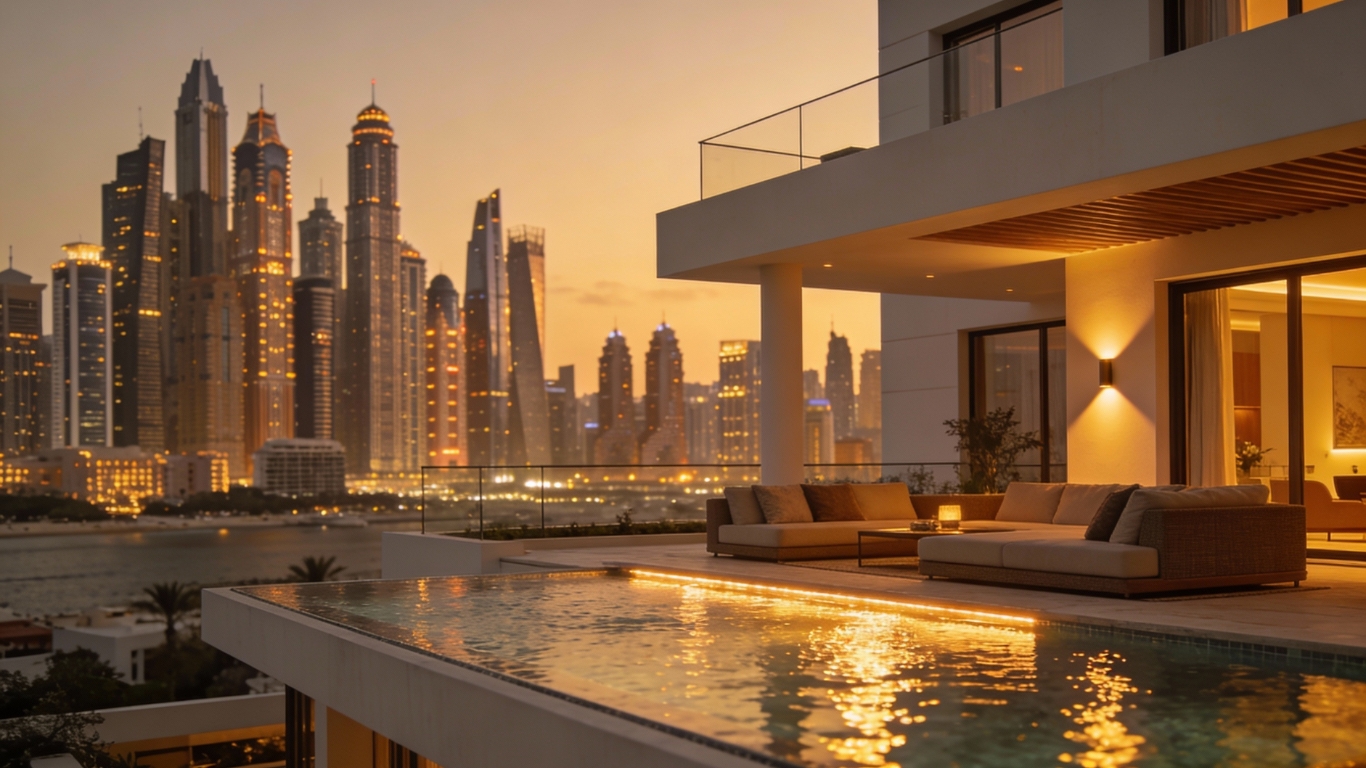
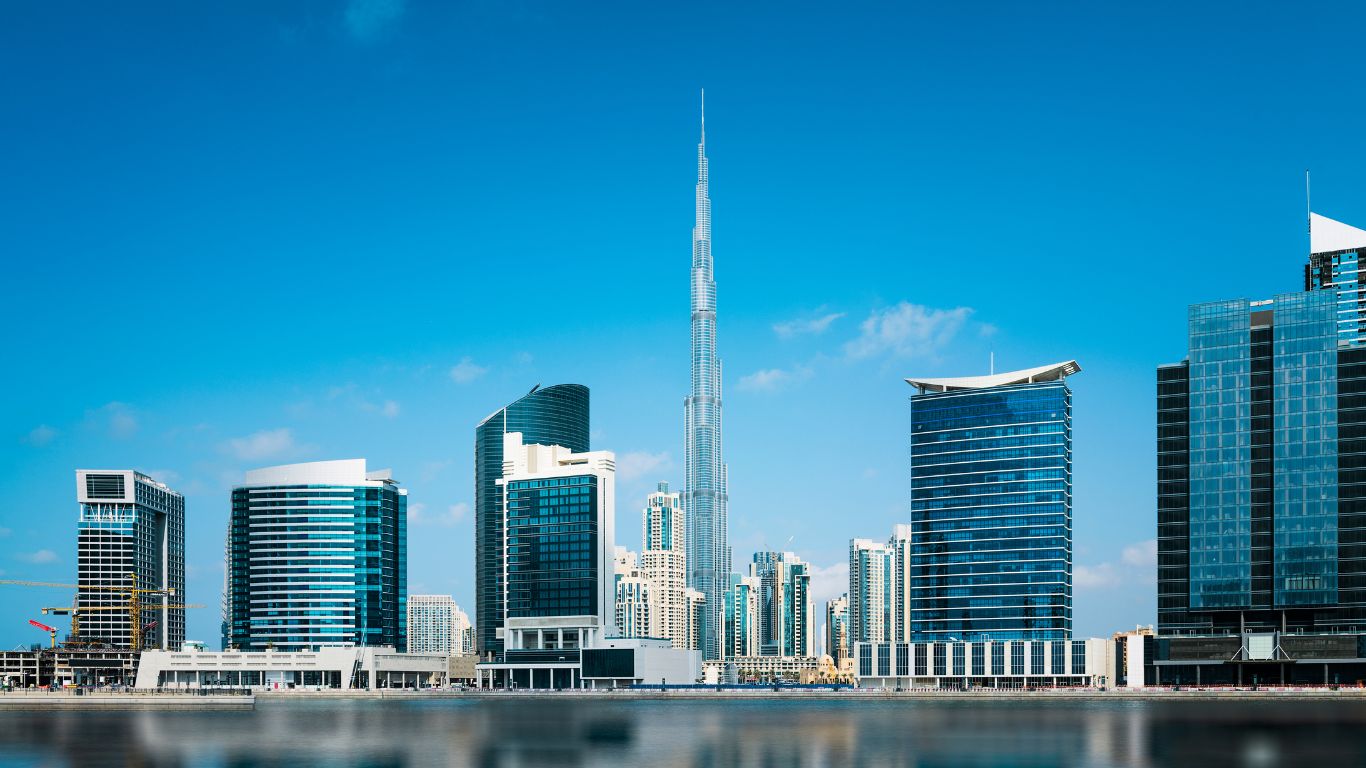
- This applies specifically to prime residential districts within Dubai including Palm Jumeirah, Downtown Dubai, Dubai Hills Estate, and Business Bay in the United Arab Emirates.
- Why consider it?
- This matters because Dubai combines zero capital gains tax, dirham dollar peg stability, transparent title registration, and golden visa linked residency rights to deliver a uniquely low cost and legally secure environment for long term wealth preservation.

Dubai Luxury Property Investment 2026 Fundamentals
Prime residential prices in Dubai have climbed consistently, with Palm Jumeirah villas averaging above AED 7,000 per square foot in 2024, while Downtown Dubai and Dubai Hills Estate command between AED 2,800 and AED 4,500 per square foot depending on the asset class. According to Property Monitor’s 2024 annual report, total residential transactions exceeded 180,000 units across the year, up 36% year on year in volume.
Off-plan sales now account for roughly 60% of all transactions, signalling strong forward confidence from buyers willing to commit capital well before completion.
The secondary market is holding up well too. Ready units in established communities attract buyers seeking immediate rental income alongside capital preservation. The split between off-plan and secondary demand actually reflects a healthy market rather than a speculative bubble, because both segments are absorbing volume at the same time. If you want to understand how broader real estate market cycles work, Dubai’s current phase is a textbook example of late-expansion maturity.
| District | Average Price Per Sq Ft (2024) | Year-on-Year Growth | Primary Demand Driver |
|---|---|---|---|
| Palm Jumeirah | AED 7,200+ | 18% | Ultra-HNW villa buyers |
| Downtown Dubai | AED 3,800 | 14% | Branded residences and short-term rental |
| Dubai Hills Estate | AED 2,900 | 12% | Family end-users and long-term investors |
| Business Bay | AED 2,400 | 9% | Young professional and rental yield seekers |
Why Dubai Remains A Global Safe Haven
The Dubai real estate safe haven narrative is grounded in policy architecture, not marketing. Zero capital gains tax means every dirham of appreciation stays with you. Zero inheritance tax removes a cost that quietly erodes generational wealth transfers in markets like the United Kingdom and France.
The Dubai Land Department maintains a transparent title registration system that gives you internationally recognised legal protection over your assets, a feature that buyers from politically unstable regions find especially compelling.
Currency stability matters too. The dirham has been pegged to the US dollar since 1997, which eliminates the exchange rate erosion that regularly punishes property investors in markets with floating currencies. Compare that to Singapore, which imposes a 60% Additional Buyer’s Stamp Duty on foreign purchasers, or London, where overseas buyers face surcharge stamp duty and rising annual property taxes. Dubai’s entry and holding costs stay remarkably low by any global benchmark.
The UAE’s golden visa programme, overhauled in 2022, now grants a ten-year renewable residency to property buyers investing a minimum of AED 2 million. This policy change directly linked property ownership to long-term residency rights, transforming the investment case for buyers who previously viewed Dubai as a speculative play rather than a genuine base. You can explore how the world’s most powerful investor passports compare if you’re weighing residency options across multiple jurisdictions.
Applications linked to property investment surged by over 40% in the twelve months following the reform, according to UAE government figures, validating just how much demand that policy shift unlocked.
Real Risks Investors Must Not Ignore
Treating Dubai as risk-free would be intellectually dishonest, and any adviser telling you otherwise deserves serious scrutiny. The market carries genuine structural vulnerabilities that require deliberate navigation. Oversupply pressure is the most frequently cited concern, particularly in the apartment segment of certain corridors where developer activity has accelerated faster than population absorption.
Service charges in premium buildings have risen sharply, with some communities in Downtown recording annual fees above AED 30 per square foot in 2024. That compresses net rental yields for owners who don’t actively manage their assets.
Developer delivery risk on off-plan units is real. Several mid-tier developers delayed handover dates by twelve to twenty-four months on projects launched between 2021 and 2023. Regulatory oversight has strengthened under RERA, but you should conduct thorough escrow verification and developer track-record checks before committing any capital. The Financial Times has covered the broader pattern of off-plan delivery risk across Gulf markets if you want deeper context.
Oil price sentiment cycles still influence broader UAE economic confidence, even though Dubai’s GDP is now less than 1% oil-dependent, because regional risk perception shifts when crude prices fall sharply.
Oversupply Hotspots To Avoid In 2026
- Jumeirah Village Circle: high apartment delivery pipeline relative to rental demand absorption
- Dubai Silicon Oasis: weakening corporate tenant demand reducing occupancy rates
- Discovery Gardens: ageing stock competing with newer units at similar price points
- International City: limited capital appreciation track record in recent cycles
Mitigation is straightforward once you understand the geography. Concentrate your exposure in supply-constrained waterfront locations and master-planned communities with controlled developer access. These locations have structural scarcity built in, and that scarcity is what protects your position when softer corridors experience price pressure.
Best Strategies To Invest In Dubai Property 2026
How you invest in Dubai property in 2026 depends heavily on your liquidity horizon and yield expectations. If you want immediate cash flow, ready units in Palm Jumeirah or Dubai Marina delivering gross rental yields of 5% to 7% annually give you the most reliable entry point.
Short-term rental strategies in tourist-heavy locations can push gross yields above 9%, though management costs and occupancy volatility mean you’ll need active oversight or a professional operator running the asset for you.
For capital appreciation over a three to seven year horizon, off-plan purchases in masterplan developments such as Dubai Creek Harbour or the Mohammed Bin Rashid City corridor offer below-market entry pricing with meaningful upside at handover.
Portfolio diversification across micro-locations reduces concentration risk. Combining a waterfront villa for capital preservation, a Downtown apartment for short-term rental yield, and an off-plan unit in an emerging district creates a balanced exposure profile that most sophisticated investors now favour.
Branded residences are the fastest growing luxury segment in the Dubai market right now. Properties carrying the names of Four Seasons, Bulgari, Bugatti, and similar luxury brands consistently command a 20% to 35% price premium over comparable non-branded stock in the same location, according to Savills’ 2024 Branded Residences report. For a deeper look at how this segment took hold, the full story of how branded residences made Dubai the most luxurious real estate market is worth your time.
That premium is not purely aesthetic. You’re paying for the management infrastructure, global brand recognition that supports short-term rental occupancy, and the aspirational positioning that sustains resale demand from the next buyer in line.
Dubai Property Market Resilience Proven By Data
Sceptics who question Dubai property market resilience often ignore the recovery velocity data. After the 2008 global financial crisis, Dubai prime prices fell approximately 50% peak to trough before recovering fully by 2014. After the 2014 oil slump and subsequent price correction, the market stabilised within three years.
After COVID-19 caused a brief pause in early 2020, Dubai launched one of the fastest luxury property recoveries globally, with prime prices surpassing pre-pandemic highs within eighteen months. Each stress test produced a shorter recovery window than the last, reflecting deepening market maturity and a broadening base of demand sources.
The Expo 2020 legacy infrastructure, including the Al Maktoum International Airport expansion that will eventually handle 260 million passengers annually, anchors long-term demand projections in a way that few global cities can match. Bloomberg’s coverage of Dubai’s property boom has tracked this infrastructure-driven demand narrative closely. UAE government data projects the national population reaching 6.5 million by 2030, with Dubai absorbing the majority of that growth through its employment and lifestyle magnetism.
Dubai’s resident population crossed 3.8 million in 2024 and the emirate keeps attracting an estimated 300 new residents every single day, according to Dubai Statistics Center figures. This is not speculative modelling. It reflects the reality of a city that has systematically reduced barriers to relocation while simultaneously raising its quality-of-life offering.
Every additional resident is a prospective tenant or future buyer, and that demand pipeline underpins yield stability even as new supply enters the market.
Your decision to invest in Dubai luxury property in 2026 rests on a foundation that combines structural policy advantages, proven recovery capacity, rising population, and genuine global demand diversification. No market is without risk, and Dubai is no exception.
The investors who perform best here do so by selecting the right micro-locations, partnering with regulated brokers, and approaching the market with a medium to long-term capital horizon rather than expecting short-cycle speculation returns. That same disciplined thinking applies whether you’re investing in commercial real estate or navigating any other capital-intensive asset class.
The data consistently rewards that disciplined approach, and the forward-looking pipeline of infrastructure and population growth suggests 2026 is a window of continued opportunity rather than a market peak.
Frequently Asked Questions
Is Dubai luxury property investment in 2026 still a good idea for foreign buyers?
Dubai luxury property investment in 2026 remains attractive for foreign buyers because of zero capital gains tax, full foreign ownership rights in designated freehold zones, a USD-pegged currency, and gross rental yields of 5% to 9% depending on asset type and location. Buyers should focus on supply-constrained waterfront and master-planned districts, verify developer credentials on off-plan purchases, and engage only RERA-registered brokers to protect their capital effectively.
What are the biggest risks of buying property in Dubai right now?
The primary risks include oversupply in specific apartment corridors such as Jumeirah Village Circle, developer delivery delays on off-plan units, rising service charges reducing net yields, and sensitivity to regional oil price sentiment even though Dubai’s economy is broadly diversified. Mitigating these risks requires careful location selection, escrow account verification for off-plan projects, and building a realistic net yield model that accounts for all holding costs before committing capital.
How does Dubai compare to London and Singapore as a luxury property safe haven?
Dubai outperforms both markets on tax efficiency and entry costs. Singapore imposes a 60% Additional Buyer’s Stamp Duty on foreign purchasers, while London buyers face surcharge stamp duty and annual council taxes that erode returns. Dubai charges no capital gains tax, no inheritance tax, and relatively low transaction fees. The dirham’s dollar peg also removes currency risk for USD-denominated investors, a significant structural advantage over sterling or Singapore dollar exposure.