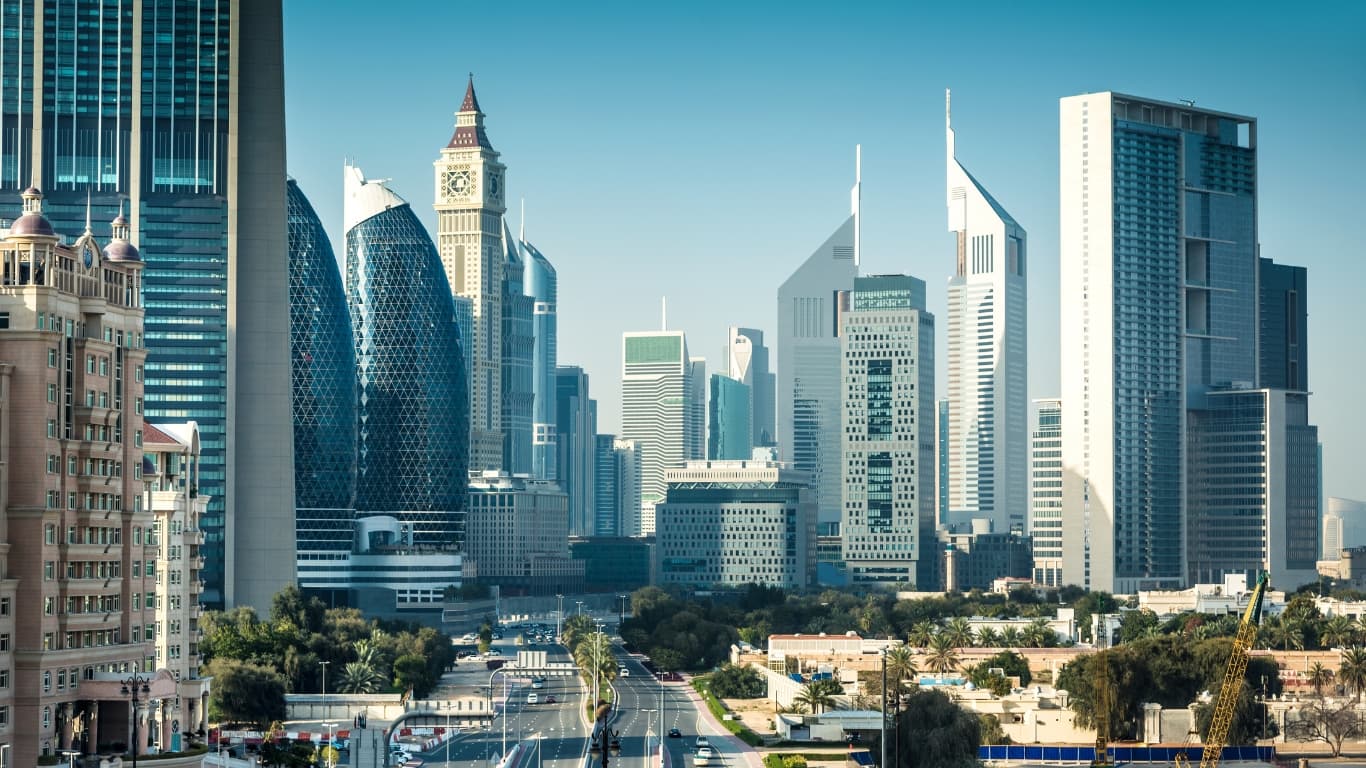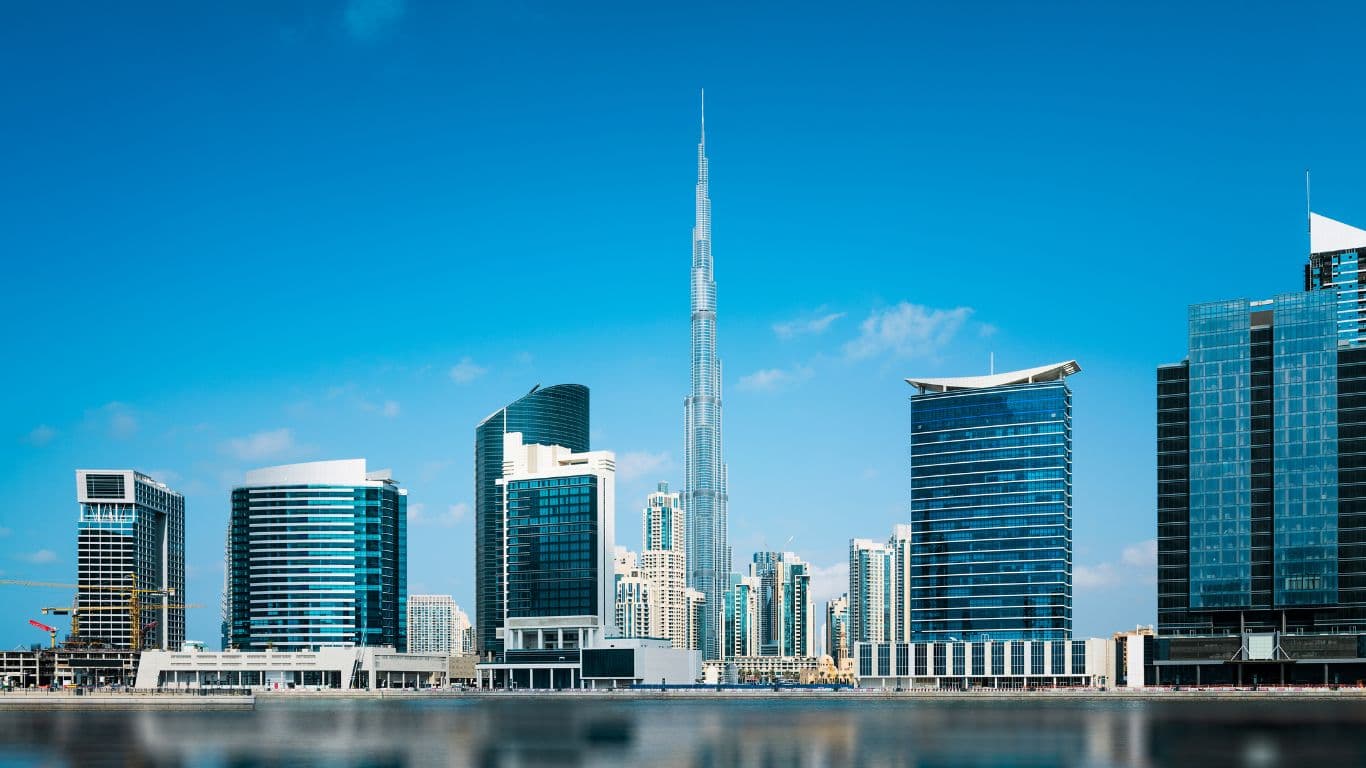

Off-plan property in Dubai is a category that doesn't really exist anywhere else at the same scale. The Dubai Land Department's 2024 figures put off-plan transactions at roughly 55% of total residential volume, the inverse of London or Paris, where off-plan is a thin slice of the market. Buyers who choose Dubai are repeatedly choosing to buy unbuilt apartments.
The question worth asking is why. Knight Frank's 2025 MENA Wealth Report and Mansion Global's 2025 Dubai dispatch both confirm that off-plan demand has not softened despite Dubai's broader market maturation. JLL's MEA residential brief reads the same way.
The short answer: Dubai's developer ecosystem is structured to deliver, the regulatory framework around escrow accounts has matured, and buyers who pick the right project at the right phase land in a fully-fitted residence with the building's amenities operational at handover. The longer answer is below.
- Buyers choose Dubai off-plan for the structured payment plans, early-stage pricing access, customisation options and the developer-led pipeline of new prime stock.
- We see off-plan installment plans from Emaar, Damac, Sobha and Nakheel typically spreading payments across two to four years tied to construction milestones.
- Early-stage entry pricing on off-plan often runs ten to twenty percent below comparable ready market stock, with the trade-off being construction risk and the wait for handover.
- Customisation flexibility on off-plan, particularly during the earlier construction phases, allows buyers to influence finishes and layout in ways unavailable on ready property.
- Major developer reputation matters meaningfully, with the established Dubai houses offering credible delivery track records relative to less proven alternatives.
- For most considered international buyers we view off-plan as a tactical entry route for those comfortable with construction risk and the multi-year hold horizon.
- Who is this for?
- International buyers considering Dubai off-plan acquisition, alongside the brokers, advisers and family office staff framing those decisions across the major developer pipelines.
- What is happening?
- A practical read of why buyers choose Dubai off-plan, covering installment plans, early-stage pricing, customisation flexibility and the major developer landscape.
- When did this emerge?
- The article reflects 2026 market conditions through Dubai Land Department, Property Monitor and Knight Frank UAE data alongside our own observations.
- Where is this happening?
- The piece focuses on Dubai off-plan, with reference to the major developer locations including Palm Jumeirah, Downtown, Business Bay and the secondary growth corridors.
- Why does it matter?
- Off-plan versus ready market selection involves distinct trade-offs, which is why understanding the value proposition matters before committing to either approach.
What "off-plan" actually means in Dubai
An off-plan unit in Dubai is one purchased before construction is complete, with payments scheduled against construction milestones. The Dubai Land Department mandates that all off-plan funds sit in a registered escrow account. Releases to the developer happen on a milestone basis, audited by RERA (the Real Estate Regulatory Agency).
The buyer signs a Sale and Purchase Agreement, makes a down-payment (typically 10-20%), and pays the balance against construction milestones (foundation, structural completion, interior finishing, handover). The escrow framework is the single most important regulatory layer Dubai built in the post-2008 reset. Before 2008, off-plan funds went directly to developers, and several buildings stalled when developers used incoming funds to start new projects rather than complete existing ones.
Today the structure is closer to what UK conveyancing has had for decades, and the result is that delivery rates in Dubai are now meaningfully higher than they were 15 years ago. Cushman & Wakefield's MENA desk reports that escrow-backed transactions cleared at a 90%-plus on-time delivery rate during the 2024 cycle. That is a different operating reality from the pre-2008 market.
The buyers' actual reasons
From the conversations we have with buyers who have done multiple Dubai purchases, three reasons recur. The first is finished product. Dubai's developer ecosystem delivers fully fitted apartments (kitchen appliances, bathroom fixtures, built-in wardrobes, flooring) at handover.
Buyers who land into a finished unit don't need to organize a renovation cycle. That is a meaningful operational difference from London, Paris, or New York, where buyers routinely spend a year and 30%-plus of purchase price renovating after closing. Sotheby's International Realty's UAE office confirms this is the single most-cited reason American and European buyers choose Dubai off-plan over a similar London or Paris purchase.
The second is payment structure. Off-plan payment plans are spread over 24 to 48 months, with developers offering structured plans where the bulk of the purchase price comes due at handover. For a buyer who has the cash but wants to spread the deployment, the payment structure is a usable feature.
The third is selection. Buying off-plan is the only way to choose a specific unit (corner, view, floor) in many of the marquee Dubai projects. The Bvlgari Lighthouse, the One&Only Za'abeel, the Bulgari residences extension.
All of these projects allocated their best units to early off-plan buyers.
By the time a building is ready, the trophy floors have been spoken for. Engel & Völkers UAE confirms that the trophy-floor selection mechanic explains why repeat buyers continue to choose off-plan even after their first Dubai purchase.
The honest caveats
The off-plan model has trade-offs and Dubai's history makes them visible. Three to be candid about. Delivery delay is the most common.
Mansion Global's 2024 builder analysis listed delivery delay as the top complaint among repeat Dubai buyers. Even with the escrow framework, Dubai builders run on developer schedules, and a 6-to-12-month slip is not unusual on a 36-month build. Buyers who plan their Dubai relocation around a precise handover date are routinely caught flat-footed.
The solve is to budget an additional six months and to choose builders with the longest on-time delivery records. The second caveat is finishing variance. Show apartments (the model units developers build to market the project) are not always representative of what gets delivered.
Buyers who can write the SPA with specific finish-spec attached are in a stronger position. Buyers who default to brochure language and hope for the best sometimes find that the marble in the show apartment becomes engineered stone in the delivered unit. Christie's International Real Estate's Dubai desk has flagged this as the second most common source of post-handover dispute.
The third is the secondary-market lock-up. Some developers prevent re-sale of off-plan units before a payment threshold (often 30-40% of purchase price) is paid. That changes the buyer's flexibility, and the clause sits in the SPA.
Reading it carefully matters. Resale-restriction clauses are most common on the marquee branded schemes, where the developer wants to manage the secondary market in the building's early years. JLL's branded-residence brief notes the clause is now near-universal on top-tier Dubai launches.
Where to look
The off-plan projects we would put on a 2026 buyer's-side shortlist are the ones with delivery records and brand operators attached. Emaar's Dubai Hills releases (Vista Lux, Address Hillcrest, Park Heights). Damac's Como Residences (the marquee Palm tower).
Meraas's City Walk and Bvlgari Lighthouse work. Sobha's projects in Dubai Hills and on Sheikh Zayed Road. Nakheel's Palm Jebel Ali villa releases.
The Dorchester Collection's Lana Residences in Business Bay.
What unites these is institutional weight: established balance sheets, multi-decade delivery histories, and for the branded schemes a hotel operator with skin in the game. The buyer protection is structural (escrow, RERA, the Land Department's transaction tracking), but the buyer's selection of who to deal with still matters more than any framework. Knight Frank's MENA team and Cushman & Wakefield's regional desk both apply the same anchor-builder filter to their own off-plan shortlists for institutional clients.
What this means for buyers
Dubai's off-plan market exists at the scale it does because the system has been built around it. Escrow protection, milestone-based payments, fitted handovers, and a developer ecosystem deep enough to absorb new launches without distorting price are the operational underpinnings. For buyers who choose carefully (anchor builders, brand operators, payment structures they understand), off-plan is no longer the speculative choice it was in 2008.
It is the dominant way new Dubai residences are sold, and it works for owners who want first pick of an emerging building. The question isn't whether off-plan; it's which off-plan, and that is a question of due diligence.
The three questions to ask before any off-plan SPA signature: who is the builder and what is their on-time delivery record over the last decade, who is the hospitality operator (if any) and what is their service-charge track record, and what does the resale-restriction clause in the SPA actually say.
We last reviewed this analysis in May 2026.


Savvas Agathangelou
Savvas Agathangelou co-founded The Luxury Playbook and has spent years reporting from the prime postcodes the magazine covers — Mayfair, Knightsbridge, the Athens Riviera, Dubai's Palm crescents, and the southern Mediterranean coastlines where the world's wealthy keep coming back. His background is in international hospitality, and that frame shapes how he writes about property: the developer's choices, the architect's signature, the agency's bench of named brokers, the building's service standard once the buyer moves in. He files developer spotlights, agency profiles, and the seasonal "Properties That Defined" listicles, and he hosts the magazine's founder-and-leadership interviews on the Voices side.