Dubai's prime property market has continued to absorb cross-border capital at a record pace through 2025, but the conversation has matured. The question is no longer whether Dubai is a credible safe-harbor destination. It is whether the city's particular safe-harbor framework continues to compound, given the run-up in pricing and the supply pipeline through 2026 and 2027.
Knight Frank's Dubai desk, Mansion Global, Bloomberg's Wealth coverage and FT Property have all flagged the same maturation. Dubai sits as one of three or four genuinely credible global safe-harbor real estate destinations, alongside Singapore, Switzerland and selected pockets of the U.S. and U.K. The conviction is intact. The underwriting now needs more care.
- Dubai remains a credible safe harbour for luxury property in 2026, with continued record transaction activity, international buyer flows and the Golden Visa framework underpinning demand.
- We see geopolitical positioning, tax efficiency, the AED-USD peg and the open-economy framework as the structural advantages supporting Dubai's safe-harbour reputation.
- Pricing has appreciated significantly across recent cycles, with some valuations at the very top of the market warranting closer underwriting discipline than at earlier entry points.
- Branded residences and prime freehold zone stock continue to attract international ultra-high-net-worth buyers seeking discretion alongside the asset exposure.
- Property Monitor and Knight Frank UAE reporting suggests continued buyer depth at the upper end, even as price velocity has moderated from peak cycle conditions.
- For most considered international ultra-high-net-worth buyers we view Dubai as remaining a credible safe-harbour option, with the choice depending on entry price discipline.
- Who is this for?
- International ultra-high-net-worth buyers evaluating Dubai as a luxury safe harbour, alongside the advisers, brokers and family office staff framing those decisions.
- What is happening?
- A read of whether Dubai is still a safe harbor for luxury property, covering structural advantages, pricing dynamics, branded residences and the entry discipline considerations.
- When did this emerge?
- The article reflects 2026 market conditions through Dubai Land Department, Property Monitor and Knight Frank UAE data alongside our own observations.
- Where is this happening?
- The piece focuses on Dubai prime property, with reference to broader UAE and global luxury market context.
- Why does it matter?
- Safe-harbour positioning depends on continued structural advantages, which is why honest entry-point analysis matters more than reflexive reaction to the headline appreciation arc.
Why the Safe-Harbor Thesis Continues to Hold Up
The structural drivers are well-rehearsed. Dubai offers freehold tenure for non-Emirati buyers, no income tax, no capital gains tax, a transparent and digitised land-registry system, and a residency framework (the Golden Visa) that anchors the long-cycle hold for HNW principals.
The regulatory infrastructure has matured meaningfully since the 2008-2009 cycle. The Real Estate Regulatory Agency (RERA), the Dubai Land Department's digital framework and the escrow protections for off-plan acquisitions have all professionalised the market. The Knight Frank Wealth Report and Engel and Voelkers' Dubai desk both flag the regulatory maturation as the single most important structural support for the safe-harbor framing.
The cross-border buyer base is the deepest of any global luxury market. UAE Land Department data shows residential transactions involving non-Emirati buyers running at multi-year highs through 2025, with concentration from India, the U.K., China, Russia, the broader Gulf, and a growing U.S. and European cohort.
The Pricing Dynamics the Bid Book Is Pricing In
Dubai prime pricing has compounded at low-double-digit annual rates through 2021-2024 and into 2025. The Knight Frank Dubai Prime Index, the headline marker, sits at multi-year highs across the major prime clusters (Palm Jumeirah, Downtown, Emirates Hills, Dubai Hills, Jumeirah Bay Island).
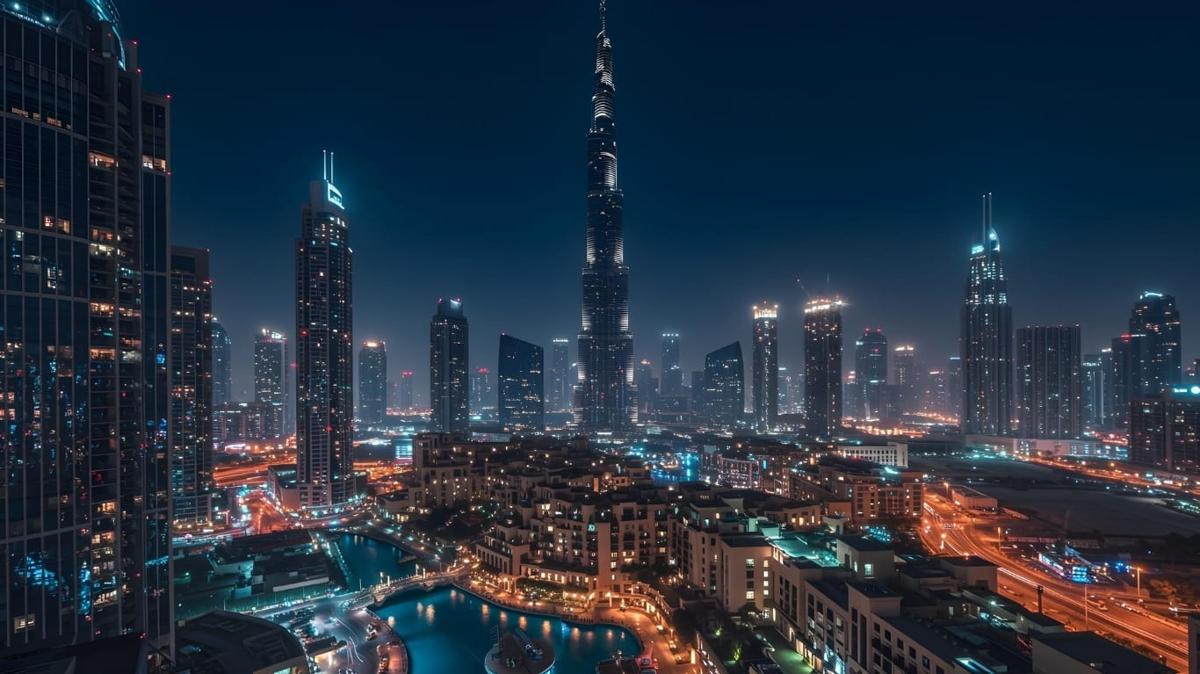
The Burj Khalifa-adjacent branded residences band has been the strongest-compounding segment, with the Bulgari, Aman, One and Only, Atlantis and Bvlgari-branded inventory pushing pricing toward Mayfair and Monaco comparability on the absolute per-square-metre basis.
Mansion Global has flagged that Dubai is now genuinely competing with London prime, Monaco and Singapore on absolute pricing for the absolute strongest inventory. That is a structural shift that the cohort engaging with the market has internalised.
The Supply Pipeline the Cycle Now Has to Absorb
The supply-side risk to the Dubai safe-harbor thesis is the substantial off-plan supply pipeline through 2026 and 2027. The cumulative completion pipeline runs at 80,000 to 110,000 units depending on the projection methodology, against historical absorption running at 35,000 to 50,000 units annually.
The implication is that the supply-demand balance through 2026-2027 sits at a different position than the 2021-2024 cycle, which absorbed limited new completions against thick cross-border demand. The cohort that recognises this is structuring with more discipline around developer selection and product positioning.
Engel and Voelkers' Dubai desk, Sotheby's International Realty's Dubai office and Christie's International Real Estate's UAE coverage all flag the same caution on the off-plan tier. The branded-residence and trophy-freehold segment continues to clear, but the broader off-plan market warrants more careful underwriting.
The Broader UAE Context Amplifying the Dubai Story
The wider UAE narrative continues to amplify the Dubai-specific bid. NEOM and Red Sea development programmes in Saudi Arabia, the Abu Dhabi luxury market's continued professionalisation, and the broader Gulf wealth-effect compounding all contribute to the regional positioning.
For UHNW buyers underwriting the Gulf as a region rather than as individual jurisdictions, Dubai remains the deepest, most liquid and most regulated market. The Knight Frank Wealth Report's Gulf coverage and FT Property's Middle East desk both flag Dubai as the structural anchor of the region's luxury property conversation.
The competitive dynamic from Saudi Arabia is real but slower-cycle. NEOM and the Red Sea developments are operating on multi-decade horizons, and the institutional brokerage infrastructure that Dubai has built over 20 years is not replicable in a 5-year window.
The Buyer Cohorts Driving the 2026 Bid Book
The cohorts actively bidding in Dubai prime in 2026 are heterogeneous. Indian principals remain the largest single cohort by transaction count. U.K. capital re-routing post-non-dom reform is the fastest-growing cohort by ticket value.
Russian and CIS-tied capital continues to allocate, though through more disciplined structuring than in the 2022 wave. U.S. and Western European principals are the third-fastest-growing cohort.
The Chinese cohort has thinned through 2024-2025 as domestic capital-control enforcement has tightened, but has not exited. The Gulf-resident cohort (Saudi, Kuwaiti, Bahraini, Omani) continues to use Dubai as the regional second-home anchor.
The underlying positioning of Dubai as the cross-border bid of choice for the cohort that has redirected from London prime, U.S. trophy markets and Singapore is structurally intact.
The Risk Factors the Disciplined Buyer Should Price In
The principal risks to the Dubai safe-harbor thesis are the off-plan supply absorption, the regional geopolitical context, and the policy reaction-function. The supply absorption is the most actionable, and the disciplined approach is to concentrate on freehold trophy inventory in established prime clusters rather than off-plan exposure to less-established submarkets.
The geopolitical risk is real but historically well-managed by the UAE's diplomatic positioning. The 2024-2026 Iran-tied volatility has not meaningfully impaired Dubai property pricing or transaction velocity, which is itself a useful signal about the depth of the safe-harbor framing.
The policy reaction-function is the most uncertain. The UAE has historically maintained an open framework for non-resident foreign capital, but the structural depth of the cross-border bid means that even modest policy adjustments could meaningfully shift the supply-demand balance.
The Neighborhoods Still Driving the Bid
The strongest absolute pricing and the deepest cross-border engagement are concentrated in Dubai's Most Coveted Neighborhoods in 2026: Palm Jumeirah, Downtown, Emirates Hills, Dubai Hills, Jumeirah Bay Island and selected branded-residence developments. These submarkets have continued to compound through the 2025 cycle and into early 2026.
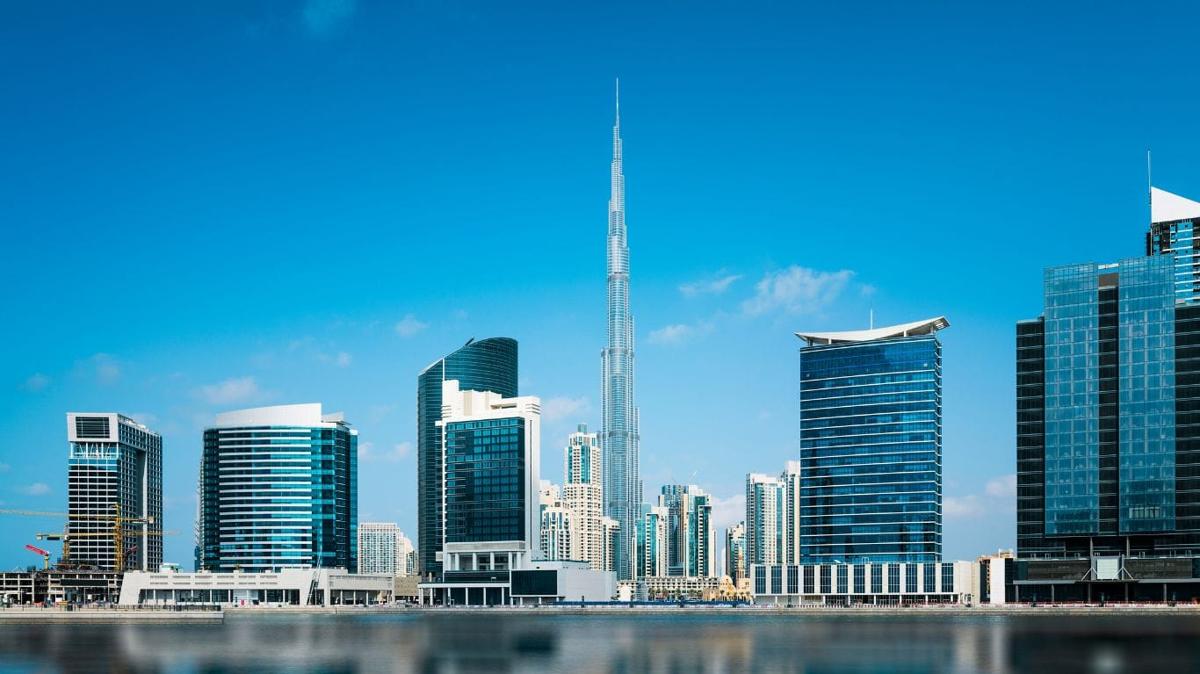
The off-plan extension markets (Dubai Marina, JLT, Business Bay) carry more cycle-absorption risk as the 2026-2027 completion pipeline arrives. The disciplined underwriting concentrates capital in the established freehold submarkets where the supply-demand balance is structurally supportive.
What This Means for Buyers
The Dubai safe-harbor thesis remains intact for collectors of cross-border trophy property who are prepared to concentrate on established prime submarkets, work with brokerages with mature compliance infrastructure, and avoid speculative off-plan exposure to less-tested developers and locations.
Knight Frank, Engel and Voelkers, Sotheby's International Realty's Dubai office, Christie's International Real Estate's UAE desk and the major UAE-resident brokerages all have the network to navigate the 2026 cycle. For UHNW capital, the bid clears most efficiently through these counterparties.
The safe-harbor framing isn't dead; it has matured. The buyers who engage with the maturing framework on its actual terms continue to find Dubai prime as a credible flagship in the global comparison set. We last reviewed this analysis in May 2026.