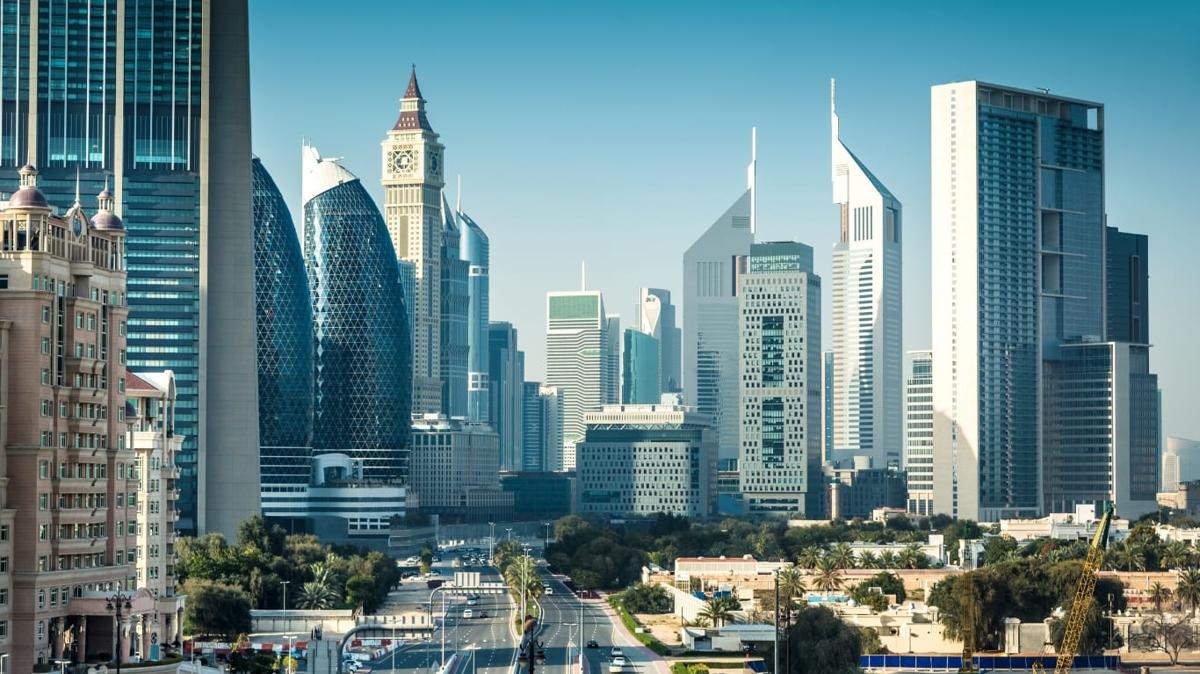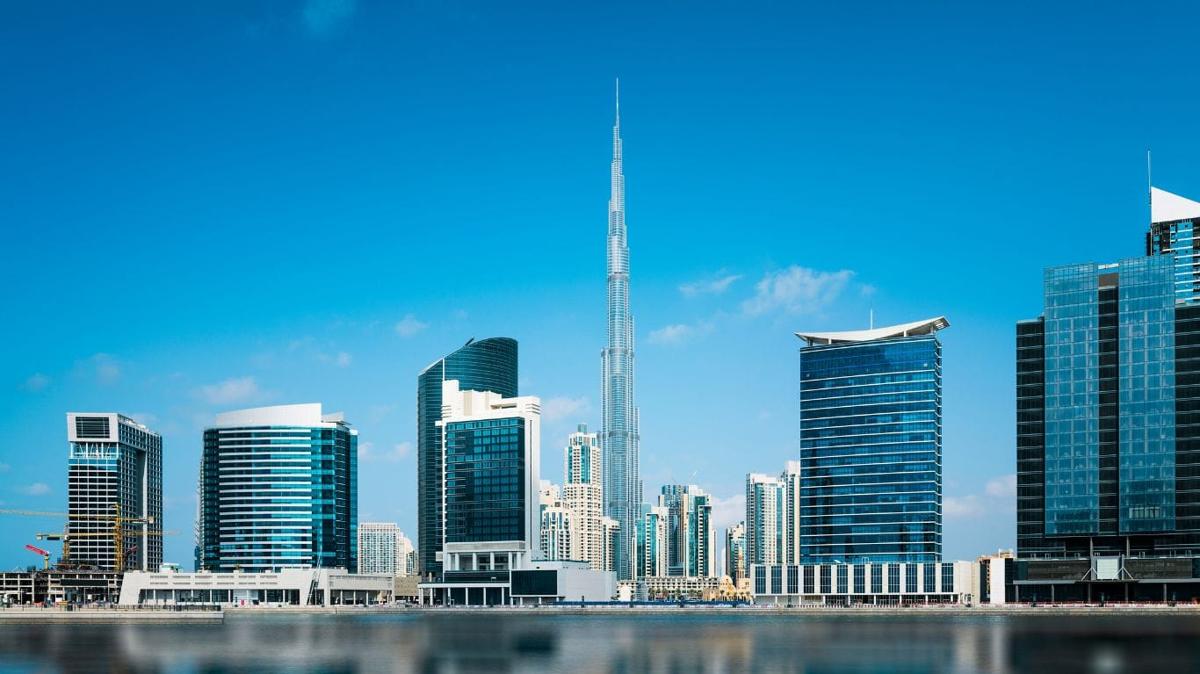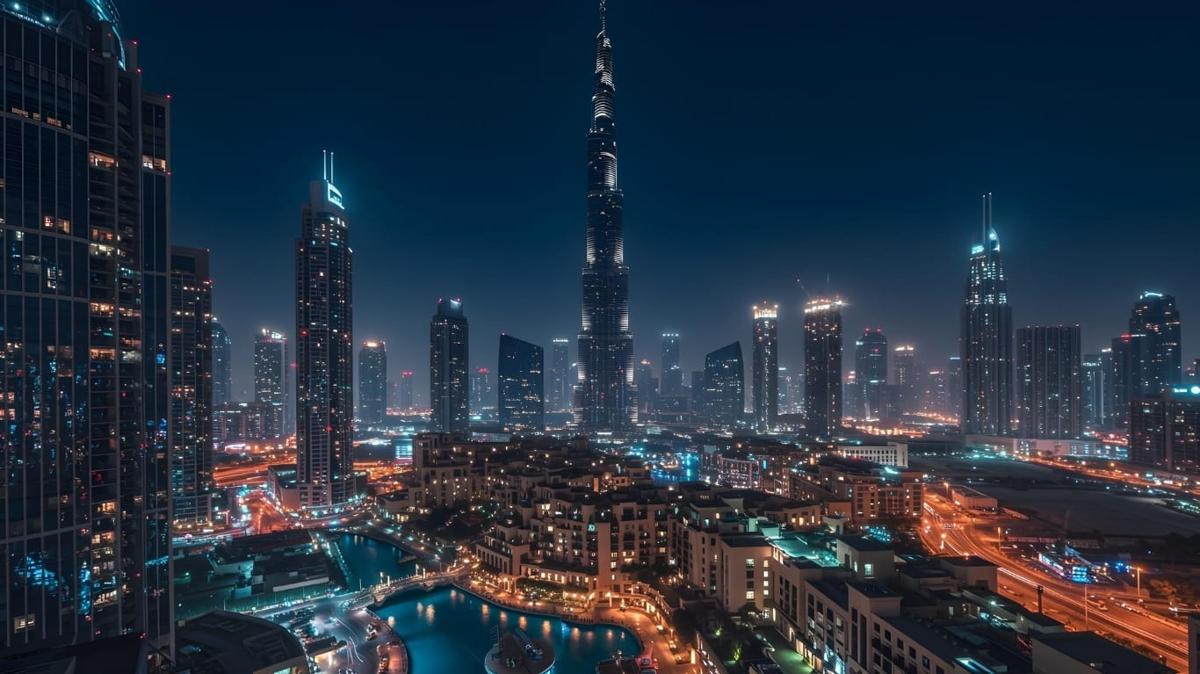
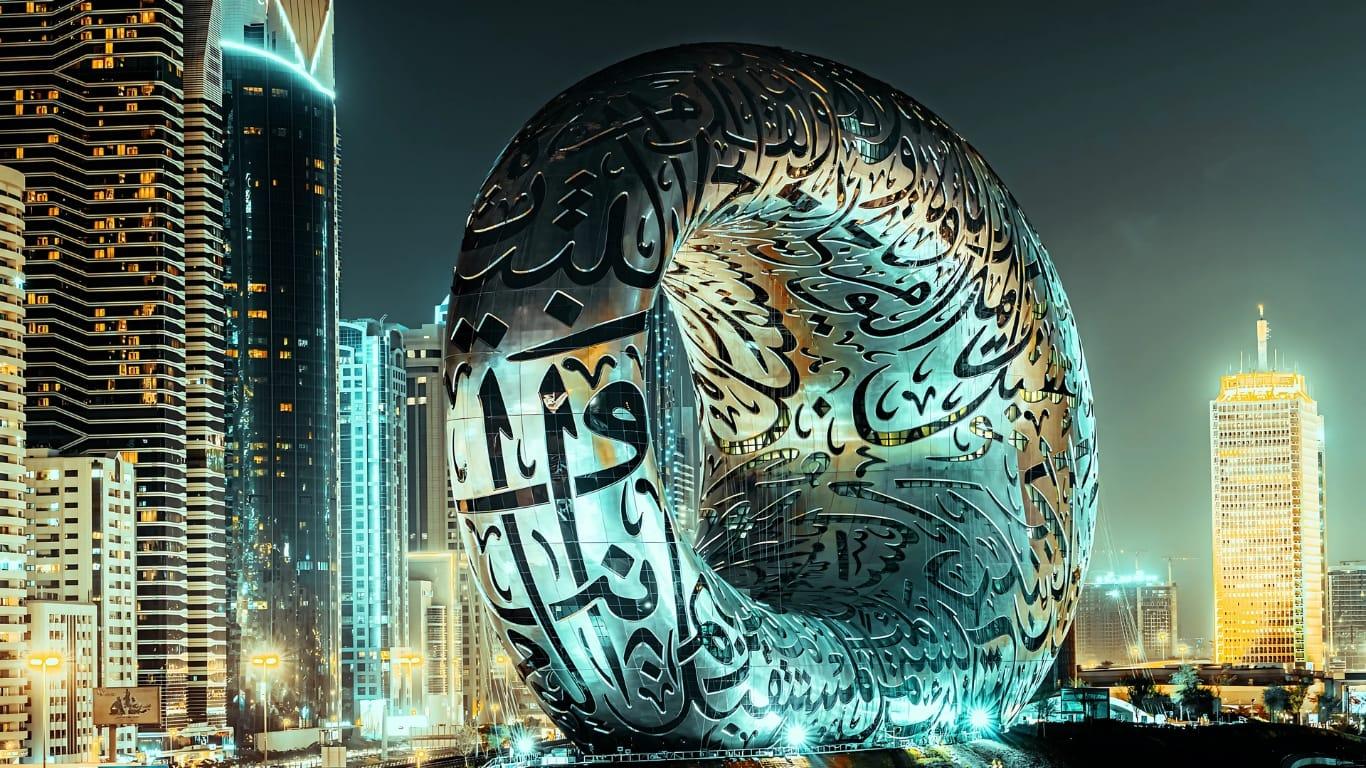
Inside the $759B UAE property boom, the story is less about the headline number than about the structural shift underneath it. Knight Frank's most recent UAE residential analysis projects the country's property market will reach roughly $759 billion in transaction value by 2029, against $693. 5 billion in 2026.
What is interesting is the maturation of the market that the number describes.
A market once defined by the volatile boom-bust pattern of the 2010s has graduated into a more layered set of buyer flows, branded inventory, and prime-residential depth that compares meaningfully with London and New York. Dubai's transaction volumes above $10 million have, on the latest count, moved past the combined totals of New York and London. That figure is drawn from Dubai Land Department published transaction data alongside Knight Frank and Savills' recent prime-residential reporting.
- The UAE property market has reached record valuations approaching USD 759 billion in aggregate, supported by record transaction activity, international buyer flows and the Golden Visa framework.
- We see Dubai Land Department transaction data confirming sustained record activity, with the major freehold zones setting fresh pricing benchmarks across multiple price points.
- International buyer flows from the US, UK, Russia, China and the broader Middle East continue to support the demand-side dynamics across the major UAE markets.
- Off-plan delivery from Emaar, Damac, Sobha, Nakheel and Aldar continues at pace, with absorption rates remaining healthy across most segments.
- Branded residences have proliferated across the prime market, with hospitality-grade services supporting consistent premium pricing at the top of Dubai and Abu Dhabi.
- For most considered international investors we view the USD 759 billion total as reflecting genuine structural depth rather than pure speculative activity, supporting the medium-term outlook.
- Who is this for?
- International investors evaluating UAE property exposure, alongside the advisers, brokers and family office staff framing portfolio allocation decisions for Gulf real estate.
- What is happening?
- A read of the USD 759 billion UAE property boom, covering record activity, international buyer flows, the major developers, branded residences and the Golden Visa framework.
- When did this emerge?
- The article reflects 2025 and 2026 market conditions through Dubai Land Department, Property Monitor, ValuStrat and Knight Frank UAE data alongside our own observations.
- Where is this happening?
- The piece covers the UAE broadly, including Dubai, Abu Dhabi, Sharjah and the wider emirate complex.
- Why does it matter?
- UAE property scale has reached an important milestone in international prime market perception, which is why understanding the structural dynamics matters for any Gulf allocation conversation.
What is actually driving the shift
The Knight Frank Wealth Report's 2025 Dubai dispatch identified four structural forces. The first is the maturation of the legal framework: the 2002 freehold law, the 2008 escrow framework around off-plan transactions, and the more recent Dubai Land Department transparency reforms have produced a property market that operates on rules comparable to the better Western European jurisdictions. For the international buyer profile that drove the 2023 to 2025 wave, legal-framework certainty has been the unlock.
The second is the wealth-migration story. Dubai has been at or near the top of the global net inflow of high-net-worth residents for three consecutive years, according to the Henley Private Wealth Migration Report. The buyer profile that has relocated, drawn from European, North American, Indian, Russian, and increasingly Chinese sources, is not only a holiday-home buyer wave: a meaningful share have made Dubai their primary residence.
The third is the Golden Visa programme, which combines tax structure (no income tax, no property tax, no inheritance tax) with a clear path to long-term residence for qualifying buyers. The programme has materially shifted the buyer profile from short-tenure expat workers to longer-tenure resident buyers, which is a different demand pattern with different transaction depth.
The fourth is the branded-residence revolution, which we have covered separately. The arrival of Bulgari, Armani, Cavalli, Bugatti, Mandarin Oriental, Dorchester Collection, and the broader branded inventory has graduated Dubai's prime offering from generic high-rise to a layered product mix that compares with the best of Manhattan or Mayfair.
The prime neighbourhoods anchoring the volume
Palm Jumeirah remains the most internationally recognised prime address. The Frond villas, the Atlantis-adjacent inventory, and the newer Atlantis the Royal residences anchor the upper price tier. Engel & Völkers Dubai's 2025 Palm dispatch reported median prime-villa pricing at AED 30 million to AED 80 million, with the trophy frond positions clearing materially higher.
Emirates Hills and Jumeirah Islands have continued as the inland prime alternative, with the gated-community framework and the established expat resident profile. Knight Frank described the Emirates Hills inventory as the most stable of the Dubai prime markets, less volatile than Palm Jumeirah, less subject to off-plan market cycles, and with the deepest secondary-market liquidity. Cushman & Wakefield confirms the resale-velocity picture.
Downtown Dubai has graduated. The Burj Khalifa-adjacent inventory, the Address Boulevard and Address Sky View residences, and the newer Dorchester Collection The Lana have produced a downtown prime market that compares with Manhattan financial district or Hong Kong's central. Sales above AED 30 million on Burj Khalifa apartments have become routine.
The Dubai Creek Harbour central inventory, including Address Harbour Point, the Creek Beach communities, and Creek Palace, has become the city's emerging prime alternative, anchored by the planned Creek Tower and the surrounding waterfront masterplan. The Creek Harbour pricing remains below Palm Jumeirah and Downtown but has shown the strongest trajectory of the past three years.
The District One villa quarter, the centerpiece of MBR City, has produced the highest-end Dubai inland villa inventory, with several trades above AED 100 million in 2024 and 2025, as Mansion Global has documented.
What could end the run
The Dubai market we are watching is not without structural pressure points. The first is supply. Dubai has been historically prone to over-supply at the mid-tier, and the off-plan pipeline through 2026 and 2027 will deliver a meaningful new wave of inventory.
Whether the prime end remains insulated from mid-tier supply pressure depends on the buyer-flow continuing at current levels, which depends on regional and global conditions outside Dubai's direct control.
The second is the regional context. Dubai's positioning as the safe-harbour Gulf alternative has benefited from Saudi Arabia's earlier Vision 2030 phase and from regional capital reallocation. As Saudi NEOM, the Red Sea Project, and the Riyadh prime developments mature, the comparative position of Dubai may shift, although it remains the most established Gulf prime market.
The third is the dollar peg. The AED's USD peg has been a structural feature of Dubai's stability, removing currency risk for dollar-denominated buyers while tying the Dubai price to dollar movements that have at times produced material currency-driven repricings for non-dollar buyers.
What this means for buyers
The Dubai prime market has graduated from speculative-watcher status into structural-prime status. The buyer profile that drove the 2024 to 2025 transaction depth, including long-tenure resident buyers, family-office acquisition activity, and meaningful international second-home demand, is structurally different from the 2008 or 2014 buyer waves. Whether the Knight Frank $759 billion projection for 2029 is realised depends on the durability of those buyer flows.
What we would say with more confidence is that the Dubai prime conversation is no longer experimental. It belongs alongside Manhattan, Mayfair, the Côte d'Azur, and the Cyclades on the short list of credible global prime destinations, and the buyers we watch are positioning accordingly.
We last reviewed this analysis in May 2026.