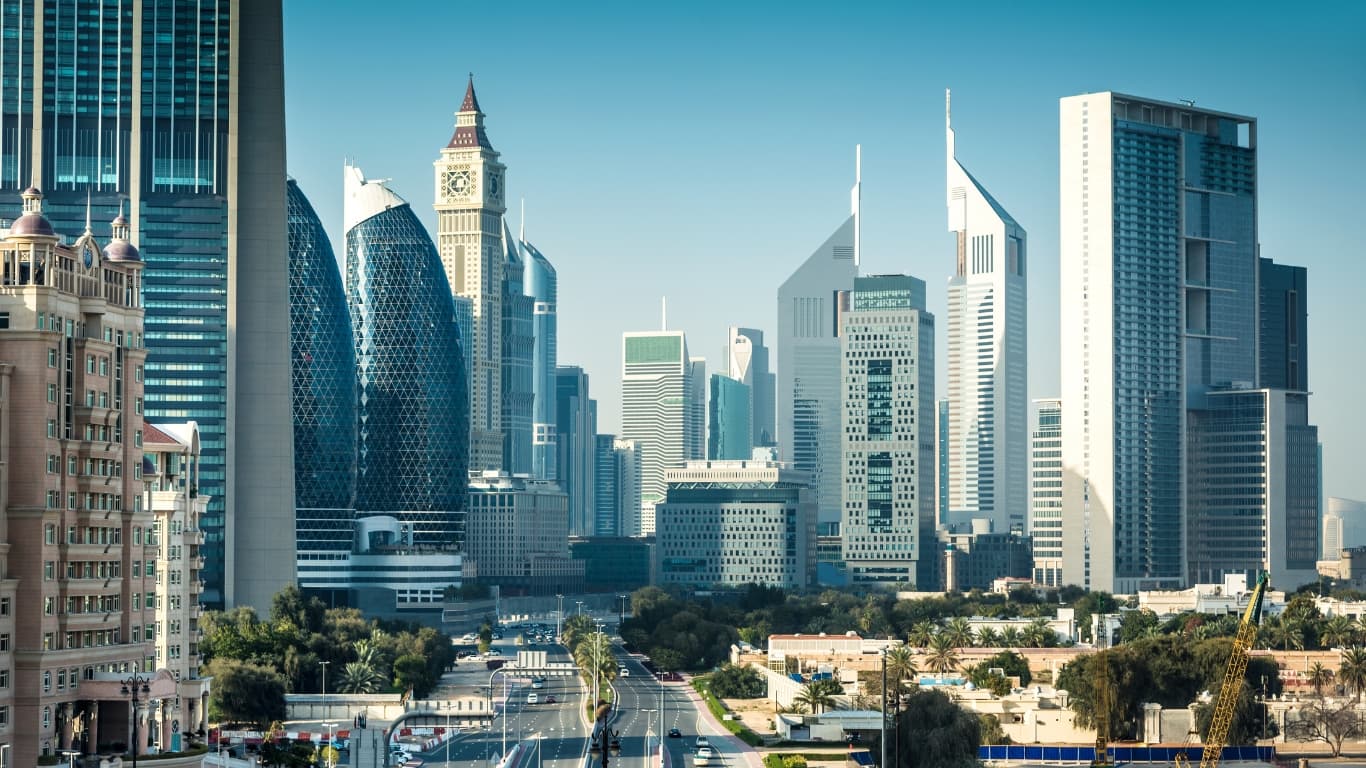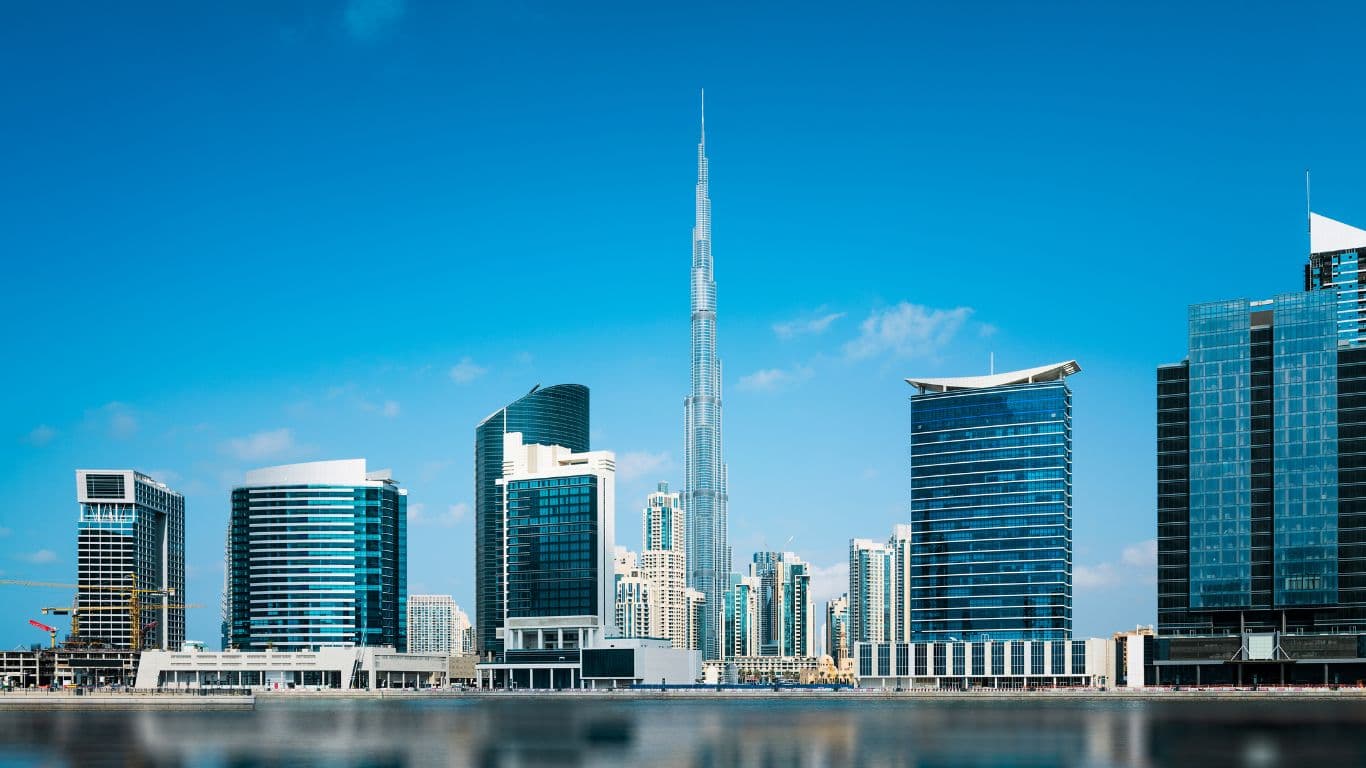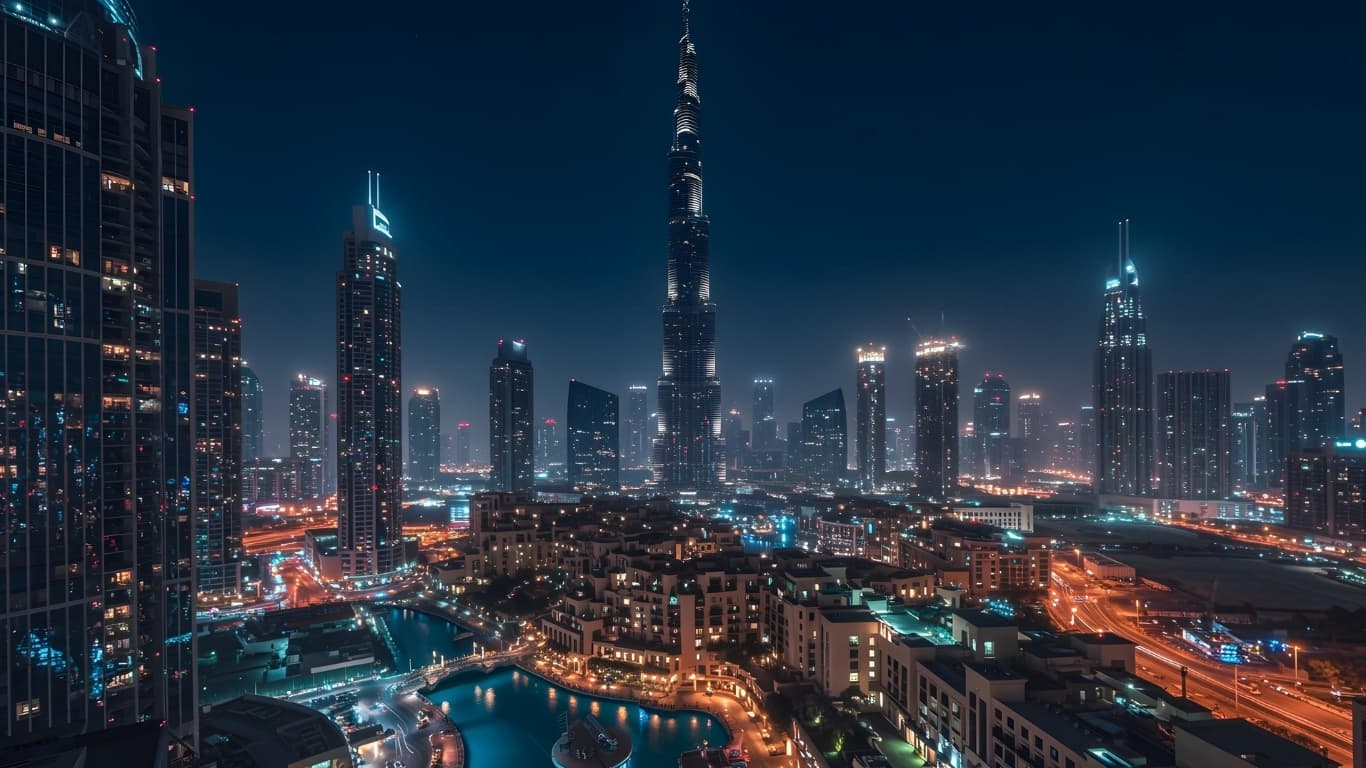
Dubai's real estate market runs on a transparent legal framework built around two powerhouse institutions: the Dubai Land Department (DLD) and the Real Estate Regulatory Authority (RERA). These bodies keep the market honest and stable, which is exactly why Dubai keeps pulling in serious capital from both local and international buyers. Non-Emirati and non-GCC citizens get full ownership rights in designated freehold zones, plus the option to lease for up to 99 years.
Knight Frank's 2025 MENA Wealth Report flagged Dubai's regulatory architecture as the structural reason the city now sits in the same prime-market comparison set as London and Singapore. JLL's MEA residential brief and Mansion Global's 2025 Dubai dispatch both confirm the regulatory layer as the principal differentiator from regional competitors. The market is genuinely well-governed now, and the buyer who understands the framework operates from a position of strength.
- Dubai real estate regulations are administered by the Dubai Land Department and the Real Estate Regulatory Agency, with the framework covering broker licensing, escrow protection and transaction registration.
- We see RERA broker certification, escrow account protection on off-plan purchases and the Oqood registration system as the key protections supporting buyer confidence.
- Title registration through the Dubai Land Department provides clear, blockchain-recorded ownership documentation, with the digital infrastructure supporting transaction efficiency.
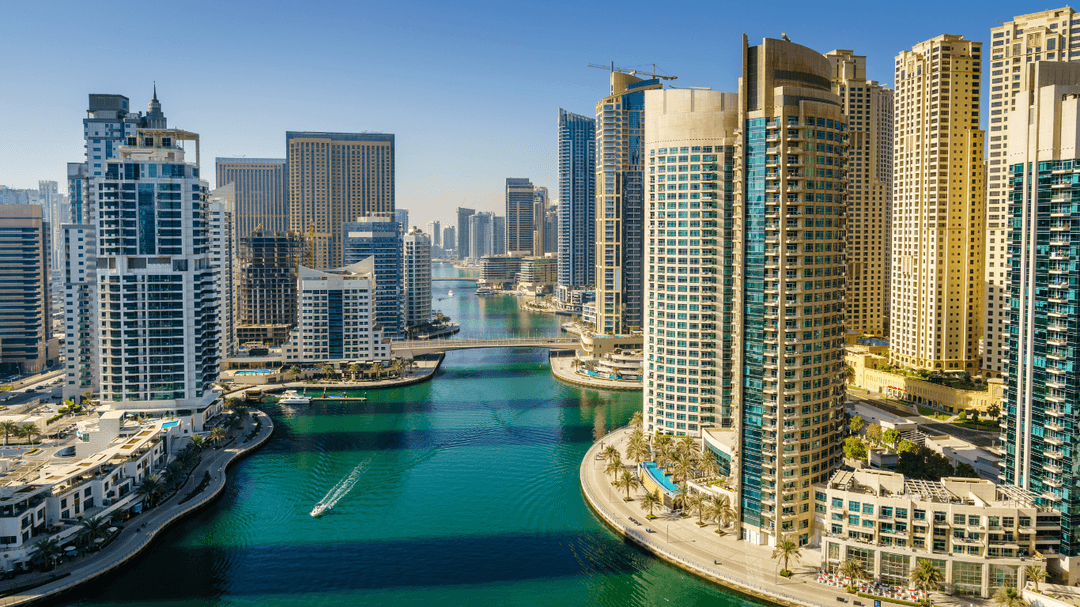
- Freehold versus leasehold distinction matters for international buyers, with freehold zones including Palm Jumeirah, Downtown, Emirates Hills and Dubai Marina offering full ownership rights.
- Tenancy laws including the rental dispute settlement framework provide structured protection for both landlords and tenants, supporting the rental market depth.
- For most considered international buyers we view the Dubai regulatory framework as one of the more sophisticated in the broader emerging-market property complex.
- Who is this for?
- International buyers, agents and investors navigating Dubai property regulations, alongside the lawyers, brokers and family office staff framing those interactions.
- What is happening?
- A complete guide to Dubai real estate regulations, covering DLD, RERA, escrow protection, Oqood registration, freehold zones and the tenancy framework.
- When did this emerge?
- The article reflects 2026 regulatory frameworks through Dubai Land Department and RERA disclosures alongside our own observations.
- Where is this happening?
- The piece focuses on Dubai, with reference to the broader UAE regulatory complex across Abu Dhabi and the emirates.
- Why does it matter?
- Dubai regulatory framework shapes every property transaction, which is why understanding the protections matters before any acquisition or disposition decision.
The DLD and RERA: who does what
Dubai's real estate market operates around two pillars. The Dubai Land Department is the primary authority for granting permits and registering transactions. If an investor is foreign, DLD approval precedes any property deal.
The registration step is what gives the buyer enforceable title and protected ownership.
The Real Estate Regulatory Authority (RERA) sits at the heart of how Dubai's property sector gets regulated and grown. Before any developer can break ground on a project, they need a RERA license, and they have to submit full details covering location, scale, and the specifics of every unit. Brokers face equally high standards.
They must complete professional training and pass a formal exam before they are allowed to operate.
RERA's practices (the Three-Broker Rule, tight oversight of property advertising, mandatory escrow accounts) send a clear message about where their priorities lie. Combined with DLD's enforcement infrastructure, the result is a market that institutional investors can genuinely trust. Cushman & Wakefield's MENA desk has tracked the maturation of the regulatory layer across the last decade.
Why Dubai's property laws matter to buyers
Getting across Dubai's property laws is what keeps a transaction legally airtight. Every property deal must be registered with fees tied to value, the Central Bank monitors mortgage lending, and disputes flow through the Rental Dispute Resolution Center or the Dubai courts. Agents must be DREI-certified and RERA-examined. Understanding what real-estate warranties mean for buyers is a foundational read before any commitment.
Dubai's property laws open real doors for foreign buyers, but they come with specific rules. As a non-citizen, the buyer can purchase in designated zones or take a leasehold up to 99 years. For off-plan, the buyer should verify the developer's RERA registration before signing anything.
Engaging a conveyancer to handle the legal-transfer layer is standard practice.
Property ownership rules across the UAE
Foreigners can purchase property in Dubai's designated zones, with the most sought-after including Palm Jumeirah, Downtown Dubai, and Dubai Marina. Non-Emirati and non-GCC citizens receive full ownership rights plus the option for leaseholds up to 99 years. The standard transaction requires a down-payment of 10% to 20% of purchase price.
For new construction, structured payment plans spread the cost across the build timeline. Advanced strategies for high-level investors are worth understanding before committing to any structure.
One feature that often surprises first-time buyers is the absence of annual property taxes. Maintenance and municipal fees apply, but no recurring property tax eats into yield, which is a structural advantage over most global prime markets.
| Area | Ownership Rights | Restrictions |
|---|---|---|
| Dubai | Foreign nationals can own property in specific zones, lease up to 99 years | Acquisitions outside designated areas require Ruler's approval |
| Designated Freehold Areas | Absolute ownership rights for non-Emiratis and non-GCC citizens | Subject to installment payment for new projects |
| Off-Plan Properties | Ownership through installments, deposit accounts ensured by RERA | Must be developed by RERA-approved entities |
| Abu Dhabi | Exclusive ownership for UAE nationals, specific zones open for foreign investment | Restrictions on musataha, usufruct, and long-term lease rights for non-nationals |

Foreign investment, freehold zones, and the registration layer
The Dubai Land Department sits at the center of every property transaction under Law No. 7 of 2013. All foreign-owned properties must be formally registered with the DLD. The core requirements appear in the table below.
| Requirement | Details |
|---|---|
| Registration | Foreign investment properties must be registered with the DLD to ensure legality and protect ownership rights. |
| Land Registration Fees | 4% of the property sale price. |
| Value Added Tax | Commercial properties carry 5% VAT on the sale price; residential generally exempt. |
Under Law No. 27 of 2007, Dubai has carved out specific zones where foreign investors are not just welcome but actively courted. These designated freehold areas open full ownership to international buyers with no requirement for a local partner. Knight Frank's MENA team flags freehold-zone purchases as the dominant route for inbound capital.
You might also find it useful to compare how Dubai's approach stacks up against other markets, such as how foreign investors navigate property ownership in Switzerland.
| Zone Type | Ownership Details |
|---|---|
| Freehold Zones | Foreign investors and expatriates can own properties outright in designated freehold areas. |
| Leasehold Areas | Foreign investors can opt for leaseholds up to 99 years. |
| Commercial or Mixed-use Properties | Available for foreign investment; subject to the 5% Value Added Tax on the sale price. |
Several areas in Dubai consistently top the list for foreign buyers. The current price benchmarks across the most-tracked freehold communities are below.
| Location | Studio Prices | 1-Bedroom Prices | 2-Bedroom Prices |
|---|---|---|---|
| Arjan | AED 550k | AED 750k | AED 1.85M |
| Business Bay | AED 870k | AED 1.1M | AED 1.7M |
| Barsha Heights | AED 330k | AED 500k | AED 1.3M |
| Bluewaters Island | AED 3.16M | AED 5.57M | AED 9.3M |
| Downtown Dubai | AED 850k | AED 2.2M | AED 1.7M |
| Dubai Marina | AED 735k | AED 1.59M | AED 2.39M |
These prime locations cover the full spectrum, from high-rise apartments to sprawling villas and townhouses. Each one underscores the depth of opportunity available to foreign capital across the freehold zones.
The off-plan framework in detail
Off-plan investment in Dubai can deliver strong returns, but only with a clear understanding of how RERA's rules shape every step of the process. Mansion Global's 2025 Dubai dispatch and JLL's MEA residential brief both flag off-plan as the dominant transaction mode in Dubai, with the regulatory framework around escrow and developer registration providing the institutional underpinning.
RERA's role is to oversee off-plan sales and ensure buyers are never left exposed. Every developer must be registered with RERA before they can sell a unit. All buyer payments go into escrow accounts, with releases tied to construction milestones.
The escrow framework is the single most important regulatory layer in the off-plan market.
| Requirement | Description |
|---|---|
| Developer Registration | Developers must be registered with RERA to sell off-plan properties. |
| Escrow Account | Payments are held in escrow, released to developers based on construction milestones. |
| Completion Status and Timeline | Developers must disclose project completion percentage and expected completion dates. |
| Permits and Approvals | DLD and RERA permits required before sale of any off-plan unit. |

The landlord-tenant regime
Dubai's rental market sits on a strong legal foundation. The core legislation is Law No. 26 of 2007, updated by Law No. 33 of 2008. Together they set the terms for fair tenancy agreements, dispute resolution through the Rental Disputes Settlement Centre, and rent-increase rules under Decree No. 43 of 2013 that prevent rises within a two-year term without RERA approval.
Article 6 of the Tenancy Law allows automatic contract renewal where neither party objects. Article 14 requires a 90-day notice period for term changes, and Article 27 confirms that tenancies survive the death of either party. Article 15 places maintenance responsibility on the landlord, while Article 19 obliges the tenant to pay on time and avoid unauthorized changes.
Transaction fees and the cost stack
The full cost of a Dubai transaction reaches well beyond the headline price. The basic transaction fee is 4% of property value, split between buyer and seller. Sale registration fees add 2% per party.
Service-partner and ancillary fees stack on top.
| Fee Type | Amount | Additional Charges |
|---|---|---|
| Basic Transaction Fee | 4% of property value | Split equally buyer and seller |
| Sale Registration Fees | 2% of sale value | Various smaller per-service fees |
| Service Partner Fees (>= AED 500,000) | AED 4,000 | 5% VAT |
| Service Partner Fees (< AED 500,000) | AED 2,000 | 5% VAT |
| Dubai Mortgage Fees | 0.25% of mortgage amount | AED 290 + bank fees |
| Real Estate Agent Commission | Approximately 2% of property value | 5% VAT |
| Title Deed Acquisition Fee | AED 520 | — |
Beyond the headline fees, the buyer should budget for maintenance and annual service charges, a property valuation around AED 3,500, and various advisory and process-related fees. VAT sits at a standard 5% on goods and services in the UAE. Residential property sales are generally VAT-exempt, but commercial transactions and ancillary services around residential deals can still attract tax. The Financial Times has reported extensively on Dubai's tax-friendly property environment.
Transfer procedures and the Three-Broker Rule
Transferring property in Dubai follows a structured process built on transparency and legal certainty. The DLD and RERA are the two pillars. Every transaction must be officially recorded with the DLD, which confirms legal ownership and produces the documentation that makes the transfer binding.
| Charge Type | Description | Fee |
|---|---|---|
| Buyer's Deposit | Needed at purchase | 10%-20% of property cost |
| Transfer Fee | For buying through a seller | 2% of property cost |
| Service & Maintenance | For ongoing upkeep | Varies with the property |

The Three-Broker Rule, introduced by the DLD in October 2022, capped the number of brokers a property seller can work with at three. The immediate effect was a sharp reduction in duplicate listings, which made the market more transparent. Reuters covered the rollout of these broker reforms and their early impact on market behavior. The rule also raised the bar on broker participation by reinforcing the DREI training and RERA exam requirements.
What this means for buyers
The Dubai regulatory framework around real estate is now mature enough that it stands as a genuine differentiator from competing prime markets in the region. The DLD-plus-RERA structure, the escrow framework, the Three-Broker Rule, the Tenancy Law, and the documented transfer process together produce a transaction environment that institutional and high-net-worth buyers can engage with confidently. If you are thinking about how regulatory frameworks like this one shape investment outcomes more broadly, the best places to invest in property in the UK offer a useful comparison.
The three operational questions for a serious purchase: which freehold zone matches the lifestyle or use brief, which builder has the cleanest delivery record on the project being considered, and what does the full cost stack actually look like inclusive of all DLD, RERA, broker, mortgage, and service-partner fees. The buyers who get this right operate from a position of structural advantage in Dubai's prime market. We last reviewed this analysis in May 2026.


Savvas Agathangelou
Savvas Agathangelou co-founded The Luxury Playbook and has spent years reporting from the prime postcodes the magazine covers — Mayfair, Knightsbridge, the Athens Riviera, Dubai's Palm crescents, and the southern Mediterranean coastlines where the world's wealthy keep coming back. His background is in international hospitality, and that frame shapes how he writes about property: the developer's choices, the architect's signature, the agency's bench of named brokers, the building's service standard once the buyer moves in. He files developer spotlights, agency profiles, and the seasonal "Properties That Defined" listicles, and he hosts the magazine's founder-and-leadership interviews on the Voices side.