The art market entered 2026 carrying bruises from a difficult 2024 and 2025 that showed no signs of healing. Auction houses posted tepid results that failed to match pre-pandemic peaks. Galleries closed at rates that shocked even the pessimists who had been warning about unsustainable overhead for years.
The fair circuit, with Art Basel at its peak, once seemed invincible. But cracks started showing fast, with cancellations and postponements signaling something systemic rather than a run of bad luck.
The casualties mounted throughout the year in ways that made the scale of the problem impossible to ignore. The Art Dealers Association of America cancelled its Art Show, a fixture of New York’s March calendar for decades. Taipei Dangdai postponed its 2026 edition indefinitely, citing market conditions that made the financial commitment completely untenable.
Photofairs Hong Kong disappeared from the schedule. India Art Fair Mumbai faced cancellation. The Baltimore Fine Art Print and Photo Fair joined the growing list of events that couldn’t justify carrying on. These weren’t marginal fairs struggling at the edges of the industry.
Major Art Fair Cancellations and Postponements (2024 to 2026)
| Fair | City / Region | Status | Affected Edition | Short reason / context |
|---|---|---|---|---|
| The Art Show (ADAA) | New York, USA | Cancelled | 2025 edition | Rising costs and weak market conditions made the long-running fair financially unsustainable for many member galleries. |
| Taipei Dangdai | Taipei, Taiwan | Postponed indefinitely | 2026 edition | Organisers cited challenging market conditions and reassessment of the fair’s future format and timing. |
| Photofairs Hong Kong | Hong Kong, China | Cancelled | Upcoming edition | Forthcoming edition called off amid softer demand and rising costs in the photography fair segment. |
| India Art Fair – Mumbai Expo | Mumbai, India | Cancelled | New Mumbai satellite | Planned Mumbai offshoot shelved as organisers reassessed demand and financial viability in the region. |
| Baltimore Fine Art Print & Photo Fair | Baltimore, USA | Cancelled | Upcoming edition | Regional fair discontinued after costs and attendance patterns no longer justified continuing the event. |
These were established events with institutional backing, loyal collector followings, and track records spanning years or even decades.
The core tension driving these failures comes down to a brutal economic equation that more and more galleries are concluding they simply cannot solve. Art fairs still matter enormously for discovery, for meeting collectors who would never walk into your gallery unprompted, and for generating the sales volume that keeps the lights on through slower months.
But participation costs at major fairs have climbed to levels where the economics only work for galleries already successful enough that they may not desperately need the exposure in the first place.
Table of Contents
Key Takeaways & The 5Ws
- The global art market entered 2025 in structural distress, with weak auction results, widespread gallery closures, and a fair circuit showing systemic cracks rather than isolated failures.
- Mega-fair economics have become unsustainable for many dealers: Art Basel and Frieze booths plus shipping, insurance, travel, and production can push total costs toward six figures (or more), so even a “good fair” often only breaks even.
- Galleries are responding by shifting toward alternative, lower-cost fairs (Esther, Arrival, 7 rue Froissart, Post-Fair, Place des Vosges) using unconventional venues, flat low fees (often around $6k–$10k), and sometimes biennial schedules to reduce risk.
- These models prioritize intimacy, collaboration, and discovery through smaller spaces, shared resources, slower viewing, and direct collector dialogue, giving galleries room to show work beyond guaranteed sellers.
- The shift points to a structural transition away from debt-fueled mega-fair dependency toward more distributed, sustainable platforms—though risks remain around fragmentation, calendar overload, and whether alternatives can scale without recreating old pressures.
- Who is driving the shift?
- Small and mid-size galleries squeezed by mega-fair costs, organizers of both major fairs (Art Basel, Frieze) and newer alternatives (Esther, Arrival, 7 rue Froissart, Post-Fair, Place des Vosges), collectors seeking lower-pressure access to new work, and institutions/trade bodies reshaping long-running events.
- What is changing?
- The art-fair ecosystem is being reordered: major fairs are becoming economically inaccessible for many dealers, while lean, collaborative, lower-cost fairs are emerging as a sustainability-focused counter-model built around discovery.
- When did it accelerate?
- The pressure intensified through 2024 into 2025, alongside a run of cancellations and postponements and the launch or expansion of alternative fairs during 2025.
- Where is it happening?
- Globally across major art centers and newer nodes—New York, Miami, Los Angeles, Paris, and also unconventional or secondary locations such as the Berkshires, Tallinn, North Adams (MA), and Santa Monica—shifting activity away from traditional high-rent hubs.
- Why is this happening?
- Because mega-fair costs have outpaced realistic sales potential, pushing galleries to the brink, while collectors are fatigued by over-scaled, high-pressure events. Alternative fairs reduce financial barriers, encourage collaboration, and restore breathing room—pointing toward a more sustainable post-2020 equilibrium.

How Much Does It Actually Cost to Exhibit at Art Basel Compared to Alternative Fairs?
Showing at Art Basel or a comparable mega-fair is now a six-figure exercise once you factor in booth fees, crating, shipping, insurance, travel, staffing, and production. For many mid-size galleries, a “good fair” barely breaks even. Leaner alternative fairs with flat fees and modest overhead can deliver similar or better sales at a fraction of the financial risk.
The headline booth costs at major fairs have reached numbers that sound almost fictional to anyone outside the industry. But the real story is how those figures disguise the true financial commitment you’re actually making.
Art Basel Miami Beach charges booth fees ranging from roughly $36,520 up to $199,040 depending on size and sector, according to Artnet News, while Frieze Los Angeles commands $89,000 to $114,000 for large booths. Those figures alone would be a serious capital commitment for most galleries. But they’re just the entry fee to a far more expensive game.
Art Fair Cost Scorecard (Mega-Fairs vs Alternatives)
- Location
- Miami Beach Convention Center
- Typical Booth Fee
- ~$36,500 – $199,000 (size/sector dependent)
- Estimated All-In Cost
- ~2×–3× booth fee (shipping, insurance, travel, build-out)
- Common Budget Range
- ~$150,000 – $400,000+ for larger stands
- Location
- Los Angeles (various premium venues)
- Typical Booth Fee
- ~$89,000 – $114,000 for large booths
- Estimated All-In Cost
- ~1.7×–2.5× booth fee (logistics, staff, production)
- Common Budget Range
- ~$150,000 – $250,000+ per edition
- Location
- Major regional city (US / EU / Asia)
- Typical Booth Fee
- ~$10,000 – $25,000
- Estimated All-In Cost
- ~1.5×–2× booth fee
- Common Budget Range
- ~$20,000 – $50,000 total
- Location
- Santa Monica Art Deco post office
- Typical Booth Fee
- Flat ~$6,000 (single-artist projects)
- Estimated All-In Cost
- ~$10,000 – $18,000 (lean build, shared logistics)
- Common Budget Range
- Sub-$20,000 for most galleries
- Location
- NYC, North Adams (MA), Paris, etc.
- Typical Booth Fee
- ~$6,000 – $10,000 (flat, low-frills)
- Estimated All-In Cost
- ~$12,000 – $25,000 (venue + lodging + shipping)
- Common Budget Range
- ~$15,000 – $30,000 per fair
- Location
- Historic / boutique venues (e.g., Paris)
- Typical Booth Fee
- Often below ~$10,000
- Estimated All-In Cost
- ~$8,000 – $20,000 (smaller footprint, local focus)
- Common Budget Range
- Low five figures or less
Post-Fair in Los Angeles operates in an entirely different universe, charging a flat $6,000 fee for single-artist project spaces and adding a $10 public admission charge to widen the visitor base well beyond the usual collector circuit, as reported by The Art Newspaper.
The hidden costs are what actually break galleries financially, turning what looks like a manageable booth fee into an impossible burden.
One dealer’s experience documented by Hyperallergic shows how a $17,400 booth became roughly $30,000 all-in once housing, transport, food, and extra framing were added. That 1.7x multiplier on the base fee is actually conservative compared to what happens at the highest tier of fairs.
Artsy has reported galleries spending up to $400,000 or more across booth fees, shipping, travel, lodging, dinners, and fair-week costs at Art Basel, depending on their scale and expectations.
The expense categories pile up in ways galleries simply cannot avoid if they want to present professionally. Crating quality works requires custom-built protection that can run thousands per piece for fragile or valuable art. International shipping means air freight, customs brokers who understand import regulations, and insurance covering transit and display at values that can reach seven figures for a single booth.
Staff travel and accommodation during fair week can easily exceed $10,000 when you need multiple representatives staying in Miami or Los Angeles at peak season. Build-outs, lighting, signage, install labor, and local transport add layer after layer of spending that turns the booth fee into just the first of many checks you’ll write.
The economics break down completely when you look at what galleries actually need to achieve just to break even. Many mid-size dealers find themselves in a position where a “good fair” merely gets them back to neutral after all costs are tallied.
If sales land below expectations, arrive late on payment terms that stretch for months, or fall through when collectors change their minds, the fair stops being a business development opportunity and becomes an expensive marketing exercise the gallery may not be able to afford to repeat.
The galleries that most need the exposure increasingly cannot justify the financial risk. And those with enough capital to absorb potential losses often question whether the return is worth committing so much of their annual budget to a single week. It’s a trap closing in from both ends, as explored in our look at why blue-chip art still commands record prices even as the market around it buckles.
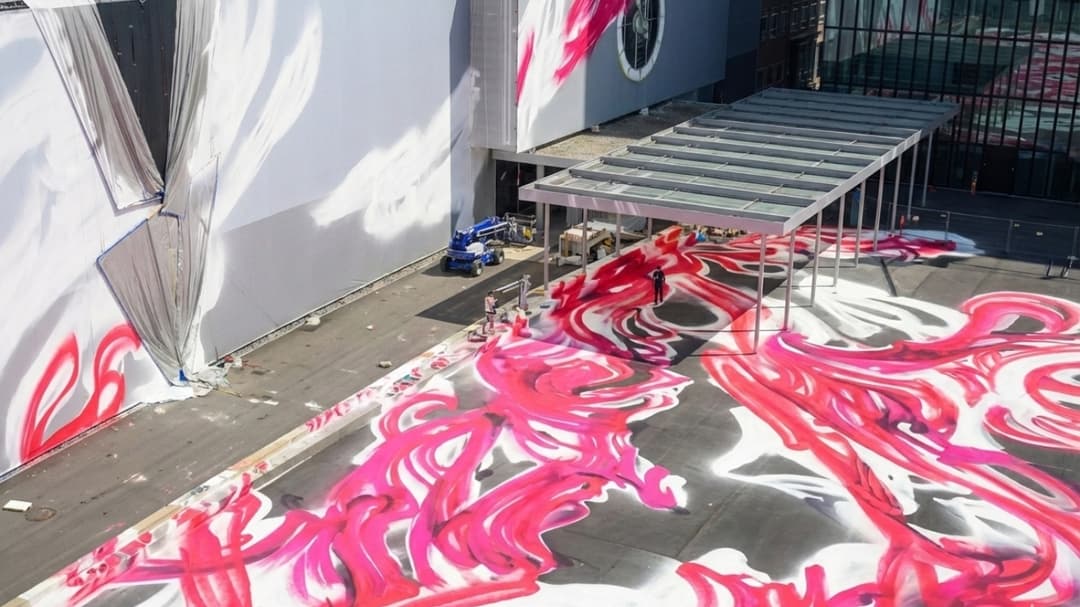
What Are Dealers Building Instead of Paying for Art Basel Booths?
Instead of pouring capital into mega-fair booths, dealers are co-creating smaller, lower-cost fairs in hotels, historic buildings, and pop-up spaces with flat fees in the mid-four to low-five figure range. These events rely on collaboration, shared shipping, slower viewing, and curated programs rather than giant floorplans and endless aisles of blue-chip inventory.
The 2026 response to these impossible economics took the form of a wave of alternative fairs that rejected the mega-fair model entirely.
Esther launched with 25 exhibitors at Estonian House in Manhattan, focusing initially on Baltic galleries before expanding to broader specializations. Arrival Art Fair chose the Tourists hotel in North Adams, Massachusetts for a June event that deliberately positioned itself far from traditional art world centers.
The 7 rue Froissart fair occupied a pop-up space in Paris’s Marais district in October. Post-Fair returned to Santa Monica’s Art Deco post office building in February. Place des Vosges created a micro-boutique fair in Paris that put intimacy ahead of scale.
Alternative Art Fairs Snapshot
These emerging and retooled fairs trade mega-fair overheads for smaller footprints, flat booth fees, and slower viewing, giving mid-size galleries and discovery-focused collectors a more sustainable way to meet.
- Launched with ~25 exhibitors, initially rooted in Baltic galleries before widening its scope.
- Uses a community venue rather than a convention center to keep costs and production light.
- Flat, lower booth fees make participation feasible for young and mid-size dealers.
- Hosted in a design-forward hotel in the Berkshires instead of a traditional fair hall.
- Positions itself as a destination event with slower viewing and more time for conversations.
- Attracts galleries and collectors who see it as an antidote to the high-pressure mega-fair circuit.
- Occupies a pop-up space in the Marais, embedded directly in a gallery-dense neighborhood.
- Built to be “independent and nimble,” stepping in quickly when larger salons cancel or reshape.
- Focuses on tightly curated presentations and close contact between dealers and collectors.
- Uses an Art Deco former post office as its venue, turning architecture into part of the experience.
- Runs on a lean model with flat, relatively low booth fees for single-artist projects.
- Adds modest public admission to broaden the audience beyond VIP lists and invite-only previews.
- Micro-boutique fair format built around a handful of galleries in an intimate historic setting.
- Prioritises close viewing and slower conversations over scale and spectacle.
- Keeps production light so galleries can take curatorial risks instead of only showing guaranteed sellers.
These weren’t just smaller versions of existing fairs. They were built on fundamentally different assumptions that inverted the mega-fair logic entirely. Lower flat fees in the $6,000 to $10,000 range meant galleries could participate without taking on debt or gambling their operating budgets on a single week. That’s a world away from the financial exposure that separates smart art collecting from speculative risk-taking.
Unconventional venues like historic buildings, hotels, and post offices kept overhead down while creating distinctive atmospheres that felt more like curated exhibitions than commercial marketplaces. Several events adopted biennial schedules instead of annual repetition, acknowledging that the exhausting churn of constant fair participation served organizers’ interests far more than dealers’ needs.
Public admission fees around $10 broadened the audience well beyond the collector class that dominates invite-only previews at major fairs.
The organizers framed these choices explicitly as reactions against the dominant fair system rather than attempts to compete within it.
Sara Maria Salamone described 7 rue Froissart as “independent and nimble” in its ability to respond quickly when Nada Salon cancelled and left galleries without the Paris platform they’d been counting on.
Chris Sharp characterized Post-Fair as “economic in every sense,” emphasizing how lower costs allowed different kinds of galleries to participate.
The Arrival founders wanted to create “an antidote to a pretty exhausting art fair system” by moving to the Berkshires and building something that felt more like a destination event than a commercial obligation.
The coalition and collaboration mindset running through these alternative fairs marks another sharp departure from the competitive individualism of major fair participation. Galleries share resources, coordinate shipping to cut costs, cross-promote each other’s programs, and operate as if they’re building something together rather than fighting over the same collectors’ attention.
This makes practical sense on modest budgets. But it also creates a different culture where one gallery’s success doesn’t come at another’s expense.
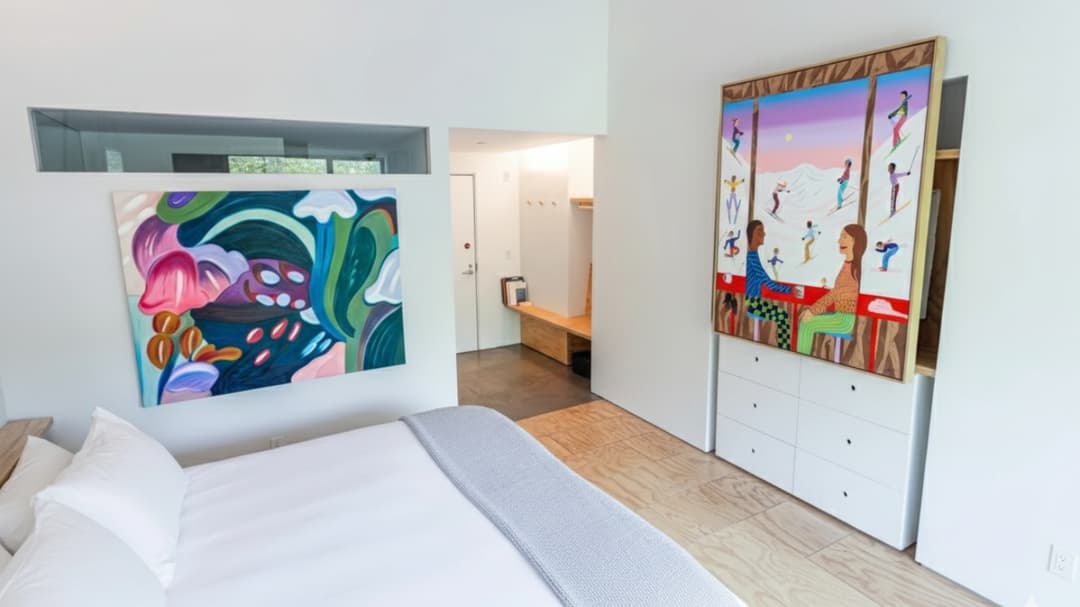
Does This Alternative Fair Movement Actually Work for Collectors and Galleries?
Early results suggest the alternative fair model has real traction. Exhibitors report healthier margins, collectors get calmer environments and more direct access to dealers, and some fairs are already expanding after strong first editions. The open question is whether they can scale without recreating the same cost and burnout dynamics that broke the mega-fair system in the first place.
Early results suggest the model has genuine traction rather than just serving as a feel-good story about scrappy underdogs. Esther expanded from its initial Baltic focus to broader specializations in its second year, a clear sign that galleries and collectors found enough value to justify continuation and growth.
Arrival attracted 3,500 visitors to its remote Berkshires location, proving that collectors will travel to unconventional venues when the programming justifies the trip.
And the 7 rue Froissart fair successfully absorbed demand when Nada Salon cancelled, proving that alternative fairs can step up when traditional options disappear and hold their legitimacy in the process.
From your perspective as a collector, these alternative fairs offer genuine access to discovery-level galleries and emerging artists without the overwhelming crowds and sensory overload that define mega-fair environments. The more intimate viewing experiences allow real conversations with dealers and sometimes directly with artists, creating connections that feel substantive rather than transactional.
Lower-pressure sales environments mean you can take time with a work without feeling pushed toward an immediate decision by the artificial urgency that major fairs deliberately cultivate.
Reduced overhead also allows galleries to price works more competitively since they’re not trying to recoup $250,000 in participation costs from every fair. The ability to take creative risks on emerging artists becomes possible when you’re not betting the gallery’s survival on whether each fair generates six-figure sales. That shift in risk tolerance is something smart money across alternative asset classes is starting to understand well.
Sustainable business models replace debt-funded mega-fair participation that created boom-bust cycles where strong fair sales briefly masked underlying financial fragility. Galleries report being able to return to focusing on their programs and their artists rather than filtering every decision through whether it will play well in a fair booth.
Still, potential fragmentation of collector attention across multiple smaller events could dilute the network effects that made major fairs so valuable, where everyone gathered in one place at one time and deals happened because all the key players were present. The risk of oversaturation looms if too many alternative fairs launch and collectors end up facing an overwhelming calendar competing for their time and attention. The Financial Times has tracked similar saturation dynamics in other luxury markets, and the pattern is worth watching closely.
What’s becoming clear is that the art market is entering a period of genuine structural change rather than a temporary adjustment. The mega-fair model that dominated the past two decades was built for market conditions that may simply no longer exist.
Rising costs, collector fatigue, and gallery financial stress have created space for different approaches that wouldn’t have found audiences when the traditional system still worked reasonably well. Whether the alternative fair movement shapes how art gets sold going forward or turns out to be a transitional phase before something else emerges depends partly on whether these new models can scale without replicating the exact problems they were designed to solve.
FAQ
Why are so many established art fairs being cancelled or postponed?
Because the basic economics have broken for a large part of the market. Booth fees, shipping, insurance, travel, and staffing have risen to the point where many galleries can’t realistically cover their costs, especially in a softer sales environment. Instead of acting as growth engines, mega-fairs have become high-risk bets that only the strongest galleries can afford to lose money on repeatedly.
How expensive is it to do a mega-fair like Art Basel compared with a lean alternative fair?
A headline booth fee at a major fair might start in the high five figures, but once you add crating, international freight, insurance, hotels, per diems, build-out, and client entertaining, total spend can reach the low-to-mid six figures, and in some cases up to around $400,000 for large programmes. By contrast, many alternative fairs operate on flat fees in the $6,000–$10,000 range, with all-in costs that are closer to a typical marketing campaign than to a make-or-break annual gamble.
Do these smaller alternative fairs actually work for galleries?
Early evidence suggests they do. Exhibitors report that lower overhead lets them experiment with riskier artists and curatorial ideas while still having a realistic path to breaking even with a few solid sales. Because the stands are smaller and the atmosphere is less frantic, the fairs also help galleries build deeper relationships instead of chasing fast, high-pressure deals.
Stefanos Moschopoulos
Stefanos Moschopoulos is the Founder and Head of Editorial at The Luxury Playbook, specializing in fine assets and alternative investments. His work focuses on analyzing luxury asset classes such as art, watches, collectibles, and yachting as structured investment vehicles, aligning them with broader wealth-building strategies. He leads the editorial direction of the publication, ensuring all content around alternative assets is data-driven, macro-aware, and investment-focused. His expertise lies in translating niche luxury markets into clear frameworks for portfolio diversification, long-term capital preservation, and asymmetric returns within non-traditional asset classes.