The contemporary art market spends a great deal of time talking about risk while structurally penalising anyone who actually takes it. Every gallery opening and biennial preview frames itself around boundary-breaking practice, and yet the capital flows show the opposite: the top five percent of artists by auction value account for the vast majority of the market, and the share has grown rather than shrunk through the current cycle.
The 2025 UBS / Art Basel Global Art Market Report makes that concentration explicit.
We do not read this as a failure of taste. It is the predictable behaviour of a market that has been financialised in stages over the past twenty years, where the conservative bet is now structurally the only bet that pays.
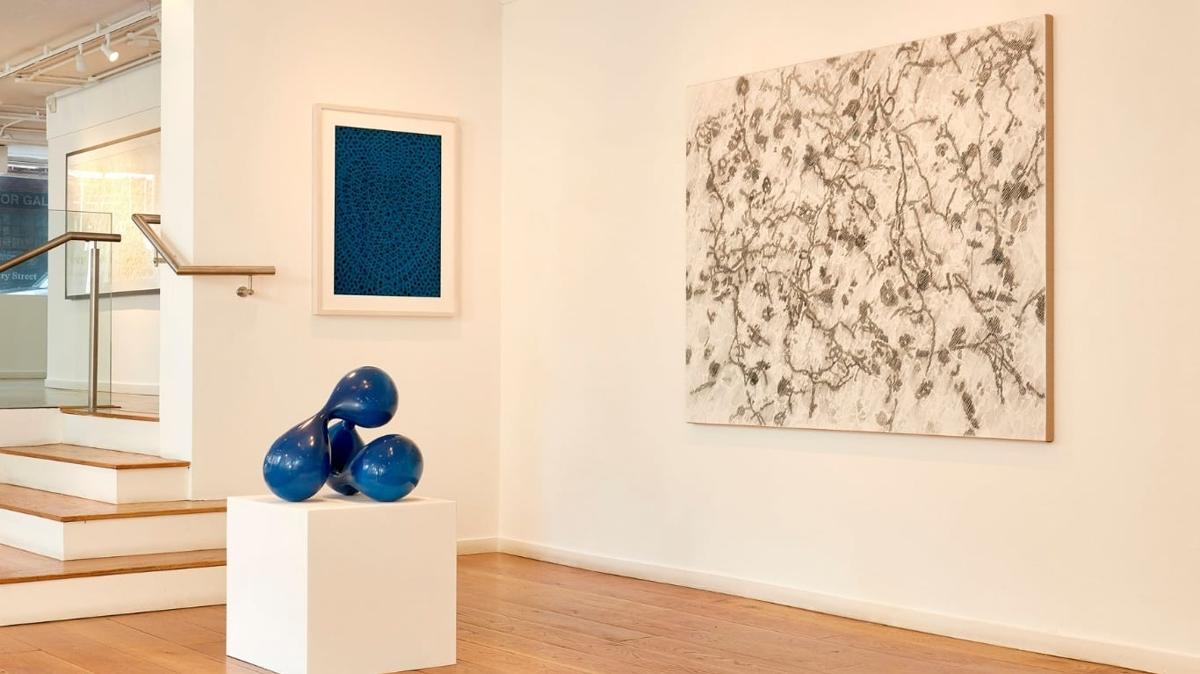
- The contemporary art market spends a great deal of time talking about risk while structurally penalising anyone who actually takes it across the broader segment.
- The 2025 UBS and Art Basel Global Art Market Report confirms that the top five percent of artists by auction value account for the vast majority of the market.
- Gallery economics are tighter than most outside observers realise, with rent, art-fair booth costs above one hundred thousand dollars and a payroll built around access expectations.
- Galleries below the mega tier have closed at the fastest pace since the 2009 cycle, with the survivors visibly shifting programmes toward established names with secondary depth.
- The mid-career experimental tier is where the structure bites hardest, with artists who built serious institutional records often hitting a wall in their forties.
- The concentration shows up clearly in auction-house disclosures, with the top ten lots accounting for an outsized share of each season’s total and the long tail thinning visibly.
- Who is this for?
- Galleries, collectors, advisors and critics observing how the contemporary market’s structural conservatism is reshaping which artists can actually sustain serious experimental careers.
- What is happening?
- An editorial read on why the art world’s safety obsession is killing what makes art matter, covering gallery economics, mid-career artists and the concentration of capital at the top.
- When did this emerge?
- Always relevant as a backdrop to the contemporary segment, with particular weight when mid-career artists hit the structural wall the current market dynamics create.
- Where is this happening?
- Centred on the New York, London, Paris and Hong Kong gallery, fair and auction-house ecosystems where the structural conservatism most visibly shapes which programmes survive.
- Why does it matter?
- Reading the market’s structural conservatism honestly matters because it clarifies where genuine experimental work now happens and how serious collectors should think about supporting it.
Why galleries cannot afford to take risks
Gallery economics are tighter than most outside observers realise. Rent in the major fair cities, art-fair booth costs that routinely exceed $100,000 at Art Basel and Frieze, art handling, insurance, and a payroll built around clients who expect access at a level that costs real money: the fixed cost base of a mid-tier gallery has roughly doubled over the past decade.
The Hiscox Online Art Trade Report has tracked the consequences. Galleries below the mega tier have closed at the fastest pace since the 2009 cycle, and the ones still standing have visibly shifted their primary programmes towards established names with proven secondary-market depth.
Risk inside a gallery now has to be subsidised by certainty elsewhere on the roster. The result is a programme structure where every truly experimental show is paid for by the back-catalogue sale of a known name, and where the artists carrying the experimental flag often appear once, sell at a controlled price to a known collector, and then quietly cycle off the programme.
The artists being left behind
The mid-career experimental tier is where the structure bites hardest. An artist who built a serious institutional record through their thirties, exhibited at the Whitney, Tate or Pompidou, and built a critical reputation that exceeds their market often hits a wall in their forties. The galleries that nurtured them either close or shift to a safer roster, and the buying clientele has aged out or moved up to blue-chip.
This is not a hypothetical pattern. We have watched it happen in real time to artists whose museum reputations dramatically outrun their auction depth. The pricing structure that made sense at the height of the experimental moment in the 2010s now reads as overstretched, and the corrections that have run through that tier in 2024 and 2025 have been painful.
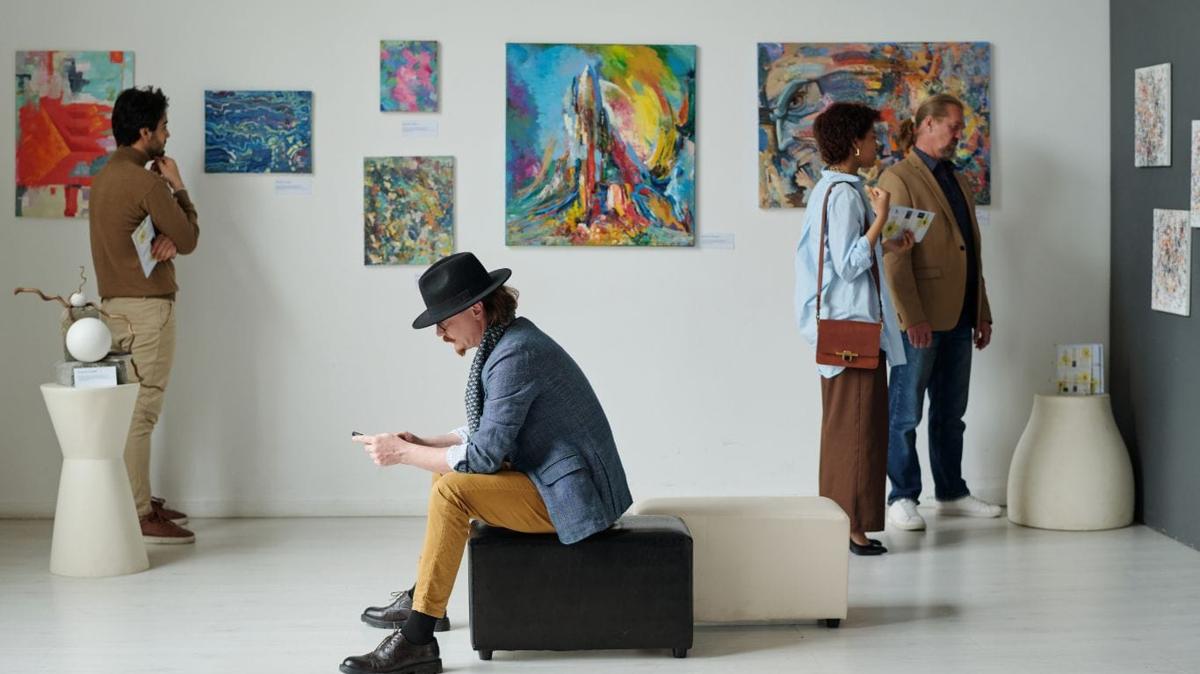
What safe collecting costs the rest of the market
The concentration shows up clearly in the auction-house disclosures. Christie's, Sotheby's and Phillips have published year after year of results where the top ten lots account for an outsized share of the season's total, and where the long tail below the trophy level has thinned visibly. Phillips' year-end commentary has flagged this explicitly as a structural shift rather than a cyclical one.
For collectors, the cost of the concentration is not just thinner programmes. It is also a market that learns to underwrite the next generation only after the institutions have done the legitimation work for them. The Venice Biennale, Documenta and major museum surveys remain the staging posts, and the market follows with a meaningful lag.
Where the experimental work has gone
The most interesting experimental practice in 2026 has migrated out of the high-fixed-cost gallery ecosystem. Artist-run spaces, project-based collectives, the resurgent independent fair circuit (Independent New York, NADA, Liste in Basel), and a quiet network of curator-led project spaces in Brussels, Mexico City, Athens and Lagos absorb most of what the mega-galleries no longer take on.
That migration is healthy in one sense and worrying in another. It preserves the work but separates it from the capital that has historically allowed careers to compound. The collectors who pay attention to the fair-circuit story this season will notice the gap between the floor of the trophy halls and the energy of the independent floors above them.
The same dynamic shows up in our reading of mid-market works outperforming trophy sales.
The honest conversation about risk
The market's safety reflex is, at root, a response to two real pressures: capital that wants downside protection in an asset class that historically offered very little, and a price-discovery mechanism that punishes any name without a deep comparable trail. Both pressures are legitimate, and neither is going away.
What is missing is the editorial honesty that says the system is now optimised for the very thing it claims to disdain: predictability. The artists who are reshaping practice rarely look like the artists who clear auction records, at least not within the same five-year window. Collectors who care about the long-run development of the medium have to accept that gap as part of how the market currently works.
What this means for collectors
The reflex to treat the trophy tier as the only serious conversation has hollowed out the layer where genuinely interesting work is being made. Collectors with the patience and the framework to look outside the most concentrated end of the market will find more compelling work for less capital than at any point in the past decade. The contemporary art field guide remains a sensible starting point for the underlying framework.
The trade-off is straightforward. Acquiring outside the mega-gallery roster requires more diligence, slower price discovery, and a higher tolerance for a portfolio where some pieces never enter the auction record at all. That is closer to how serious collections have always been built.
The safety reflex has not produced a better market, only a narrower one. The collectors we watch most carefully have already noticed.
Frequently asked questions
Why has the contemporary art market become so concentrated?
The combination of high gallery fixed costs, mega-fair economics, and capital that demands downside protection has structurally pushed the market towards a small number of names with deep auction comps. The UBS / Art Basel Global Art Market Report has tracked the concentration of value at the top five percent of artists year after year through the current cycle.
Is the mid-career experimental tier viable in 2026?
It is viable but harder than it was a decade ago. Artists in this segment now rely more heavily on institutional support, independent fair visibility, and a tighter circle of collectors who buy outside the auction-driven framework. Some of the most interesting practice has migrated to artist-run and curator-led spaces.
Should collectors avoid the trophy tier entirely?
No. The trophy tier remains the most liquid and most heavily documented part of the market, and it deserves its place in a serious collection. The argument is for balance: pairing the established names with deliberate exposure to mid-career and emerging work that the market has not yet fully priced.
Where are the best places to discover experimental work today?
Independent New York, NADA, Liste in Basel, the curator-led project spaces in Brussels, Mexico City and Athens, and the public-institution survey programmes at Tate, the Whitney, MoMA PS1, the Pompidou and the New Museum. The biennial circuit (Venice, Documenta, Berlin) remains the most reliable legitimation pathway.
We last reviewed this analysis in May 2026.