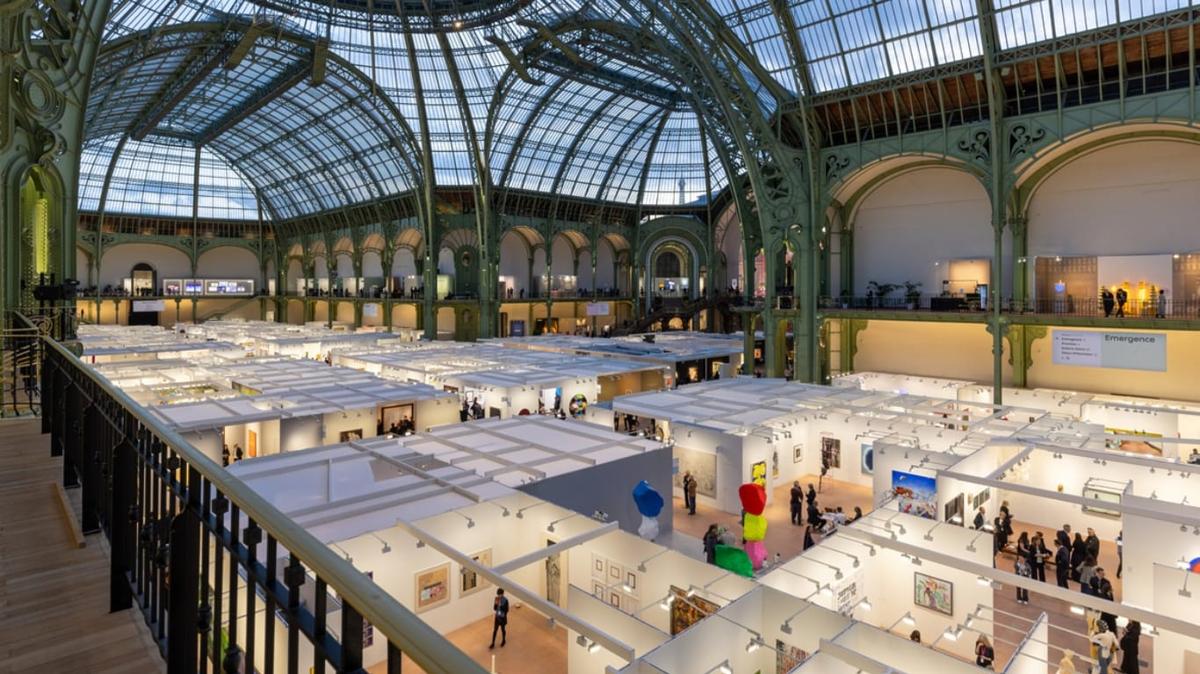
Art Basel Paris delivered the cleanest demand signal the trade has seen in eighteen months, and the fair-week sales calendar around it confirmed the message. The 2025 edition drew over 65,000 visitors to the Grand Palais and produced reported transactions at galleries across every tier of the contemporary segment, with Hauser & Wirth, Pace, Zwirner, and Gagosian all confirming substantial sale activity within the opening days.
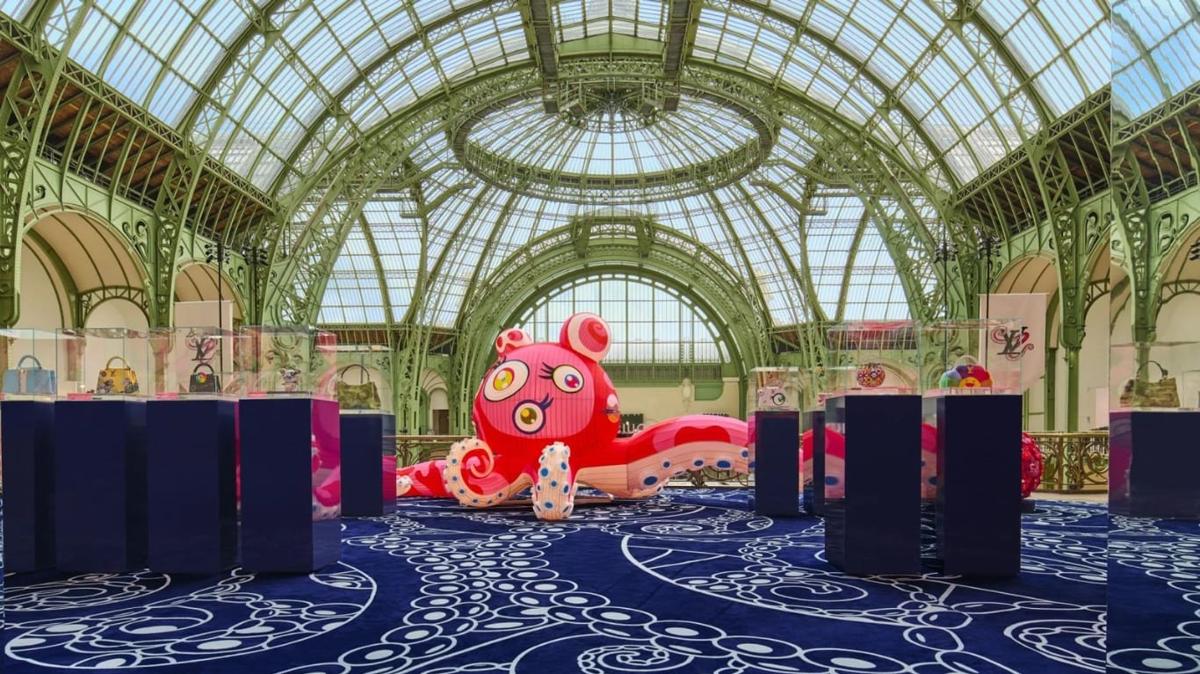
The fair-week effect on Paris extended beyond the Grand Palais. Sotheby's, Christie's, and Phillips all programmed their October sale calendars to overlap with Art Basel Paris, and the Bourse de Commerce-Pinault Collection, the Fondation Louis Vuitton, and the Lafayette Anticipations all opened major exhibitions for the week. The city has become the structural counterweight to the New York November calendar.
- Art Basel Paris delivered the cleanest demand signal the trade has seen in eighteen months, with the 2025 edition drawing over sixty-five thousand visitors to the Grand Palais.
- Hauser and Wirth, Pace, Zwirner and Gagosian all confirmed substantial sale activity within the opening days across major works by Jenny Saville, Mark Bradford and George Condo.
- The fair-week effect extended beyond the Grand Palais, with Sotheby’s, Christie’s and Phillips all programming October sale calendars to overlap with the fair.
- The Bourse de Commerce Pinault Collection, the Fondation Louis Vuitton and the Lafayette Anticipations all opened major exhibitions for the fair week in 2025.
- The Galeries Emergentes section produced multiple sold-out booths within the first hours of the VIP preview, with primary-market work in the five thousand to fifty thousand dollar band.
- Paris has become the structural counterweight to the New York November calendar, with a decade of institutional and gallery infrastructure now anchoring the fair-week sales.
- Who is this for?
- Galleries, collectors, advisors and observers of the international fair circuit tracking how Art Basel Paris has reshaped the European calendar and the broader contemporary segment.
- What is happening?
- An editorial read on Art Basel Paris signalling fresh momentum for the fair circuit, covering 2025 sales, the auction-house response, the foundation programming and the mid-market depth.
- When did this emerge?
- Most relevant around the Art Basel Paris cycle in October each year and during the parallel evening sales at Christie’s, Sotheby’s and Phillips that now anchor the same week.
- Where is this happening?
- Centred on the Grand Palais and the broader Paris gallery and foundation network, with global participation from collectors and museum acquisition teams across Europe, Asia and the Americas.
- Why does it matter?
- Reading the Paris momentum correctly clarifies how the European fair circuit is evolving and supports galleries, collectors and advisors making decisions about programming and acquisition cadence.
What sold, and at what tier
The opening days produced a clean cross-section. Hauser & Wirth reported sales of major works by Jenny Saville, Mark Bradford, and George Condo in the high-six and seven-figure range. Pace placed an Arshile Gorky and a Maria Lassnig at the trophy tier.
Zwirner sold across the Bridget Riley, Wolfgang Tillmans, and Lisa Yuskavage segments.
Gagosian, Lehmann Maupin, White Cube, and Thaddaeus Ropac all confirmed substantial activity. The mid-tier galleries, where the durable collecting cohort actually transacts, reported the strongest week-on-week growth in attendance and recorded conversation activity in eighteen months.
The emerging-artist tier was particularly active. The fair's Galeries Émergentes section produced multiple sold-out booths within the first hours of the VIP preview, with prices on primary-market work in the $5,000 to $50,000 band.
The Paris infrastructure that built the moment
Paris's revival as a contemporary centre is a decade in the making. The opening of the Fondation Louis Vuitton in 2014, the Bourse de Commerce-Pinault Collection in 2021, the relocation of Frieze Masters to Paris's Petit Palais (now Art Basel Paris's tier-two parallel fair), and the steady migration of major mega-gallery footprints to the Marais and the 8th arrondissement built the infrastructure that the fair-week sales now sit on.
The institutional programming runs continuously. The Pompidou, the Musée d'Orsay, the Louvre, the Musée de l'Orangerie, and the Petit Palais together produce the densest cultural calendar in any single fair week, and the foundation segment, Cartier, LVMH, Pinault, runs an institutional layer alongside.
Our coverage of how the broader segment is responding sits alongside our piece on how Gen Z collectors discover artists through social media, which describes the audience the Paris programme has been particularly successful at engaging.
The collector base that showed up
The fair's collector preview drew foundations, museum acquisition teams, and private collectors at meaningful scale. The Pinault Collection, the Fondation Louis Vuitton, the Cartier Foundation, the Brant Foundation, and acquisition representatives from MoMA, the Tate, the Met, the Pompidou, and the Whitney all walked the booths through the opening days.
The geographic spread was unusually broad. European collectors anchored the base, but visible Asian, Middle Eastern, and Latin American participation was meaningfully stronger than at any prior Art Basel Paris edition. The Saudi, Emirati, and Qatari institutional buyers in particular had visible booth-level conversations across the major mega-galleries.
What the auction houses produced around the fair
Christie's Paris evening sale on the Tuesday of fair week posted hammer results that materially beat estimate across multiple lots. The sale featured strong representation of Bridget Riley, Pierre Soulages, Joan Mitchell, and Yves Klein, all of which sold above the upper estimate. Two new artist records were set.
Sotheby's Paris evening sale on the Wednesday produced similar depth across the contemporary segment. Christie's and Sotheby's combined Paris hammer for the week ran at multiples of the prior October calendar, and the depth of bidding on the mid-tier lots was the most encouraging signal of the segment's recovery.
Phillips' Paris sale, smaller in scale but consistent with the broader pattern, anchored the contemporary cohort with strong results on Christina Quarles, Flora Yukhnovich, and Salman Toor.
The mid-market depth that mattered
The single most encouraging data point from the week was bidding depth at the $200K to $5M tier. Across the auction sales and the gallery booths, the mid-tier transacted with breadth that the 2023 and early-2024 calendars had simply not produced.
The cohort of buyers at that tier is the structural backbone of the market. Galleries report that the same collector who acquires a $500K work in 2025 is the same collector who, across the next decade, progresses into the seven-figure tier. The 2025 Paris fair confirmed the cohort is functioning.
Our piece on how serious collectors separate durable demand from hype covers the broader framework for reading the segment.
What the trade is reading from the fair
The week's results suggest the broader market correction has bottomed. The mid-tier depth, the geographic spread, and the institutional and foundation participation collectively signal that the cohort of buyers the trade was concerned about, the serious, long-cycle collector base, did not leave. They paused, and they are returning at scale.
The Ultra-Contemporary segment that drove the 2021-2022 peak is structurally different. Some of that cohort is back; much of it is not. The pattern is consistent with prior resets: the speculative tier corrects and reorganises, the durable tier deepens.
For broader market context, our coverage of older-master rerating, including El Greco's recent market activity, and the contemporary trophy-tier dynamics in pieces like the Banksy market, sets out the longer arc.
Where the calendar goes next
The Hong Kong sale calendar in March, Art Basel Hong Kong, the May New York evening sales, and the Frieze London calendar are now the structural sequence the trade will read. The Paris result raises the expectation for each, but the sustaining read will need confirmation from at least two of the next three calendar dates.
The houses' programming for 2026 has been adjusted to reflect the Paris confidence. Larger consignments, deeper estimates, and broader geographic marketing all reflect the trade's working assumption that the segment has bottomed and is rebuilding.
What this means for collectors
Art Basel Paris 2025 was the inflection. Not the cycle's peak return, but the moment the trade started talking about momentum rather than caution. The mid-tier depth, the institutional participation, and the geographic spread all point to a segment that is functioning across its durable layers.
For collectors building positions through the cycle, the price environment remains favourable. The reset cleared the speculative excess, the auction-house estimate-setting is materially more disciplined than at the prior peak, and the artists the trade is treating with conviction are those with institutional and gallery infrastructure that does not depend on the speculative cohort.
We last reviewed this analysis in May 2026.
Frequently Asked Questions
What is Art Basel Paris?
Art Basel Paris is the Paris edition of the Art Basel fair, held annually in October at the Grand Palais. The 2025 edition drew over 65,000 visitors and produced reported transactions at galleries across every tier of the contemporary segment. The fair has become the structural counterweight to the New York November sale calendar within the Art Basel global network.
How did the 2025 Art Basel Paris sales perform?
Strongly across the major mega-galleries. Hauser & Wirth, Pace, Zwirner, Gagosian, Lehmann Maupin, White Cube, and Thaddaeus Ropac all confirmed substantial activity at the trophy tier and across the mid-market. Christie's and Sotheby's evening sales running alongside the fair posted hammer results that materially beat estimate across multiple lots, with two new artist records set.
Why is Paris now important to the art market?
The cultural infrastructure that has built up across the past decade: the Fondation Louis Vuitton (2014), the Bourse de Commerce-Pinault Collection (2021), the migration of mega-gallery footprints to the Marais and the 8th arrondissement, and the institutional density of the Pompidou, Orsay, Louvre, Orangerie, and Petit Palais. The fair sits on infrastructure that no other European city matches.
What does the Paris result mean for the broader market?
That the mid-tier of the market is functioning with depth and that the durable collector base did not leave during the 2023-2024 correction. The trade now reads the next calendar dates, Hong Kong in March, New York in May, Frieze London in October, as the sustaining confirmation. The signal from Paris is positive; the broader confirmation is still being built.