
Gen Z collectors discover, evaluate, and acquire art through social media in a way no previous generation did, and the trade is structurally adapting to it. The Hiscox Online Art Trade Report has consistently flagged Instagram, TikTok, and Pinterest as the principal discovery channels for buyers under thirty, and the major auction houses now budget for that fact rather than work around it.
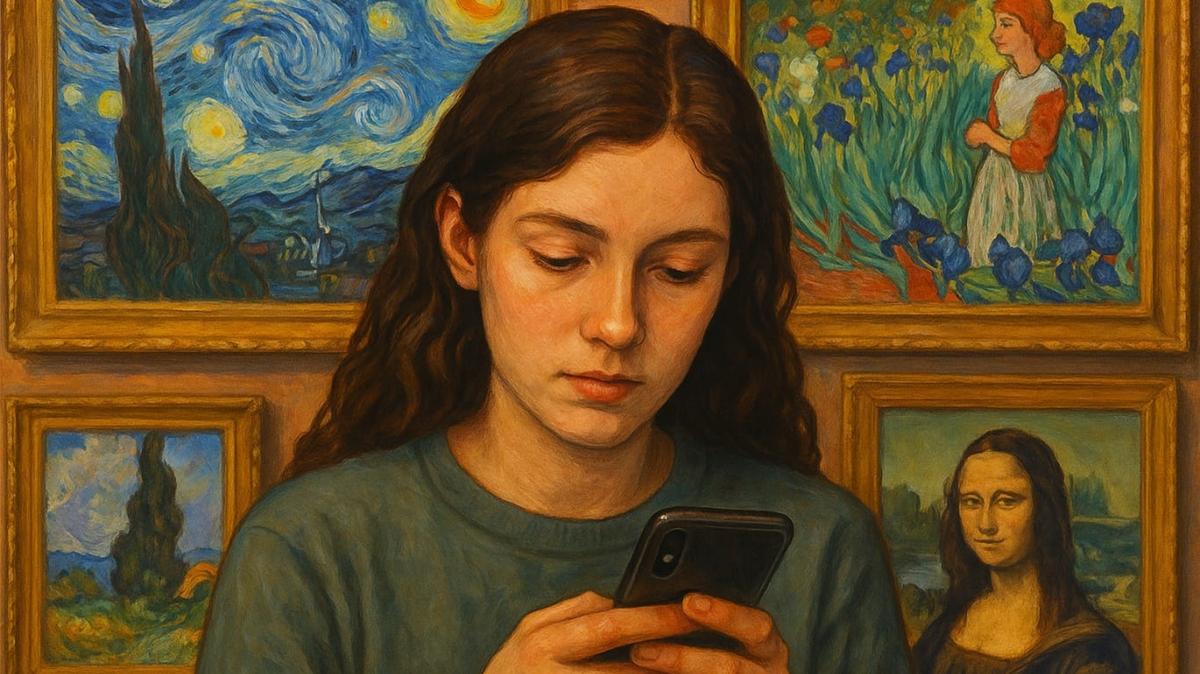
The Art Basel and UBS Global Art Market Report 2024 dedicates substantial coverage to the generational shift, with under-30 collectors transacting more frequently online and at lower individual price points than older cohorts, but with materially higher total transaction counts per year. The behaviour is not casual; it is structurally different from how older collectors built their holdings.
- Gen Z collectors discover, evaluate and acquire art through social media in a way no previous generation did, and the trade is structurally adapting to that fact.
- The Hiscox Online Art Trade Report consistently flags Instagram, TikTok and Pinterest as the principal discovery channels for buyers under thirty across the global market.
- The traditional discovery sequence of gallery introduction, fair attendance and auction-house relationship has been replaced by feed, save, screenshot and dealer DM.
- Figurative painters whose work photographs cleanly on a phone screen have benefited disproportionately, with Amoako Boafo, Jordan Casteel and Salman Toor as recognisable examples.
- The cohort transacts most actively between five hundred and twenty-five thousand dollars, with serious buyers occasionally reaching primary-market work above two hundred thousand dollars.
- TikTok has become the surprise discovery channel of the past three years, with viral runs moving specific artists’ primary-market wait-lists materially within weeks.
- Who is this for?
- Galleries, advisors and observers of the contemporary market tracking how Gen Z collectors are reshaping discovery, primary-market access and the cadence of emerging-artist demand.
- What is happening?
- An editorial read on why Gen Z collectors let social media pick their art, covering the discovery funnel, the artists who break through, the TikTok variable and the risks the cohort carries.
- When did this emerge?
- Always relevant as a backdrop to the contemporary market, with particular weight around major fair seasons when social-driven demand most visibly shapes gallery activity and auction estimates.
- Where is this happening?
- Centred on the global gallery networks of Pace, Zwirner, Hauser and Wirth and Lehmann Maupin, and on platforms including Avant Arte, Artspace and Phillips’ streaming evening sales.
- Why does it matter?
- Understanding how Gen Z actually buys clarifies which artists will or will not break through and supports galleries, advisors and collectors making decisions about access and pricing in real time.
The discovery funnel has changed
The traditional art-world discovery sequence was gallery introduction, fair attendance, auction-house relationship. The Gen Z sequence is feed, save, screenshot, dealer DM. The artists who get on a Gen Z collector's radar arrive through algorithmic curation rather than institutional gatekeeping.
That changes which artists actually break through. The cohort that has benefitted most are figurative painters whose work photographs cleanly on a phone screen: bold colour, clear composition, recognisable subjects. Amoako Boafo's auction breakthrough in 2020 was partly an Instagram phenomenon; the same is true of Jordan Casteel, Salman Toor, and the wave that followed.
Galleries have adapted. The Pace, Zwirner, Hauser & Wirth, and Lehmann Maupin Instagram accounts run as quasi-editorial properties now, with curated drops, studio visits, and timed reveals that mirror the cadence of consumer brand marketing.
What Gen Z actually buys
The price point that defines the segment runs roughly from $500 to $25,000 for the entry-level cohort, with serious buyers transacting up to $250,000 for emerging-name primary-market works. Print editions, photography, smaller paintings, and works on paper anchor the volume.
The cohort is over-represented in the NFT segment, in print editions through Avant Arte and Artspace, and in the emerging-artist primary market at galleries that have built credible digital programmes. The same buyer who acquires a $2,000 print on Avant Arte often ends up acquiring a $25,000 painting from the same artist's gallery two years later.
Our best contemporary art movements coverage maps the broader segment Gen Z buyers gravitate toward.
The TikTok variable
TikTok is the discovery channel that surprised the trade most. The platform's art content runs the spectrum from gallery walkthroughs to studio process videos to auction-result commentary, and a viral run can move a specific artist's primary-market wait-list materially within weeks.
The pattern has been consistent enough that several galleries now treat TikTok visibility as a leading indicator for emerging-artist demand. The platform's algorithm rewards process content, time-lapse studio footage, finish reveals, and behind-the-scenes work, which has elevated artists whose practice happens to translate to that medium.
The risks the cohort carries
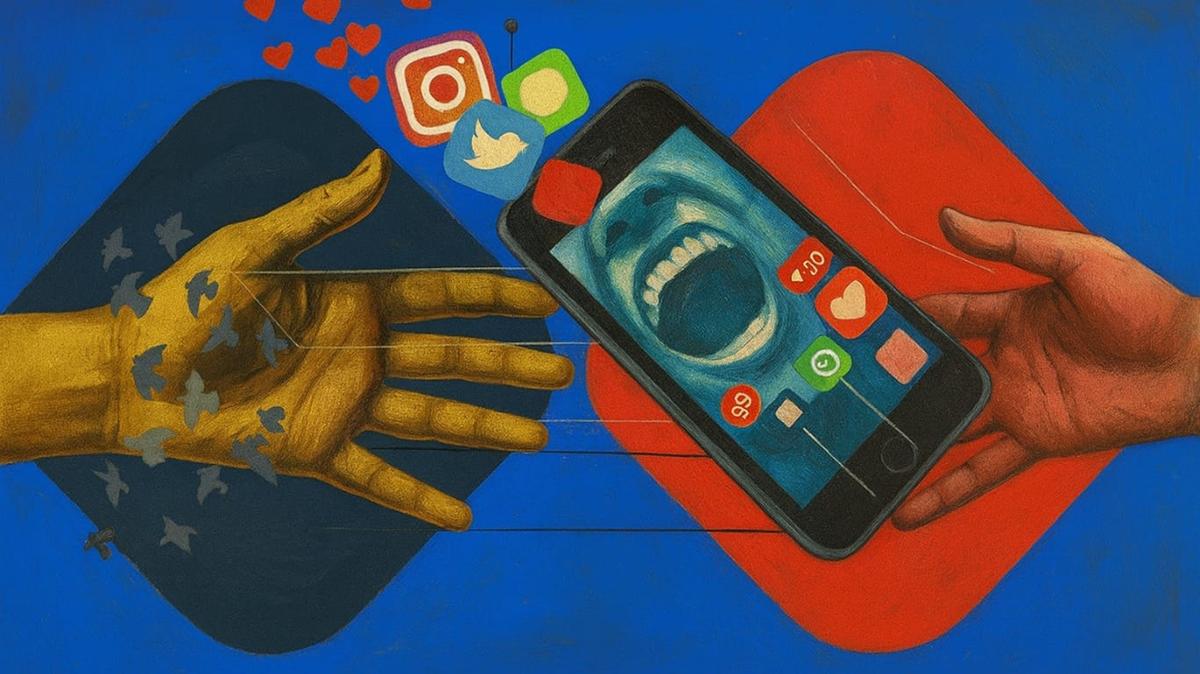
Algorithmic discovery rewards visual immediacy over staying power. A studio practice that builds across decades is harder to convey in a fifteen-second video than a single hyperreal portrait or a precisely composed still life, which means the cohort is structurally biased toward artists whose work translates to the feed.
The 2021 NFT cycle was the clearest expression of that bias, and the correction that followed in 2022 and 2023 was steep. Our piece on common NFT scams covers the segment-specific risks.
The flipping problem is real. Galleries report higher rates of resale within six to eighteen months of acquisition among under-30 buyers than any other cohort, which is part of why some primary-market wait-lists now include resale-restriction clauses for first-time buyers.
What the institutions are doing
The Tate, MoMA, the Guggenheim, and the major European institutions have all built substantial social-media programmes that function as discovery and education channels for the cohort. The Tate's Instagram is one of the most-followed museum accounts globally, and the engagement metrics correlate with attendance at the named exhibitions.
Auction houses run their own active programmes. Sotheby's Now, Christie's First Open, and Phillips' New Now formats are explicitly designed for the digital-native cohort, with lots presented through video walk-throughs and same-week online bidding windows.
For collectors interested in the broader institutional rotation, our coverage of institutional risk aversion sets out the structural concerns experienced collectors have flagged.
The traditional-art question
Gen Z collectors are not abandoning traditional art entirely. The Hiscox report tracks meaningful interest in 19th-century photography, Old Master prints, and traditional Asian art among under-30 buyers who use Instagram and TikTok to discover those segments alongside contemporary work.
The structural difference is the channel, not the category. A buyer who discovers Hiroshi Sugimoto's seascapes through Instagram and then acquires a vintage print at Christie's is the same behaviour pattern, just routed through a different segment.
Our piece on what traditional art means sets out the broader segment that remains a meaningful share of the cohort's acquisitions.
Where this goes next
The trade is now treating social-media presence as a baseline professional requirement for new artists rather than a marketing nicety. Galleries advise emerging artists to maintain consistent feeds, and the most disciplined run their accounts as editorial channels rather than promotional ones.
The risk for the cohort is mistaking discovery for due diligence. Algorithmic surfacing is a starting point, not a vetting process. The serious collectors emerging from the Gen Z cohort are the ones using the feed to discover and then applying the same provenance, condition, and primary-market discipline that older collectors use.
For broader context on the institutional and market infrastructure these collectors operate within, our RISE 2026 coverage and art fund analysis both touch on the surrounding ecosystem.
What this means for collectors
Social media is the new gallery district, and the cohort that grew up there is collecting accordingly. The pattern is structural, not generational drift, and the auction-house programming has reorganised around it permanently.
The discipline for any collector now, regardless of age, is to use the feed for discovery and then walk the same provenance, condition, and primary-market path that the serious trade has always required. The channel changes; the homework does not.
We last reviewed this analysis in May 2026.
Frequently Asked Questions
Do Gen Z collectors really buy art through Instagram?
Yes, in volume. The Hiscox Online Art Trade Report and the UBS/Art Basel Global Art Market Report both flag Instagram, TikTok, and Pinterest as the principal discovery channels for buyers under thirty. The actual transactions still close through galleries, auction houses, and platforms like Avant Arte and Artspace, but the discovery funnel begins on the feed.
Which artists have broken through on social media?
Amoako Boafo, Jordan Casteel, Salman Toor, Jadé Fadojutimi, Flora Yukhnovich, and Christina Quarles are among the artists whose primary-market momentum was visibly amplified by social-media visibility. The cohort skews toward figurative painters whose work photographs cleanly on a phone screen.
What price point do Gen Z collectors transact at?
The entry tier runs $500 to $25,000, with print editions, photography, and works on paper anchoring the volume. Serious buyers in the cohort transact up to $250,000 for emerging-name primary-market works. The same buyer who acquires a $2,000 print on Avant Arte often progresses to a $25,000 gallery painting within two years.
Is the social-media-driven market sustainable?
The discovery channel is sustainable; the speculative excess that occasionally accompanies it is not. The 2021 NFT cycle and the wet-paint flipping problem of 2022 were both algorithmically amplified. The cohort that emerges with durable collections is the one applying traditional provenance, condition, and primary-market discipline to artists they discovered through the feed.