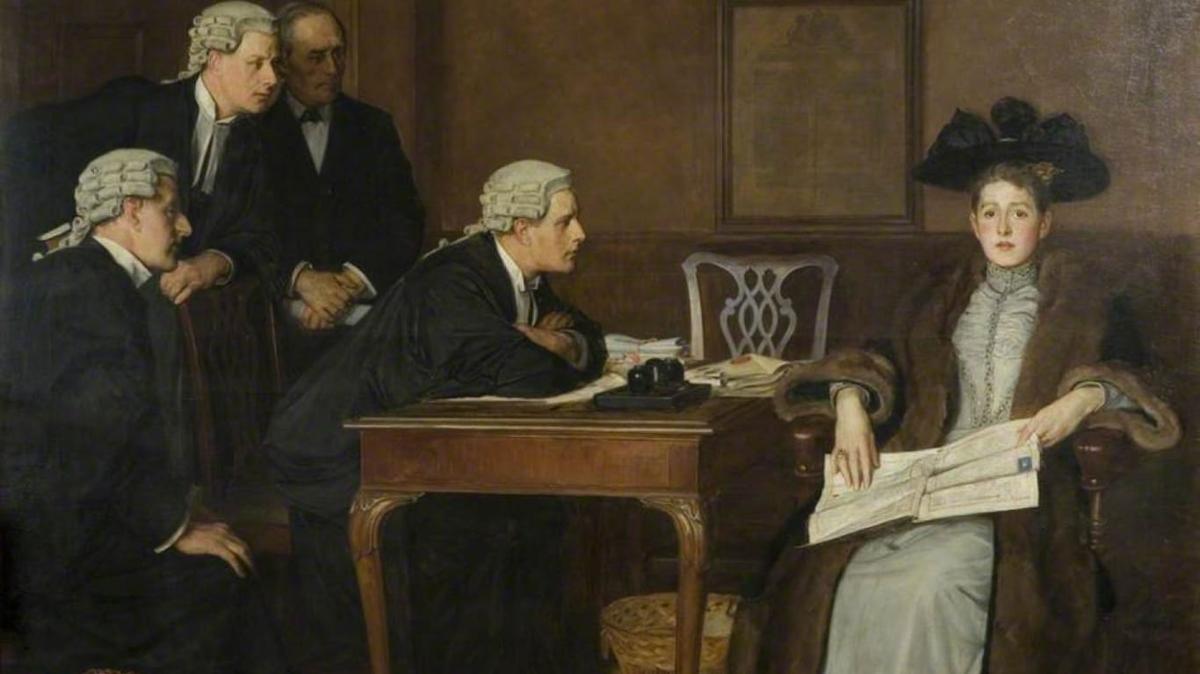
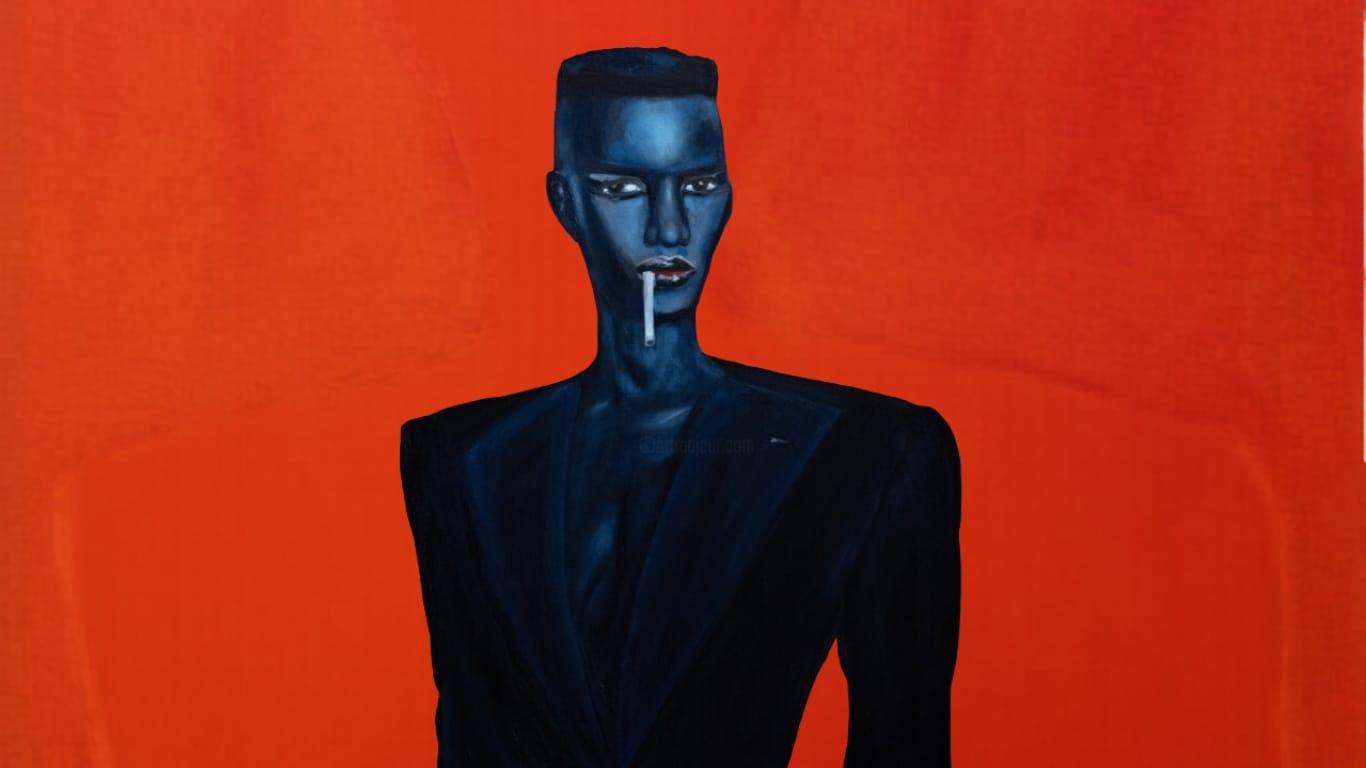
Contemporary portrait art has become one of the most collectible categories of 2026, and the auction record tells the story without ornament. Christie's, Sotheby's and Phillips have all reported strong sell-through and meaningful new highs across the cohort of contemporary portrait painters, and the trophy results in 2023-2025 have repeatedly cleared $10 million on a single canvas.
The 2025 UBS / Art Basel Global Art Market Report flagged figurative and portrait painting as one of the most resilient segments of a soft year.
The shift is not about portraiture in the broad sense. It is about a specific cohort of contemporary painters working with the face as the primary compositional and conceptual material, and the institutional and market depth that has converged around the cohort.
- Contemporary portrait art has become one of the most collectible categories of 2026, with Christie’s, Sotheby’s and Phillips all reporting strong sell-through across the cohort.
- Trophy results in 2023 to 2025 have repeatedly cleared ten million dollars on a single canvas, with the segment proving resilient through a soft broader year.
- Three structural forces sit behind the rise: major museum survey programming, market reweighting toward technical depth and the historical resonance of portrait painting itself.
- The Met, the Whitney, the Tate, the Pompidou and the National Portrait Gallery have all run major survey programming around the contemporary portrait through 2023 to 2025.
- Jenny Saville’s engagement with Renaissance compositional tradition has anchored eight-figure trophy results, with John Currin’s Northern Renaissance references doing the same.
- Lisa Yuskavage, Cecily Brown, Tracey Emin, Marlene Dumas, Lynette Yiadom-Boakye, Amoako Boafo and Jordan Casteel all anchor different points on the same broader curve.
- Who is this for?
- Contemporary collectors and advisors tracking the contemporary portrait cohort as one of the most consistently performing segments of the broader contemporary market through 2026.
- What is happening?
- An editorial read on why contemporary portrait art is now a top collectible category, covering the institutional pipeline, the cohort of names, the auction record and the historical resonance.
- When did this emerge?
- Most relevant around the May and November contemporary evening sales at Christie’s, Sotheby’s and Phillips and during major portrait-focused museum survey programmes worldwide.
- Where is this happening?
- Centred on the New York and London salesrooms and the major institutional programme at the Met, the Whitney, the Tate, the Pompidou and the National Portrait Gallery.
- Why does it matter?
- Reading the contemporary portrait segment correctly matters because the institutional and market depth are both genuine and the cohort offers credible compounding through the next cycle.
Why portrait painting is leading the contemporary market
Three structural forces sit behind the rise. The first is institutional. The Met, the Whitney, the Tate, the Pompidou and the National Portrait Gallery have all run major survey programming around the contemporary portrait through 2023-2025, with the Met's pairing of historical and contemporary portraiture across the recent retrospective season being one of the most consequential.
The second is market structural. The broader contemporary market has reweighted towards depth of technical achievement and institutional record, away from speculative primary-market exposure, and the portrait painters working with serious technical engagement and deep institutional records have benefited disproportionately.
The third is the historical resonance. Contemporary portrait painting sits structurally in dialogue with the Renaissance, Baroque and academic traditions, and the cross-period framing that major museums and serious collectors are increasingly applying has placed contemporary portraiture in particularly favourable position.
The cohort of names defining 2026
The market depth sits with a defined cohort. Jenny Saville's engagement with the Renaissance compositional tradition has anchored eight-figure trophy results. John Currin's Northern Renaissance portraiture references and the depth of his market across both unique work and prints have sustained a multi-decade compounding curve.
Lisa Yuskavage, Cecily Brown, Tracey Emin, Marlene Dumas, Lynette Yiadom-Boakye, Amoako Boafo, Jordan Casteel, and the late Lucian Freud's continuing secondary market all anchor different points on the curve.
The 2024 Jordan Casteel record at Sotheby's, the multiple Amoako Boafo highs through 2023-2025, and the consistent eight-figure clearings for major Lucian Freud and Marlene Dumas canvases have built the empirical record that the institutional momentum has framed conceptually.
What the auction record actually says
The cohort produces some of the most consistent contemporary auction results. Major Jenny Saville canvases have cleared at the multi-million-dollar level repeatedly. Marlene Dumas works have produced steady eight-figure results across multiple seasons.
The Currin, Yuskavage and Brown markets carry deep secondary depth at the mid-six and low-seven-figure level.
The Lucian Freud market deserves separate framing. His late-period work continues to trade at the trophy tier with depth that has held through the broader market softness, and the institutional record (Tate Britain, the National Portrait Gallery, the Metropolitan Museum) anchors the long-run market structurally.
The institutional pipeline through 2026
Three major institutional programmes will shape the conversation through the rest of the year. The Met's contemporary portrait programming continues. The Whitney's survey of the contemporary portrait painters is in active phase.
The National Portrait Gallery's contemporary commission programming and the major Tate Britain programming anchor the British and Commonwealth cohort.
The catalogue scholarship has thickened in parallel. Each of the major names in the cohort now sits on a body of curatorial writing that places the practice in direct conversation with the historical portrait tradition, and the documentary record around the work is among the strongest in the contemporary market.
What separates the cohort from broader figurative painting
The four tests apply. The first is the institutional record across multiple named museums. The second is the depth of comparable lots across multiple seasons rather than a single trophy.
The third is the technical achievement of the work, evaluated by named specialists. The fourth is the catalogue scholarship around the practice.
The cohort that clears all four tests is small but defensible. Our coverage of the broader cohort of blue-chip artists defining 2026 and the artists defining the market in 2026 overlaps materially with the portrait cohort, which reflects the broader market reweighting.
How the cohort sits relative to historical portrait painting
The contemporary cohort engages directly with the historical canon rather than alongside it. Jenny Saville's references to Titian and Veronese are explicit. John Currin's Northern Renaissance compositional logic is direct.
The wider cohort works with iconographic and technical reference points that run through the entire history of European portraiture.
That direct engagement is part of what has driven the cross-period acquisition pattern in serious 2026 collections. The pairing of a contemporary portrait with a historical portrait from a related tradition has been a recurring framing in both major museum surveys and serious private collections. Our coverage of figurative art commanding high prices covers the broader context.
The structural question of who is collecting
The buyer base has thickened and widened over the past decade. The traditional contemporary collector cohort has been joined by HNW collectors specifically seeking depth of technical achievement and institutional record, by Asian collectors expanding into Western contemporary portraiture, and by the institutional and foundation buyers who increasingly anchor the trophy-tier consignments.
The pattern matches the broader 2026 framing in our coverage of the contemporary art field guide and the contemporary art movements that defined 2025: the market has structurally rebalanced towards depth of engagement and away from speculative primary-market exposure.
What this means for collectors
Contemporary portrait painting is no longer a niche corner of the contemporary market. It is the segment where institutional depth, market depth and catalogue scholarship have converged most clearly on the same cohort of names, and where the buyer base has thickened most consistently over the past five seasons.
The opportunity sits in two places. The first is the cohort of mid-career portrait painters whose institutional records run ahead of their auction comparables, where the lag is structurally closing. The second is the cross-period acquisition that pairs a contemporary portrait with a historical portrait from a related tradition, where the framing has been validated by both major museum programming and the secondary-market depth.
The portrait, as the contemporary cohort has shown, is structurally one of the deepest forms in painting. The market has caught up with the institutional record, and 2026 has confirmed the framing.
Frequently asked questions
Why is contemporary portrait painting outperforming other figurative segments?
The cohort combines depth of institutional record (Met, Whitney, Tate, Pompidou, National Portrait Gallery), depth of catalogue scholarship, and depth of recent auction comparables. The 2025 UBS / Art Basel Global Art Market Report flagged figurative and portrait painting as one of the resilient segments of a soft year. The market has rewarded the technical and institutional depth.
Which artists most clearly define the cohort?
Jenny Saville, John Currin, Lisa Yuskavage, Cecily Brown, Marlene Dumas, the late Lucian Freud, Lynette Yiadom-Boakye, Amoako Boafo, Jordan Casteel and the broader generation of mid-career and emerging portrait painters working with serious technical engagement and deep institutional records.
How does the cohort sit relative to historical portraiture?
In direct dialogue. The cohort engages explicitly with the Renaissance, Baroque and academic portrait traditions, and major museum surveys have placed contemporary and historical portraiture in direct conversation. The cross-period acquisition pattern in serious 2026 collections reflects the institutional framing.
What should a collector building a portrait position prioritise?
Depth of institutional record across multiple named museums, depth of recent comparable lots, technical achievement of the specific work evaluated by named specialists, and the catalogue scholarship around the artist's practice. The cohort that clears all four tests is small but defensible, and the diligence work is structurally the same across the historical and contemporary segments.
We last reviewed this analysis in May 2026.