

On June 18, 2024, NVIDIA hit a milestone that few saw coming. The company became the most valuable in the world, overtaking tech titans like Microsoft, Apple, Samsung, and Alphabet with a valuation of $3.34 trillion. What got them there is a story worth understanding, because it touches on innovation, timing, and a level of strategic clarity that most companies never find.
The Origins of NVIDIA
NVIDIA’s story starts in 1993, when Jensen Huang, Chris Malachowsky, and Curtis Priem sat down together and spotted a gap that nobody else was moving fast enough to fill. Personal computers at the time were graphically underwhelming, and the trio believed a new kind of chip could change that entirely. The conversation that started it all reportedly happened at a Denny’s diner, which is now one of Silicon Valley’s most retold origin stories.
The name NVIDIA draws from the Latin word “Invidia,” meaning envy. That was intentional. They wanted to build technology so far ahead of the curve that competitors would have no choice but to look on with admiration. From that booth at Denny’s, they set out to do exactly that.
The Birth and Evolution of the GPU
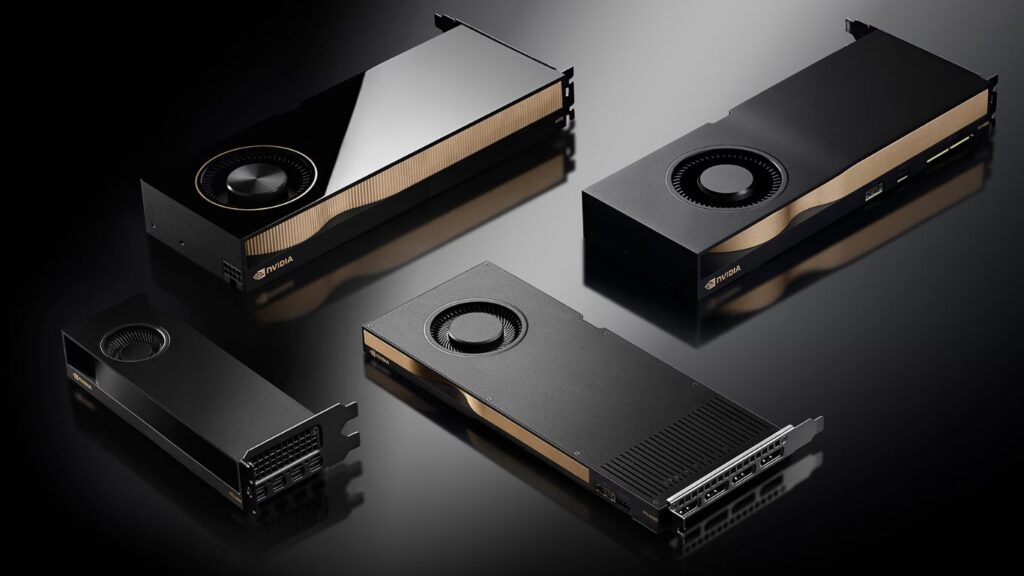
The real turning point came in 1999 with the launch of the GeForce 256, the first chip NVIDIA formally marketed as a Graphics Processing Unit, or GPU. The key difference between a GPU and a traditional CPU is how they handle work. A CPU tackles one calculation at a time with high precision. A GPU spreads thousands of calculations across parallel processors simultaneously, making it built for the kind of visual complexity that gaming and rendering demand.
That shift in how graphics were processed changed everything for game developers. Before GPUs entered the picture, they were essentially building within the ceiling of what a CPU could handle, which was not very high. Suddenly, richer worlds, faster frame rates, and more immersive experiences became possible. NVIDIA locked in its position as the leader in graphics hardware, and quietly set itself up for something much bigger.
Diversification into AI and Beyond
Winning the GPU race gave NVIDIA an opening, and they took it. In 2006, they launched CUDA, which stands for Compute Unified Device Architecture. Think of it as a software bridge that let developers tap into the raw parallel processing power of NVIDIA GPUs for tasks that had nothing to do with graphics. That was a bold and far-sighted move, and it paid off in ways that even NVIDIA’s founders may not have fully anticipated at the time.
CUDA unlocked a wide range of use cases, from video editing and financial modeling to scientific simulations. But the application that truly defined NVIDIA’s future was artificial intelligence. Training AI models is extraordinarily computationally intensive, and GPUs, with their ability to run thousands of calculations at once, turned out to be exactly what the field needed. You can read more about whether the AI investment wave is built on real foundations in this piece on why the AI boom is not a bubble.
That early bet on AI positioned NVIDIA ahead of the pack long before most companies understood what was coming. Researchers and AI developers gravitated toward NVIDIA GPUs because nothing else came close to matching the performance. By the time demand exploded, NVIDIA already owned the infrastructure layer that made it all possible.
Dominance in the AI Era
As AI scaled up across industries, NVIDIA’s hardware became the default engine powering it. Tesla, for instance, uses NVIDIA GPUs at its Texas Gigafactory supercomputer cluster, running 50,000 units to advance its full self-driving capabilities. That single deployment gives you a sense of the scale involved. And Tesla is just one customer among many.
Amazon Web Services, the world’s most widely used cloud platform, also leans heavily on NVIDIA GPUs to power its services. When you use cloud-based AI tools, there is a strong chance NVIDIA silicon is doing the work underneath. That kind of deep integration across the tech ecosystem is not easy to displace, and it is a big part of why investors across global markets have treated NVIDIA as a proxy for the entire AI trade.
Strategic Financial Moves: The 10-to-1 Stock Split
One of the moves that accelerated NVIDIA’s ascent to the top was a 10-to-1 stock split. By dividing each share into ten, the price per share dropped to a level that opened the door to a much wider pool of investors. More buyers, more demand, and a market cap that kept climbing as confidence in AI grew.
The timing could not have been better. The split landed right as global enthusiasm for AI was reaching a fever pitch. With NVIDIA sitting at the center of that story, their stock became one of the most watched in the world. As the Financial Times noted, the move reflected both smart financial engineering and a confident signal about where the company was headed.
Challenges and Future Outlook
The growth story is real, but it comes with questions worth taking seriously. One of the biggest is energy. A recent study found that the current pace of AI expansion could eventually demand power equivalent to an entire country the size of the Netherlands. That puts pressure on governments, utilities, and the companies driving AI adoption, including NVIDIA, to think carefully about sustainability.
There are also voices warning of a potential valuation bubble in AI stocks, drawing comparisons to the dot-com era. Some of those concerns deserve attention, even if you believe in the long-term thesis. Separating real returns from hype is something every smart investor needs to do right now, especially in a sector moving this fast.
That said, NVIDIA’s foundation looks strong. Demand for their GPUs keeps expanding across sectors you might not immediately think of, from surgical robotics and film production to the early architecture of the metaverse. The digital transformation underway across industries is not slowing down, and NVIDIA’s hardware sits at the center of almost all of it.
Conclusion
NVIDIA’s climb to the top of the tech world is a story about more than good timing. They pioneered a new category of chip, built the software ecosystem to match, and then watched the world catch up to the vision they had been executing for decades. As AI continues to reshape how businesses operate and how capital flows, NVIDIA’s role in that shift looks more entrenched, not less.
From a diner conversation in 1993 to a $3.34 trillion valuation, NVIDIA’s journey is one of the clearest examples of what happens when genuine innovation meets disciplined execution. For entrepreneurs and investors alike, the takeaway is straightforward. Back the right technology early, build the ecosystem around it, and be patient enough to let the world arrive at your door. Reuters covered the historic milestone in detail, and it is worth revisiting to appreciate just how far NVIDIA has come.