
Fine wine has quietly become one of the most compelling ways to diversify a serious portfolio and chase returns that traditional markets simply can’t match.
Red wines like Pinot Noir and Cabernet Sauvignon tend to steal the spotlight in investment circles. But white wines, specifically Pinot Grigio and Chardonnay, are carving out their own compelling case for your attention.
To make smart moves in this space, you need to understand what separates these two varietals. Think origins, grape characteristics, taste profiles, winemaking methods, and how each performs in the market over time.
This guide breaks down the key differences between Pinot Grigio and Chardonnay, with a close look at average bottle pricing and the historical return on investment each has delivered.
By weighing all these factors, you’ll walk away with a clear picture of which varietal offers the stronger investment case heading into 2026.
Table of Contents
Pinot Grigio vs Chardonnay: Regions & Origins
Where a wine comes from shapes everything about it. For investors, understanding the origins and home regions of Pinot Grigio and Chardonnay is your starting point.
These regions don’t just define flavor. They drive market value, collector demand, and the long-term appreciation story behind each bottle.
Pinot Grigio: Regions & Origins
Pinot Grigio, called Pinot Gris in France, traces its roots to the Alsace region and is actually a natural mutation of Pinot Noir.
Its ability to adapt to wildly different climates has helped it spread across the globe, with each region adding its own fingerprint to the final wine.
Key regions for Pinot Grigio include:
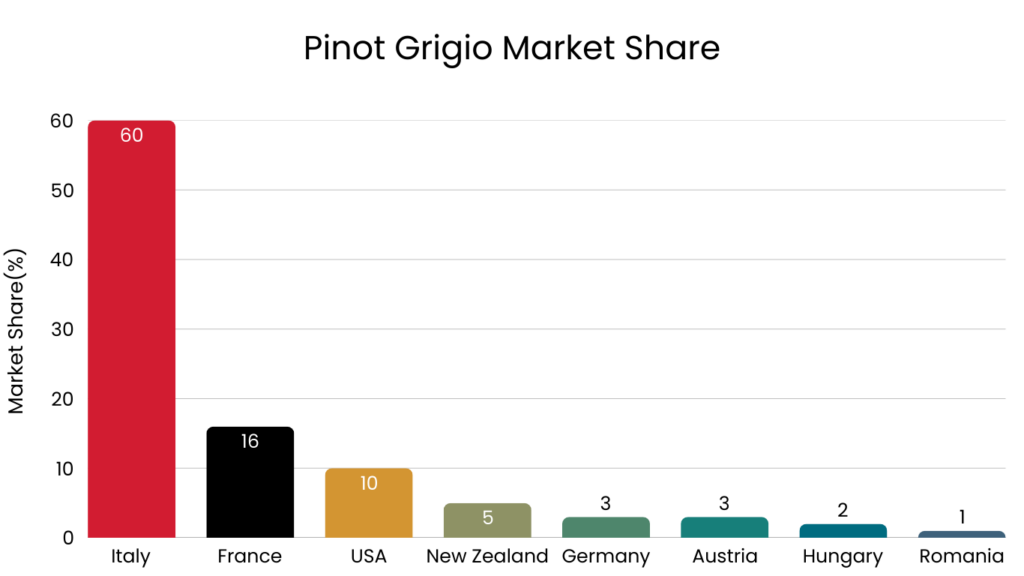
- Italy (Veneto, Friuli-Venezia Giulia, Trentino-Alto Adige): Italy produces light, crisp Pinot Grigio, particularly from the Veneto region. This style dominates the global market, accounting for over 60% of Pinot Grigio exports.
- France (Alsace): Alsace Pinot Gris offers richer, fuller-bodied wines with a hint of sweetness, reflecting the region’s cooler climate and unique terroir.
- USA (California, Oregon): California Pinot Grigio is fruit-forward and approachable, while Oregon’s cooler climate mirrors the Alsatian style, producing more complex wines.
- New Zealand: Known for vibrant acidity and tropical fruit notes, New Zealand’s Pinot Grigio has gained traction in international markets.
Chardonnay: Regions & Origins
Chardonnay, often called the winemaker’s grape, was born in the Burgundy region of France. Its ability to express terroir and bend to a winemaker’s vision has made it one of the most widely planted white varieties on the planet.
Key regions for Chardonnay include:
- France (Burgundy, Champagne): Burgundy produces world-renowned Chardonnays, particularly from regions like Chablis (known for its minerality) and Côte de Beaune (rich and buttery styles). Champagne uses Chardonnay as a key component in sparkling wine production.
- USA (California): California Chardonnay, especially from Napa Valley and Sonoma County, is characterized by ripe tropical fruit flavors and oak influence, appealing to a broad market.
- Australia (Margaret River, Yarra Valley): Australian Chardonnays range from crisp, unoaked styles to richer, oak-aged wines, showcasing the grape’s adaptability.
- New Zealand: Chardonnay from New Zealand is gaining recognition for its balance of vibrant acidity and fruit-forward profiles.
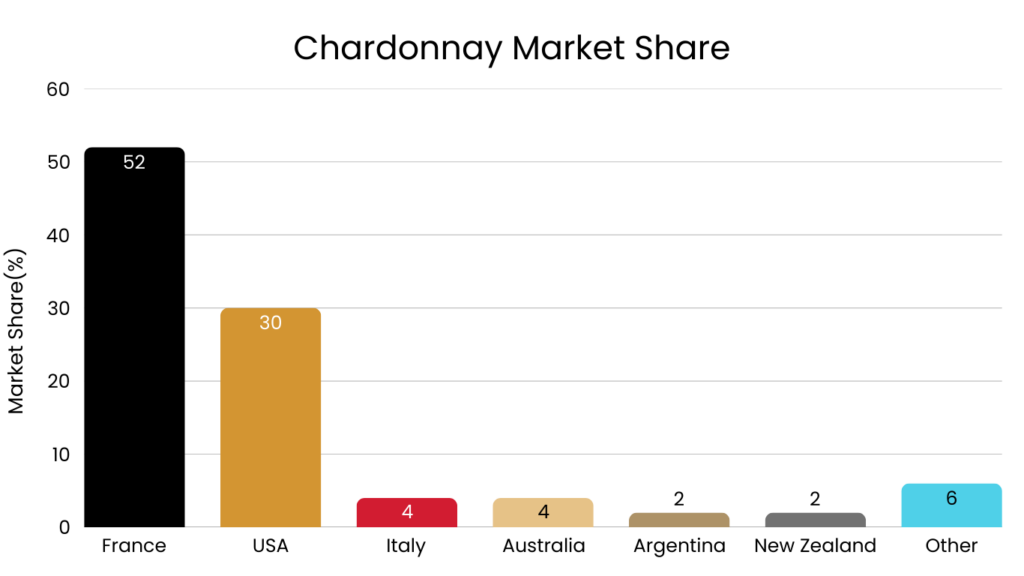
The regional diversity behind both Pinot Grigio and Chardonnay plays a direct role in how appealing they are to investors.
Italian Pinot Grigio dominates the volume market, offering accessible entry points. But niche regions like Alsace and Oregon attract collectors chasing something more distinctive.
Chardonnay’s global footprint and iconic standing in Burgundy and California make it a foundation piece for serious wine investors, especially when you’re targeting premium bottles with a track record of appreciation. If you want to understand how rare grape varieties are reshaping the investment conversation, this look at rare wine grapes billionaires are quietly investing in is worth your time.
Pinot Grigio vs Chardonnay: Grape Characteristics
The grape itself tells you a lot. The physical and agricultural characteristics of Pinot Grigio and Chardonnay shape everything from wine style to production method to long-term market appeal.
Getting familiar with these traits helps you gauge which varietal has the staying power investors look for.

Pinot Grigio: Grape Characteristics
Pinot Grigio grapes are small to medium in size, with grayish-blue skins that give the varietal its name, meaning gray Pinot in Italian. The juice itself is clear, which is why the wines come out light-bodied and crisp despite that distinctive skin tone.
Key characteristics of Pinot Grigio grapes:
- Skin: Thin-skinned and prone to early ripening, which requires careful timing during harvest to maintain acidity.
- Acidity: Naturally high, contributing to its refreshing, zesty profile.
- Sugar Levels: Moderate, making it suitable for dry to slightly off-dry wine styles.
- Aroma Potential: Offers subtle citrus, green apple, and floral notes.
Pinot Grigio thrives in cooler climates, where lower temperatures preserve its natural acidity and keep those delicate aromas intact.
The grape ripens early, which lets winemakers produce light, approachable wines that sell well in the entry to mid-tier segments of the market.
Chardonnay: Grape Characteristics
Chardonnay grapes are a different story. They’re adaptable and thrive across a wide range of climates and soil types.
Their naturally neutral flavor profile gives winemakers enormous creative freedom, with fermentation choices and aging decisions doing much of the heavy lifting on the final product.
Key characteristics of Chardonnay grapes:
- Skin: Medium-thick skins, making them less susceptible to rot compared to Pinot Grigio.
- Acidity: Moderate to high, depending on the growing region, which supports a variety of wine styles.
- Sugar Levels: High sugar accumulation during ripening, suitable for both still and sparkling wine production.
- Aroma Potential: A neutral base that reflects terroir and winemaking techniques, from citrus and green apple in cooler climates to tropical fruits in warmer regions.
Chardonnay’s adaptability makes it a winemaker favorite. You can coax everything from lean, mineral-driven whites to full-bodied, oak-aged showpieces out of the same grape.
That flexibility means Chardonnay speaks to a wide audience, from someone picking up a bottle at a wine shop to a serious collector hunting grand cru Burgundy.
Pinot Grigio’s high acidity and approachable profile have locked in its place as a staple in the affordable wine market. That said, niche styles from Alsace do attract premium buyers who want something with more depth.
Chardonnay, with its broader stylistic range and stronger resilience in the vineyard, opens up more investment angles, especially in Burgundy and Napa Valley, where the grape reaches its peak expression.
Pinot Grigio vs Chardonnay: Taste & Alcohol
Taste and alcohol levels are where these two wines really diverge. Both factors reflect the grape’s natural character and the climate it was grown in, and both have a real impact on who buys the wine and why.
Consumer preferences follow taste. And taste drives demand, which ultimately shapes investment potential.
Pinot Grigio: Taste & Alcohol
Pinot Grigio is built for refreshment. It’s light, crisp, and clean, which is exactly why it’s become the go-to white for casual occasions. The high acidity is the engine behind that zesty, clean finish you get with every sip.
Depending on where it’s grown, Pinot Grigio can range from simple and easy-drinking to surprisingly complex and aromatic.
Taste Profile:
- Primary Flavors: Citrus fruits (lemon, lime), green apple, pear, and subtle floral notes.
- Regional Variations: Italian Pinot Grigio tends to be light and mineral-driven, while Alsace Pinot Gris offers richer, fuller-bodied wines with hints of honey and spice.
- Body: Light to medium-bodied, with a focus on freshness and purity of flavor.
Alcohol content for Pinot Grigio typically sits in the moderate range, making it an easy companion across a wide range of settings.
- Typically ranges between 11.5% and 13%, depending on the region and production style.
- Cooler climates, like Alsace and Oregon, produce Pinot Grigio with lower alcohol levels, while warmer regions like California may result in slightly higher alcohol content.
That approachable taste combined with moderate alcohol makes Pinot Grigio a genuine crowd-pleaser. It pairs well with everything from seafood to light pasta, which only adds to its broad market appeal.
Chardonnay: Taste & Alcohol
Chardonnay’s flavor profile shifts dramatically based on where it was grown and how it was made. That’s the magic of this grape. It can be lean and mineral in one bottle and rich and buttery in the next.
Taste Profile:
- Primary Flavors: In cooler climates, Chardonnay exhibits green apple, lemon, and minerality. Warmer regions produce flavors of tropical fruits like pineapple and mango.
- Influence of Oak: Oak aging adds notes of vanilla, butter, and baking spices, creating the iconic “buttery Chardonnay” style popular in regions like California.
- Body: Medium to full-bodied, with a rich and creamy texture in oaked styles or a crisp, clean finish in unoaked versions.
Alcohol content in Chardonnay tends to run slightly higher than Pinot Grigio, especially in warmer-climate expressions from Napa or Australia.
- Typically ranges between 12.5% and 14.5%, with higher alcohol levels more common in warmer regions.
- Chardonnay’s sugar accumulation during ripening often leads to fuller-bodied wines with slightly higher alcohol compared to Pinot Grigio.
Whether you prefer a vibrant, unoaked style or a luxurious, oak-aged profile, Chardonnay has a version for you. That breadth is a big part of why it resonates with both everyday wine drinkers and serious collectors.
Pinot Grigio’s consistent lightness and refreshing character have made it one of the top-selling white wine styles in the world, particularly among casual drinkers.
And while it owns the entry-level market, premium styles like Alsace Pinot Gris do offer something more for the discerning investor.
Chardonnay’s stylistic versatility and widespread appeal mean it commands higher prices and draws a broader range of investors.
Iconic bottles from Burgundy and Napa Valley are especially prized for their ability to age and grow in value over time. Understanding how other investment-grade wines like Syrah perform can help you build a more complete picture of the fine wine investment space.
Pinot Grigio vs Chardonnay: Winemaking Methods
How a wine is made is just as important as where it comes from. The winemaking techniques behind Pinot Grigio and Chardonnay shape their flavor, their aging potential, and ultimately their appeal to collectors and investors.
These production choices are worth understanding, because they directly influence both quality and the scarcity that drives value.
Pinot Grigio: Winemaking Methods
Pinot Grigio’s winemaking philosophy is built around simplicity and freshness. The goal is minimal intervention, preserving the grape’s natural acidity and keeping that light, crisp character front and center.
Most Pinot Grigio is made for drinking young. But select regions do push the craft further for higher-end expressions.
Key techniques in Pinot Grigio production:
- Harvest Timing: Grapes are harvested early to retain acidity, especially in warmer climates.
- Fermentation: Usually fermented in stainless steel tanks to maintain bright, fruit-forward flavors and avoid oxidation.
- Malolactic Fermentation: Rarely employed, as winemakers aim to preserve the wine’s zesty acidity rather than soften it.
- Aging: Most Pinot Grigio is bottled shortly after fermentation to capture its youthful freshness. In Alsace, however, Pinot Gris may undergo aging in neutral oak barrels or extended time on lees for added complexity.
- Sweetness Variations: While most Pinot Grigio is dry, some regions, like Alsace, produce off-dry or even late-harvest styles that add richness and aging potential.
That production simplicity is what keeps Pinot Grigio accessible and high-volume. It’s a wine built for the market, not the cellar.
Still, premium expressions from Alsace and Oregon use more intricate methods, and those bottles do draw collector interest.
Chardonnay: Winemaking Methods
Chardonnay gives winemakers a blank canvas. The grape’s versatility means producers can take it in completely different directions, all resulting in wines that sell across vastly different market segments.
From the razor-sharp, mineral-driven Chablis to the lush, buttery Chardonnays coming out of Napa, the production process defines the character of what ends up in your glass.
Key techniques in Chardonnay production:
- Harvest Timing: Timing depends on the desired style. Early harvests preserve acidity for leaner wines, while later harvests yield richer, fruitier profiles.
- Fermentation: Chardonnay is fermented in either stainless steel for a clean, crisp style or oak barrels for richer, textured wines. Fermentation temperatures are carefully controlled to enhance aromatics.
- Malolactic Fermentation: Commonly used in oak-aged Chardonnays, this process converts tart malic acid into softer lactic acid, creating the signature “buttery” texture.
- Lees Aging: Wines aged on their lees develop creamy textures and enhanced complexity, often used in high-end Chardonnays.
- Oak Aging: Many premium Chardonnays are aged in French or American oak barrels, imparting flavors of vanilla, toast, and spice. The degree of oak influence depends on the winemaker’s goals.
- Sparkling Production: Chardonnay is a key grape in Champagne production, adding to its versatility and market demand.
The result is a wine that can be everything from a daily drinker to a cellar treasure capable of appreciating for decades.
Pinot Grigio’s streamlined production keeps it affordable and in high demand across mass-market channels.
But in regions like Alsace, where winemakers put in the extra work, the bottles that come out carry genuine investment value.
Chardonnay’s diverse production toolkit, especially for oak-aged and lees-aged styles, gives it the depth and complexity that collectors pay a premium for.
Think Chablis grand crus and Napa Valley’s top-tier buttery Chardonnays. These are the bottles that belong in an investment portfolio.

Pinot Grigio vs Chardonnay: Appearance, Aromas, and Tasting Notes
What you see and smell in the glass tells you a great deal about a wine’s quality and its connection to its origins. For investors, these sensory signals matter because they’re exactly what drives consumer preference and collector demand.
The differences in how Pinot Grigio and Chardonnay present themselves help define where each sits in the market and what makes them worth buying.
Pinot Grigio: Appearance, Aromas, and Tasting Notes
Pinot Grigio is celebrated for its light, refreshing, and approachable character. Pick up a glass and you know immediately what you’re dealing with. The profile is honest, clean, and built for immediate enjoyment.
Appearance:
- Color: Pale straw to light yellow, often with a slight greenish tint.
- Clarity: Clear and bright, indicative of its crisp nature and clean winemaking techniques.
Aromas:
- Primary Notes: Citrus fruits like lemon and lime dominate, with green apple and pear adding complexity.
- Secondary Notes: Subtle floral aromas, including honeysuckle and white blossoms, often enhance its freshness.
- Regional Variations: Alsace Pinot Gris can present richer aromas of honey, apricot, and baking spices due to longer ripening periods.
Tasting Notes:
- Acidity: High, contributing to a zesty, refreshing palate.
- Body: Light to medium-bodied, with a smooth, dry finish in most styles.
- Flavor Profile: Citrus and green apple flavors dominate, occasionally supported by hints of almond or minerality, particularly in Italian expressions.
That straightforward sensory profile drives strong sales at the entry level. And for higher-end expressions from Alsace, you get the added complexity that pulls in seasoned collectors.
Chardonnay: Appearance, Aromas, and Tasting Notes
Chardonnay’s versatility shows up in every sensory dimension. The range of colors, aromas, and flavors you can find across different styles makes it one of the most dynamic and collectible white wines anywhere.
Appearance:
- Color: Ranges from pale gold to deep yellow, depending on oak influence and aging.
- Clarity: Bright and luminous, with older vintages showing a richer, golden hue.
Aromas:
- Primary Notes: In cooler climates, Chardonnay exhibits aromas of green apple, lemon, and pear. Warmer climates bring out tropical notes like pineapple and mango.
- Secondary Notes: Oak aging adds vanilla, butter, and baking spice aromas, while lees aging can contribute nutty and brioche-like qualities.
- Regional Variations: Chablis (unoaked) offers flinty, mineral-driven aromas, while Napa Chardonnays are rich and buttery with pronounced oak influence.
Tasting Notes:
- Acidity: Moderate to high, providing balance and aging potential.
- Body: Medium to full-bodied, with textures ranging from creamy and rich to crisp and lean.
- Flavor Profile: Diverse, with cooler climates emphasizing citrus and minerality, and warmer climates delivering tropical fruit, vanilla, and spice.
Its ability to showcase terroir and respond to winemaking decisions makes Chardonnay endlessly adaptable. That adaptability is precisely what gives it such broad appeal across both casual drinkers and serious investors.
Pinot Grigio’s clean, crisp character dominates the affordable wine market, but the full-bodied, complex versions from Alsace and Oregon are where collectors start paying real attention.
Chardonnay, with its vast stylistic range and genuine aging ability, carries the stronger investment case. Burgundy’s Montrachet and Napa’s finest Chardonnays consistently fetch serious prices on the secondary market, delivering the kind of ROI that makes them hard to ignore. Fine wine is part of a broader shift where luxury assets are stepping in where stocks and bonds are falling short.
Pinot Grigio vs Chardonnay: Storage
Storage isn’t just a logistical detail. For wine investors, it’s a core part of protecting your asset and maximizing its value over time.
Both Pinot Grigio and Chardonnay require controlled conditions, but their aging potential and sensitivity differ in ways that directly shape how you should approach each as an investment.
Pinot Grigio: Storage
Pinot Grigio is made for drinking, not waiting. Most bottles hit their peak within a few years of release, which keeps storage demands simple but also caps the long-term value ceiling.
Key storage considerations for Pinot Grigio:
- Temperature: Store at a consistent 45°F to 55°F (7°C to 13°C) to maintain its bright acidity and fresh flavors.
- Humidity: Maintain humidity levels of 60% to 70% to prevent corks from drying out and allowing oxidation.
- Light Exposure: Protect from UV light, which can degrade the wine’s delicate profile.
- Lifespan: Most Pinot Grigio is best consumed within 1 to 3 years of bottling. Premium versions, such as Alsace Pinot Gris, may age for up to 8 to 10 years, developing richer, honeyed notes.
The limited aging potential isn’t necessarily a drawback for every investor. If your strategy is built around quick turnover in high-demand markets, Pinot Grigio’s short storage window is actually an advantage.
Chardonnay: Storage
Chardonnay is a more nuanced storage story.
Many Chardonnays are crafted for early enjoyment. But the best examples from Burgundy and Napa Valley can age gracefully for decades, with complexity and value building every year they spend in proper conditions.
Key storage considerations for Chardonnay:
- Temperature: Like Pinot Grigio, Chardonnay thrives in storage conditions of 45°F to 55°F (7°C to 13°C), but maintaining a stable temperature is particularly important for aging wines.
- Humidity: Keep humidity at 60% to 70% to ensure the cork stays intact.
- Light Exposure: Minimize exposure to light to preserve the wine’s aromatic and flavor integrity.
- Lifespan: Entry-level Chardonnays are best enjoyed within 1 to 5 years, while premium bottles from regions like Chablis or Napa Valley can age for 10 to 20 years or more.
Aging transforms premium Chardonnay. Flavors shift from fresh citrus and green apple toward rich, nutty, and honeyed profiles that collectors are willing to pay significantly more for.
Pinot Grigio fits neatly into short-term investment strategies, especially where Italian and Oregon wines command steady demand and move quickly.
Chardonnay gives you more flexibility. You can hold for the long game or sell earlier depending on market conditions.
Premium aged Chardonnays from Burgundy in particular tend to command strong secondary market prices, which is why they show up consistently in serious wine investment portfolios. According to Wine Spectator, top Burgundy whites have shown compounding value growth that outpaces most traditional asset classes over extended holding periods.
Pinot Grigio vs Chardonnay: Pricing
Pricing reflects everything. Market positioning, production methods, regional prestige, and collector demand all feed into what a bottle actually costs.
Pinot Grigio owns the affordable end of the white wine market. Chardonnay stretches across the entire spectrum, from everyday bottles to some of the most expensive white wines on the planet.
Pinot Grigio Pricing
Pinot Grigio is synonymous with accessibility, especially in its Italian expressions. That said, premium versions from Alsace and Oregon can push into price territory that opens real investment conversations.
Average pricing for Pinot Grigio:
- Entry-Level: $10–$20 per bottle, typically from Italy’s Veneto or Trentino-Alto Adige regions. These wines are light, crisp, and designed for everyday drinking.
- Mid-Range: $20–$50 per bottle, including higher-quality Italian Pinot Grigios or more complex styles from Oregon and New Zealand.
- Premium: $50–$150+ per bottle, primarily Alsace Pinot Gris, which is fuller-bodied and capable of aging.
- Ultra-Premium: Rare late-harvest or Grand Cru Alsace Pinot Gris wines may exceed $200, appealing to niche collectors.
The affordability of most Pinot Grigio is what fuels its global popularity. But it’s the premium end of the range, particularly those unique cooler-climate expressions, where investors find meaningful upside.
Chardonnay Pricing
Chardonnay’s pricing is a different universe entirely.
From affordable, unoaked versions sitting under $20 to grand cru Burgundy bottles that command thousands per case, Chardonnay gives you genuine options across the full investment spectrum.
Average pricing for Chardonnay:
- Entry-Level: $15–$30 per bottle, including unoaked Chardonnays from regions like California’s Central Coast or Australia’s Riverland.
- Mid-Range: $30–$100 per bottle, with higher-quality offerings from Napa Valley, Sonoma County, and Australian producers.
- Premium: $100–$500 per bottle for top-tier Chardonnays from Burgundy’s premier cru vineyards or Napa Valley icons like Rombauer or Kistler.
- Ultra-Premium: Grand cru Chardonnays from Burgundy, such as Montrachet, or Napa’s cult wines like Aubert, can exceed $1,000 per bottle, making them highly collectible.
That broad price range means Chardonnay attracts both casual buyers and elite collectors simultaneously. The premium segment, led by Burgundy and Napa Valley, is what really drives its investment story. Decanter regularly tracks how top Chardonnay producers are outperforming expectations in secondary market auctions.
Pinot Grigio dominates the entry-level market and offers solid turnover potential for investors working that price tier.
But the Alsace and Oregon expressions, with their limited production runs and distinctive profiles, give you a route into longer-term appreciation that most Italian Pinot Grigio simply can’t offer.
Chardonnay’s wider pricing range lets you build investment strategies across multiple tiers simultaneously.
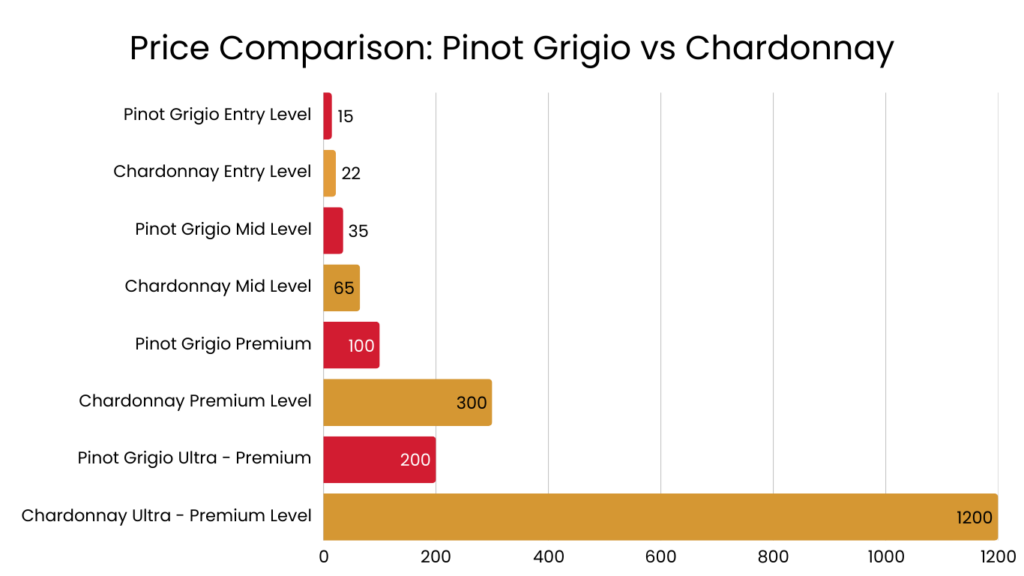
Entry-level Chardonnay keeps steady demand flowing, while the high-end segment, especially out of Burgundy, consistently delivers strong ROI. Some bottles appreciate by over 10 to 12% annually on the secondary market, which puts them firmly in the same conversation as other serious alternative investments.

Pinot Grigio vs Chardonnay: Historical ROI
Historical ROI is where the investment case for each varietal either strengthens or shows its limits.
Pinot Grigio sells well and consistently. Chardonnay, particularly from Burgundy and Napa Valley, has delivered appreciation that turns heads and builds real wealth over time.
Pinot Grigio Historical ROI
Pinot Grigio’s ROI story is anchored in the entry to mid-level market.
Its popularity as a light, approachable wine keeps demand high and inventory moving. But for deeper returns, you need to look at the premium segment, mainly Alsace Pinot Gris.
Key highlights for Pinot Grigio ROI:
- Global Demand: Pinot Grigio accounts for approximately 30% of white wine sales globally, driven by its accessibility and popularity among casual drinkers.
- Premium Growth: Alsace Pinot Gris has shown a steady annual price appreciation of 5–7%, particularly for late-harvest and Grand Cru bottles, which are sought after by collectors.
- Limited Aging Appeal: Pinot Grigio’s limited aging potential caps its long-term ROI compared to wines with extended cellaring capabilities.
Pinot Grigio performs best in short-term investment cycles, particularly in markets like Italy and the United States where demand never really wavers.
Premium expressions offer moderate ROI for investors who want exposure to more unique regional styles without committing to the prices that top Chardonnay demands.
Chardonnay Historical ROI
Chardonnay has consistently outperformed Pinot Grigio when it comes to ROI, and the gap widens considerably in the premium and ultra-premium categories.
Its versatility, combined with hard-earned reputations in Burgundy and California, has cemented its place as a genuinely investment-grade wine. Bloomberg Markets has noted how fine wine indices tracking top Chardonnay producers have outpaced broader commodity indices over multi-decade periods.
Key highlights for Chardonnay ROI:
- Burgundy Dominance: Grand cru Chardonnays from Burgundy, such as Montrachet, have shown annualized growth rates of 10–15% over the past decade, driven by global demand and limited production.
- Napa Valley Success: Iconic Napa Valley Chardonnays, like those from Aubert and Kistler, have demonstrated consistent price appreciation, with select vintages increasing in value by 8–12% annually.
- Aging Potential: Chardonnay’s ability to age for 10–20 years or more enhances its investment appeal, allowing it to develop complexity and command higher prices on the secondary market.
Chardonnay’s long-term ROI gets an additional boost from its central role in Champagne production, which keeps global demand for the grape at a consistently elevated level.
Collectors and investors who focus on prestigious producers and standout vintages see sustained value growth that compounds meaningfully over time.
Comparative Analysis
- Short-Term Gains: Pinot Grigio is better suited for short-term investment strategies, with high turnover potential in the affordable segment and moderate appreciation for premium Alsace styles.
- Long-Term Growth: Chardonnay offers greater potential for long-term gains, particularly in its high-end expressions from Burgundy and Napa Valley. Its aging potential and collector appeal make it a reliable asset in fine wine portfolios.
Chardonnay is the clear winner for investors chasing reliable long-term returns.
Pinot Grigio may not compete in the ultra-premium tier, but it delivers steady, consistent performance for short-term strategies in the right markets.
Holding both in a diversified portfolio gives you the best of both worlds, short-term liquidity through Pinot Grigio and long-term appreciation through Chardonnay.
Which Is Better for Investment: Pinot Grigio vs Chardonnay?
The right choice between Pinot Grigio and Chardonnay as an investment comes down to your financial goals, your appetite for risk, and how patient you’re prepared to be. These two wines occupy very different corners of the market, and each one opens up a different kind of opportunity.
Pinot Grigio’s global following as a crisp, refreshing wine generates reliable demand, especially across the entry to mid-tier price range.
Its affordability and mass-market accessibility make it a smart choice if you’re focused on high turnover and short-term ROI. But if you want to go deeper, the premium segment, particularly Alsace Pinot Gris, offers a more niche and nuanced investment angle.
Alsace Pinot Gris brings real complexity and moderate long-term appreciation potential, which makes it genuinely attractive to collectors who value distinctive expressions of this varietal.
The honest limitation is that most Pinot Grigio simply doesn’t age well enough to support a long-term holding strategy, and the premium market outside of Alsace stays fairly narrow.
Chardonnay is a different proposition altogether. Its versatility and established global reputation make it a cornerstone of fine wine investment. It ages beautifully, speaks to a diverse audience, and consistently draws strong demand across a wide range of price points.
Chardonnay from Burgundy and Napa Valley routinely delivers exceptional long-term ROI, with some grand cru bottles appreciating at 10% or more per year. The Financial Times has tracked how top-end Burgundy whites have become a go-to alternative asset for family offices and private wealth managers.
Iconic producers like Domaine Leflaive and Aubert only reinforce Chardonnay’s prestige and its standing in high-value wine collections.
That said, getting into the premium Chardonnay market often requires serious upfront capital. And lower-tier Chardonnays can muddy consumer perception of the category, though this largely dissolves once you move into the premium tier.
As of 2026, the fine wine market is positioned for continued growth, which benefits both varietals. Pinot Grigio’s strength lies in its affordability and reach, making it the right call for investors targeting high-volume, mass-market wines.
Chardonnay dominates the premium and ultra-premium segments, offering unmatched opportunities for long-term appreciation, especially from Burgundy and Napa Valley.
For short-term plays with quick turnover potential, Pinot Grigio is your more practical option.
For long-term growth and a place in a high-value portfolio, Chardonnay wins, thanks to its aging ability and strong secondary market track record.
A well-constructed portfolio could hold both, using Pinot Grigio for liquidity and Chardonnay for the kind of sustained value growth that serious investors are after. If you’re thinking about how alternative investments like fine wine fit alongside other asset classes, this guide on how to invest in art offers a useful parallel for building a tangible asset strategy.
Best Pinot Grigio Collections to Invest in 2026
Here’s a table summarizing the best Pinot Grigio collections for investment in 2026, with key producers, regions, and the reasons behind their investment potential.
Best Pinot Grigio Collections to Invest in 2025
Investment Insights:
- Invest in premium Pinot Grigios from Alsace, Oregon, and Northern Italy.
- Target producers with limited production and strong reputations.
- While returns are typically moderate, Pinot Grigio’s global popularity and niche premium market make it a reliable portfolio addition.
Best Chardonnay Collections to Invest in 2026
Chardonnay is a cornerstone of fine wine investment, offering a broad range of styles from crisp, unoaked expressions to rich, oak-aged bottles with serious cellar potential. Below is a table summarizing the top Chardonnay collections worth considering for your 2026 investment strategy.
wine_investment_producers.csv
Investment Insights:
- Burgundy Chardonnay remains the top choice for high-value, long-term investments due to its prestige and limited supply.
- Napa Valley and Chablis offer excellent alternatives, with proven ROI and increasing global recognition.
- Target iconic producers with a history of strong secondary market performance and wines with long aging potential.
- Diversify with unique regional offerings, such as Australia’s Leeuwin Estate, to tap into emerging markets.
FAQ
Which offers higher ROI: Pinot Grigio or Chardonnay?
Chardonnay generally offers higher ROI, particularly from Burgundy and Napa Valley, where certain bottles appreciate by 10–15% annually. Pinot Grigio is better suited for short-term investments, with steady growth in the premium segment, such as Alsace Pinot Gris, which shows annual appreciation of 5–8%.
Is Pinot Grigio or Chardonnay easier to resell?
Chardonnay is easier to resell due to its global appeal and established reputation in premium markets. Wines from Burgundy and Napa Valley are in high demand among collectors. Pinot Grigio has a narrower premium market, making resale more niche, but its widespread popularity ensures consistent demand at entry and mid-range price points.
What regions should I focus on for investment-grade Pinot Grigio and Chardonnay?
For Pinot Grigio, focus on Alsace (France), Oregon (USA), and Northern Italy (Friuli & Alto Adige) for premium-quality wines.
For Chardonnay, prioritize Burgundy (France), Napa Valley (USA), Chablis (France), and Margaret River (Australia).