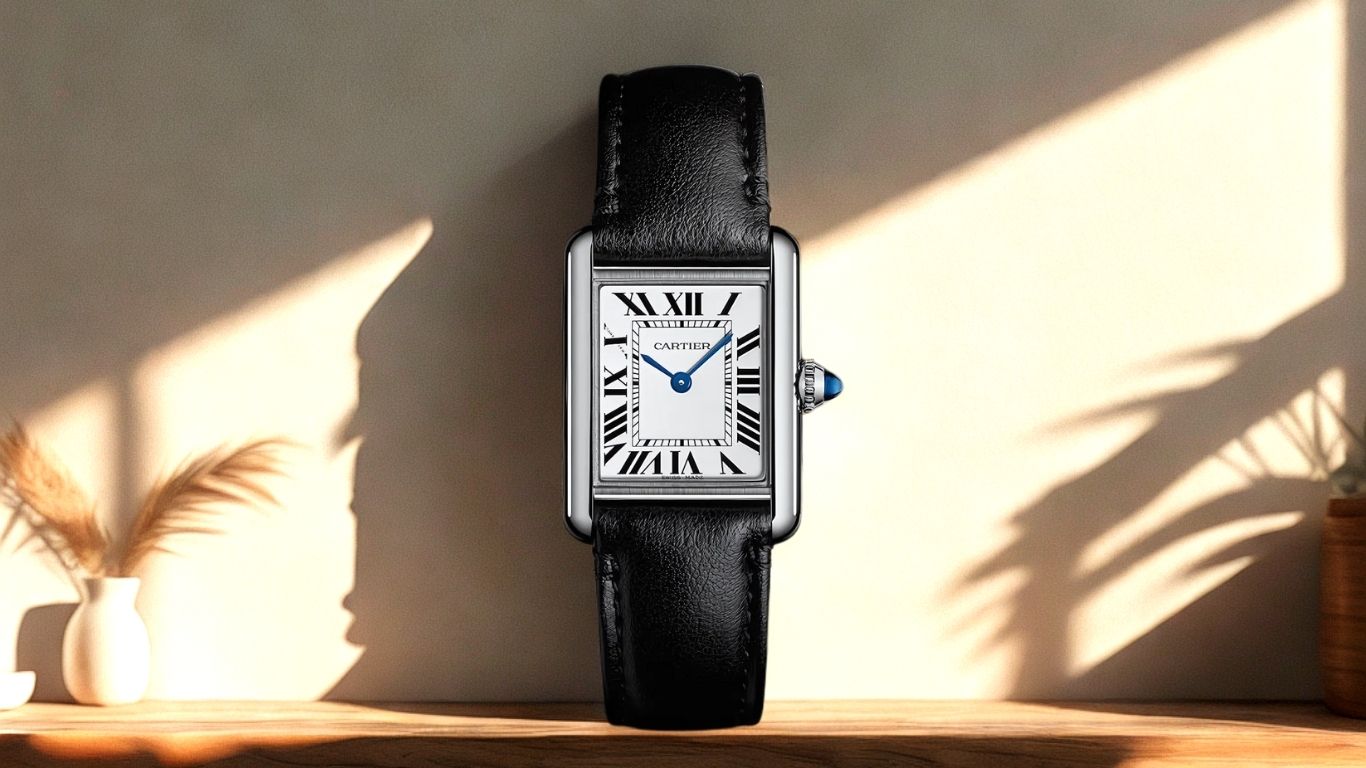

Few watches carry the cultural weight of the Cartier Tank, a timepiece whose design has gone essentially unchanged for over a century while somehow never feeling dated or out of place. That kind of consistency points to something deeper than aesthetic appeal. The Tank holds a dual identity that makes it genuinely unlike anything else you can put on your wrist, functioning at once as an icon of understated elegance and a tangible piece of horological history.
Owning a Tank goes well beyond a typical fashion purchase or even conventional watch collecting. You’re acquiring what amounts to a living artifact, a design that witnessed the aftermath of World War I, adorned the wrists of cultural revolutionaries, and still commands attention in boardrooms and creative studios today.
That permanence creates financial potential that differs from the speculation-driven hype surrounding certain sport watches. What you get instead is the steady appreciation that comes with genuine cultural significance, the kind that doesn’t evaporate when trends shift.
If you’re seeking alternatives to the obvious sport watch choices, the Tank presents a compelling proposition. Here’s a timepiece where aesthetic merit, historical importance, and financial performance converge in ways that feel increasingly rare in modern luxury markets. whether luxury watches still make sense as investments is a question worth asking before you commit, and the Tank offers one of the more nuanced answers.
Table of Contents
Key Takeaways
Navigate between overview and detailed analysisKey Takeaways
- The Cartier Tank remains one of the few watches that balance cultural symbolism, timeless design, and investment credibility in equal measure.
- Created in 1917 and inspired by WWI Renault tanks, it transformed industrial geometry into refined minimalism that still defines Cartier’s design language today.
- Collectors increasingly view the Tank as an “anti-hype” investment — a design that appreciates through historical resonance and cultural permanence rather than short-term speculation.
- Auction data confirms strong long-term value for rare and vintage Tanks, with certain 1920s models rising from roughly $3,000 to over $50,000, and 1930s platinum examples exceeding $400,000 at Phillips.
- Modern references such as the W1529756 Tank Louis have gained around 38.5% over five years, while standard production pieces still face short-term depreciation of 20–25% below retail.
- Cartier’s reissues like the Tank Must and the return of the Tank à Guichets have introduced the design to a new generation, reinforcing its cultural relevance while expanding its collector base.
- For investors, the Tank represents a slower but more stable appreciation curve rooted in heritage, storytelling, and rarity rather than hype-driven scarcity.
The Five Ws Analysis
- Who:
- Collectors, investors, and style-driven buyers seeking alternatives to mainstream luxury sport watches.
- What:
- A century-old Cartier design that merges wearable art, cultural history, and tangible investment value.
- When:
- Introduced in 1917 and continuously produced since, with renewed market interest following 2020s reissues and auction results.
- Where:
- Global markets led by Europe, the U.S., and Asia, with strong performance in secondary markets and vintage auctions.
- Why:
- The Tank endures because it delivers authenticity, design purity, and cultural depth — offering investors both aesthetic satisfaction and long-term stability in an overhyped watch market.
A Watch Inspired by War and Elegance
The Tank’s origin story begins in 1917, right in the middle of World War I, when Louis Cartier found unexpected inspiration in the geometric forms of Renault tanks rolling across French battlefields. That unlikely muse led to one of watchmaking’s most enduring designs, as Cartier envisioned transforming industrial strength into refined sophistication you could wear on your wrist.
The rectangular case was a radical departure from the round pocket watch forms that dominated early wristwatch design. Clean lines and minimal ornamentation created a visual language that felt simultaneously bold and restrained, establishing aesthetic principles that would shape luxury watch design for generations.
These weren’t arbitrary style choices but deliberate decisions that helped redefine what modern wristwatch design could be.
Early adopters knew they were wearing something genuinely new. Military officers, government dignitaries, and emerging cultural figures gravitated toward the Tank precisely because it offered a restrained, distinctive style without any trace of ostentation.
Those early champions understood that the Tank communicated sophistication through understatement rather than decoration, and that character has never left it.
How the Cartier Tank Became a Symbol of Timeless Style
The Tank’s transformation from innovative timepiece to cultural icon accelerated through its association with some of the 20th century’s most influential figures. Jackie Kennedy, Andy Warhol, and Princess Diana all wore Tanks, cementing the watch’s status as the choice of people who shaped culture rather than simply followed it.
And none of those were paid endorsements. These were genuine personal preferences from individuals whose taste defined entire eras.
That understated luxury positioning became increasingly valuable as watch culture evolved. In an era obsessed with oversized sport watches and technical complications, the Tank emerged as the anti-hype alternative for buyers who wanted confidence without flash. The watch makes no apologies for lacking chronograph functions or rotating bezels. Instead, it asserts that true luxury needs no justification beyond beautiful proportions and historical significance.
Cartier has skillfully stoked renewed interest through limited editions and strategic reinterpretations that honor heritage while speaking to contemporary tastes. The Tank Must reissues brought accessible pricing to younger collectors, while more ambitious projects demonstrated the design’s versatility across different expressions and price points.
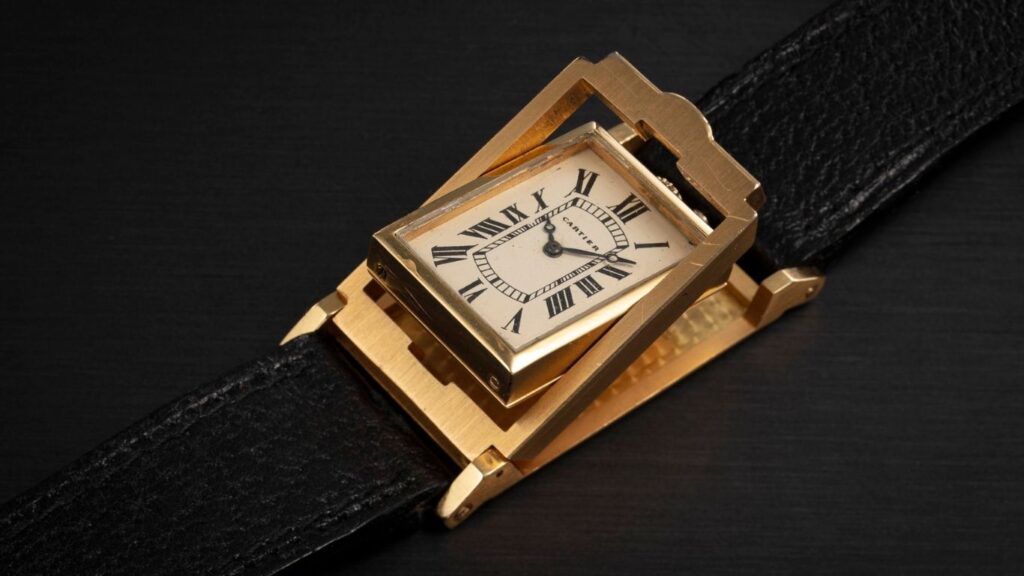
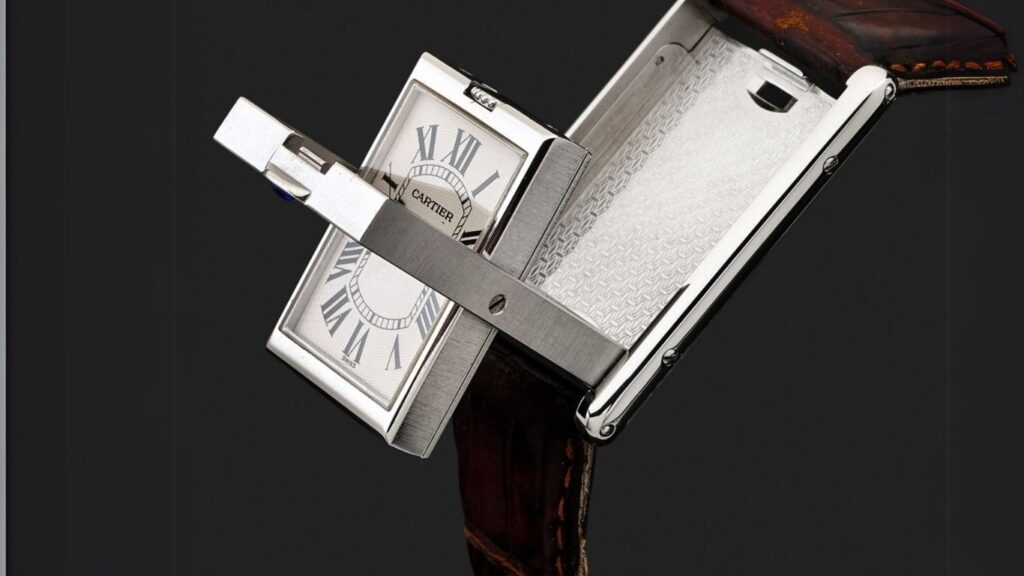
The 2026 return of the Tank à Guichets perfectly illustrates Cartier’s strategy of revisiting rare historical models to create excitement and a sense of scarcity. GQ’s coverage of this revival generated real collector attention, reminding the market that Cartier holds deep archives of compelling designs ready for reintroduction when the timing is right.
Auction results validate this cultural positioning with some impressive price realizations. Hodinkee documented a 1931 platinum Tank à Guichets selling for $448,346 at Phillips, making it the second most expensive Tank ever sold at public auction.
That result wasn’t simply about rarity or precious metal content. It came from the convergence of historical significance, exceptional condition, and the kind of narrative power that elevates certain pieces into museum-quality territory.
Market Prices, Collector Demand, and Auction Highlights
Current market positioning shows the Tank’s accessibility relative to ultra-premium alternatives while also revealing real appreciation potential for exceptional examples. WatchCharts data shows Cartier Tanks trading around $4,000 on average in secondary markets, though individual models span from roughly $1,000 to $32,000 depending on reference, materials, and vintage status.
Entry-level access comes through modern production pieces like the Tank Must WSTA0041, which Chrono24 lists at roughly €3,450, or about $4,042 for new unworn examples. This pricing allows younger collectors and first-time luxury buyers to own authentic Tank heritage without an extreme financial commitment, broadening the potential collector base in a meaningful way.
At the opposite end of the spectrum, the revived Tank à Guichets models in gold and rose gold retail around €52,000 according to The 1916 Company, while platinum versions command approximately €60,000 to €66,000. These contemporary limited editions position themselves as instant collectibles, though their long-term appreciation stays unproven compared to vintage references with established track records.
Auction activity for vintage Tanks reveals both opportunities and realistic expectations across different segments. Barnebys.com documented a rare Tank Cintrée selling for $4,162 in auction, while a Cartier Tank Louis in 18K gold achieved $4,350 at auction during the same period. These results show respectable but not explosive returns for mid-tier vintage pieces.
But truly exceptional vintage Tanks deliver dramatically different outcomes. Christie’s achieved $69,300 for a 1929 Tank Obus Savonnette, reflecting the extreme premiums that rarity and collector fascination can command when the right piece meets the right room.
Our research shows certain special older Tanks from the 1920s originally trading around $3,000 now fetching over $50,000 at auction, representing substantial appreciation for collectors who recognized quality early.
Modern vintage examples also show encouraging patterns. Yellow gold Tank Louis models from the 1980s that originally retailed around $5,000 now trade in the $15,000 to $20,000 range, showing how even relatively recent vintage pieces can triple or quadruple in value over decades as they transition from used watches into genuine collectibles. If you want to understand why luxury watch prices are climbing again, the Tank’s trajectory tells a big part of that story.
Performance tracking through indices reveals mixed signals about Tank investment potential. WatchCharts maintains a Cartier Tank Market Index tracking the top 30 models to reflect secondary market trends, giving you objective data about category performance. Individual reference results vary widely, with the W1529756 Tank Louis up approximately 38.5% over five years, well ahead of the Tank collection average and showing genuine appreciation potential.
That said, other references disappoint. The WGTA0011 Tank Louis Large declined roughly 2.9% over five years, underperforming the broader Tank index which gained about 30.3% during the same period. This divergence makes one thing clear: selection matters enormously within the Tank category, and not all references benefit equally from rising collector interest.
Current retail versus secondary pricing also reveals depreciation challenges for standard production models. WatchCharts shows the WSTA0040 Tank Must Large selling approximately 24.8% below U.S. retail, at around $3,760 market value against a $5,000 retail price.
That gap means buyers of new standard Tanks face immediate depreciation similar to purchasing a new car. Exceptional condition and patience may eventually recover those losses, but you need to go in with realistic expectations.
Cartier Tank Watch Investment Performance Analysis
A comprehensive breakdown of Cartier Tank watch models showing retail prices, secondary market values, and return on investment. The data covers modern references like the Tank Must, Tank Louis, and Tank Américaine, alongside historic vintage pieces from the 1920s through the 1980s.
| Model / Reference ▼ | Retail Price (USD) ▼ | Secondary Market Price (USD) ▼ | ROI / Value Change ▼ |
|---|
Is the Cartier Tank a Good Investment or Just a Cultural Icon?
Making the investment case for Tank ownership requires an honest look at both the compelling strengths and the meaningful limitations, especially when you stack it against proven alternatives.
The arguments in favor center on documented appreciation for rare and vintage references. Certain vintage Tanks have delivered gains from $3,000 to over $50,000, showing that exceptional examples can generate returns rivaling traditional investments over multi-decade holding periods. And if you want to sidestep the most common pitfalls, brushing up on the investing mistakes beginners tend to make is worth your time before entering any alternative asset category.
Modern references also show real promise. The W1529756 Tank Louis gained roughly 38.5% over five years according to WatchCharts, outpacing many traditional investment vehicles while giving you something beautiful to wear throughout the holding period. Auction demand for exceptional pieces stays robust across major houses, pointing to sustained rather than temporary collector interest.
The counterarguments are just as real, though. WatchCharts data shows many Tanks trading below retail because of liquidity constraints, condition sensitivity, and oversupply in standard production models. You’re not always buying into scarcity when you pick up a modern Tank.
The Tank Must WSTA0040 trading approximately 24.8% under retail illustrates exactly that point. Common modern steel and quartz models face flat or mild depreciation precisely because they lack meaningful scarcity, and the market prices that in quickly.
Performance inconsistency across references creates real selection risk too. The WGTA0011 declining 2.9% over five years while the broader Tank index gained 30.3% shows how choosing the wrong reference within the same family can produce dramatically different outcomes. That kind of variability demands expertise that casual investors may simply not have.
Liquidity stays lower for many Tanks compared to sport watches from Rolex or Patek Philippe. Not every Tank finds a buyer quickly, and transaction costs can eat a significant portion of modest appreciation. Bob’s Watches tracks resale liquidity trends across major luxury watch categories, and the data confirms that the Tank rewards patient long-term holders far more than active traders looking for quick flips.
FAQ
Is the Cartier Tank a good investment in 2025?
The Tank works best as a long-term legacy asset, not a quick flip. Rare vintage models like 1920s Cintrée pieces have appreciated from $3,000 to over $50,000, while 1980s gold Tank Louis models grew from $5,000 retail to $15,000-$20,000 today. However, modern standard models like the WSTA0040 trade 24.8% below retail. Success requires targeting rare, vintage, or limited editions rather than common production pieces.
Which Cartier Tank model has the best ROI?
Vintage Tank Louis, Tank Cintrée, and Tank Américaine in precious metals show strongest appreciation. The W1529756 Tank Louis gained 38.5% over five years, while rare 1929 Tank Obus models reached $69,300 at auction. Limited editions like the Tank à Guichets also perform well, with a 1931 platinum example selling for $448,346.
How much does a Cartier Tank cost in 2025
Prices range from approximately $3,000 for entry-level Tank Must models to over $50,000 for vintage pieces and limited editions. New Tank Must models start around $4,042, while standard production ranges from $3,000-$10,000.
Does Cartier Tank hold its value over time?
Results vary dramatically by model. Exceptional vintage Tanks appreciate significantly, with some 1980s models tripling in value. However, the Tank index shows mixed performance: some references like W1529756 gained 38.5% over five years, while WGTA0011 declined 2.9%. Standard modern models face 20-25% depreciation from retail. Mechanical models, gold editions, and rare vintage pieces hold value best, while common quartz and steel models struggle.