
Wine investment has quietly become one of the most compelling alternative asset classes out there, offering you both genuine pleasure and serious financial upside.
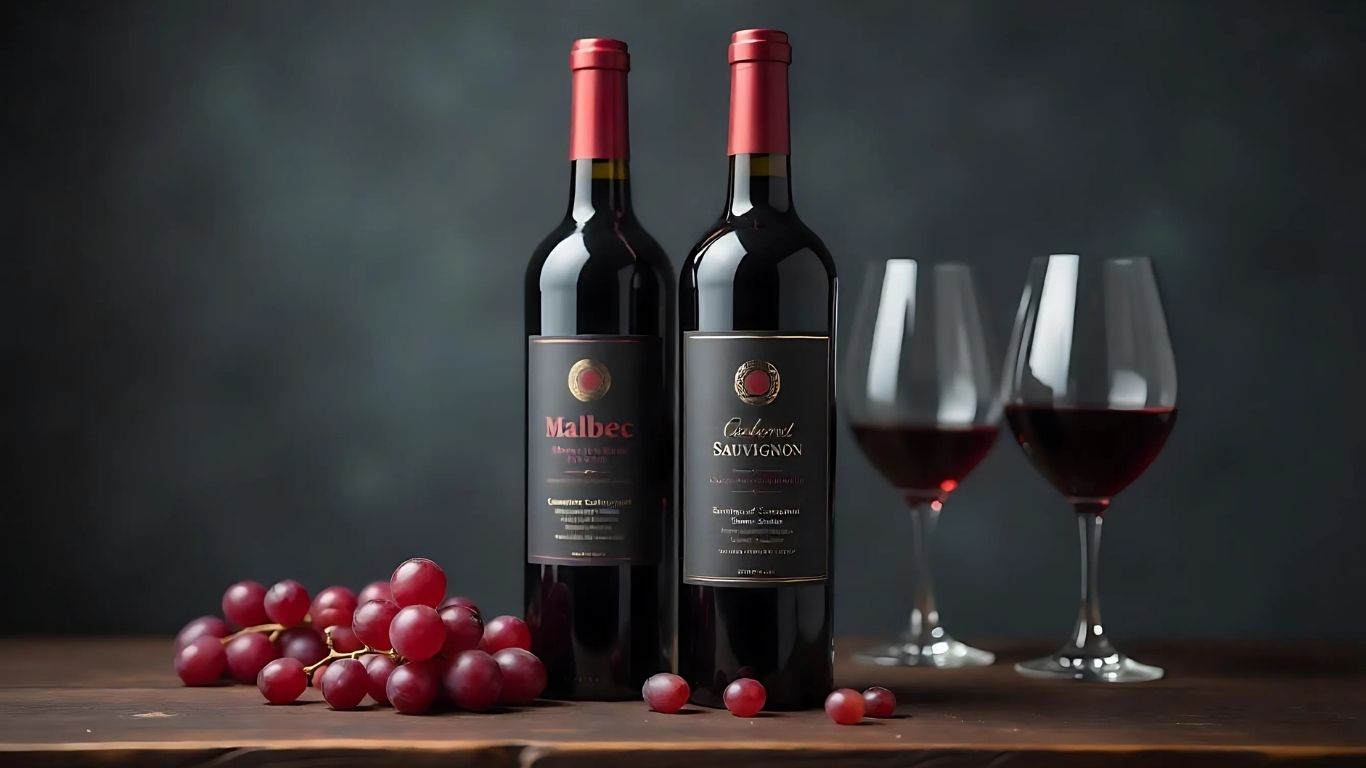
Two red wine varieties keep coming up when serious collectors and investors compare notes: Malbec and Cabernet Sauvignon. Both stand out for their unique character, aging potential, and track record of price appreciation.
Cabernet Sauvignon has long been the anchor of fine wine portfolios, with prestigious labels from Bordeaux and Napa Valley commanding eye-watering prices and delivering strong returns. But Malbec has quietly been closing the gap, particularly from Argentina’s Mendoza region, where a new generation of world-class producers is catching the attention of global collectors.
As you head into 2026, several factors deserve your attention before committing capital. Think regional influences, production trends, historical ROI, pricing dynamics, and long-term aging potential.
This guide puts Malbec and Cabernet Sauvignon head to head from a pure investment perspective, so you can decide which one belongs in your portfolio and which offers the better returns in the years ahead.
Table of Contents
Malbec vs Cabernet Sauvignon: Regions & Terroir
Both wines are celebrated for their bold flavors and aging potential, but each tells a very different story shaped by its origins, terroir, and global influence.
Understanding where these grapes truly thrive and how different environments shape their character is key to grasping their value, both in the glass and as a long-term investment.
Cabernet Sauvignon
Cabernet Sauvignon is the world’s most widely planted red grape variety, thriving across an impressive range of climates and terroirs. Its roots trace back to Bordeaux, France, where it forms the backbone of some of the world’s most prestigious blends, particularly in the Left Bank regions of Médoc and Pauillac.
The gravelly soils of Bordeaux offer exceptional drainage, forcing the vines to struggle and, in doing so, concentrate extraordinary flavor into each grape.
Beyond France, Napa Valley in California has become synonymous with premium Cabernet Sauvignon. The region’s warm climate, tempered by cool coastal breezes, produces ripe, fruit-forward wines with deep concentration and a powerful tannin structure. Other notable regions worth tracking include Tuscany in Italy, Coonawarra in Australia, and Maipo Valley in Chile, each adding its own distinct expression to the variety.
- Tuscany, Italy: Used in high-end “Super Tuscans” such as Sassicaia and Ornellaia.
- Chile (Maipo Valley): Produces structured yet affordable Cabernet Sauvignon wines, attracting global investors.
- Australia (Coonawarra & Margaret River): Known for its elegant yet bold expressions with age-worthy potential.
Cabernet Sauvignon’s ability to adapt across wildly different terroirs has been a major driver of its investment appeal. It gives you genuine diversification within a single grape variety, which is rare in the fine wine world.
Malbec
Malbec has a fascinating origin story. It started life in Cahors, France, where it earned the nickname the Black Wine of Cahors thanks to its deep color and robust, almost brooding character.
But Argentina changed everything for this grape. Today, Mendoza sits at the heart of global Malbec production, accounting for over 75% of Argentina’s total wine exports, and the quality coming out of the region has genuinely shocked the fine wine establishment.
The key terroirs in Argentina shaping Malbec’s investment story are worth knowing in detail. Mendoza’s Uco Valley, with its high-altitude vineyards sitting between 900 and 1,500 meters, produces wines with remarkable freshness and structure. Luján de Cuyo delivers the classic, plush Mendoza style that first put Argentine Malbec on the map. And Salta, further north, is pushing boundaries with extreme altitude viticulture that creates some of the most distinctive and collectible expressions of the grape.
- Luján de Cuyo: Known for producing bold, high-quality Malbecs with aging potential.
- Uco Valley: A high-altitude region with cool nights and intense sunlight, leading to wines with balanced acidity and deep complexity.
- Salta: Home to some of the highest-altitude vineyards in the world, producing structured and concentrated Malbecs.
Malbec’s rising status is driven by surging global demand and its extraordinary ability to express terroir in ways that feel genuinely unique. It may not carry the centuries of prestige behind Cabernet Sauvignon, but its appreciation potential is turning heads among serious collectors and investors who know where to look.
Investment Perspective
Cabernet Sauvignon is a dominant force in fine wine investment, with a proven track record, global demand that never really wavers, and a well-established secondary market that gives you real liquidity.
Its versatility and consistent quality have made it the cornerstone of serious wine portfolios for decades, delivering both stability and long-term returns that other varieties struggle to match.
Malbec, by contrast, is dynamic and fast-moving. High-quality Argentine labels have seen steady appreciation over recent years, driven by unique terroir-driven expressions and a global audience that keeps growing.
That combination makes Malbec genuinely attractive if you are looking to diversify your portfolio and capture high-growth potential in an emerging category.
If stability and long-term value are your priority, Cabernet Sauvignon is your reliable anchor. If you want to explore newer opportunities with strong growth prospects, Malbec deserves a serious look.
Together, these two varieties, each with their distinct characteristics and regional identities, present compelling opportunities in the fine wine investment space that is constantly evolving.
Malbec vs Cabernet Sauvignon: Grape Characteristics
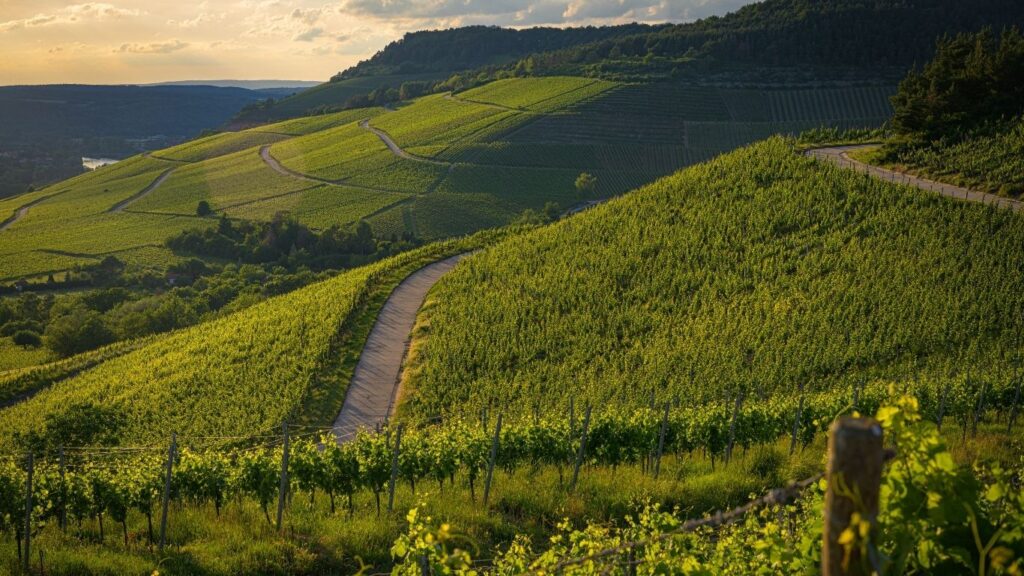
When you compare Malbec and Cabernet Sauvignon side by side, their distinct grape characteristics play a defining role in shaping their flavors, aging potential, and investment appeal.
Understanding these differences does more than deepen your appreciation for the wines. It helps you make smarter, more strategic decisions as a collector or investor.
Cabernet Sauvignon Grape Characteristics
Cabernet Sauvignon grapes are small, with thick skins and high tannins, giving the wine a robust structure and extraordinary aging potential. High acidity is another hallmark, making it one of the most age-worthy red varieties on earth, capable of evolving and improving for decades.
The key grape characteristics worth understanding are these. Thick skins lead to deep color, powerful tannins, and exceptional longevity. The small grape size creates a higher skin-to-juice ratio, which intensifies flavor and structure. And the high acidity enhances aging potential while maintaining a freshness that other varieties lose over time.
Because of its firm tannin structure, Cabernet Sauvignon demands careful aging. The best examples are typically aged in oak barrels for extended periods to soften those tannins and allow complex secondary and tertiary flavors to develop.
This is why the finest investment-grade Cabernets carry lifespans of 10 to 50 years, making them ideal for collectors and investors who are willing to play the long game.
Malbec Grape Characteristics
Malbec grapes are larger, with thinner skins and lower acidity, producing wines that tend to be softer, fruitier, and far more approachable at a younger age. While Malbec can age well, it does not match Cabernet Sauvignon’s ultra-long-term aging trajectory. That said, high-altitude Malbecs from Mendoza’s Uco Valley and Salta bring greater acidity and tannin structure to the table, allowing for meaningfully extended aging compared to standard expressions.
The key grape characteristics are worth keeping in mind. Thinner skins result in smoother tannins and a softer, more approachable mouthfeel. The larger grape size produces juicy, fruit-forward wines that connect with a broader audience. And moderate acidity means these wines are less suited to ultra-long aging, though high-quality expressions can develop beautifully over 5 to 15 years.
Investment Takeaway
Cabernet Sauvignon is the superior choice for long-term investment. Its high tannins, acidity, and proven ability to age gracefully over decades make it a reliable cornerstone for serious collectors and investors seeking stable returns.
Malbec offers an earlier drinking window, which actually makes it an attractive option for shorter-term investment strategies and for tapping into strong consumer-driven demand.
Top-tier Malbecs from Argentina, particularly those grown at altitude, are gaining real recognition for their quality and aging potential. That creates an emerging market opportunity you would be wise to watch.
If your focus is on wines that appreciate steadily over decades, Cabernet Sauvignon is your clearest path. But if you want exposure to a high-growth emerging category, Malbec offers an exciting and increasingly credible avenue.
Both varieties, each with their own distinct character and appeal, offer genuinely compelling opportunities for wine enthusiasts and serious investors alike.
Malbec vs Cabernet Sauvignon: Taste & Alcohol
Taste and alcohol content are two of the most defining factors shaping a wine’s character, its broad appeal, and how well it fits different investment strategies.
Both Cabernet Sauvignon and Malbec are celebrated for their boldness, but they deliver very different drinking experiences, and those differences matter when you are thinking about who will ultimately buy these bottles from you.
Cabernet Sauvignon Taste & Alcohol
Cabernet Sauvignon is built for the long haul. Its full-bodied structure, deep flavors, and high tannins create a powerful wine that evolves beautifully over time, revealing layers of complexity that simply were not there in its youth.
The flavor profile spans a wide range depending on the region and vintage. Young Cabernets offer concentrated dark fruits like blackcurrant, blackberry, and plum, often layered with cedar, graphite, and a signature hint of green pepper. With age, these flavors shift toward dried fruit, tobacco, leather, and earthy undertones that collectors pay serious premiums to experience.
- Primary Flavors: Blackcurrant, blackberry, plum
- Secondary Flavors: Cedar, vanilla (from oak aging), tobacco, graphite
- Aging Flavors: Leather, dried herbs, cigar box
On the alcohol front, Cabernet Sauvignon typically lands between 13.5% and 15%, with the number varying by region. Napa Valley Cabernets tend toward the higher end thanks to the warm climate, while Bordeaux wines maintain more moderate alcohol levels with a stronger emphasis on structure and balance.
Malbec Taste & Alcohol
Malbec comes at you differently. It leads with a plush, fruit-forward style, offering a rounder mouthfeel and softer tannins than Cabernet Sauvignon. Bold, yes, but far more approachable when the wine is young.
The flavor profile is rich with black cherry, plum, blackberry, and violet, often layered with cocoa, mocha, and hints of vanilla from oak aging. Premium high-altitude expressions add a savory edge of dark spice, dried herbs, and leather that develops beautifully with time.
- Primary Flavors: Black cherry, plum, blackberry
- Secondary Flavors: Cocoa, mocha, tobacco, vanilla
- Aging Flavors: Dried fig, leather, nutmeg
Alcohol content for Malbec typically falls in the same range as Cabernet Sauvignon, between 13.5% and 15%. Argentine Malbecs, especially those from Mendoza, tend toward the higher end thanks to the warm climate and intense high-altitude sun exposure that pushes sugar levels in the grapes.
Investment Takeaway
Cabernet Sauvignon’s structured and tannic nature means it genuinely needs time to reveal its best. That requirement for aging is actually what drives its investment case, with the finest examples improving over 15 to 50 years and forming a cornerstone of any serious fine wine portfolio.
Malbec, with its fruit-driven and velvety profile, appeals to a consumer base that wants wines enjoyable earlier in their lifespan. But top-tier Malbecs from high-altitude regions like Mendoza’s Uco Valley can still age gracefully for 5 to 15 years, creating real opportunities for investors working with shorter investment cycles.
Cabernet Sauvignon dominates traditional fine wine markets, but Malbec is gaining ground fast with rising global demand. As broader fine wine categories expand globally, Malbec is well positioned to capture a growing share of collector interest.
Both varieties, with their distinct characters and market positions, offer genuinely compelling opportunities for the right investor.
Malbec vs Cabernet Sauvignon: Winemaking Methods
The winemaking techniques behind Malbec and Cabernet Sauvignon differ significantly, shaped by the structure of the grapes, the traditions of each region, and the aging potential the winemaker is aiming for.
Both varieties benefit from oak aging, but Cabernet Sauvignon demands far more extended maturation to develop its signature depth. Malbec is often crafted for earlier drinking, though the best producers still achieve real complexity through careful vinification.
Cabernet Sauvignon Winemaking Methods
Cabernet Sauvignon’s high tannins and acidity require precise winemaking to achieve the balance and longevity that collectors expect. Winemakers typically extend maceration periods to extract maximum color, tannin, and structure from those thick-skinned grapes.
Key Winemaking Techniques for Cabernet Sauvignon:
The key winemaking steps that shape the investment case are worth understanding. Long maceration keeps the skins in contact with the juice for three to four weeks, building serious tannin structure. Oak aging typically runs 12 to 24 months in French oak barrels, and sometimes longer for top-tier releases. Blending with varieties like Merlot, Petit Verdot, and Cabernet Franc in the Bordeaux style adds complexity and balance. And bottle aging is essentially mandatory for investment-grade Cabernets, with years of cellaring required before the wine reaches its peak.
The extended oak aging in the finest Bordeaux and Napa Valley Cabernets develops secondary flavors of vanilla, spice, and tobacco that collectors prize, and that drive the long-term appreciation in value you are looking for as an investor.
Malbec Winemaking Methods
Malbec’s thinner skins and lower tannins make it more approachable young, but the top producers put just as much thought into the winemaking process as any Bordeaux estate.
In Argentina, the most ambitious producers experiment with maceration length and oak treatment to preserve fruit intensity while building genuine complexity.
Key Winemaking Techniques for Malbec:
The key techniques shaping premium Malbec’s investment potential include shorter maceration runs of typically 10 to 20 days, producing softer tannins and a more fruit-driven profile. Oak aging in French or American barrels typically runs 6 to 18 months, depending on the style the producer is targeting. Some winemakers use micro-oxygenation techniques to soften tannins and refine the mouthfeel. And increasingly, single-vineyard bottlings from Mendoza’s Uco Valley and Salta are vinified separately to express the precise character of each site.
Unlike Cabernet Sauvignon, Malbec does not always demand extensive aging before it shows well. That accessibility is a strength when it comes to consumer demand, and the top-tier labels still carry genuine aging potential that serious collectors are starting to recognize.
Investment Takeaway
Cabernet Sauvignon’s winemaking process, with its long maceration and extended oak aging, makes it a natural fit for long-term investment. These wines often mature over 30 or more years, giving collectors and investors a long runway to see meaningful appreciation.
Malbec focuses on fruit-forward expression with moderate aging, which suits shorter investment cycles and appeals to a much broader consumer base. That broad appeal matters for liquidity.
High-end Malbecs from Argentina’s premier regions, particularly Mendoza’s Uco Valley, are building reputations that position them as a serious emerging investment category. The growth prospects are real and accelerating.
Fine Bordeaux and Napa Valley Cabernets are the established anchors of traditional wine investment, but Argentina’s top Malbecs present a genuine opportunity to diversify your portfolio and capture returns in a market that is still finding its ceiling. If you want to understand how fine wine stacks up against other asset classes, the comparison is worth your time.
Both varieties, with their distinct winemaking philosophies, offer compelling opportunities for wine enthusiasts and investors who know what they are looking for.
Malbec vs Cabernet Sauvignon: Appearance, Aromas, and Tasting Notes
Both Malbec and Cabernet Sauvignon are full-bodied reds, but they differ in ways that matter the moment you pour a glass.
Cabernet Sauvignon brings structure and complexity that deepens over time. Malbec leads with a smooth, fruit-forward profile that wins over a wider audience faster. Both qualities have investment implications worth understanding.
Cabernet Sauvignon Appearance, Aromas, and Tasting Notes
Cabernet Sauvignon wines show a deep ruby or garnet color in youth, often developing slight brick-red hues at the rim as they age. Their aromatic complexity is one of their most prized qualities, evolving over years of cellaring and offering a shifting palette of dark fruit, spice, and earthy depth.
Aroma Profile:
Primary aromas carry blackcurrant, plum, blackberry, and cassis. Secondary aromas bring tobacco, cedar, bell pepper, and graphite. And aged expressions develop tertiary notes of leather, cigar box, and dried herbs that collectors seek out specifically.
Tasting Experience:
- High tannins and acidity give Cabernet Sauvignon its firm structure.
- Younger Cabernets are intense and bold, while aged versions develop silky textures with refined flavors.
- Often described as having a long, elegant finish, making it ideal for aging and investment.
Malbec Appearance, Aromas, and Tasting Notes
Malbec is among the darkest wines you will pour, appearing deep purple or close to black in the glass when young. Its aromatics lean fruity and floral, with a warming touch of spice that makes it immediately appealing.
Aroma Profile:
Primary aromas offer black cherry, plum, blackberry, and raspberry. Secondary aromas bring cocoa, mocha, vanilla, and tobacco. With age, the best expressions develop tertiary notes of dried fig, nutmeg, and leather that place them firmly in collector territory.
Tasting Experience:
- Softer tannins and a velvety mouthfeel make Malbec easier to drink at a younger age.
- The fruit-forward profile appeals to a wide range of consumers.
- Less structured than Cabernet Sauvignon, but high-altitude Malbecs can have excellent aging potential.
Investment Takeaway
Cabernet Sauvignon’s complex structure and remarkable aging potential make it the preferred choice for long-term investment. Its ability to develop and improve over decades has secured its place as the favorite of serious collectors and portfolio-focused investors worldwide.
Malbec’s smooth and fruit-driven style creates broad market appeal, which translates into strong demand and real opportunity for shorter-term appreciation.
Top-tier Malbecs from single-vineyard sites in Mendoza are gaining recognition for their ability to build complexity over time, and that growing reputation is steadily attracting investors who want exposure to an emerging category before the market fully prices it in.
Cabernet Sauvignon is the cornerstone of fine wine investment. Malbec is the dynamic alternative for those looking to diversify. Both have sensory profiles that resonate with buyers, and that consumer connection is ultimately what drives the secondary market prices you care about as an investor.
Malbec vs Cabernet Sauvignon: Storage
Proper storage is not optional in wine investment. Get it wrong and you erode the value of your collection before a single bottle goes to market.
Cabernet Sauvignon, with its long aging potential, demands extended cellaring under precise conditions. Malbec, while capable of aging, typically works within a shorter optimal storage window, and timing your exit correctly matters.
Cabernet Sauvignon Storage
Cabernet Sauvignon’s high tannins and acidity make it one of the most age-worthy wines on earth. Premium Bordeaux and Napa Valley Cabernets can mature for decades, developing extraordinary complexity as the years accumulate.
The ideal storage conditions for protecting your investment are straightforward but non-negotiable.
Temperature should sit at a consistent 55°F (13°C) to ensure steady, even aging. Humidity in the range of 60 to 70% prevents cork shrinkage. Light exposure should be minimal, since UV light actively degrades wine quality. And bottles should be stored horizontally to keep the cork moist and prevent oxidation from creeping in.
Fine Bordeaux and Napa Valley Cabernets are renowned for their ability to age gracefully over 20 to 50 years, often increasing meaningfully in value as they mature.
Wines from highly rated vintages, such as the 2010 Château Margaux, are particularly prized for their potential to appreciate over decades, making them a cornerstone of any long-term wine investment strategy.
To ensure these wines reach their full potential, professional storage solutions such as temperature-controlled wine cellars or bonded warehouses are highly recommended for investors who are serious about preserving quality and maximizing resale returns.
Malbec Storage
Malbec, while not as long-lived as Cabernet Sauvignon, develops beautifully with proper storage, particularly the high-altitude expressions coming out of Argentina’s premium growing regions.
The ideal storage conditions for Malbec closely mirror those for Cabernet Sauvignon.
Temperature should be maintained at 55°F (13°C) for optimal aging. Humidity between 60 and 70% keeps cork integrity intact. Direct sunlight should be avoided entirely to prevent spoilage. And bottles should be stored horizontally to keep the cork in consistent contact with the wine.
Standard Malbecs are best enjoyed within 5 to 10 years, which makes them less suitable for ultra-long-term investment strategies.
Top-tier Malbecs, such as those from Catena Zapata’s Adrianna Vineyard, are a different story. These can age gracefully for 15 or more years, gaining complexity and building value as their reputation grows among international collectors.
Malbec’s softer tannin profile means these wines reach peak maturity faster than their Cabernet counterparts.
That faster maturation window actually works in your favor if you time your sales correctly, allowing you to maximize returns by catching the wine at its optimal drinking peak before the market window closes.
Investment Takeaway
Cabernet Sauvignon’s long aging potential makes it a cornerstone of fine wine investment. Its ability to appreciate over decades, especially in highly rated vintages, delivers significant returns for investors who are genuinely patient.
Malbec’s shorter aging window makes it an attractive option for mid-term returns, particularly with high-quality, single-vineyard releases that are earning growing recognition in the global market.
Both varieties demand optimal storage conditions to preserve their investment value. Professional storage solutions are not a luxury here; they are a necessity if you want the wines to age gracefully and reach their full potential.
Whether you are drawn to the timeless elegance of Cabernet Sauvignon or the emerging appeal of Malbec, proper storage is the foundation everything else is built on.
Malbec vs Cabernet Sauvignon: Pricing
Pricing is one of the most critical factors when evaluating a wine’s investment potential. Cabernet Sauvignon has long dominated the fine wine market with premium pricing and a well-documented history of appreciation. Malbec is emerging as a more affordable yet increasingly valuable alternative that deserves serious attention.
Cabernet Sauvignon Pricing
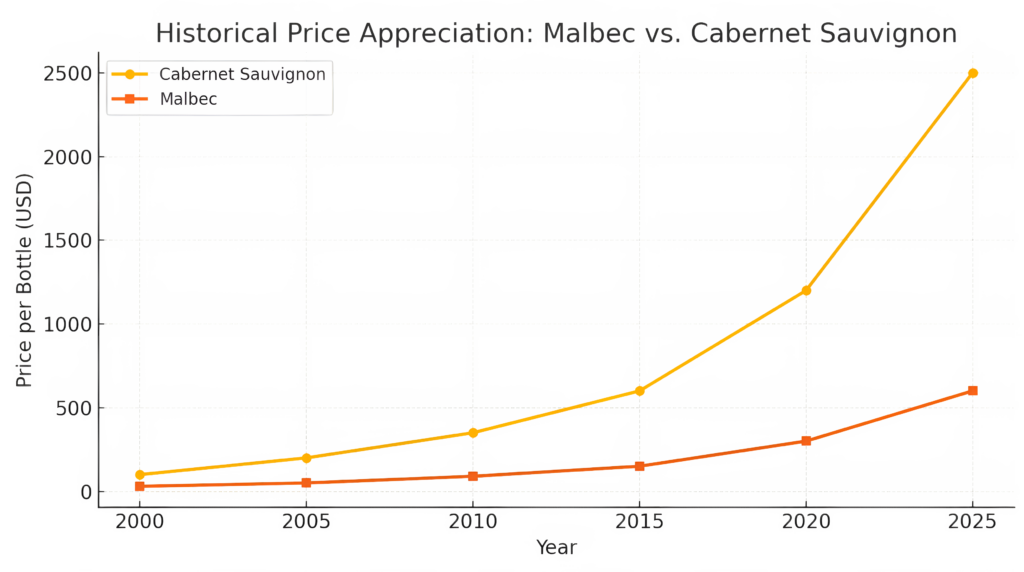
Cabernet Sauvignon sits at the pinnacle of fine wine pricing. Entry-level premium bottles typically start at $80 to $100, but the real investment-grade selections come from the legendary estates of Bordeaux and Napa Valley.
Bordeaux First Growths like Château Margaux and Château Lafite Rothschild command prices ranging from $500 to several thousand dollars per bottle, depending on the vintage.
Then there is Napa Valley, where the cult Cabernet phenomenon has sent prices into the stratosphere. Wines like Screaming Eagle and Harlan Estate regularly exceed $3,000 per bottle, placing them among the most expensive wines in the world.
Collectors and investors seek these wines not just for prestige but for their proven ability to appreciate over time. Some of the most celebrated Bordeaux vintages have doubled in value over a decade, driven by demand from both established collectors and new investors entering the market.
- Entry-level premium Cabernet Sauvignons start around $80–$100.
- High-end Bordeaux First Growths (e.g., Château Margaux, Château Lafite Rothschild) range from $500 to several thousand dollars per bottle.
- Napa Valley’s cult Cabernets (e.g., Screaming Eagle, Harlan Estate) often exceed $3,000 per bottle, making them highly sought after by collectors and investors.
- Older vintages appreciate significantly over time, with some Bordeaux wines increasing in value by 100% or more over a decade.
From an investment perspective, Cabernet Sauvignon is a staple of fine wine portfolios. Its reputation is unmatched, its demand consistent, and its price appreciation historically strong.
Many top producers see annual appreciation in the range of 10 to 15%, making Cabernet Sauvignon one of the most secure and profitable wine investments available. Liquidity in the secondary market is also high, meaning you can buy and sell with relative confidence.
Malbec Pricing
Malbec is a very different story on pricing. High-quality Argentine Malbecs can be found between $20 and $50, making them an accessible entry point for investors looking to build a fine wine position without committing significant capital upfront.
That said, as demand for premium Argentine wines keeps growing, top-tier Malbecs have started breaking past the $100 mark, particularly limited-edition and single-vineyard selections from producers like Catena Zapata’s Adrianna Vineyard.
Malbec has not yet reached the pricing levels of Cabernet Sauvignon, but its trajectory is promising. Over the past decade, increased global recognition of Argentina’s fine wines has pushed price points higher and drawn in a new wave of demand, particularly for high-altitude, limited-production expressions.
Unlike Cabernet Sauvignon, which already dominates the investment market, Malbec is an emerging opportunity. Getting in early, before values rise further, is the strategy that will define returns for the investors who move now.
- Quality Argentine Malbecs are priced between $20–$50, making them significantly cheaper than Cabernet Sauvignon.
- Top-tier Malbecs (e.g., Catena Zapata’s Adrianna Vineyard) can exceed $100, with limited-edition releases fetching higher prices.
From an investment perspective, Malbec is an attractive diversification play. The lower entry point lets you build a collection without the financial commitment required for elite Cabernets.
The catch is that Malbec’s secondary market is less liquid, so you need to be strategic. Focus on highly rated vintages and rare bottles with genuine appreciation potential, and you are positioned well.
Malbec vs Cabernet Sauvignon: Historical ROI
Fine wine investment comes down to historical performance and future potential.
Cabernet Sauvignon, particularly from Bordeaux and Napa Valley, has consistently delivered strong returns over the past few decades, cementing its reputation as a blue-chip asset in the wine investment world.
Malbec is a newer contender in the high-end wine investment market, but the growth trends are real, driven by increasing global demand and Argentina’s rising prominence in fine wine production.
Cabernet Sauvignon Historical ROI
When it comes to historical ROI, Cabernet Sauvignon is the undisputed leader. Bordeaux First Growths have long been considered one of the most secure wine investments available, with some vintages appreciating by over 120% in a decade.
Take the 2010 Château Margaux as a concrete example. Initially released at approximately $500 per bottle, it has since surpassed $1,100 on the secondary market.
Investors who secured allocations of these elite Bordeaux wines years ago have seen remarkable returns, often exceeding what traditional asset classes like stocks and bonds delivered over the same period.
Beyond Bordeaux, Napa Valley’s cult Cabernets have demonstrated exceptional price appreciation. Screaming Eagle, Harlan Estate, and Opus One have become some of the most coveted wines in the world, with annual growth rates running 10 to 15%.
A bottle of 1997 Screaming Eagle, initially priced at around $125, now commands prices upward of $15,000. That is the power of limited supply combined with elite branding and a devoted collector base.
A key factor in Cabernet Sauvignon’s investment success is its aging potential. Fine Bordeaux and Napa Cabernets can evolve beautifully for 30 to 50 years, meaning collectors are willing to pay serious premiums for well-aged bottles. The longer they are properly stored, the rarer they become, and rarity drives value.
Malbec Historical ROI
Malbec’s historical performance as an investment has not yet reached the heights of Cabernet Sauvignon, but the momentum is building. Over the past 15 years, the value of top-tier Argentine Malbecs has been steadily climbing, particularly for limited-production, high-altitude expressions.
Catena Zapata’s Adrianna Vineyard Malbec is the clearest example to point to. Widely considered Argentina’s most collectible wine, bottles from this vineyard were priced at around $50 in the early 2000s.
Today, highly rated vintages regularly surpass $200 on the secondary market. Those numbers are modest compared to blue-chip Bordeaux and Napa Cabernets, but they signal a growing recognition of Malbec as a wine worth taking seriously from an investment standpoint.
Argentina’s increasing global presence in fine wine is another factor driving Malbec’s rising ROI. As international critics keep awarding high scores to the top producers, collector and investor demand builds steadily.
High-altitude Malbecs from the Uco Valley and Salta are attracting serious attention, with some bottles seeing annual appreciation rates of 8 to 12%. That number could rise meaningfully as Argentina cements its position in the luxury wine market.
Investment Takeaway
Cabernet Sauvignon is the dominant fine wine investment, with a long track record of exceptional returns and global demand that shows no sign of softening.
For investors seeking stable appreciation, strong secondary market liquidity, and long-term security, elite Bordeaux and Napa Valley Cabernets are the gold standard. Full stop.
Malbec is not yet a mainstream blue-chip wine investment, but it is a genuinely intriguing growth opportunity. Lower entry costs, increasing value, and exposure to an emerging market make it attractive for investors who want to get ahead of the curve. If you are building a diversified alternative asset strategy, understanding how fine wine compares to traditional investments is a smart starting point.
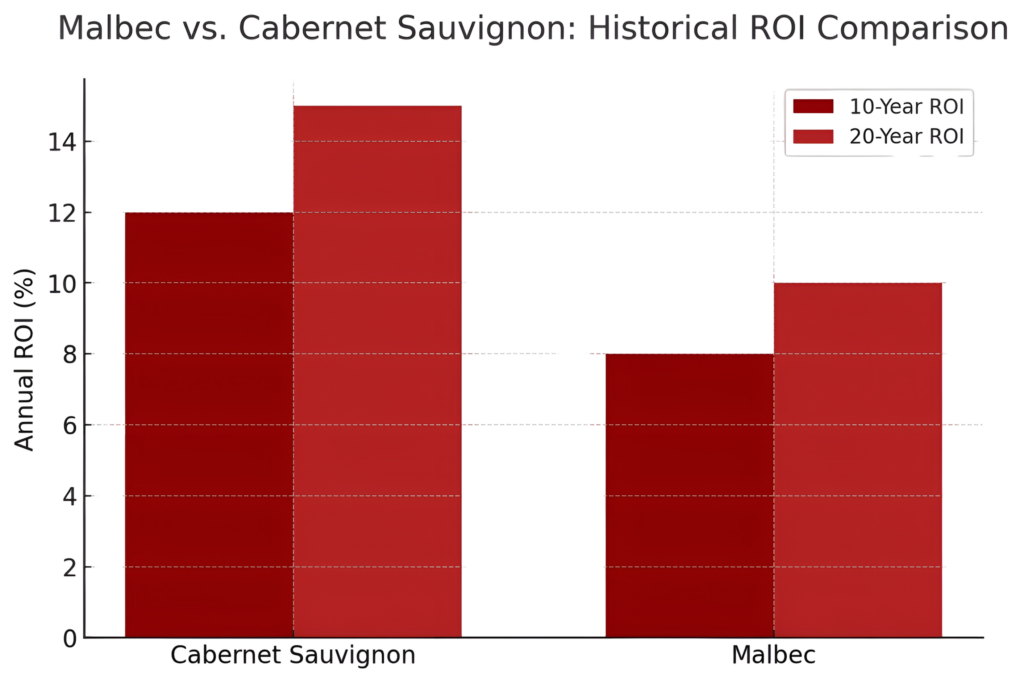
With Argentina’s fine wine reputation rising fast, select high-end Malbecs may deliver strong appreciation in the coming years, particularly limited-edition and single-vineyard bottlings from the country’s best producers.
Which Is Better for Investment: Malbec vs Cabernet Sauvignon?
Both Malbec and Cabernet Sauvignon offer real investment opportunities, but they appeal to very different investor profiles.
Cabernet Sauvignon is the proven leader in fine wine investment. Malbec is the emerging contender with growing potential and a compelling growth story.
The right choice for you depends on your risk tolerance, your investment time horizon, and how much you value liquidity in the secondary market.
Cabernet Sauvignon
If fine wine investment were compared to the stock market, Cabernet Sauvignon would be your blue-chip stock. A reliable, historically strong asset with consistent demand and appreciation that rarely disappoints patient investors.
- Proven Appreciation – Bordeaux First Growths and Napa Valley cult Cabernets have demonstrated decades of stable, high returns. For example, a case of 2000 Château Lafite Rothschild, originally priced around $5,000, is now worth over $20,000, reflecting its exceptional growth.
- Global Demand & Market Liquidity – The fine wine market actively trades investment-grade Cabernets, ensuring liquidity for investors looking to buy and sell.
- Long-Term Aging Potential – Elite Cabernet Sauvignons can mature for 30–50 years, meaning they remain valuable assets for multiple decades.
- High Initial Cost, But Secure Returns – Entering the Cabernet investment market requires capital, as premium bottles start at $500+, but they deliver predictable long-term growth.
If security, long-term appreciation, and strong resale value are your priorities, Cabernet Sauvignon is the superior choice. It is the backbone of any serious fine wine portfolio, offering stability and meaningful returns with limited downside risk.
Malbec
Malbec, while less established in investment circles, tells a compelling growth story, particularly for investors willing to take calculated risks on an evolving market.
- Affordable Entry Point – Unlike high-priced Bordeaux or Napa Cabernets, premium Malbecs start at around $50, making them a more accessible investment.
- Rising Global Recognition – As Argentina’s fine wine reputation grows, high-end Malbecs are gaining traction among collectors. Top-tier Malbecs have already shown 8–12% annual appreciation rates, signaling upward potential.
- Shorter Investment Horizon – While Cabernets require decades to reach peak maturity, Malbecs can develop within 5–15 years, allowing investors to turn over their holdings faster.
- Selective Market Growth – Not all Malbecs will become investment-worthy. The best opportunities lie in high-altitude, single-vineyard bottlings from renowned producers like Catena Zapata, Achával-Ferrer, and El Enemigo.
If you want to diversify beyond traditional fine wines and capture upside in a high-growth sector, Malbec offers genuine potential. And as climate and vintage conditions increasingly shape fine wine value, keeping a close eye on emerging wine regions will separate smart investors from the rest.
The key with Malbec is discipline. Choose top-rated bottles with genuinely limited production, and you position yourself well for the moment when demand outstrips supply.

Best Cabernet Sauvignon Collections to Invest In 2026
If you are adding Cabernet Sauvignon to your portfolio in 2026, focus on highly rated vintages, prestigious producers, and regions with proven secondary market demand.
Bordeaux’s First Growths and Napa Valley’s cult wines are still the top choices, offering a combination of historical appreciation, global demand, and the kind of liquidity that lets you exit when you need to. Robb Report’s guide to investment wines is worth bookmarking for ongoing reference.
Best Cabernet Sauvignon Collections to Invest In 2025
Investment Takeaway
For long-term stability, your focus should be on Château Lafite Rothschild, Château Margaux, and Screaming Eagle. For high growth and scarcity-driven appreciation, Harlan Estate, Sassicaia, and Opus One are the names to know. For diversification and value within the Cabernet world, Ornellaia and Château Mouton Rothschild both offer compelling cases.
Best Malbec Collections to Invest In 2026
Malbec is still an emerging player in fine wine investment, but the top Argentine producers have earned genuine international recognition, and that recognition is translating into higher demand and accelerating price appreciation.
If you want affordable entry points with high-growth potential, focus on single-vineyard, high-altitude Malbecs from Argentina’s premier regions, particularly Mendoza and Salta. Wine Spectator’s coverage of Argentine Malbec offers useful context for identifying which producers are building the strongest long-term cases.
Best Malbec Collections to Invest In 2025
Investment Takeaway
For long-term growth and aging potential, Catena Zapata’s Adrianna Vineyard and Achával-Ferrer’s Finca Altamira are the standout names. For high scarcity and limited-edition appeal, El Enemigo’s Gran Enemigo and Viña Cobos’ Bramare deserve a place on your radar. And for unique exposure to the most exciting emerging micro-regions, Colomé’s Altura Máxima and Bodega Tacuil’s RD represent some of the most interesting bets in the category right now.
FAQ
Is Malbec or Cabernet Sauvignon a better investment in 2025?
Cabernet Sauvignon is the safer, blue-chip investment with proven long-term returns and strong secondary market demand. Malbec offers a lower-cost, high-growth opportunity, but with higher risk and lower liquidity.
How long should I hold investment-grade Malbec and Cabernet Sauvignon?
Cabernet Sauvignon: 15–50 years for peak appreciation.
Malbec: 8–20 years, with faster turnover potential.
What are the best regions for investing in Malbec and Cabernet Sauvignon?
Cabernet Sauvignon: Bordeaux (First Growths), Napa Valley (cult wines), Tuscany (Super Tuscans).
Malbec: Mendoza (Uco Valley, Luján de Cuyo), Salta (high-altitude wines).
How much capital do I need to invest in Malbec vs Cabernet Sauvignon?
Cabernet Sauvignon: $500–$15,000+ for investment-grade bottles.
Malbec: $80–$500+, making it a more accessible entry point.
Which is better for short-term vs. long-term gains?
Short-term: Malbec (faster appreciation within 10–15 years).
Long-term: Cabernet Sauvignon (proven growth over 20–50 years).