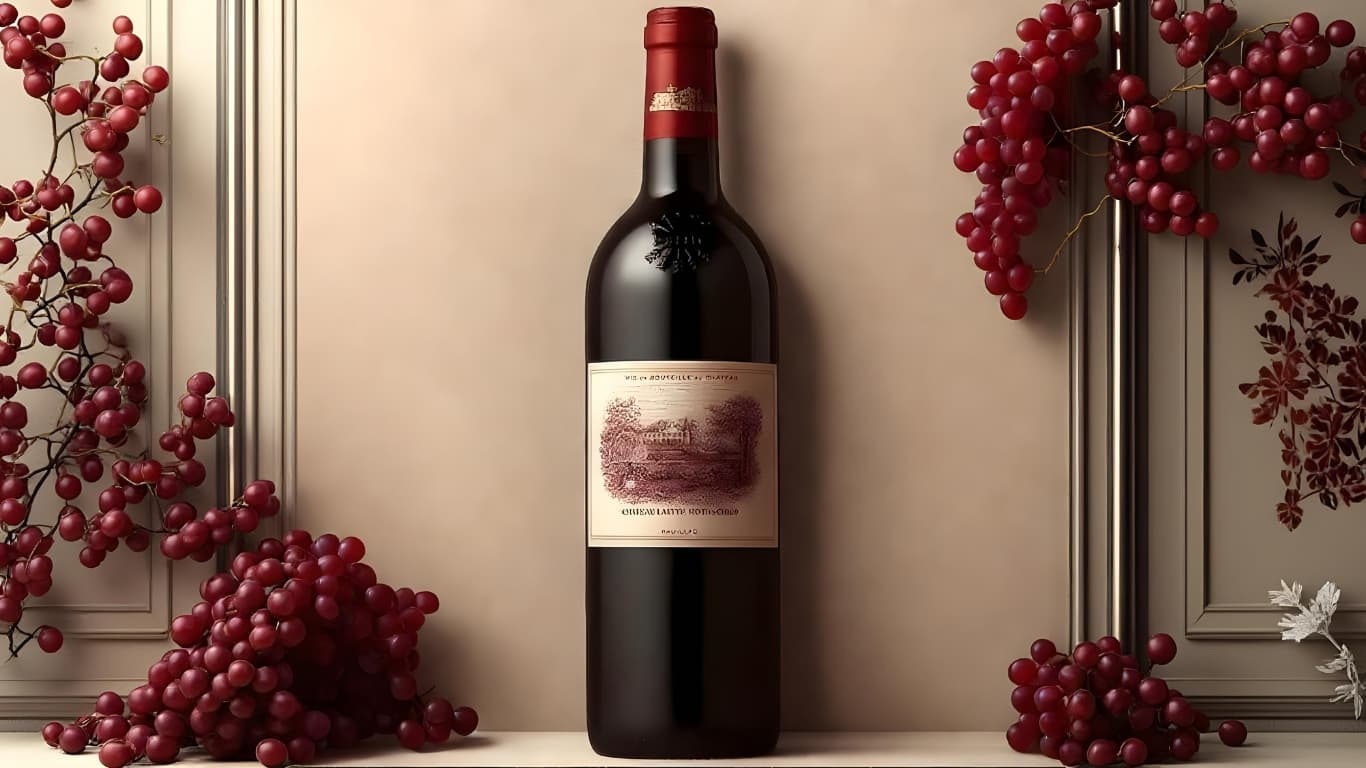
In fine wine circles, Lafite Rothschild isn’t just a name. It’s a benchmark. For over 150 years, this Pauillac First Growth has been the yardstick by which Bordeaux elegance and longevity are measured. Collectors track Lafite’s vintages as closely as you’d track blue-chip stocks, and certain years stand out as inflection points for both drinking pleasure and serious financial returns.
The 2019 vintage is shaping up to be one of those moments. Produced during a growing season that combined warm, sun-soaked days with cool, dry nights, the conditions allowed Cabernet Sauvignon, which makes up 91% of the blend, to ripen perfectly without sacrificing acidity.
The result is a wine with remarkable structure, layered aromatics, and a finish that critics have described as “near-endless.”
The market took notice quickly. Wine Advocate gave it 98 to 100 points, placing it on par with Lafite’s most storied years like 1982 and 2010. James Suckling awarded 99 points, praising its “purity of fruit and impeccable balance,” while Decanter noted its “seamless tannins” and “textbook Lafite poise.”
For investors, the en primeur release price in 2020 was meaningfully lower than the 2016 or 2018 vintages, giving it an unusually strong value-to-quality ratio right from the start.
This mix of critical acclaim, optimal pricing, and tightening global supply, especially from buyers in Hong Kong, Singapore, and New York, has fueled real speculation that 2019 could be the Lafite vintage of the decade for long-term returns. If you’re thinking about moving wealth into luxury assets, this is a conversation worth having.
As one Bordeaux merchant told Liv-ex earlier this year, “It’s rare to get a Lafite that’s this good and this underpriced at the same time. The market doesn’t usually leave the door open for long.”
Table of Contents
Lafite Rothschild’s Reputation in the Fine Wine Market
As a First Growth from the 1855 Bordeaux Classification, Lafite has been producing wines for centuries that not only define the Pauillac style, structured, elegant, and age-worthy, but also act as the benchmark for the entire fine wine market.
Investment performance backs up its legendary status. Data from Liv-ex shows that over the past 20 years, Lafite vintages have averaged 8 to 10% annual growth, with certain standout years delivering far more.
The 1982 Lafite, for instance, traded at around £2,000 per case in the early 2000s. Today, it changes hands for over £16,000, an appreciation of more than 700%.
Similarly, the 2000 vintage has climbed from £3,000 on release to £14,000 and above, driven by critical acclaim and dwindling supply.
Its market resilience is partly cultural. In mainland China, Lafite became a household name in the early 2000s, symbolizing wealth and sophistication in the same way a Rolex Daytona or Hermès Birkin might. Collectors in Hong Kong, Singapore, and the UAE have followed suit, turning Lafite into a globally recognized luxury asset, one that’s as likely to appear in a family trust as it is on a dining table.
Crucially, Lafite’s production is tightly controlled, averaging 16,000 to 20,000 cases of Grand Vin each year. With demand far outstripping supply, the price floor for Lafite stays historically high, even in downturns.
As wine critic Jane Anson puts it, “Lafite is not just a wine, it’s a brand. Its value is underpinned as much by cultural prestige as by winemaking excellence.”
That blend of scarcity, cultural cachet, and proven investment performance sets the stage for why Lafite Rothschild 2019 is attracting serious long-term interest.
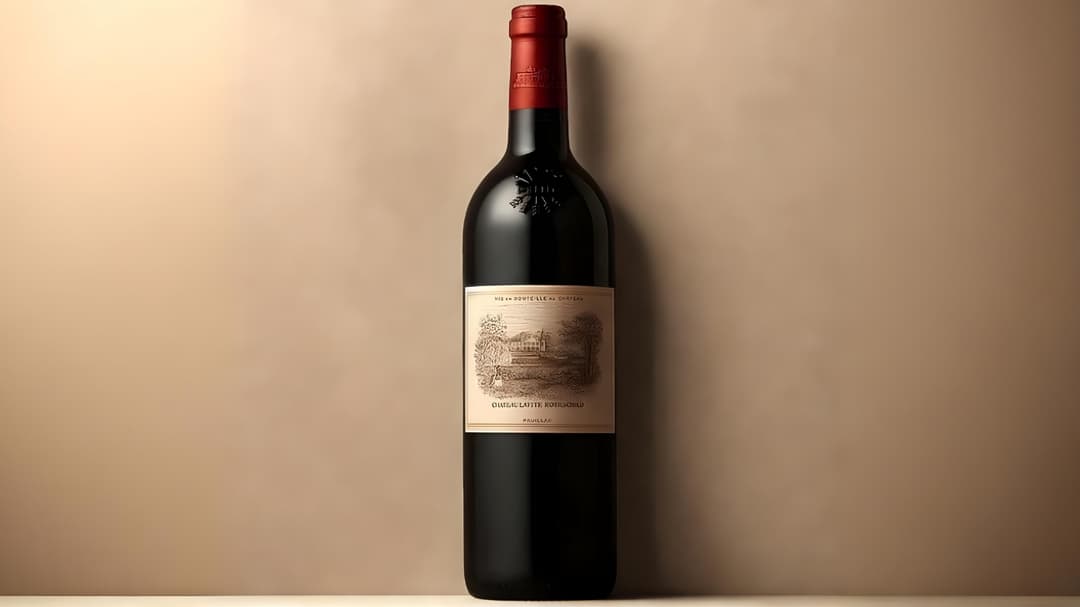
Lafite Rothschild 2019: Ratings, Weather Conditions, and Taste
The 2019 vintage at Château Lafite Rothschild is already being spoken of as one of the estate’s modern greats. The growing season in Pauillac began with a mild winter, followed by a wet spring that replenished the soils.
The summer brought two intense heatwaves, one in late June and another in July, pushing temperatures above 40°C (104°F). While such extremes can sometimes stress the vines, Lafite’s deep gravel soils and meticulous vineyard management allowed the Cabernet Sauvignon to ripen evenly without losing acidity.
The harvest took place between September 19 and October 7, in near-perfect conditions. Grapes arrived at the winery with thick skins, small berries, and exceptional tannin quality. Those are all hallmarks of wines built for decades of aging.
Critics have been unanimous in their praise.
- Wine Advocate (Lisa Perrotti-Brown): 98–100 points, calling it “a wine of stunning purity, precision, and length — quintessential Lafite.”
- James Suckling: 99 points, noting its “perfumed nose of violets and graphite, layered over cassis and fine tobacco.”
- Vinous (Neal Martin): 98 points, praising its “restrained power and crystalline structure.”
- Decanter: 98 points, highlighting its “incredible finesse, with tannins that glide across the palate.”
The final blend is 94% Cabernet Sauvignon, 5% Merlot, and 1% Petit Verdot, a composition that leans more heavily on Cabernet than usual, reinforcing its backbone and longevity. Tasting notes consistently point to aromas of blackcurrant, graphite, cedar, and violets, supported by a cool mineral edge that comes from Lafite’s unique terroir. You can read more about how shifting growing seasons are reshaping these profiles in our guide to climate change and fine wine investments.
What makes 2019 special is its balance. It delivers the density and depth of vintages like 2010 or 2016 but with the freshness and approachability of 2005.
That means you can expect both near-term drinking pleasure and long-term cellaring potential, a rare combination that adds real weight to its investment case.
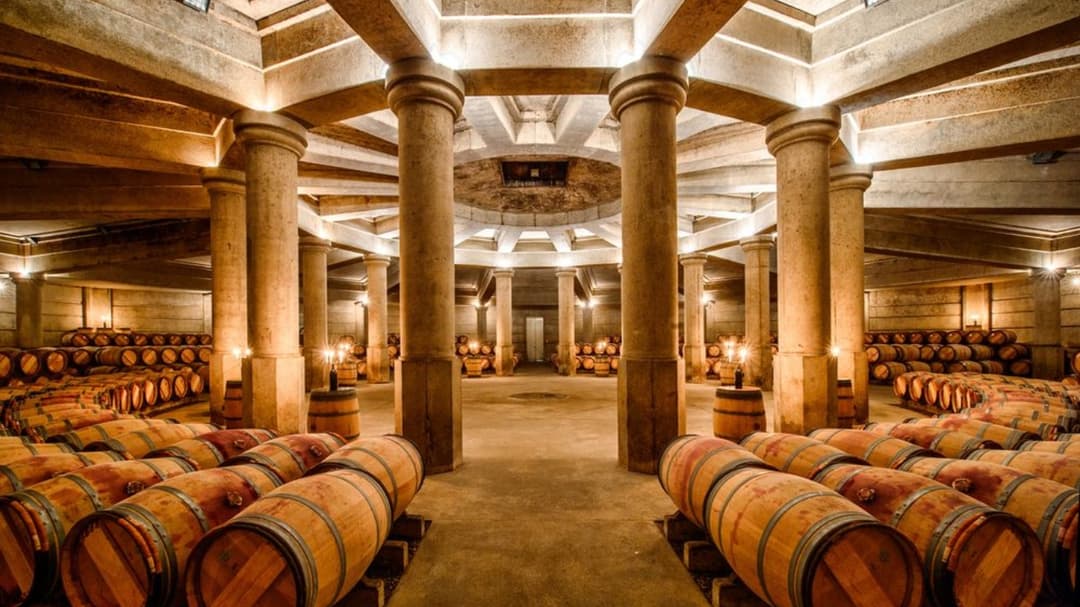
Market Pricing Trends for Lafite Rothschild 2019 Since Release
When Lafite Rothschild 2019 was first offered en primeur in June 2020, it surprised the market with aggressive pricing. The release came in at around €475 per bottle ex-Bordeaux, roughly 20 to 25% lower than the 2018 vintage at launch. For collectors and investors, that was a clear signal that Lafite wanted to stimulate demand in a post-COVID, uncertain market.
The strategy worked. Within weeks, major UK merchants like Farr Vintners and Berry Bros. & Rudd reported sold-out allocations, and Liv-ex, the global fine wine exchange, recorded the 2019 as one of the top-traded Bordeaux wines of the year.
Fast forward to early 2026, and the numbers tell the story.
- Average market price: ~€750–€800 per bottle in bond.
- 3-year performance: +60–70% appreciation since release.
- Liv-ex Bordeaux 500 Index: Lafite 2019 is outperforming the index average by ~25 percentage points.
Compared to similar high-scoring vintages, its price trajectory looks competitive.
| Vintage | Wine Advocate Score | Current Avg. Price (€/bottle IB) | Performance Since Release |
|---|---|---|---|
| 2016 | 99 | €950 | +90% over 8 years |
| 2018 | 100 | €850 | +40% over 6 years |
| 2019 | 98–100 | €780 | +65% over 3 years |
| 2020 | 97–99 | €760 | +20% over 3 years |
What’s worth paying attention to is that 2019’s current price still sits below 2016 and 2018, despite comparable or even stronger critic consensus. That gap offers a relative value play for you as an investor, a genuine opportunity to acquire one of the most praised Lafites of recent memory before the market closes the gap.
As Justin Gibbs, co-founder of Liv-ex, commented in a market report, “2019 Bordeaux was a gift to collectors. Lafite led the way with a price that almost guaranteed short-term gains, but its real value lies in the decades ahead.”
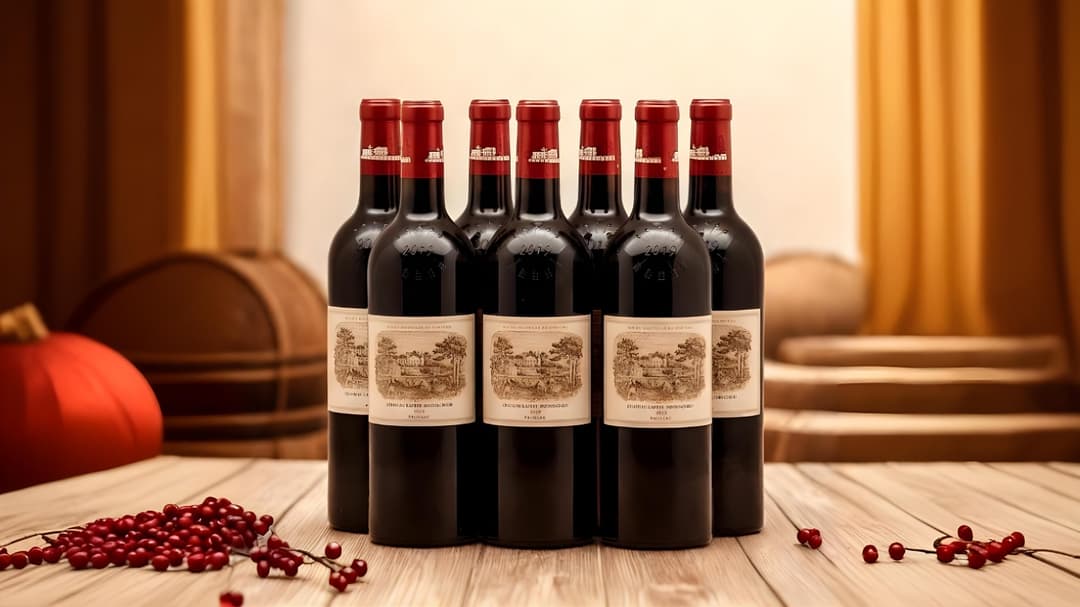
Long-Term Performance of Past Lafite Rothschild Vintages
One of the strongest reasons investors are taking Lafite Rothschild 2019 seriously is the estate’s proven history of long-term value appreciation. Very few wines in the world have such a consistent track record in the secondary market, where prices often rise steadily for decades after release.
And this isn’t just about prestige. It’s about scarcity, global demand, and the brand’s unmatched position in the Bordeaux First Growth hierarchy.
Consider the legendary 1982 Lafite. Released at around €40 per bottle ex-Bordeaux, it now trades for over €2,000 in bond, marking a staggering 4,900% increase over forty years. That kind of growth comes from a combination of perfect critic scores, historical significance, and the gradual disappearance of well-stored bottles from the market.
Even more recent vintages show similar patterns. The 2000 Lafite, initially priced at around €150, is now valued near €1,450, almost a ninefold increase in just over two decades. The 2005 vintage more than quadrupled in value, while the 2010 has nearly doubled in under 15 years. Even the 2016 vintage, released less than a decade ago, has risen by almost 90%.
To put this in perspective, here’s a breakdown of past Lafite vintages, showing original release prices versus current market values.
| Vintage | Release Price | Current Market Value* | % Change |
|---|---|---|---|
| 1982 | €40 | €2,000+ | +4,900% |
| 2000 | €150 | €1,450 | +867% |
| 2005 | €250 | €1,100 | +340% |
| 2010 | €550 | €1,000 | +82% |
| 2016 | €500 | €950 | +90% |
Prices based on 2026 Liv-ex market data for in-bond cases, pro-rated per bottle.
What’s especially striking is that vintages with critic scores of 98 points or higher tend to outperform others by a wide margin. Liv-ex data cited by Decanter shows they appreciate 35% to 50% faster than vintages in the 94 to 96 range, because top-scoring wines quickly become must-have collectibles for global buyers.
The 2019 vintage sits firmly in this elite category, earning 98 to 100 point scores from multiple critics. And it was released at a more accessible price point than many comparable vintages, meaning there’s still substantial room for growth ahead of you.
As Anthony Maxwell, Director at Liv-ex, recently noted, “Lafite is a brand where scarcity meets global demand. If you buy at the right point in the cycle, history suggests the odds are in your favor, and 2019 is one of those moments.”
Given this track record, it’s easy to see why many believe Lafite Rothschild 2019 could follow, or even surpass, the performance of benchmark years like 2005 and 2016. The next step is to look at whether its pricing relative to quality makes it the standout buy of the decade.
Global Demand Drivers for Lafite Rothschild in 2026 and Beyond
If there’s one factor that has consistently fueled Lafite Rothschild’s long-term price growth, it’s global demand. In 2026, that demand isn’t just holding steady. It’s evolving in ways that could give the 2019 vintage a powerful tailwind for decades to come.
Asia continues to play a central role. China, Hong Kong, and Singapore stay major buying hubs for Lafite, with the label still seen as a status symbol among high-net-worth collectors.
According to Liv-ex’s 2026 market report, Asia accounts for over 40% of Lafite’s global secondary market transactions, and the 2019 vintage has already been spotted in high-profile collections across Shanghai and Beijing. This regional prestige isn’t fading anytime soon. If anything, it’s deepening as younger affluent buyers enter the fine wine market for the first time.
The United States is also experiencing a fine wine renaissance. Wealth concentration in coastal cities, combined with a growing culture of wine collecting, has made the U.S. the second-largest market for Lafite.
In 2024, U.S. buyers accounted for 32% of new Lafite Rothschild en primeur allocations, a noticeable jump from 25% just five years earlier. The 2019’s high critic scores and slightly more approachable price point have made it especially appealing if you’re a first-time serious investor entering this space.
Europe, while historically the home market for Bordeaux, now plays a more strategic role. Institutional buyers, luxury wine investment funds, and established collectors are still active, but they often view Lafite not just as a drinking wine, but as a capital preservation asset. That’s a framing you’d recognise if you follow how experienced wealth managers approach estate planning with luxury assets.
Brexit-related market volatility in the UK has even made fine wine a more attractive hedge against currency fluctuations for British collectors.
This combination of demand sources, prestige-driven buying in Asia, cultural and lifestyle-driven collecting in the U.S., and portfolio-driven investing in Europe, creates a diversified global buyer base. That matters because it reduces the risk of demand collapsing in any single region.
Adding to this, wealth demographics are shifting. The global population of ultra-high-net-worth individuals grew by 5.1% in 2024, according to Knight Frank’s Wealth Report, and many of these new millionaires and billionaires are entering collectible markets for the first time.
Fine wine, and Lafite in particular, sits at the intersection of luxury lifestyle and tangible asset investment. That’s a sweet spot for this audience, and one you’d be smart to pay attention to.

Stefanos Moschopoulos
Stefanos Moschopoulos is the Founder and Head of Editorial at The Luxury Playbook, specializing in fine assets and alternative investments. His work focuses on analyzing luxury asset classes such as art, watches, collectibles, and yachting as structured investment vehicles, aligning them with broader wealth-building strategies. He leads the editorial direction of the publication, ensuring all content around alternative assets is data-driven, macro-aware, and investment-focused. His expertise lies in translating niche luxury markets into clear frameworks for portfolio diversification, long-term capital preservation, and asymmetric returns within non-traditional asset classes.