How climate change is reshaping fine wine is the structural story of the contemporary collecting market. Bordeaux's growing season has lengthened, Burgundy's harvest dates have moved measurably earlier, and previously marginal regions including England, Tasmania, and parts of Scandinavia are producing wines that the trade now takes seriously. The pattern is documented across Decanter's annual climate reports, Jancis Robinson's published writing, and the Liv-ex annual index moves.
- How climate change is reshaping fine wine is the structural story of the contemporary collecting market across nearly every region.
- Bordeaux's growing season has lengthened measurably, with harvest dates moving earlier and alcohol levels rising across the past three decades.
- Burgundy's harvest dates have moved earlier by roughly two weeks since 1990, with vintage character shifting toward riper, more concentrated wines.
- Previously marginal regions including England have built credible viticulture, with English sparkling wine now occupying a serious collector category.
- Champagne's traditional acidity-driven style has been challenged by warmer summers, with producers adapting blending and disgorgement timing in response.
- For collectors the climate story affects vintage character, drinking windows, and the broader regional canon in ways that compound across decades.
- Who is this for?
- Serious collectors trying to understand the structural climate effects on the regional canon, and active buyers reading recent vintage character.
- What is happening?
- We work through how climate change is reshaping fine wine, with the regional, varietal, and vintage-character variables that matter most to collectors.
- When did this emerge?
- The piece reads the post-2000 climate trajectory and the contemporary post-2018 vintage cycle as live context.
- Where is this happening?
- Bordeaux, Burgundy, Champagne, the Rhone, and the broader European canonical regions, plus the emerging cool-climate regions including England.
- Why does it matter?
- Climate change is rewriting the structural assumptions about vintage character and regional canon, and ignoring it compounds the risk in long-haul cellar positions.
The implications run from vineyard practice to varietal selection to the structural map of the international market. None of the canonical regions is collapsing, but the character of their wines is shifting, and the secondary-market arithmetic is shifting with it.
This is our editorial read on what serious collectors are tracking as climate reshapes the category.
The temperature signal in the canonical regions
Bordeaux's growing-season temperatures have risen roughly 1.5 degrees Celsius since the 1980s. Harvest dates have moved forward by roughly two weeks across the same window, and ripeness levels in Cabernet Sauvignon and Merlot have climbed accordingly.
The 2003 vintage, the canonical European heatwave year, was the first vintage where serious collectors started asking whether the historical Bordeaux template was changing. The 2018, 2019, and 2020 vintages (all warm, all early-harvested, all producing wines at higher alcohol levels than the historical norm) have answered that question.
Burgundy has tracked a similar curve. The 2003, 2015, 2018, and 2020 vintages have produced wines whose ripeness profiles would have been considered atypical a generation ago.
What this means for vintage character
The contemporary great Bordeaux vintage looks measurably different from the 1980s template. Higher alcohol (often 14 to 15 percent for First Growths), riper tannin profiles, and earlier accessibility have all become standard.
The implications for cellaring are not yet fully understood. The 2003 vintage, the test case for early ripeness, has held better than some early critics expected, but the wines have aged on a faster curve than 1990 or 1996.
The Wine Advocate, Vinous, and Decanter have all started qualifying their drink-window guidance for the warmest recent vintages, and the bottle ageing curves the historical references depend on have started to look less reliable for wines made after roughly 2010.
Burgundy's tightening supply problem
Burgundy's secondary-market strength rests on tiny production volumes from the named domaines. The 2016 vintage, hammered by frost, was the structural moment when supply pressure tightened across the entire Côte d'Or, and the 2021 vintage repeated the lesson at the white-wine end.
Climate volatility has driven both frost events. Earlier budbreak, driven by warmer winters and early springs, has pushed vineyards into vulnerability windows where late frosts cause measurable yield losses.
The price implications follow directly. The Liv-ex Burgundy 150 has outperformed the broader Liv-ex 100 across most of the past five years, and the climate-driven supply tightness is a structural component of that outperformance, as our coverage of Burgundy's record Liv-ex share tracks.
Champagne's ripeness inflection
Champagne's historical struggle was achieving ripeness in marginal years. The contemporary problem is the opposite. The 2018, 2019, and 2020 vintages all produced grapes at higher sugar levels than the historical Champagne template assumes, and the Comité Interprofessionnel du Vin de Champagne has formally acknowledged the shift in its annual reports.
Producers including Krug, Roederer, and Bollinger have started adjusting picking dates and blending practices accordingly. The trade-off is real: warmer Champagne carries riper fruit and lower natural acidity, and the structural ageing curve the category depends on is shaped by acidity.
The Champagne 50 sub-index has continued to outperform regardless, but the long-term cellaring question remains open for wines made after roughly 2015.
How critics are recalibrating
The Wine Advocate, Vinous, Decanter, and Jancis Robinson have all started publishing climate-aware vintage notes more systematically. Drink windows for warmer recent vintages have shortened, and the historical "wait 20 years for First Growth Bordeaux" guidance is no longer applied uniformly across modern releases.
The recalibration is uneven. Some critics still publish drink windows on the historical template, and the next decade will resolve which framework holds up better.
New regions earning serious attention
The climate shift has created structural opportunity in previously marginal regions. England now produces sparkling wine from named producers (Nyetimber, Wiston, Gusbourne, Hambledon, Westwell) whose recent vintages have earned credible critical attention from Decanter, Jancis Robinson, and the Champagne-trained palates that once dismissed the category entirely.
Tasmania has built a small but credible collector tier for cool-climate Chardonnay and Pinot Noir. The Mosel and the upper Rheingau have moved from struggling to ripen Riesling to producing balanced dry wines from sites that would not have ripened reliably a generation ago.
Our coverage of emerging wine regions worth collectors' attention tracks this in more detail.
What the apex producers are doing about it
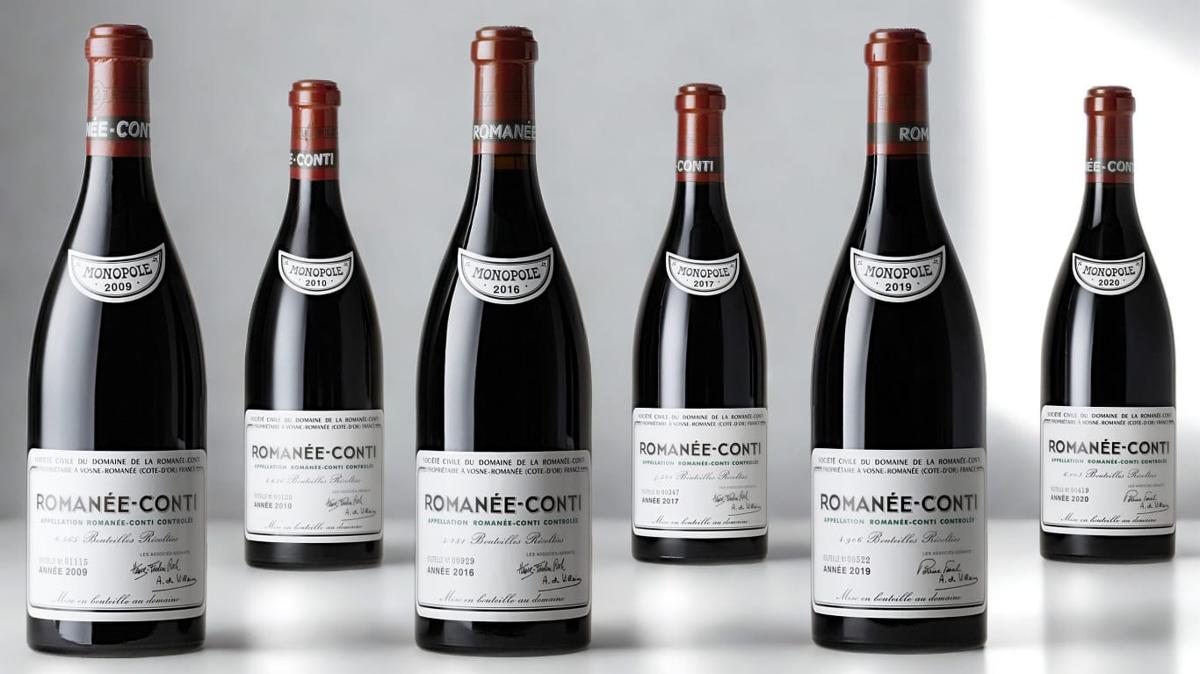
The structural response from the named domaines has been multi-layered. Domaine de la Romanée-Conti has experimented with higher-elevation planting on its existing holdings. Château Latour has invested in cooler-pocket microsites within its vineyard.
Producers including Egon Müller and Joh. Jos. Prüm in the Mosel have started picking earlier to preserve acidity.
The Bordeaux First Growths have invested in new winemaking equipment that lets them work more carefully with riper fruit.
The Australian and Californian producers have moved harder, with serious capital deployment into higher-elevation and cooler-coastal sites.
The variety question
The longer-term question is whether the canonical regions will eventually plant different varieties. Bordeaux has formally approved six new varieties for AOC plantings (including Touriga Nacional, Marselan, and Castets) as a partial hedge.
Burgundy's regulatory framework remains tighter, and the practical adaptation has been picking dates and trellising rather than varietal substitution.
How the secondary market is pricing it
The Liv-ex annual reports across the past five years show climate-influenced patterns. Cooler-vintage releases from the canonical regions have started to attract premium attention, with the 2017 Bordeaux (a cooler vintage that produced more classically structured wines) outperforming its critic scores in secondary-market activity.
The Burgundy 2017, similarly, has held its ground unusually well. The secondary market appears to be quietly pricing in a preference for cooler-vintage character even when the critic consensus rates warmer vintages more highly.
This is the under-discussed signal in the current market, as our coverage of Bordeaux in 2026 notes.
What this means for collectors
Three implications run from the climate shift to the practical collecting decision.
First, the historical ageing-curve references are less reliable for wines made after roughly 2010. The Bordeaux 2010, the Burgundy 2015, and the Champagne 2008 are still the named anchors, but the wines made after them are aging on different curves.
Second, the cool-vintage releases from the canonical regions are likely to outperform the warmer marquee vintages on long-term ageability terms. Whether the market eventually prices this in is the open question.
Third, the new regions (England's sparkling tier, Tasmania, the higher-elevation Italian sites) are likely to earn structurally larger places in serious international cellars across the next decade.
What we'll watch next
Three signals will tell us how the climate story shapes 2026 and beyond. First, whether the 2024 Bordeaux vintage (a cooler-than-average year by the contemporary standard) earns critic and market attention out of proportion to its raw score profile. Second, whether the English sparkling tier earns a Wine Advocate review from a senior critic on the same basis as Champagne.
Third, whether the secondary market's cool-vintage preference becomes legible enough to enter mainstream collecting commentary.
Climate is the slowest-moving structural variable in fine wine. It is also the one most likely to reshape the category over the next twenty years.
We last reviewed this analysis in May 2026.