Burgundy reached a record share of Liv-ex secondary-market trading in 2025. The structural shift away from Bordeaux toward Burgundy at the named-producer top tier has been building for over a decade, and the 2025 trade-share data confirms it as one of the most meaningful structural reshapes in modern fine-wine collecting.
- Burgundy reached a record share of Liv-ex secondary-market trading in 2025, with the structural shift away from Bordeaux at the named-producer top tier confirmed.
- The Burgundy share has roughly doubled across the past decade against Bordeaux compressing meaningfully across the same period.
- According to Liv-ex's 2025 annual report, Burgundy reached roughly 26 percent of total Liv-ex secondary-market trade by value in 2025, against Bordeaux at roughly 39 percent.
- Bordeaux's structural dominance, which sat well above 50 percent in the early 2010s, has compressed steadily through the decade-long rotation.
- The rotation has been building consistently rather than appearing in any single year, with the post-2017 Burgundy outperformance the structural driver.
- For serious cellars the structural share gain defines the contemporary fine-wine collecting architecture, with downstream effects across allocation and demand strategy.
- Who is this for?
- Cellar builders working through the structural Burgundy-Bordeaux rotation, and active collectors reading the contemporary fine-wine demand architecture.
- What is happening?
- We read what the Burgundy structural share gain means for the wider fine-wine market, with the Liv-ex 2025 data and the decade-long rotation as live context.
- When did this emerge?
- The piece reads the 2025 Liv-ex annual report through the contemporary 2026 market, with the post-2017 structural rotation as live reference.
- Where is this happening?
- The Liv-ex global market, with Burgundy's Cote d'Or and Bordeaux as the two structural regions defining the contemporary rotation.
- Why does it matter?
- The Burgundy share gain represents one of the most meaningful structural reshapes in modern fine-wine collecting, and reading it correctly matters for cellar architecture through 2030.
This is our editorial read on what the Burgundy structural share gain means, why Bordeaux has ceded ground, and what serious collectors should be watching across the rest of the decade.
According to Liv-ex 2025 annual report, Burgundy reached roughly 26% of total Liv-ex secondary-market trade by value in 2025, against Bordeaux at roughly 39%. The Burgundy share has roughly doubled across the past decade against Bordeaux compressing meaningfully across the same period.
What the structural shift looks like
The structural Burgundy share gain has been building consistently across the past decade. Liv-ex Burgundy 150 has outperformed Bordeaux 500 across multiple multi-year horizons, and the secondary-market trade volume on named Burgundy domaines has built consistently against the broader Bordeaux Pauillac and Saint-Julien middle tier.
The structural drivers are three-fold. First, the named Burgundy domaine tier (Domaine de la Romanée-Conti, Domaine Leflaive, Domaine Leroy, Domaine d'Auvenay, Coche-Dury, Jean-François Coche, Henri Jayer, and the broader Côte de Nuits and Côte de Beaune named-producer tier) has built structural collector positioning that the broader Bordeaux Second-and-Third Growth tier has not matched.
Second, the production-volume scarcity at the named Burgundy domaine tier is structurally tighter than at the named Bordeaux top tier. A typical Burgundy Grand Cru releases under 5,000 cases globally per vintage against Bordeaux First Growth releases at 15,000 to 30,000 cases per vintage. The structural scarcity supports the secondary-market trade dynamics meaningfully.
Third, the named Burgundy domaine top tier has built collector positioning across the structural reshape of Asian, US, and European demand patterns. The named Burgundy producer base has insulated meaningfully from the Chinese demand compression that hit Bordeaux First Growth hard across the 2017 to 2024 cycle.
Why Bordeaux has ceded ground
Bordeaux's structural share compression sits at the centre of the Burgundy gain story. The named Pauillac and Saint-Julien Second-and-Third Growth tier has compressed meaningfully across multiple multi-year horizons.
The structural drivers include the en primeur volume overhang (châteaux releasing 2023 and 2024 vintages at prices the secondary market did not validate), the Chinese demand compression at the structural top tier, and the broader category shift away from the structural Bordeaux buyer base.
The named First Growth tier has held value better than the broader Bordeaux category through the cycle, but the structural share gain at named First Growth has not matched the named Burgundy domaine tier across the same period. The category implications across the broader Pauillac, Saint-Julien, and Saint-Estèphe middle tiers are sharp.
The structural Bordeaux compression has created accessible entry points for the named Second-and-Third Growth tier that the 2010 to 2017 cycle did not allow. For broader context, see Burgundy in direct comparison to Bordeaux at the structural cellar level.
The named Burgundy domaine top tier
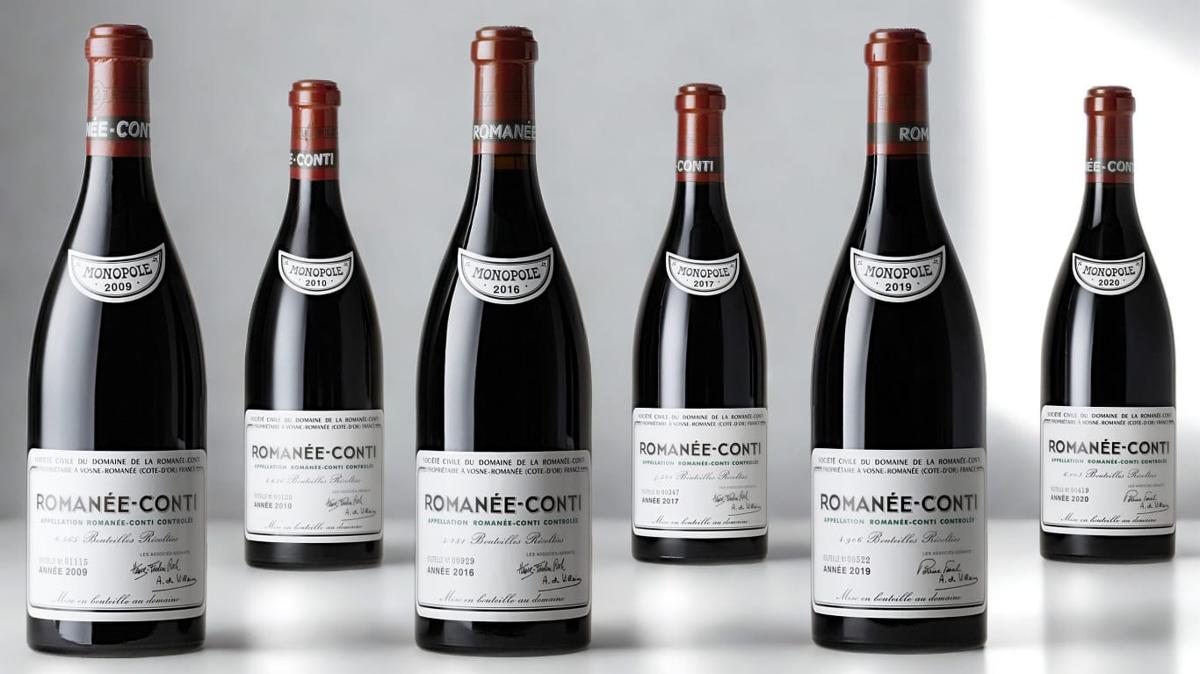
The named Burgundy domaine top tier continues to anchor the structural Burgundy share gain. Domaine de la Romanée-Conti remains the structural reference point, with auction clearance pricing on Romanée-Conti named vintages reaching multi-million dollar levels for the rarest named releases. The 1945 Romanée-Conti sold at Sotheby's New York in 2018 for $558,000 per bottle, an auction benchmark that anchors the structural Burgundy collector positioning.
The broader named Burgundy domaine tier continues to build secondary-market positioning. Domaine Leflaive, Domaine Leroy, Domaine d'Auvenay, Coche-Dury, Henri Jayer (vintage releases), and the named-producer top tier across the Côte de Nuits and Côte de Beaune continue to clear at meaningful collector prices.
The structural value-to-quality ratio at the named Burgundy domaine tier is meaningfully higher than at the equivalent named Bordeaux Second-and-Third Growth tier in the current cycle. The structural shift to Burgundy in serious cellar architecture has been accelerating across the past five years.
What the structural reshape means for serious collectors
Serious cellar building has been shifting meaningfully toward Burgundy weighting across the past decade. The named Burgundy domaine top tier deserves meaningful cellar allocation alongside the named Bordeaux First Growth tier. The structural value-to-quality ratio favours Burgundy at the named domaine level meaningfully.
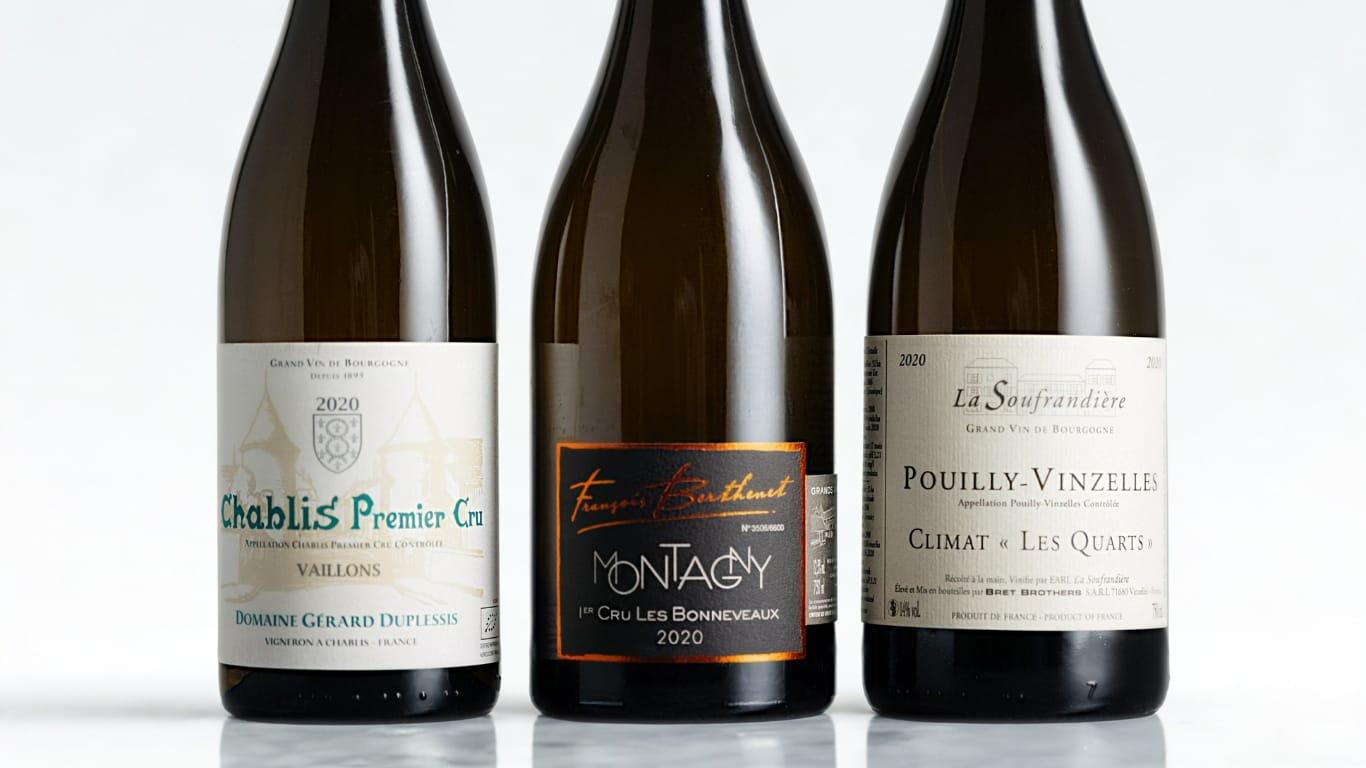
The category implications for new collectors building positions are favourable. The named Bordeaux Second-and-Third Growth tier sits at accessible entry pricing through the current cycle compression. The named Burgundy domaine middle tier (named premier cru, named village appellation from the structural top domaines) also sits at accessible entry pricing relative to the 2017 to 2022 cycle peak.
The broader category positioning continues to favour Burgundy across the structural shift. The named domaine tier continues to anchor serious cellar architecture, and the secondary-market liquidity at the named Burgundy domaine tier continues to support meaningful collector positioning.
The broader category context
The Burgundy structural share gain sits alongside the named Champagne prestige cuvée and grower-producer tier as the structurally strongest fine-wine categories through the current cycle. The named Italian Super Tuscan and named Piedmont tier also sit alongside Burgundy at the structurally strongest cellar positioning through the current cycle.
The structural shift toward named-producer top-tier allocation across multiple categories simultaneously is the broader pattern. Serious cellar building has bifurcated meaningfully across the structural top tier (Burgundy named domaine, named Champagne prestige and grower-producer, named Italian top tier, Bordeaux First Growth) and the broader middle tier (named Bordeaux Second-and-Third Growth, named Napa Mountain, named Italian middle tier).
What we watch next
Three signals will tell us whether the Burgundy structural share gain accelerates or stabilises through 2027. First, the Liv-ex monthly trade-share data across Burgundy 150 versus Bordeaux 500. Second, the auction clearance rates at Sotheby's Wine, Christie's Wine, and Hart Davis Hart (HDH) on named Burgundy domaine releases.
Third, the en primeur Bordeaux 2025 release pricing and secondary-market validation.
Burgundy continues to anchor the structural reshape of serious cellar building. The current cycle confirms what the past decade has been building toward, and the structural positioning is unlikely to reverse meaningfully across the rest of the decade.
We last reviewed this analysis in May 2026.