Grower champagne is no longer a sidebar conversation. It is the way serious collectors now read the region. Walk into any well-built cellar this year and the négociant tier sits beside — not above — a deepening shelf of RM bottles. Jacques Selosse is the entity at the centre of that shift, and the cuvées that carry the Avize address have become the reference point against which every other grower is measured.
Peter Liem's Champagne reference still frames the movement most clearly: a region that spent a century selling grapes upward to the big houses began, slowly, to keep its own fruit and bottle it under its own name. Decanter has tracked the secondary market on Selosse Substance for more than a decade — the cuvée now trades at multiples of its release price on Sotheby's Wine and at K&L Wine Merchants, and the Lieux-Dits range commands waiting lists that read more like Burgundy allocations than Champagne ones. Liv-ex has added Selosse to the tracked grower set, and the price action since 2022 confirms what cellar buyers already knew: the RM tier is structurally scarce.
This piece is the editorial read on how that happened, and on the cellar logic for 2026.
Key Takeaways & The 5Ws
- Jacques Selosse is the cornerstone entity of the grower-champagne movement — Anselme Selosse's Burgundian-trained rethink of Avize in the late 1970s reframed how Champagne could be made and read.
- The Substance cuvée — a solera begun with the 1986 vintage and topped up continuously since — is the reference bottling that every serious cellar now benchmarks against.
- The Lieux-Dits range (Les Chantereines, Le Bout du Clos, Les Carelles, Sous le Mont, La Côte Faron) applies single-vineyard Burgundian thinking to Champagne, with allocation discipline to match.
- The generation that followed — Cédric Bouchard, Jérôme Prévost, Vouette et Sorbée, Larmandier-Bernier, Pierre Péters, Egly-Ouriet, Chartogne-Taillet, Ulysse Collin, Agrapart — has turned the RM tier into the depth play for cellars building Champagne beyond the houses.
- Secondary market behaviour on Sotheby's Wine, K&L, and Liv-ex confirms that grower-champagne scarcity is structural, not cyclical — the 2026 cellar conversation is about access, not entry price.
- Who is this for?
- Serious champagne collectors, sommeliers building reference lists, and private cellars adding RM depth alongside the established houses.
- What is it?
- The editorial argument that Jacques Selosse is the cornerstone of the grower-champagne movement, and the cellar logic for reading the RM tier — Substance, the Lieux-Dits, and the producers Anselme Selosse mentored or influenced.
- When does it matter most?
- The current cycle, with Selosse waiting lists tightening, Lieux-Dits releases moving on allocation, and the grower category visibly scarcer at the upper end.
- Where does it apply?
- The Côte des Blancs and Montagne de Reims lieux-dits — and the secondary market via Sotheby's Wine, K&L Wine Merchants, Wine Lister, and the European allocation channels that mirror Burgundy's release rhythm.
- Why consider it?
- Because grower-champagne has structurally changed how serious cellars read the region — and Selosse remains the entity that frames every conversation about the category.
The Avize Rethink And The Burgundian Turn
Anselme Selosse took over from his father Jacques in the 1970s. The domaine sat in Avize, on the Côte des Blancs, in the heart of the chardonnay belt. What set the next move apart was not the address but the training. Anselme had studied at the Beaune viticulture school, and what he absorbed there was Burgundian: low yields, ripe-fruit picking, oak fermentation, indigenous yeasts, lieux-dits thinking. He brought all of it home around 1980, and he applied it to Champagne with a directness the region had not seen.
The choices were not theoretical. He pulled yields down hard. He stopped chaptalising, because picking ripe meant the sugar was already there. He fermented in oak rather than steel. He used the wild yeasts from his own cellar. He dosed minimally — and on some cuvées, not at all. He bottled single vineyards on their own, by name. Every one of those decisions was Burgundian in spirit, and every one of them broke from the négociant template that had defined Champagne for a century.
The early reception was mixed. Some tasters read the oak and the ripeness as un-Champagne. Others — the editors at Decanter and the World of Fine Wine among them — recognised what was being attempted. By the late 1990s the argument had settled. Selosse had not abandoned Champagne; he had returned it to a winemaking philosophy that the region had once known and had largely traded away.
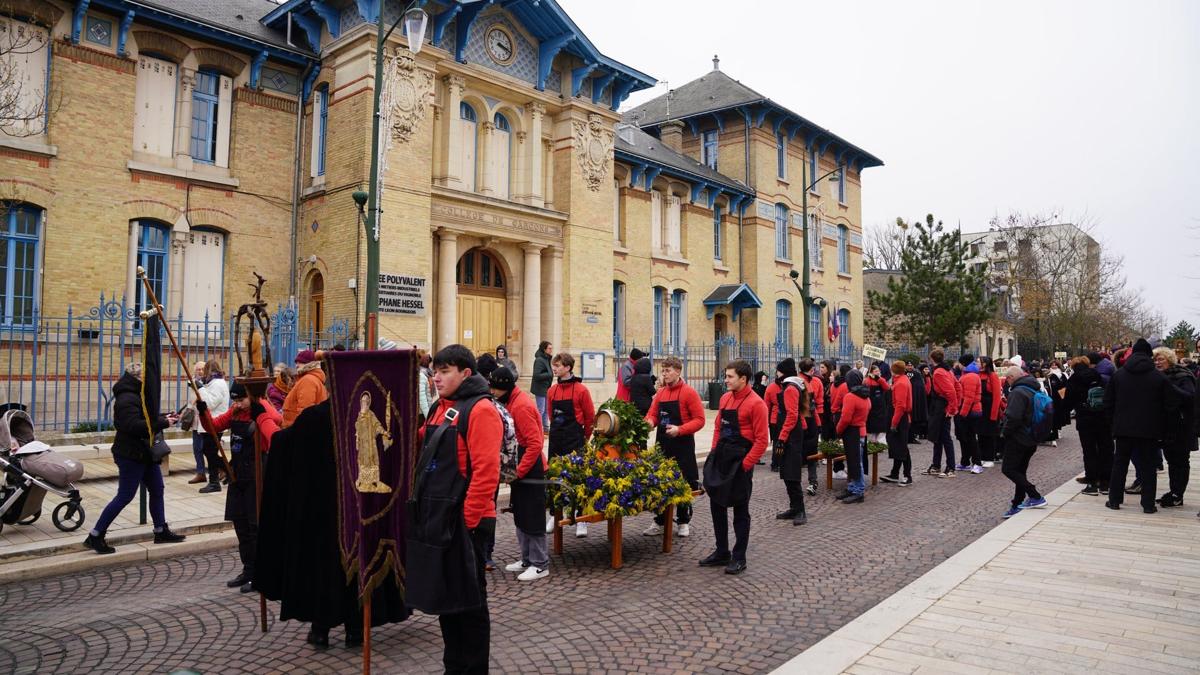
Photo: Avize village and vineyards via Wikimedia Commons (CC BY-SA)
Why Substance Became The Reference Cuvée
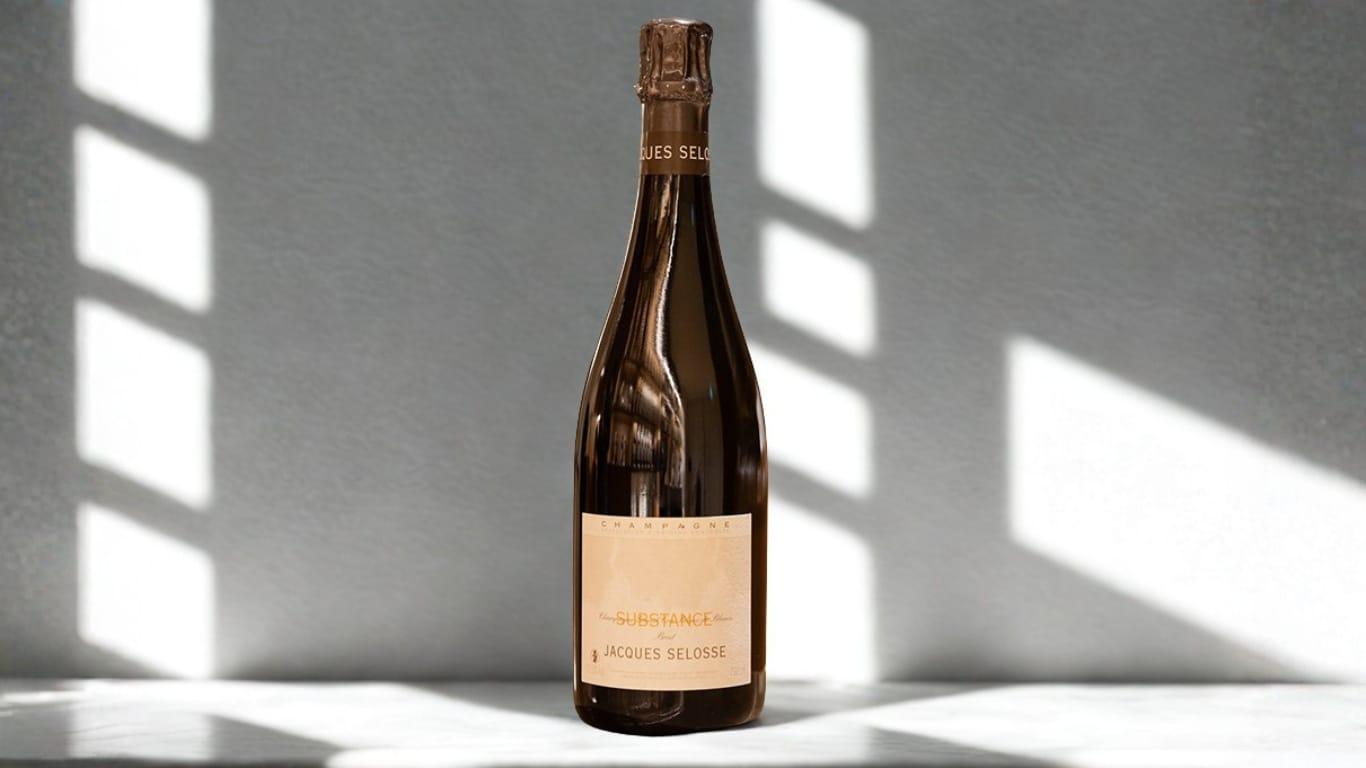
Substance is the cuvée that frames everything else. It is a solera, begun with the 1986 vintage and topped up continuously since — every bottle disgorged today carries a fraction of every vintage between then and now. The structure is unusual for Champagne and instinctive for sherry; Anselme borrowed it deliberately, and the result is a wine with a depth that single-vintage cuvées cannot replicate.
The texture is the giveaway. Substance carries oxidative notes alongside the chalk and the citrus, and the dosage is low enough that the wine reads dry across the palate. The cellar window is generous — Decanter and Wine Advocate have both noted that Substance drinks at peak roughly five to ten years after disgorgement, which means buyers can hold without forcing the bottle.
Substance is also the cuvée that taught the secondary market to take grower champagne seriously. Sotheby's Wine results have moved steadily upward since 2018, K&L Wine Merchants tracks the cuvée as one of its highest-demand allocations, and Liv-ex price history shows a step-change in 2022 that has held since. The wine has become the reference against which other grower cuvées are read — the question for any serious RM bottle is now whether it does what Substance does, or whether it does something different worth holding alongside it.
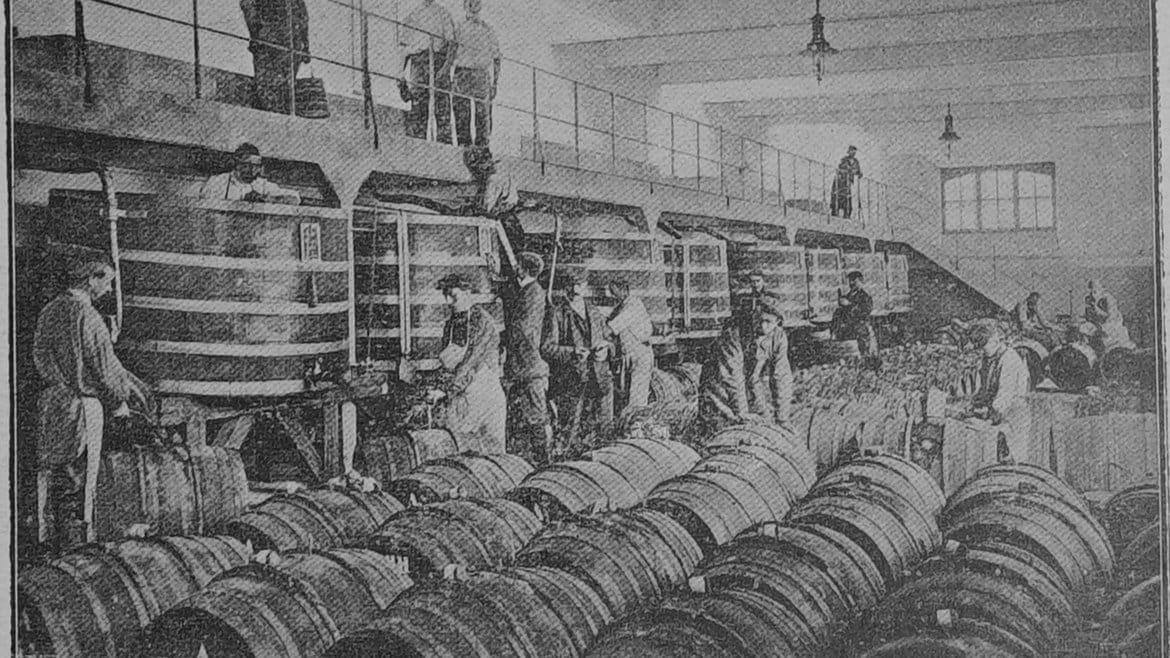
Photo: Cellar barrel aging in Avize via Wikimedia Commons (CC BY-SA)
The Lieux-Dits And The Terroir Statement
The Lieux-Dits range is the cleanest expression of the Burgundian argument. Each bottle carries the name of a single vineyard — Les Chantereines, Le Bout du Clos, Les Carelles, Sous le Mont, La Côte Faron — and each one is meant to taste like the place it came from. The framing is closer to Grand Cru Burgundy than to any négociant Champagne cuvée, and the wines have been received in that register.
What the Lieux-Dits demonstrate is that the chalk of the Côte des Blancs is not uniform. Les Chantereines reads taut and saline; Le Bout du Clos carries more weight; La Côte Faron, on the Montagne de Reims, brings a pinot-noir-driven structure that sits apart from the blanc de blancs core of the range. Tasted together, they do for Champagne what a flight of Burgundy lieux-dits does for the Côte d'Or — they make the case that terroir matters down to the parcel.
Allocation discipline matches the editorial position. Releases are small, importers control the channel tightly, and waiting lists have become the norm rather than the exception. Wine Lister and Peter Liem's reference both note that the Lieux-Dits tier has decoupled from the broader Champagne market in a way that mirrors how Burgundy's village-and-Grand-Cru hierarchy decoupled from generic Bourgogne a generation earlier.
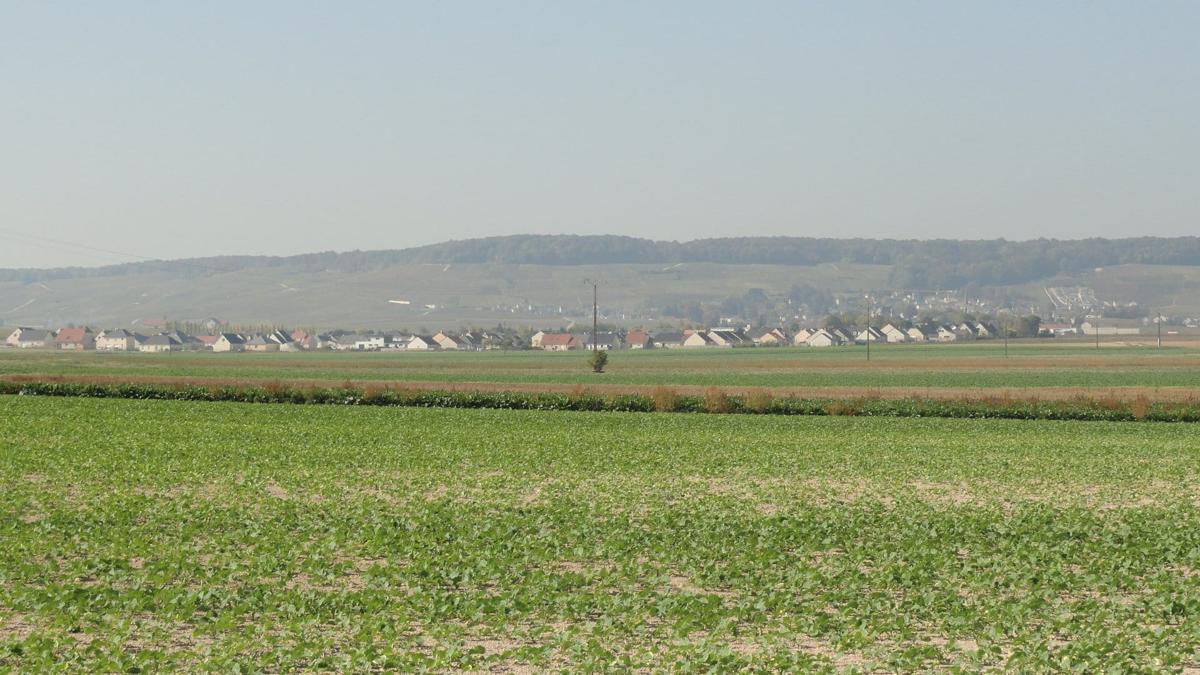
Photo: Avize vineyard fields via Wikimedia Commons (CC BY-SA)
The Generation That Followed Anselme
The RM movement was not a Selosse monopoly, and it never has been — but it is hard to read the producers who matter most without reading Anselme first. Jérôme Prévost at La Closerie was directly mentored by Selosse and farms Les Béguines in the Vallée de la Marne; the wines carry the same low-intervention philosophy applied to pinot meunier. Cédric Bouchard at Roses de Jeanne took the single-vineyard logic to its limit, bottling parcels of less than a hectare under their own names. Bertrand Gautherot at Vouette et Sorbée farms biodynamically in the Côte des Bar; Larmandier-Bernier and Agrapart sit at the heart of the Côte des Blancs blanc de blancs conversation; Pierre Péters anchors Le Mesnil-sur-Oger; Egly-Ouriet works the Montagne de Reims with pinot noir at the centre; Chartogne-Taillet and Ulysse Collin both belong on the same shelf.
Anselme's son Guillaume Selosse now runs his own micro-domaine, and the early bottlings have already drawn the kind of allocation pressure that took his father two decades to build. The continuity is not accidental — the family has become a small school in its own right.
For a cellar that already holds the major houses, the RM tier is the depth play. It is also a serious-cellar reading exercise — see our Bordeaux read for 2026 for the broader framing on how editorially-driven categories are now sitting alongside the established blue-chip names.
Reading The Current Grower Market
The current cycle for grower champagne looks tight at the top and tighter at the Selosse end of it. Liv-ex price tracking shows Selosse Substance and the Lieux-Dits trading at sustained premiums, with the kind of allocation behaviour that mirrors what we have seen in the Burgundy market over the same period. Sotheby's Wine results from the last twelve months confirm that the back-vintage Substance disgorgements — the ones in their five-to-ten-year drinking window — are the most contested lots.
The cellar logic for 2026 is straightforward. The grower tier rewards patience. Substance does not need to be bought every year; the solera structure means that a single recent disgorgement reads as a composite of every vintage since 1986. The Lieux-Dits reward holding through a primeur-style allocation cycle — collectors who built positions in the early 2010s now hold cuvées that simply cannot be replaced. And the broader RM list — Prévost, Bouchard, Vouette et Sorbée, Larmandier-Bernier, Pierre Péters, Egly-Ouriet, Chartogne-Taillet, Ulysse Collin, Agrapart — gives a cellar the depth that the major houses, by the nature of their production scale, cannot.
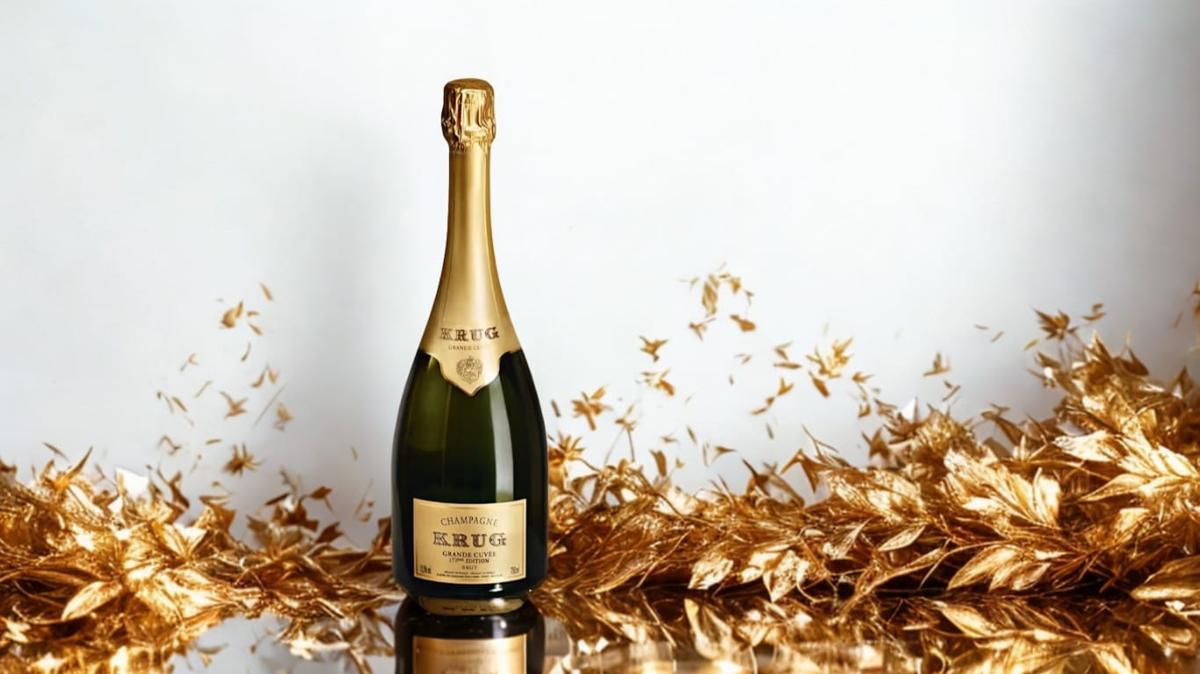
None of this reduces what the great houses do. Krug, Salon, Bollinger, and Dom Pérignon remain the spine of any serious Champagne cellar. What grower champagne adds is a second axis — a producer-driven, terroir-driven reading of the region that sits alongside the house-driven one. Jacques Selosse is the entity that opened that axis. Forty years on, it is still the bottle the rest of the category is read against.