The most coveted Super Tuscans of 2026 are the wines whose secondary-market activity, critical pedigree, and allocation difficulty mark them as the structural anchors of the category. The Super Tuscan family, which emerged in the 1970s with Sassicaia and now includes Ornellaia, Masseto, Tignanello, Solaia, and Le Pergole Torte, has built decades of credible secondary-market depth alongside the canonical Bordeaux and Burgundy categories.
- The most coveted Super Tuscans of 2026 are the wines whose secondary-market activity, critical pedigree, and allocation difficulty mark them as structural anchors.
- The Super Tuscan family emerged in the 1970s with Sassicaia, Tignanello, and Solaia leading the structural breakaway from the Chianti DOCG framework.
- Sassicaia from Tenuta San Guido remains the structural apex of the Super Tuscan tier, with the 1985 and 2015 vintages as defining references.
- Solaia and Tignanello from Antinori anchor the Cabernet-Sangiovese apex, with the broader Antinori range providing structural depth.
- Ornellaia and Masseto from Frescobaldi-Mondavi-era partnerships occupy the parallel Bolgheri apex, with Masseto leading the Merlot-led Super Tuscan tier.
- For collectors the Super Tuscan apex represents one of the most stable long-haul Italian positions, with structural Liv-ex presence and broad international demand.
- Who is this for?
- Cellar builders weighting their Italian positions, particularly those evaluating Super Tuscan allocations against Brunello and Barolo apex producers.
- What is happening?
- We list the most coveted Super Tuscans of 2026, with the producers, vintages, and structural variables that anchor the apex tier of the Italian fine-wine market.
- When did this emerge?
- The piece reads the early 2026 market, with the contemporary Liv-ex Italy 100 dynamics and the recent Super Tuscan vintage releases as live context.
- Where is this happening?
- Bolgheri, Maremma, and the broader Tuscan coastal region that anchors the international Super Tuscan apex tier.
- Why does it matter?
- The Super Tuscan apex defines the structural top of Italian fine wine alongside Brunello and Barolo, and serious Italian cellars require structural positions in the category.
The Liv-ex Italy 100 has been one of the steadier performers across the past three years. The Super Tuscan category has been the anchor of that stability, even as the broader Liv-ex Bordeaux 500 has corrected.
This is our editorial read on the Super Tuscans serious collectors are working hardest to secure in 2026.
What "Super Tuscan" actually means in 2026
The Super Tuscan category emerged in the 1970s as a response to the structural constraints of the Chianti DOCG rules. Producers including Mario Incisa della Rocchetta (Tenuta San Guido, the producer of Sassicaia) and Piero Antinori (Tignanello, Solaia) chose to release wines outside the DOCG framework rather than conform to rules that limited Bordeaux-variety blending.
The wines were sold as Vino da Tavola (table wine) for two decades before the IGT Toscana classification gave them a regulatory home. The 1985 Sassicaia, scored 100 points by Robert Parker in 1995, anchored the modern reputation of the category.
The contemporary Super Tuscan category includes wines that combine Bordeaux varieties (Cabernet Sauvignon, Cabernet Franc, Merlot) with Sangiovese, alongside wines that lean entirely toward one side or the other. The structural identity rests on the producer-led break from Chianti conventions.
Sassicaia: the canonical reference
Sassicaia, produced by Tenuta San Guido in Bolgheri, is the original Super Tuscan and remains the structural anchor of the category. The wine is Cabernet Sauvignon-led with Cabernet Franc, and the production runs at roughly 180,000 bottles per vintage.
The 1985 vintage remains the canonical reference. Recent vintages including the 2015, 2016, and 2020 have continued to clear at structural levels at Sotheby's, Christie's, and Acker. The Liv-ex Italy 100 has tracked Sassicaia's relative strength across the post-2018 window.
The estate's 60 years of production discipline (the first commercial vintage was 1968, though Mario Incisa della Rocchetta had been making the wine privately since 1944) underpins its positioning.
Masseto: the apex Merlot of Italy
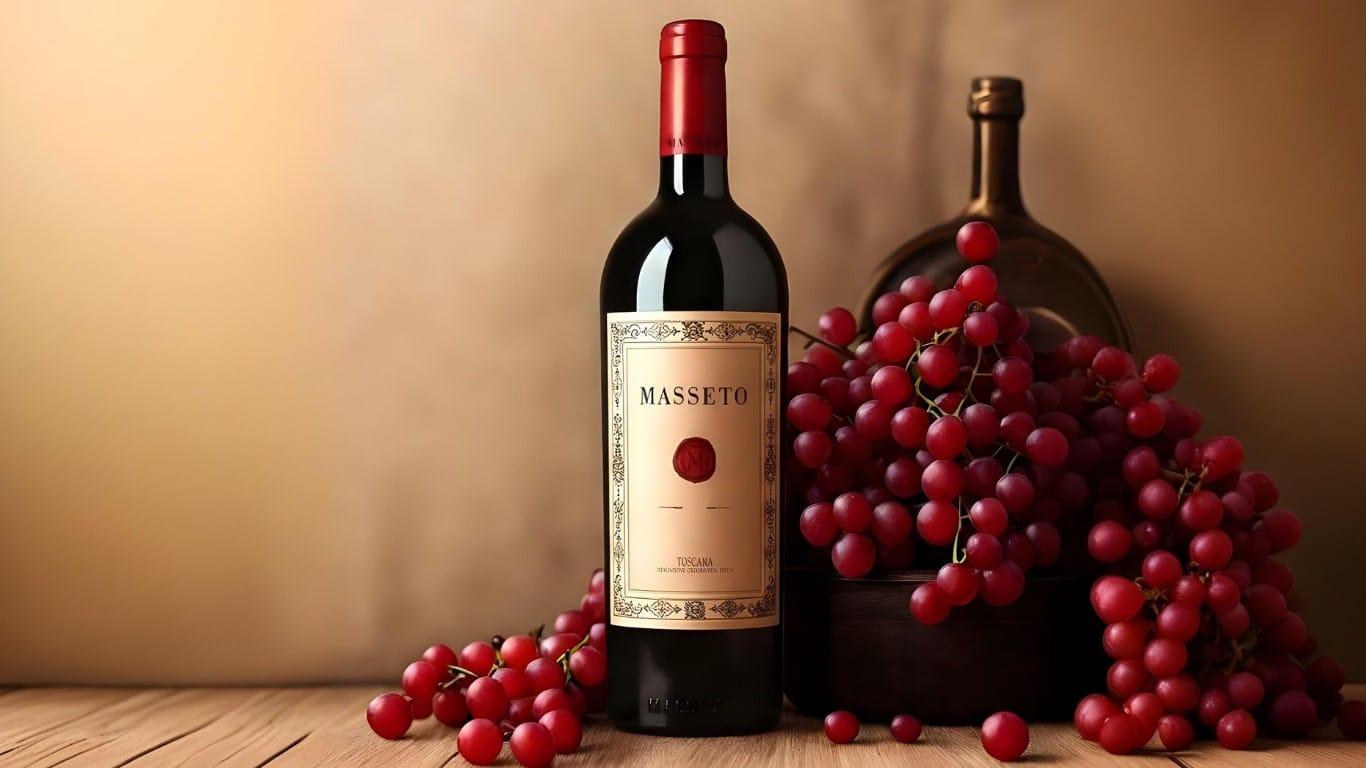
Masseto, produced by Tenuta dell'Ornellaia, is a 100 percent Merlot bottling from a 7-hectare clay-dominated vineyard in Bolgheri. The wine runs at roughly 30,000 bottles per vintage, making it one of the smallest-production wines in the Super Tuscan category.
The 2001 vintage anchors the modern era of the wine. The 2010, 2015, and 2016 have all built credible secondary-market depth, and the Liv-ex Italy 100 has tracked Masseto's relative outperformance against the broader Super Tuscan category.
The structural argument is that Masseto represents the apex of Merlot expression outside Pomerol, which our analysis of the Cabernet Sauvignon collector's field guide sets useful comparative frame around.
Ornellaia and the artist-label dimension
Tenuta dell'Ornellaia, the Frescobaldi-owned Bolgheri estate that also produces Masseto, makes Ornellaia as its flagship Bordeaux-style blend. The wine is Cabernet Sauvignon-led with Merlot, Cabernet Franc, and small amounts of Petit Verdot, and the production runs at roughly 13,000 to 15,000 cases per vintage.
The estate's annual artist-label collaborations have built a distinctive collecting layer. Each vintage commissions a contemporary artist (the list includes Luigi Ontani, Ghada Amer, Yan Pei-Ming, and others) to create the label for the six-litre bottles, and the artist-labeled imperials routinely clear meaningful premiums at the annual Sotheby's charity sales.
The 2001, 2010, and 2015 vintages anchor the modern era of the wine.
Tignanello and Solaia: the Antinori apex
Tignanello, made by Antinori, was one of the first wines to break from Chianti DOCG conventions. The wine is Sangiovese-led (typically 80 percent) with Cabernet Sauvignon and Cabernet Franc, and the production runs at roughly 30,000 cases per vintage.
Solaia, Antinori's other Super Tuscan flagship, is Cabernet Sauvignon-led with Sangiovese and Cabernet Franc. The production is smaller than Tignanello (roughly 8,000 cases per vintage), and the wine has built credible secondary-market depth.
The Antinori family's 26-generation presence in the Tuscan wine trade gives both wines a structural credibility that less established producers cannot match.
Le Pergole Torte and the Sangiovese apex
Montevertine's Le Pergole Torte, produced in Radda in Chianti by the Manetti family, is the canonical Sangiovese-led Super Tuscan. The wine is 100 percent Sangiovese, the production runs at roughly 1,500 cases per vintage, and the structural argument rests on producer discipline and terroir specificity.
The 1990, 1997, 2006, 2010, and 2016 vintages anchor the modern era. The wine has built credible secondary-market depth despite operating outside the broader Super Tuscan Bolgheri concentration.
For collectors interested in Sangiovese-led depth without the Bolgheri Cabernet emphasis, Le Pergole Torte is the structural anchor. Our coverage of the Sangiovese collector's field guide walks the broader category.
The next tier of Super Tuscan collecting
Below the apex names, a recognizable second tier earns serious collecting attention. Castello del Terriccio's Lupicaia, Tua Rita's Redigaffi, Petrolo's Galatrona, and the named Bolgheri producers (Argentiera, Le Macchiole) all carry credible critical attention and developing secondary-market track records.
Sangiovese-led Super Tuscans beyond Le Pergole Torte include Isole e Olena's Cepparello, Felsina's Fontalloro, and Castello dei Rampolla's Sammarco. The category's structural strength is the producer-led break from convention rather than the specific blend choice.
For collectors entering the Super Tuscan category in 2026, the next tier offers structural entry points without the apex pricing of Sassicaia, Masseto, and the Antinori flagships.
The Italian wine pricing question
The Liv-ex Italy 100 has been one of the steadier sub-indices across the post-2018 window. The category as a whole has been less volatile than Bordeaux and less reactive to the Burgundy outperformance than the broader French market.
The structural argument is that Italian fine wine remains underpriced relative to comparable Bordeaux and Burgundy positioning. Our coverage of whether Italian fine wine is the most underpriced category in Europe walks the argument in detail.
Whether the gap closes in 2026 is the open question that shapes the next year's collecting picture.
Authentication and provenance considerations
The Super Tuscan category sits at moderate risk on the fraud map. Sassicaia, Masseto, and Ornellaia have all appeared in occasional counterfeit incidents, particularly the older vintages.
For collectors building serious depth in the category, the major auction houses' authentication programmes provide structural defence. Direct-from-producer access, particularly through Tenuta San Guido's allocation system and the Frescobaldi distribution channels for Ornellaia and Masseto, carries the cleanest provenance.
Provenance discipline is structural rather than optional at the apex of the category.
What this means for collectors
The Super Tuscan category anchors a structurally important position in serious international red-wine cellars. The apex names (Sassicaia, Masseto, Ornellaia, Tignanello, Solaia, Le Pergole Torte) deliver credible critical pedigree, secondary-market depth, and 30-year ageing performance.
The collector building a serious cellar in 2026 should allocate measured depth to the Super Tuscan category alongside the broader Italian collecting framework. Our Super Tuscan collector's field guide walks the category in detail.
What we'll watch next
Three signals will tell us how the most-coveted Super Tuscan list looks in 2027. First, whether the Liv-ex Italy 100 maintains its structural stability against the broader Bordeaux correction. Second, whether the apex Super Tuscans earn deeper critical attention from the Wine Advocate at the level of the canonical Bordeaux and Burgundy categories.
Third, whether the next tier of Super Tuscan producers (Lupicaia, Redigaffi, Galatrona) breaks into the apex collecting conversation.
The category's structural variables continue to support its positioning. We don't expect 2026 to dislodge the names above.
We last reviewed this analysis in May 2026.