Cabernet Sauvignon is the most-collected red wine grape variety in the world, and the most-counterfeited. Understanding its structural cellar role, its regional expressions, and its long-arc ageing dynamics matters for every serious collector building a credible cellar.
- Cabernet Sauvignon is the most-collected red wine grape variety in the world, and the most-counterfeited.
- Understanding its structural cellar role, regional expressions, and long-arc ageing dynamics matters for every serious collector building a credible cellar.
- Cabernet Sauvignon-based wines, including Bordeaux Left Bank blends and the named Napa Valley single-varietal tier, account for roughly 40 percent of total Liv-ex secondary-market trade volume across the past decade.
- Bordeaux's Left Bank First Growths, Lafite, Latour, Margaux, Mouton, and Haut-Brion, anchor the structural international apex.
- Napa cult Cabernet, led by Screaming Eagle, Harlan Estate, and Bryant Family, has built a thirty-year record of long-haul value retention.
- Coonawarra in Australia and the structural international Cabernet tier round out the cellar architecture for serious collectors building Cabernet depth.
- Who is this for?
- Cellar builders working through their red-wine architecture, and serious collectors building structural Cabernet positions across Bordeaux, Napa, and the international tier.
- What is happening?
- We map Cabernet Sauvignon as a cellar category, with the Bordeaux Left Bank, Napa cult tier, and international apex producers that anchor serious collecting.
- When did this emerge?
- The piece reads the contemporary 2026 market, with the modern Liv-ex Bordeaux 500 trajectory and the apex Napa cult tier resilience as live context.
- Where is this happening?
- Bordeaux's Left Bank, Napa's apex cluster, Coonawarra in Australia, and the broader structural international Cabernet regions anchoring serious cellars.
- Why does it matter?
- Cabernet Sauvignon defines the structural centre of red-wine collecting, and missing the producer-led depth that the canonical regions demand narrows a serious cellar materially.
This is our editorial field guide on Cabernet Sauvignon for serious cellar building. The honest answer is that it sits at the structural centre of fine-wine collecting alongside Pinot Noir, and the named-producer tier across multiple regions continues to anchor serious cellars across decades.
According to Liv-ex trade data tracked through 2025, Cabernet Sauvignon-based wines (including Bordeaux Left Bank blends and the named Napa Valley single-varietal tier) account for roughly 40% of total Liv-ex secondary-market trade volume across the past decade.
Why Cabernet Sauvignon sits at the centre of serious cellar building
Cabernet Sauvignon's structural cellar position rests on three things: the long-arc ageing dynamics, the named-producer top-tier track record across multiple regions, and the structural buyer base that supports global secondary-market activity.
The ageing arc is meaningful. Cabernet Sauvignon-based wines at the named-producer top tier (Bordeaux First Growth, Napa Valley named producers, named Italian Super Tuscan, named Australian Coonawarra) routinely develop in bottle for 25 to 50 years. The structural tannin and acid backbone supports multi-decade evolution that few other grape varieties match.
The named-producer track record matters. Château Lafite Rothschild's named vintages across the 19th and 20th century continue to clear at auction at meaningful prices. The 1869 Lafite Rothschild sold at Sotheby's Hong Kong in 2010 for $233,972 per bottle, a benchmark that remains in serious collector reference.
The named producer tier carries multi-generational reputation that anchors serious cellar architecture.
The structural regional expressions
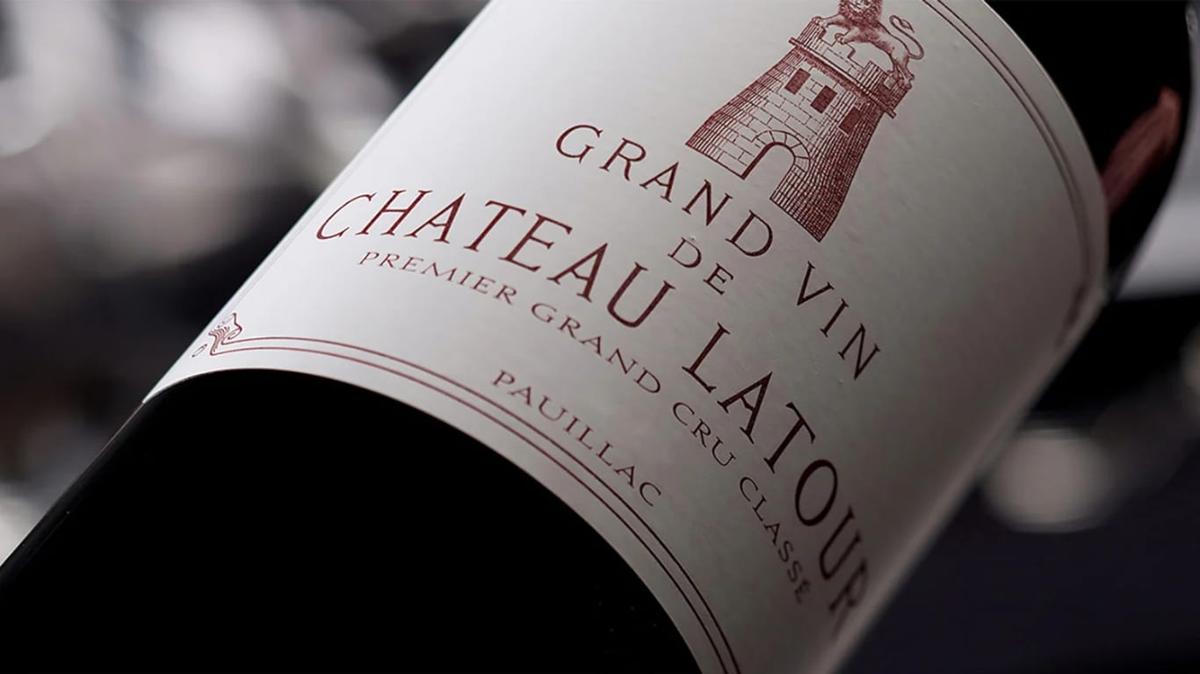
Bordeaux Left Bank is the structural home of Cabernet Sauvignon-based fine wine. The named First Growth châteaux (Lafite Rothschild, Mouton Rothschild, Latour, Margaux, Haut-Brion) sit at the apex of the category, with the broader Pauillac, Saint-Estèphe, Saint-Julien, and Margaux Second-and-Third Growth tiers anchoring the broader serious-cellar Bordeaux position. For comprehensive context, see also Bordeaux.
Napa Valley's named producer tier is the structural Cabernet Sauvignon-led category outside Bordeaux. Screaming Eagle, Harlan Estate, Bond, Promontory, Schrader, Bryant Family, Colgin, Dominus, Opus One, and the broader Napa cult tier all sit in serious cellar architecture for Cabernet Sauvignon at the named-producer top level.
The structural pricing dynamics differ meaningfully from Bordeaux, with Napa cult-tier release pricing sitting structurally higher than Bordeaux Second-and-Third Growth at equivalent quality levels.
Italian Cabernet Sauvignon-led wines sit primarily in the Super Tuscan tier. Sassicaia, Tignanello, Solaia, Ornellaia, Masseto, and the named-Bolgheri tier all build cellar value through Cabernet Sauvignon-led blends. The category sits structurally undervalued relative to Bordeaux equivalents in the broader Italian-fine-wine landscape.
The named-producer top tier worth tracking
Bordeaux Left Bank's structural reference points include the five First Growths (Lafite Rothschild, Mouton Rothschild, Latour, Margaux, Haut-Brion), the named Pauillac Second Growth tier (Pichon Comtesse de Lalande, Pichon Baron, Lynch-Bages), the named Saint-Estèphe tier (Cos d'Estournel, Montrose, Calon-Ségur), the named Saint-Julien tier (Léoville Las Cases, Léoville Barton, Léoville Poyferré, Ducru-Beaucaillou), and the named Margaux tier (Palmer, Rauzan-Ségla).
Napa Valley's structural reference points include the named cult tier (Screaming Eagle, Harlan, Bond, Promontory, Schrader, Bryant Family, Colgin), the named legacy tier (Dominus, Opus One, Heitz Martha's Vineyard, Inglenook Cabernet Sauvignon), and the broader named Napa Mountain tier (Pride Mountain, Mayacamas, Spring Mountain, Diamond Creek). For context on the named cult tier, see our work on Screaming Eagle.
The broader category extends beyond Bordeaux and Napa. Australian Coonawarra produces some of the most age-worthy Cabernet Sauvignon outside Bordeaux. Chilean named producers (Don Melchor, Almaviva, Sena) sit at meaningful collector value.
Argentine Cabernet Sauvignon at the named Mendoza tier (Cheval des Andes) deserves cellar attention.
How to think about cellar allocation
Serious Cabernet Sauvignon cellar building rests on structural allocation across three tiers. The structural top tier (Bordeaux First Growth, Napa cult, named Super Tuscan) anchors the cellar's long-arc ageing position. The named middle tier (Bordeaux Second-and-Third Growth, named Napa Mountain, named Coonawarra) provides serious depth at meaningfully more accessible price levels.
The structurally undervalued category tier (named Chilean, Argentine, named Italian outside Super Tuscan) offers value-to-quality ratios that the established top tier cannot match.
The cellar arc matters. Cabernet Sauvignon-based fine wine needs to be cellared with multi-decade time horizons in mind. Young releases (under five years from harvest) sit structurally closed and reveal their depth only with serious cellar time.
The named First Growth tier needs typically 15 to 25 years to enter optimal drinking windows. The named Napa cult tier follows similar arcs.
The counterfeit and provenance question
Cabernet Sauvignon at the named-producer top tier is the most-counterfeited fine-wine category in the world. The structural premium on named First Growth bottlings makes provenance verification absolutely essential. Bordeaux First Growth older vintages (pre-1990) carry meaningful counterfeit risk; named Napa cult releases (Screaming Eagle in particular) carry similar provenance verification burden.
Serious cellar building at the named-Cabernet-Sauvignon top tier needs ex-cellar or ex-château provenance, with full transit records and storage history. Anything sitting outside that structure at the top tier deserves serious provenance skepticism.
The category context
The named Cabernet Sauvignon tier sits structurally alongside Pinot Noir at the centre of serious cellar building. For broader context, we have written on the named First Growth tier with specific reference to First Growth releases and on the named Napa cult tier referenced in Napa.
The broader category continues to anchor serious cellar architecture across regions and across decades. The named producer track record, the long-arc ageing dynamics, and the structural buyer-base resilience all support the structural cellar role of Cabernet Sauvignon at the named-producer top tier.
What this means for serious collectors building Cabernet Sauvignon positions
The category continues to anchor serious cellar architecture. The named producer top tier across Bordeaux Left Bank, Napa Valley, and Italian Super Tuscan deserves disciplined cellar allocation. The structural ageing arc rewards multi-decade cellar planning, and the named-producer track record supports the long-arc commitment.
The current market cycle is creating accessible entry points across the named-producer middle tier that the 2017 to 2022 cycle did not allow. Serious collectors building positions now have meaningful structural opportunity at the named Bordeaux Second-and-Third Growth tier, the named Napa Mountain tier, and the broader Italian Super Tuscan named-producer tier.
We last reviewed this analysis in May 2026.