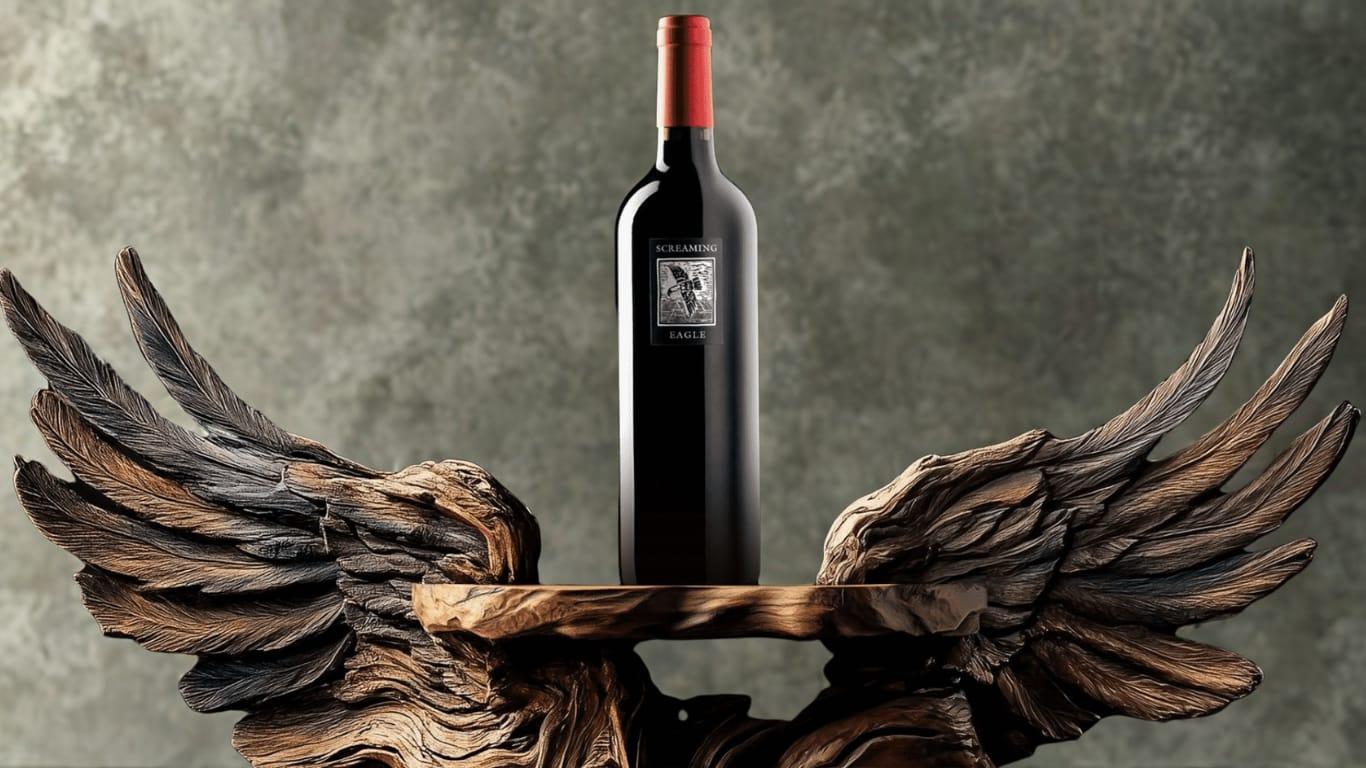
Screaming Eagle has never been harder to acquire, and the structural picture explains why. The Oakville-based Napa Cult Cabernet produces roughly 700 cases per vintage (around 8,400 bottles), the allocation list closed to new applicants in the late 1990s, and the secondary-market pricing has carried steady gains across the past decade even through periods when other parts of the fine-wine market decompressed.
- Screaming Eagle has never been harder to acquire, and the structural picture explains why the Oakville Napa Cabernet has reached the level of allocation lock it has.
- Screaming Eagle produces roughly 700 cases per vintage (around 8,400 bottles), with the allocation list closed to new applicants in the late 1990s.
- Secondary-market pricing has carried steady gains across the past decade, even through periods when other parts of the fine-wine market decompressed.
- Founded in 1986 by Jean Phillips on a small parcel in Oakville Napa Valley, the first commercial release was the 1992 vintage, drawing immediate Robert Parker attention.
- The Stan Kroenke ownership era since 2006 has maintained the structural production scale and stylistic discipline that defines the wine's apex positioning.
- For serious cellars Screaming Eagle defines the structural apex of Napa cult Cabernet, with the secondary market the only credible structural way in.
- Who is this for?
- Cellar builders evaluating Napa cult Cabernet positions, and serious collectors reading the structural allocation and secondary-market dynamics around Screaming Eagle.
- What is happening?
- We read why Screaming Eagle has never been harder to acquire, with the production scale, allocation history, and secondary-market trajectory as live context.
- When did this emerge?
- The piece reads the contemporary 2026 market, with the modern post-2010 Screaming Eagle secondary-market trajectory and the broader Napa cult tier as live reference.
- Where is this happening?
- Oakville in Napa Valley, with the broader Napa cult Cabernet tier and the international apex Cabernet market as the structural reference.
- Why does it matter?
- Screaming Eagle defines the structural apex of Napa cult Cabernet, and understanding the scarcity dynamics matters for serious cellars evaluating the category.
This is our editorial read on what the Screaming Eagle scarcity tells us about the wider Napa Cult Cabernet tier and what it means for serious collectors who want to engage with the category.
The story is more layered than the headline allocation lock suggests.
How Screaming Eagle got to where it is
Screaming Eagle was founded in 1986 by Jean Phillips on a small parcel in Oakville, Napa Valley. The first commercial release was the 1992 vintage, and the wine drew the attention of Robert Parker, who scored it 99 points and described it in Wine Advocate as "a benchmark for the next generation of Napa Cabernet."
The structural facts that define the wine's position are simple. Production is tight (around 700 cases per vintage, against demand that has consistently been multiples of that). The allocation list has been closed to new applicants since the late 1990s, and the existing list operates on a strict cellar-history discipline.
The wine releases primarily as direct-to-allocation, with a small share going to selected merchant accounts.
Charles Banks (acquired the estate in 2006) and then the current ownership (Stan Kroenke, the NFL and Premier League team owner, who acquired the estate in 2009) have maintained the production and allocation discipline. Andy Erickson and now Nick Gislason have managed the winemaking continuity across the ownership transitions. The structural picture has not meaningfully shifted in two decades.
What the secondary market looks like
The Screaming Eagle secondary market is one of the most concentrated single-bottle categories in serious fine wine. The wine has appeared at every major auction house's fine-wine sales (Sotheby's, Christie's, Acker, Zachys, Hart Davis Hart) with consistent clearing well above the original release pricing.
The 1992 first vintage trades at the highest secondary-market premium, with single-bottle lots clearing at multi-thousand-dollar pricing across recent sales. The strongest recent vintages (2007, 2012, 2013, 2015, 2016, 2019) trade in the $4,000 to $7,000 per bottle range on the secondary market, with single-bottle premium pricing for the apex critical-scoring vintages.
The 6-litre Imperial format from the 2000 vintage cleared $500,000 at the Napa Auction in 2000, which was at the time a single-bottle auction record for any Napa wine. That benchmark has been challenged but not exceeded for the category, and the broader Screaming Eagle large-format market has built consistent activity across the past decade.
The wider Cabernet tier framework is something we have covered in our Cabernet Sauvignon: A Collector's Field Guide, which sets out the broader stylistic context.
What is making 2026 the hardest year yet
Three structural forces are compounding in 2026. First, the supply side. The 2026 California vintage is shaping up to be one of the smallest in two decades, with the Napa benchland yields running below the 2024 baseline (which was itself the lowest in twelve years).
Screaming Eagle has not yet announced its 2026 release allocation pattern, but the broader Napa Cult Cabernet tier is likely to see tighter case-volume releases across the cycle.
Second, the demand side. The wider California's 2026 Vintage May Become One Of The Hardest Bottles To Buy story has elevated international collector attention on the Cult tier overall, and Screaming Eagle is the structural apex of that conversation.
Third, the structural rotation. Serious cellar builders rotating away from Bordeaux en primeur (which has carried recurring release-pricing concerns) and toward the structurally rarer categories have placed sharpened attention on the Napa Cult tier alongside Burgundy Grand Cru. The Cult tier benefits from the same structural-scarcity discipline that has driven Burgundy's secondary-market gains across the past five years.
What collectors should know about the broader category
Screaming Eagle is the structural apex, but the wider Napa Cult Cabernet tier extends to a credible group of producers operating at comparable quality with different allocation patterns.
Harlan Estate (the Hudson Ranch and Promontory bottlings, with allocation lists similarly closed), Bond (the named vineyard work: Melbury, Pluribus, Quella, St. Eden, Vecina), Sine Qua Non (Manfred Krankl's Ventura-County-based but Napa-adjacent project, with quirky vintage-named cuvées), and Colgin Cellars (IX Estate, Tychson Hill) are the canonical second tier.
Behind that second tier sit serious Napa producers operating at structurally comparable quality but with broader merchant distribution and more accessible allocation patterns.
Spottswoode (organic, restrained, Oakville-based), Ridge Monte Bello (Santa Cruz Mountains, the historic anchor of serious California Cabernet), Dunn Howell Mountain (the canonical mountain-fruit Cabernet, structured and long-aging), Shafer Hillside Select, and Pahlmeyer make a credible cellar of named California Cabernet at quality levels that compete with the Cult tier.
For collectors thinking about the wider list, our The Most Coveted Cabernet Sauvignons of 2026 covers the broader most-coveted picture.
How to engage with Screaming Eagle if you cannot get an allocation
The straightforward answer is the secondary market. Sotheby's, Christie's, Acker, Zachys, and Hart Davis Hart all run sales that consistently include Screaming Eagle lots. The discipline for collectors engaging with the wine through the secondary market is the same as for any apex Bordeaux or Burgundy: read the provenance narrative carefully, check the level and condition, and approach single-bottle and small-case lots with disciplined bidding.
The pricing reality is that Screaming Eagle from a strong vintage will clear at multi-thousand-dollar per bottle pricing through the secondary market. For collectors building a serious Napa position, the alternative is to anchor around the second-tier Cult names (Harlan, Bond) and the serious-quality merchant-distributed tier (Spottswoode, Ridge Monte Bello, Dunn). That framework delivers genuine Napa Cabernet depth without requiring direct Screaming Eagle allocation.
The Second Flight (Screaming Eagle's $2,000-or-so second-label cuvée) is the closest direct alternative for collectors who do not have allocation access. Production is larger than the headline wine, secondary-market pricing is structurally below the apex bottle, and the quality reflects the same winemaking team and similar source fruit.
What this means for collectors
The straightforward read is that Screaming Eagle is not the necessary entry point to building a serious Napa Cult Cabernet position in 2026. The structural allocation challenge means that direct access is functionally impossible for collectors not already on the list, and the secondary-market clearing pricing reflects the scarcity.
What is structurally achievable is building a credible Napa Cabernet cellar around the wider Cult and serious-quality tier. Harlan, Bond, Colgin, Sine Qua Non through the secondary market, plus Spottswoode, Ridge Monte Bello, Dunn, Shafer Hillside Select through merchant distribution, builds a serious Napa Cabernet position that engages with the category without depending on Screaming Eagle access.
That framework is, in our editorial read, the structurally sensible approach for collectors building positions in 2026.
What we will watch next
Three signals. First, whether the 2026 vintage release pattern at Screaming Eagle (likely announced in 2028 or 2029) reflects the smaller California crush in case-volume terms. Second, whether the Harlan Estate, Bond, and Colgin allocation lists begin to reopen partial new-collector access, which would relieve some of the structural pressure on the wider Cult tier.
Third, whether the wider Cult tier secondary-market pricing across the major auction houses continues to climb at the pace it has across the past 18 months, or whether the structural rotation toward Burgundy compresses the trajectory.
We last reviewed this analysis in May 2026.