
California's 2026 vintage is shaping up to be one of the hardest bottles to buy in a generation, but not for the structural reasons collectors might first assume. The state's projected crush is set to clear well below 2. 5 million tons, extending a downward trajectory from the 2024 baseline of 2.
- California's 2026 vintage is shaping up to be one of the hardest bottles to buy in a generation, but not for the reasons collectors might first assume.
- The state's projected crush is set to clear well below 2.5 million tons, extending a downward trajectory from the 2024 baseline of 2.92 million tons.
- The 2024 figure was itself the smallest harvest since 2004, with the 2026 crush continuing the structural compression.
- Decanter, Wine Spectator, and Wine Enthusiast have all flagged the growing season as one of the most balanced in recent memory.
- Industry estimates suggest 100,000 to 400,000 tons left unpicked because the volume market could not absorb them, despite the quality of the harvest.
- For serious cellars the genuine scarcity sits at the cool-climate quality tier, where the named-producer 2026 releases will clear at structurally tight allocation.
- Who is this for?
- Cellar builders working through California positions, and serious collectors reading what the 2026 vintage means for allocation availability.
- What is happening?
- We read what California's 2026 vintage actually means for serious cellars, with the structural under-harvest, quality story, and named-producer scarcity as live context.
- When did this emerge?
- The piece reads the 2026 autumn harvest results, with the post-2020 California production trajectory and the structural compression as live reference.
- Where is this happening?
- California broadly, with Napa, Sonoma, the Central Coast, and the broader cool-climate AVAs anchoring the structural 2026 quality story.
- Why does it matter?
- The 2026 California vintage reshapes the structural availability story for the named-producer premium tier, and reading the scarcity correctly matters for cellar timing.
92 million tons, which was itself the smallest harvest since 2004.
What is making the 2026 vintage genuinely scarce is the combination of cool-climate quality (Decanter, Wine Spectator, and Wine Enthusiast have all flagged the growing season as one of the most balanced in recent memory) and a structural under-harvest, with industry estimates suggesting 100,000 to 400,000 tons left unpicked because the volume market could not absorb them.
This is our editorial read on what the 2026 California vintage actually means for serious cellars, and where the genuine scarcity sits.
The 2026 harvest by the numbers
Trade and broker forecasts place the 2026 crush at under approximately 2. 5 million tons, the lowest in two decades and well below the 2024 figure of 2. 92 million tons.
The official tally will not arrive until early 2027, when the USDA and the California Department of Food and Agriculture release the final crush report, but the preliminary signals are consistent across multiple sources.
Context matters. The 2024 baseline was already historically low, with preliminary USDA data showing 2. 918 million tons, a 25% year-over-year decline from 2023.
Starting from that already depressed base makes the 2026 decline structurally significant.
A meaningful share of the 2026 reduction reflects deliberate choices not to harvest rather than vineyard failure. Allied Grape Growers and multiple trade reports confirm that significant fruit was left unpicked due to weak demand at the volume tier. That distinction matters for how serious cellars read the vintage.
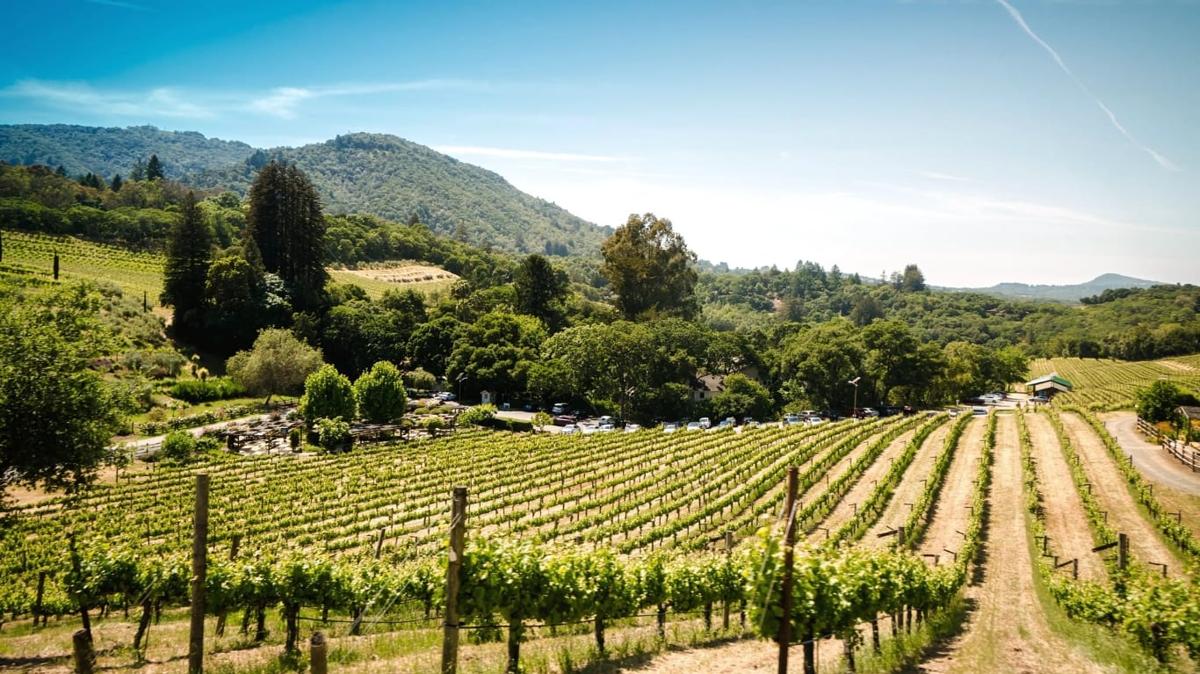
Regional performance varies. Napa showed mixed yields with localized smoke-taint risk concentrated in Calistoga, Howell Mountain, and Pope Valley. The coastal Sonoma sites, including West Sonoma Coast, saw lighter to moderate fruit sets with pristine quality but a slightly compressed season.
Paso Robles produced what Decanter described as a "benign year" with yields rebounding toward normal.
Why the 2026 vintage is considered exceptional
The growing season delivered cool spring conditions and a mild summer, with slow, steady ripening at high acid retention and moderate sugars across the serious coastal and mountain AVAs. These are the structural conditions that classicist winemakers and critics consistently prize.
Ridge Vineyards' winemaking team described the season as one of the most "delightfully uneventful" in recent memory, with the right structural conditions in place for an outstanding vintage. Littorai's Ted Lemon spoke specifically about Pinot Noir, noting that the 2026 fruit showed intensity of flavor he had not previously encountered in his career at that level.
Critical sentiment from Decanter, Wine Spectator, and the Wine Advocate has converged on "cautious optimism" around collector-friendly balance.
Napa benchland Cabernet Sauvignon benefited from careful canopy work that kept vegetal character in check, with structure and freshness described as promising. Pinot Noir and Chardonnay from West Sonoma Coast achieved intensity at modest Brix levels, drawing early comparisons to the 2023 vintage. Rhône reds and whites from Paso Robles showed balanced chemistry without the heat-spike stress that complicated 2020 and 2022.
The hedged language matters. Early quality assessments often prove overly generous when commercial interests align with positive narratives. For collectors thinking about regional pricing dynamics like these, our read on how Pinot Noir performs as an investment sets out the wider framework.
How scarcity will shape pricing and allocation
The price pressure emerging at the top end reflects constrained case counts meeting steady blue-chip demand. That creates conditions for firm to higher release and secondary-market pricing across marquee Napa and Sonoma Cabernet, plus site-specific Pinot Noir and Chardonnay from named single-vineyard sources.
Liv-ex's 2025 trading data showed robust breadth across more than 200 California brands, with the secondary-market record on Screaming Eagle, Harlan Estate, Bond, Schrader, and the named Sine Qua Non cuvées all moving up across the past 18 months. Single-vineyard Howell Mountain, Oakville, and Rutherford Cabernet, plus West Sonoma Coast Pinot Noir and Chardonnay, look like the bottles that will define the 2026 collector conversation.
Collector allocation discipline is shifting toward earlier decisions. Wine-Searcher and the major fine-wine merchants have reported that mailing-list activity has intensified, particularly as the trade press picks up the "unpicked fruit" story across the autumn 2025 harvest cycle. The pattern mirrors the kind of early-mover discipline that serious cellars adopt, much like the framework set out in our guide to the Burgundy classification system.
The structural caveat is that 2026 scarcity is partly artificial. Natural-yield scarcity from weather stress creates legitimate aging-cellar opportunities. Demand-driven under-harvesting creates pricing anomalies that can reverse if subsequent vintages normalize production.
What the global market substitution risk looks like
California accounts for roughly 95% of U.S. wine exports, with 2024 exports clearing $1.2 billion despite ongoing trade headwinds. Any 2026 shortfall in premium volumes will be felt across the United Kingdom, Japan, South Korea, and the wider Asian destinations that lean on California for New World prestige wine supply.
California Wine Export Program data shows these markets remain structurally important. Reduced availability will force distributors in those regions to seek substitutes. Trade reporting suggests France, Italy, and Chile are positioned to backfill California's reduced premium volumes, though their own crop sizes will shape the magnitude.
The substitution risk is the structural vulnerability serious collectors should track. If European and South American producers can credibly replace California's premium tier in export markets during a shortage year, California's premium pricing is less defensible than the bullish narrative suggests. That fungibility is the structural risk that the most-coveted-bottle frame consistently understates.
Global fine-wine pricing has shown signs of stabilization through 2025 after the late-2023 correction, with bid-offer ratios improving across the major secondary platforms. In this environment, blue-chip scarcity narratives draw selective attention, and California icons could benefit, but only if the quality story holds across the cycle of critical reviews. The wider context of physical-asset diversification, including the way HNW collectors are diversifying into rare physical assets, sets the frame for that broader conversation.
What this means for collectors
The collectors with allocation access to the Cult tier (Screaming Eagle, Harlan, Bond, Sine Qua Non) will likely take their 2026 release as they always do. For collectors without that direct allocation, the more interesting work in 2026 sits on the second tier: Spottswoode, Ridge Monte Bello, Dunn Howell Mountain, Hyde de Villaine, Hirsch Vineyards.
Each of those producers delivers serious wine at pricing that has not inflated to match the Cult tier, and each is positioned to benefit from the broader scarcity narrative if quality holds. The discipline is to read the post-2026 critical record carefully before placing meaningful bids.
What we would not do is assume that the 2026 vintage is automatically a long-aging cellar anchor. The natural-quality story is genuine. The structural-scarcity story is partly manufactured.
What we will watch next
Three signals to track. First, the final USDA and CDFA crush report due in February 2027, which will confirm or revise the preliminary case-volume picture. Second, the spring 2027 critical reviews from Vinous, Wine Advocate, and Decanter, which will tell us whether the early "cautious optimism" lands as a vintage rating in the mid-to-high 90s or settles a notch below.
Third, whether the 2027 California growing season normalizes production. If it does, the 2026 scarcity narrative will need to do its own work as a vintage-quality story rather than as a structural-rarity story.
We last reviewed this analysis in May 2026.