The most coveted Cabernet Sauvignons of 2026 cluster in a recognizable set of producers across the international category. Bordeaux's Médoc First Growths, Napa Valley's cult tier, the apex Coonawarra and Margaret River Australian producers, and a small set of cool-climate New World names together anchor the structural top of the category. The Liv-ex Bordeaux 500 gives the public benchmark for the apex French names.
- The most coveted Cabernet Sauvignons of 2026 cluster in a recognisable set of producers across the international category.
- Bordeaux's Medoc First Growths, particularly Lafite, Latour, Margaux, Mouton, and Haut-Brion, anchor the structural apex of international Cabernet collecting.
- Napa Valley's cult tier, led by Screaming Eagle, Harlan Estate, and Schrader, occupies the parallel New World Cabernet apex.
- Coonawarra and Margaret River in Australia have built credible apex Cabernet positions, with Penfolds Bin 707 and Cape Mentelle as structural references.
- A small handful of Tuscan producers, particularly the apex Bolgheri estates, contribute to the broader international Cabernet apex tier.
- For collectors the most-coveted Cabernet list defines the structural top of the variety, with serious cellar architecture built around the named producers.
- Who is this for?
- Cellar builders evaluating apex Cabernet Sauvignon positions, and serious collectors weighing Bordeaux Left Bank against Napa cult allocations.
- What is happening?
- We list the most coveted Cabernet Sauvignons of 2026, with the producers, vintages, and structural variables that anchor the apex tier internationally.
- When did this emerge?
- The piece reads the early 2026 market, with the contemporary Liv-ex Bordeaux 500 First Growth tier and the Napa cult apex pricing as live context.
- Where is this happening?
- Bordeaux's Medoc, Napa's apex cluster, Coonawarra and Margaret River in Australia, and the broader Bolgheri Cabernet tier in Tuscany.
- Why does it matter?
- The most-coveted Cabernets define the structural top of the international variety, and serious cellars are built with awareness of which producers anchor the apex.
The category has weathered the post-2022 Liv-ex correction asymmetrically. The Médoc First Growths have corrected meaningfully, the Napa cult tier has stabilized after its own adjustment, and the Australian apex has held up relatively well across the broader move.
This is our editorial read on the Cabernet Sauvignons serious collectors are working hardest to secure in 2026.
The Médoc First Growths
The five Bordeaux First Growths anchor the international Cabernet Sauvignon category. Lafite Rothschild, Mouton Rothschild, Margaux, Latour, and Haut-Brion each carry deep critical pedigree, multi-decade secondary-market depth, and 1855 classification credibility.
Recent vintages including 2009, 2010, 2015, 2016, 2018, and 2019 anchor the modern era. Our coverage of the Lafite Rothschild 2019 vintage walks the contemporary Lafite positioning in detail, and the wine continues to define the structural top of the category alongside its First Growth peer group.
The 1945 Mouton Rothschild remains the canonical reference for the apex of pre-modern Cabernet collecting. Recent vintages have continued to clear at strong levels even through the broader Bordeaux correction.
Château Latour
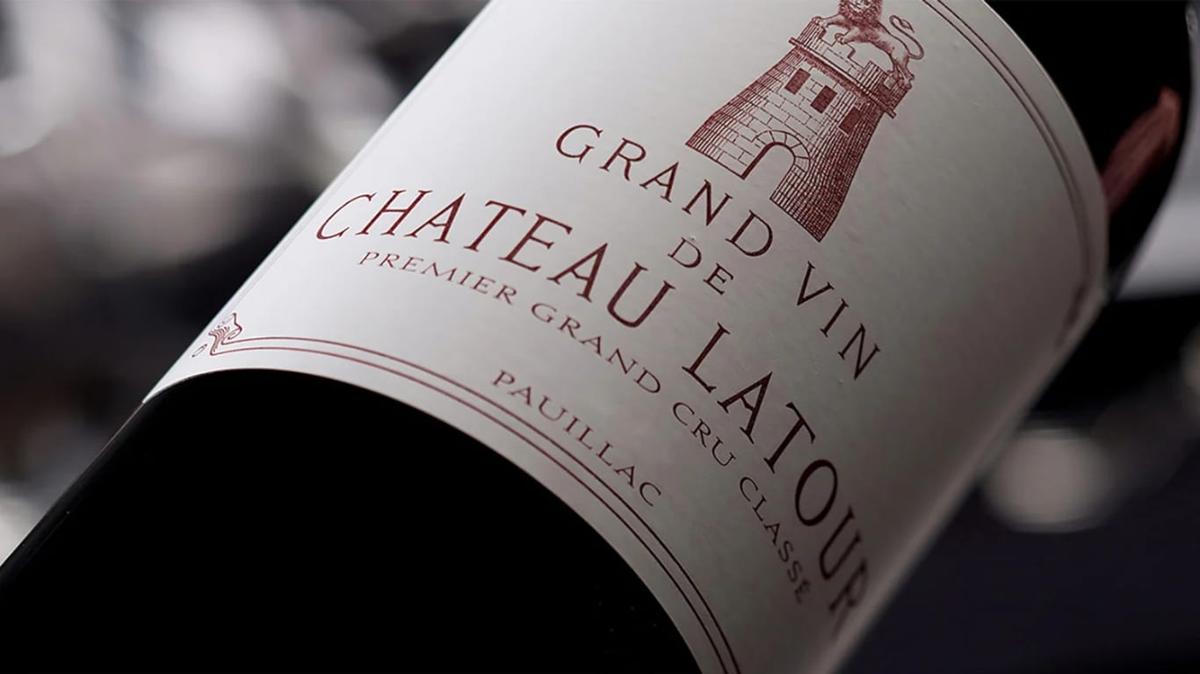
Château Latour, the Pauillac First Growth, has built its reputation on consistent vintage-to-vintage quality across difficult years. The wine is structurally the most Cabernet Sauvignon-led of the First Growths (typically 75 to 85 percent Cabernet Sauvignon with Merlot, Cabernet Franc, and Petit Verdot in support).
The estate's 2012 decision to withdraw from en primeur and instead release library vintages directly has reshaped the wine's relationship with the secondary market. The 2003 and 2005 vintages remain benchmark references, and the 2015 and 2016 releases have continued the modern lineage.
The structural argument for Latour rests on its track record across difficult vintages including 1992, 2002, and 2013, where the wine has delivered better than peer-group quality.
Screaming Eagle and the Napa cult tier
Screaming Eagle, the Oakville cult Cabernet producer, sits at the apex of the Californian category. Production runs at 500 to 850 cases per vintage, the waitlist is multi-year, and the wine continues to define the modern American collectible Cabernet template.
The 1992 release earned Parker's first Napa 100-point score and anchored the trajectory. Our detailed coverage of why Screaming Eagle has never been harder to acquire walks through the contemporary allocation dynamics.
Harlan Estate, Bond Estate, Sine Qua Non, Colgin, Schrader, and Bryant Family all anchor the broader Napa cult tier alongside Screaming Eagle. The category has weathered its own Liv-ex Napa adjustment in 2023 and has stabilized at structurally credible levels.
Opus One and the Mondavi legacy
Opus One, the Robert Mondavi and Mouton Rothschild collaboration that began with the 1979 vintage, anchors the bridge between the Médoc tradition and the Napa cult category. The wine is Cabernet Sauvignon-led with Merlot, Cabernet Franc, Petit Verdot, and Malbec, and the production runs at roughly 25,000 cases per vintage.
The 2010, 2015, and 2018 vintages anchor the modern lineage. Opus One has built credible secondary-market activity across both American and European auction channels.
The structural positioning rests on the producer's identity as the bridge between the canonical Bordeaux tradition and the emerging American collecting category.
The Bolgheri Bordeaux-style apex
Sassicaia, Tenuta dell'Ornellaia's Ornellaia, and Tenuta di Argentiera all produce Bordeaux-variety blends from Bolgheri on the Tuscan coast. The wines are Cabernet Sauvignon-led with Cabernet Franc, Merlot, and Petit Verdot, and they anchor the Italian Cabernet collecting category.
The 1985 Sassicaia remains the canonical Italian reference for the variety. The 2001 Masseto (though 100 percent Merlot) sits alongside as the apex Italian collecting reference for the broader Bolgheri category.
Our coverage of the most coveted wine producers of 2026 walks the Italian apex positioning in detail.
The Coonawarra and Margaret River apex
Australian apex Cabernet Sauvignon clusters in Coonawarra (the South Australian terra rossa strip) and Margaret River (the Western Australian Cape region). Named Coonawarra producers including Wynns Coonawarra Estate, Bowen Estate, and the smaller boutique producers anchor the historical category.
Margaret River producers including Cullen, Moss Wood, Vasse Felix, and Cape Mentelle have built stronger international collecting attention across the past two decades. The 2014, 2018, and 2019 vintages have all built credible secondary-market activity.
The structural argument for Australian apex Cabernet is that the category has earned credible critical attention from James Halliday, Decanter, and Wine Spectator, and the wines deliver consistent vintage-to-vintage quality at price tiers below the apex Bordeaux and Napa references.
The cool-climate New World extension
Cool-climate New World Cabernet has built developing collecting attention. South Africa's Stellenbosch tier (Kanonkop, Meerlust, Rust en Vrede, De Toren) has built three decades of credible critical activity. Chile's Maipo Valley apex (Almaviva, Don Maximiano, Errazuriz Kai) anchors the South American Cabernet category.
The structural collecting interest in cool-climate New World Cabernet is narrower than for the canonical apex, but the categories offer credible regional depth at favourable price tiers for collectors building geographic breadth.
For collectors interested in international Cabernet beyond the canonical references, the cool-climate New World category is the structural entry point.
What makes a Cabernet Sauvignon durable across decades
Five structural variables drive long-term value retention in the category. First, tannin structure sufficient to support 25 to 40 years of bottle development. Second, named-producer reputation that has held across multiple vintage cycles.
Third, terroir specificity (Médoc gravel, Napa cult vineyard sites, Bolgheri's coastal influence, Coonawarra's terra rossa, Margaret River's Cape conditions). Fourth, critical pedigree across the major publications. Fifth, secondary-market depth that the major auction houses recognize as bankable.
Our coverage of the red wines that hold their value over decades and the Cabernet Sauvignon collector's field guide walks the structural variables in detail.
The Bordeaux versus Napa structural comparison
The Bordeaux First Growths and the Napa cult tier together anchor the apex of the international Cabernet category. Our coverage of the Bordeaux versus Napa Valley cellar comparison walks the structural comparison in detail.
The First Growths offer deeper critical pedigree, multi-decade ageing track record, and larger production volumes that support broader allocation. The Napa cult tier offers tiny production volumes, more aggressive vintage-by-vintage quality discipline, and the structural argument for American collecting identity.
The collector building serious Cabernet depth in 2026 typically allocates meaningfully to both categories.
Authentication and provenance considerations
The apex Cabernet category sits at the top of the fraud-risk map. The 1945 Mouton Rothschild is one of the most-faked wines in the world. Pétrus (a Merlot, but relevant context) and Screaming Eagle have appeared regularly in counterfeit incidents.
For collectors building serious depth, provenance discipline is structural rather than optional. The major auction houses' authentication programmes, alongside direct-from-producer allocation channels, provide the practical defence.
Bottles with intact original wooden cases, verifiable storage history, and unbroken capsules routinely command 15 to 25 percent premiums over loosely sourced counterparts at major auctions.
What this means for collectors
The most coveted Cabernet Sauvignons of 2026 cluster in the categories above. The Médoc First Growths, the Napa cult tier, Opus One, the Bolgheri apex, and the Australian apex together account for the structural majority of serious collecting activity in the category.
The collector building a serious cellar in 2026 should anchor depth across these categories. Our coverage of the most coveted wine producers of 2026 sets useful broader context.
What we'll watch next
Three signals will tell us how the most-coveted Cabernet list looks in 2027. First, whether the Liv-ex Bordeaux 500's correction stabilizes. Second, whether the Napa cult tier extends its post-adjustment stabilization.
Third, whether the cool-climate New World categories earn deeper collecting attention from the Wine Advocate or Vinous.
The categories above have weathered worse corrections than the current one. We don't expect 2026 to dislodge them.
We last reviewed this analysis in May 2026.