The most coveted wine producers of 2026 are the houses whose names anchor the structural top of the international fine-wine market. The Liv-ex Power 100, the annual ranking published by the London exchange that combines trade activity, price performance, and search interest, gives the public benchmark. Below the headline ranking, the contemporary fine-wine map has a recognizable shape.
- The most coveted wine producers of 2026 are the houses whose names anchor the structural top of the international fine-wine market.
- The Liv-ex Power 100, published annually by the London exchange, combines trade activity, price performance, and presence to rank the apex producers.
- Domaine de la Romanee-Conti remains the structural apex of the international market, with the broader Cote d'Or grand cru tier driving Burgundy.
- Petrus and Le Pin anchor the Pomerol apex, with the broader Right Bank Bordeaux producers providing structural depth.
- Screaming Eagle, Harlan Estate, and the Napa cult Cabernet tier continue to occupy a parallel apex position in the international market.
- For collectors the most-coveted producer list defines the structural top of the market and the producers whose allocations matter most.
- Who is this for?
- Cellar builders at scale, particularly those approaching the apex tier of the international market across Burgundy, Bordeaux, and Napa.
- What is happening?
- We list the most coveted wine producers of 2026, with the Liv-ex Power 100 framework and the structural variables that anchor the apex tier.
- When did this emerge?
- The piece reads the early 2026 market, with the contemporary Liv-ex Power 100 rankings and the recent apex-tier pricing dynamics as live context.
- Where is this happening?
- Burgundy's Cote d'Or, Pomerol and the Right Bank, the Napa apex cluster, and the broader international tier that anchors the Liv-ex Power 100.
- Why does it matter?
- The most-coveted producers define the structural top of the market, and understanding which houses anchor the apex is foundational for serious cellar architecture.
Six structural variables make a producer coveted. Tiny production, deep critical pedigree, multi-decade consistency, distinctive terroir, secondary-market liquidity, and demand from multiple collector geographies. The producers on the list below score on all six.
This is our editorial read on the producers serious collectors are working hardest to secure in 2026.
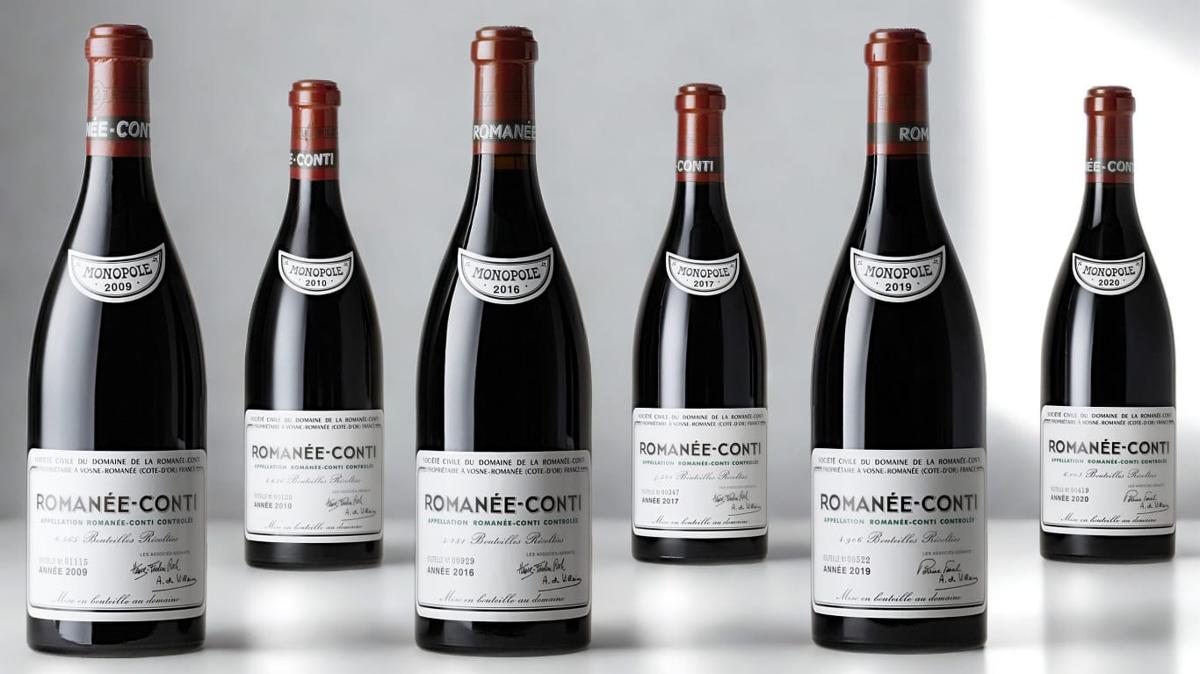
Domaine de la Romanée-Conti
Domaine de la Romanée-Conti, headquartered in Vosne-Romanée, has been making the wines that anchor Burgundy's grand cru market since 1869. The domaine produces roughly 7,000 cases per vintage across its six grand crus, with Romanée-Conti and La Tâche running the smallest volumes.
The 1945 Romanée-Conti remains the canonical reference. A single bottle cleared $558,000 at Sotheby's New York in 2018, and the secondary market for the domaine's library releases has continued to clear at structural levels at every major auction since.
The domaine sits at the top of the Liv-ex Power 100 by structural argument and tends to anchor or top the annual list.
Château Pétrus
Pétrus, the Pomerol estate produced by the Moueix family, runs at roughly 2,500 cases per vintage from a 28-acre vineyard. The wine is Merlot-led and has built its reputation across decades of small-production discipline and Moueix family stewardship.
The 1947 and 1961 vintages remain benchmark lots, the 1989 and 1990 anchor the modern era, and the 2009 (Parker 100) and 2010 have built secondary-market depth. The Liv-ex Bordeaux 500 has tracked Pétrus's relative strength even through the broader Bordeaux correction.
The producer has held its premium positioning across decades of competitive pressure from other Pomerol icons, including Le Pin, Lafleur, and Vieux Château Certan.
Château Lafite Rothschild
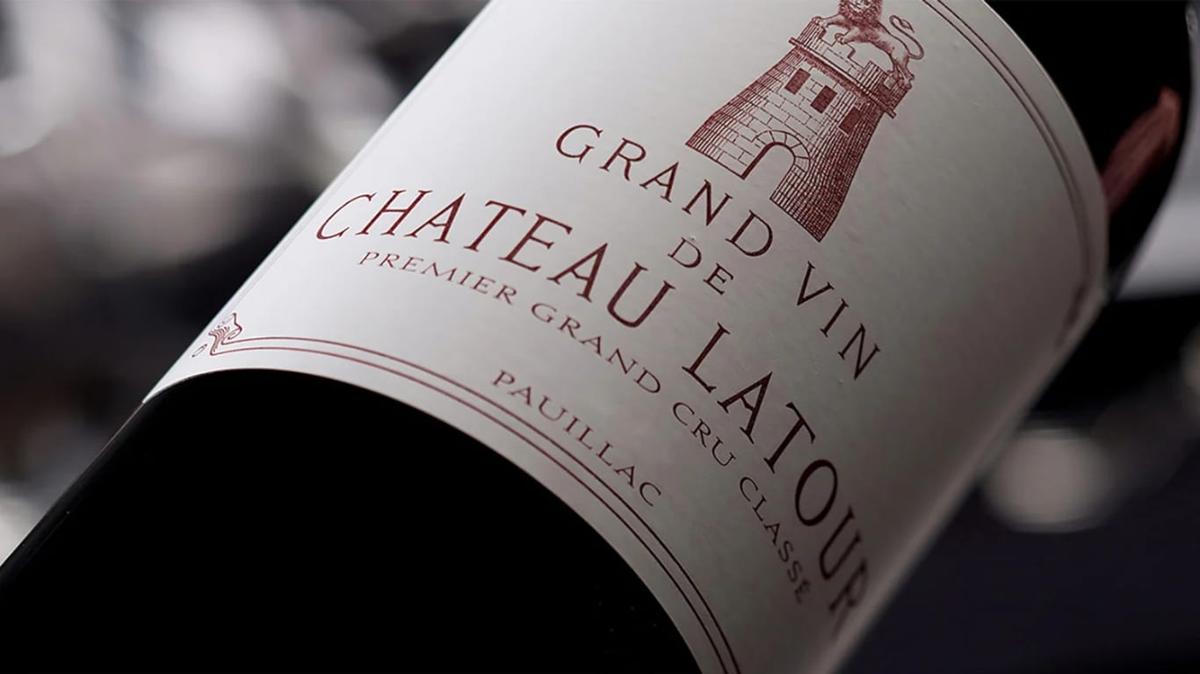
Lafite Rothschild, the Pauillac First Growth controlled by the Rothschild family, has been a First Growth since the 1855 classification. The 1869 vintage cleared $233,972 at Sotheby's Hong Kong in 2010, the wine that effectively confirmed Asian demand as a structural force in the Bordeaux market.
Across the 2010 to 2014 window, Lafite ran ahead of the broader Bordeaux index on the back of Chinese demand. The subsequent China pullback corrected the move, and Lafite has since traded at levels more consistent with its structural Bordeaux peer group.
The 2019 release, which we covered in our Lafite 2019 vintage cellar guide, represented a recalibrated en primeur pricing approach.
Château Margaux
Château Margaux, the Médoc First Growth, has built its reputation on the elegance and aromatic depth of its wines. The 1900 vintage remains the canonical reference for the estate, and the 1990, 1995, 2000, and 2010 vintages have all built secondary-market strength.
The estate's investment in its winery and vineyard under Paul Pontallier (technical director until his death in 2016) and now Philippe Bascaules has kept the wines at the top of the First Growth peer group across the past three decades.
The Pavillon Rouge second wine has built its own collector tier, which adds a second entry point for collectors building Margaux depth.
Domaine Leroy
Domaine Leroy, the Burgundy domaine run by Lalou Bize-Leroy until recently, has built the most distinctive critical pedigree of any contemporary Burgundy producer outside DRC itself. The domaine's biodynamic discipline, low yields, and full-cluster fermentation regime have produced wines that the Wine Advocate, Vinous, and Decanter have all scored at the apex of the Burgundy hierarchy.
The 1990, 1999, 2005, and 2015 vintages remain the benchmark releases. The Liv-ex Burgundy 150 has tracked Leroy's structural strength as part of the broader Burgundy outperformance.
Bize-Leroy's role in shaping the modern Burgundy quality standard is the deeper structural argument for the producer's positioning.
Henri Jayer
Henri Jayer, the Vosne-Romanée producer who died in 2006, anchored the modernist case for low-yield Burgundy. His remaining bottles continue to clear at extraordinary levels at major auction. Hart Davis Hart's Jayer sales in Chicago, alongside Sotheby's and Acker, have set the contemporary benchmarks.
The Cros Parantoux is the canonical bottling. The Échezeaux, the Vosne-Romanée Beaumonts, and the village Vosne-Romanée have all built secondary-market depth across the past two decades.
The supply is finite and shrinking, which is the structural argument for the category's continued price strength.
Egon Müller
Egon Müller, the Saar-based Riesling producer, sits at the apex of German white-wine pricing. The Scharzhofberger Trockenbeerenauslese runs at tiny volumes, and recent vintages have cleared at five-figure-per-bottle levels at major auction.
The 2003 and 2010 vintages remain benchmark releases. The Bad Kreuznach charity auctions have repeatedly set the structural reference points for the category.
The structural strength rests on tiny production, multi-decade ageability, and a critical pedigree that runs through Jancis Robinson, the Wine Advocate, and Vinous.
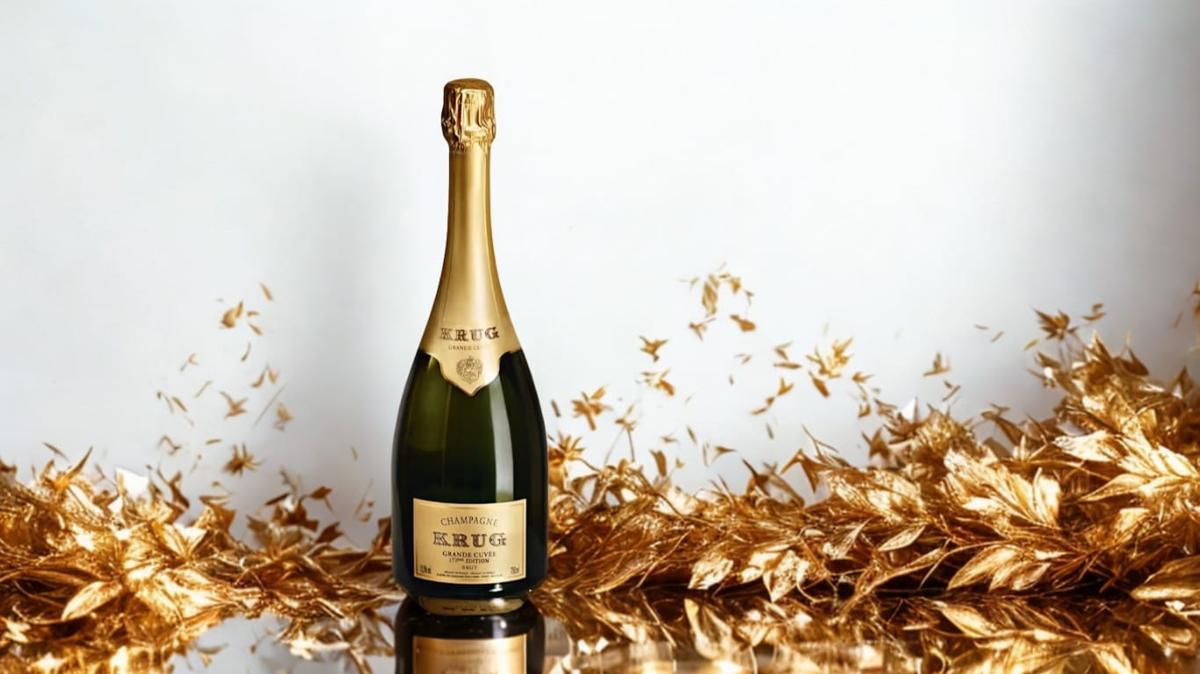
Krug
Krug, the Champagne house owned by LVMH but operated with deep multi-generation continuity, has built its reputation on the Grande Cuvée multi-vintage blend and the single-vineyard Clos du Mesnil. The Clos du Mesnil, a 1.85-hectare walled vineyard producing single-variety Chardonnay, sits at the apex of contemporary Champagne pricing.
The 2002 and 2008 vintages of the Vintage Brut remain benchmark releases. The 1996, 2002, and 2008 Clos du Mesnil bottlings have all built secondary-market strength.
The Liv-ex Champagne 50's structural outperformance against the broader Liv-ex 100 has tracked Krug's positioning across the past several years.
Salon
Salon, the single-vintage Champagne house in Le Mesnil-sur-Oger, releases only in years deemed great. The result is fewer than forty vintages declared across the producer's history, with the 1928, 1996, 2002, and 2008 releases anchoring the category.
The structural argument is unique. A single vineyard, a single variety (Chardonnay), a single producer's discipline of refusing to declare in marginal years.
The secondary market for older Salon vintages has built across the past decade as collectors have priced in the ageability of cool-vintage Champagne.
Screaming Eagle
Screaming Eagle, the Oakville cult Cabernet producer, sits at the apex of the Californian category. Production runs at 500 to 850 cases per vintage, the waitlist is multi-year, and the wine continues to define the modern American collectible Cabernet template.
The 1992 release earned Parker's first Napa 100-point score for the producer, anchoring the trajectory. Our detailed coverage of why Screaming Eagle has never been harder to acquire walks through the contemporary allocation dynamics.
The producer's structural positioning has held across decades of competitive pressure from other Napa cult names, including Harlan Estate, Bond, and Sine Qua Non.
Tenuta San Guido (Sassicaia)
Tenuta San Guido in Bolgheri, the producer of Sassicaia, effectively created the Super Tuscan category in the 1970s. The 1985 vintage anchors the modern lineage, and recent vintages including the 2015 and 2016 have cleared at structural levels.
The Italy 100 sub-index of the Liv-ex Fine Wine 1000 has been one of the steadier performers across the past three years. Sassicaia has been the anchor of that stability.
The producer's positioning as the bridge between Bordeaux-style winemaking and Tuscan terroir has built one of the most distinctive identities in the contemporary collecting market.
Tenuta dell'Ornellaia and Masseto
Tenuta dell'Ornellaia, the Frescobaldi-owned Bolgheri estate, produces Ornellaia (a Bordeaux-style blend) and Masseto (a 100 percent Merlot). Both have built secondary-market depth alongside Sassicaia and the broader Super Tuscan category.
Masseto's structural argument is that it represents the apex of Merlot expression outside Pomerol, and recent vintages have cleared at levels that confirm the case.
Ornellaia's annual artist-label collaborations have built a distinctive collecting layer around the wine, with the artist-labeled six-litre bottles routinely clearing meaningful premiums at Sotheby's charity sales.
What this means for collectors
The producers above share the structural variables we've described. Tiny production, deep critical pedigree, multi-decade consistency, distinctive terroir, secondary-market liquidity, and multi-geography demand.
The collector building a serious cellar in 2026 should treat these names as the structural anchors rather than chasing whichever individual vintage or sub-index ran hottest in the past twelve months. Our broader analysis of Burgundy's record Liv-ex share sets useful context for how the regional shifts shape the producer-level conversation.
What we'll watch next
Three signals will tell us how the most-coveted producer list looks in 2027. First, whether the Liv-ex Power 100 reshuffles in any structural way. Second, whether Burgundy's outperformance against Bordeaux extends or normalizes.
Third, whether any emerging producer (in California, Italy, or the new English sparkling tier) breaks into the top thirty for the first time.
The producers above have weathered worse corrections than the current one. We don't expect 2026 to dislodge them.
We last reviewed this analysis in May 2026.