
The red wines that hold their value over decades cluster in a recognizable set of categories. Bordeaux's First Growths, the Pomerol icons, the Burgundy grand crus, the Napa cult Cabernets, and the apex Super Tuscans together account for the structural majority of secondary-market activity in collectible reds. The Liv-ex 100 and the Liv-ex Bordeaux 500 confirm the clustering across decades of trade data.
- The red wines that hold their value over decades cluster in a recognisable set of categories anchored by Bordeaux, Burgundy, Napa, and the apex Super Tuscans.
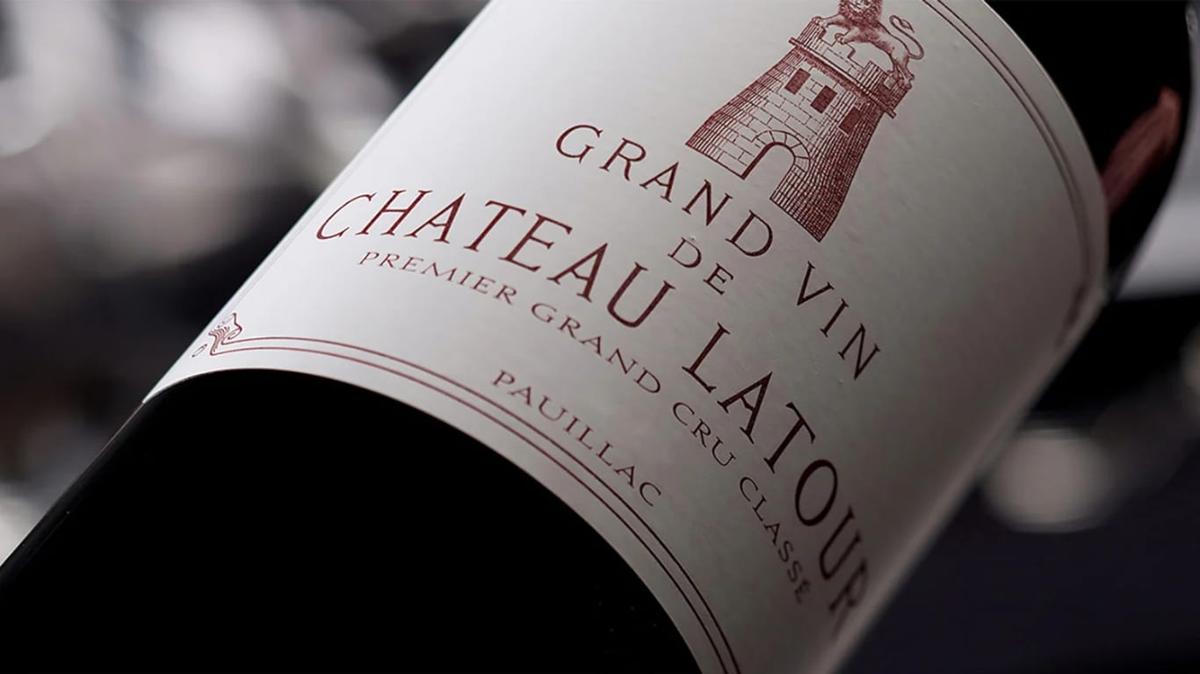
- Bordeaux's First Growths, particularly Lafite, Latour, Margaux, Mouton, and Haut-Brion, anchor the structural top of the international long-haul market.
- The Pomerol apex, led by Petrus and Le Pin, drives the Right Bank Bordeaux long-haul performance with the broader Saint-Emilion grand cru tier behind.
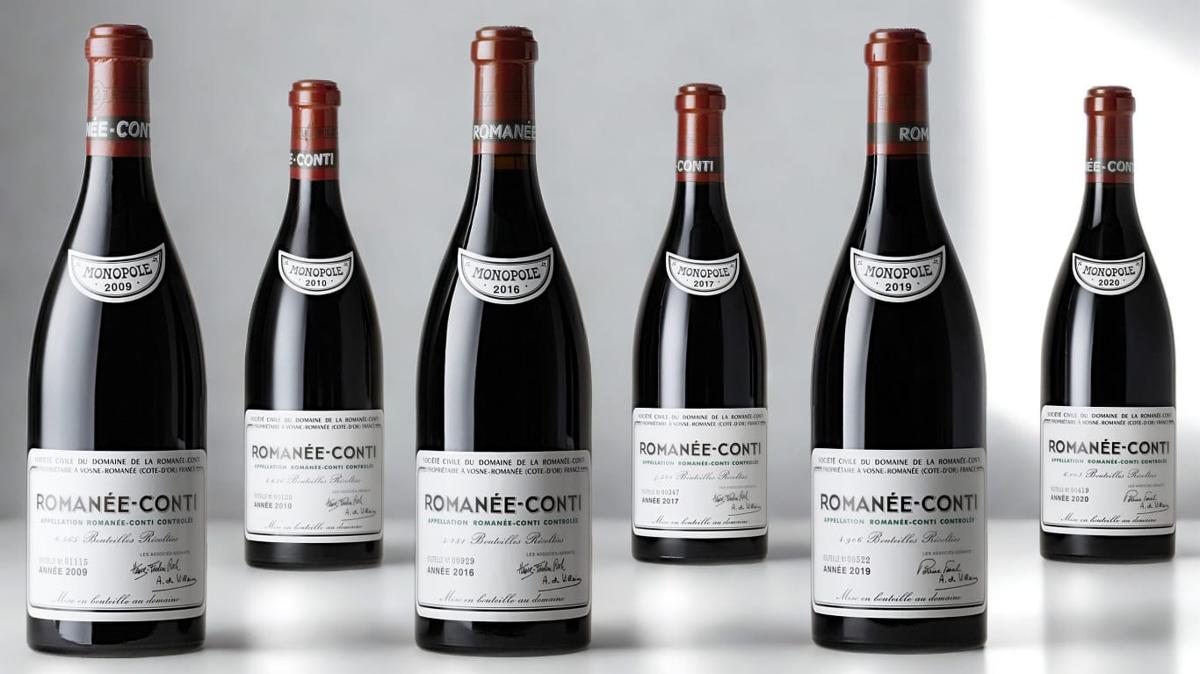
- Burgundy's grand cru reds, particularly the DRC monopoles and the broader Cote d'Or grand cru tier, occupy the parallel apex of the international market.
- Napa cult Cabernet, led by Screaming Eagle and Harlan Estate, has built a thirty-year record of long-haul value retention.
- The apex Super Tuscans, particularly Sassicaia, Solaia, and Ornellaia, round out the structural long-haul red-wine category for serious cellars.
- Who is this for?
- Cellar builders weighting their red-wine architecture toward the long haul, and serious collectors evaluating which apex producers anchor structural positions.
- What is happening?
- We work through the red wines that actually hold value across decades, with the structural categories, producers, and vintages that anchor long-haul performance.
- When did this emerge?
- The piece reads the contemporary post-2020 market, with the modern Liv-ex Fine Wine 1000 sub-indices and the apex-tier long-haul data as live context.
- Where is this happening?
- Bordeaux's Left Bank and Pomerol, Burgundy's Cote d'Or, Napa's apex cluster, and the broader Tuscan Super Tuscan tier as the structural regions.
- Why does it matter?
- Long-haul value retention is the structural reason serious cellars exist, and understanding which red wines actually deliver it is foundational for cellar architecture.
What makes a red wine durable as a long-term cellar holding is the combination of grape, terroir, producer, and vintage discipline. Six categories below carry the structural variables that produce multi-decade value retention.
This is our editorial read on the red wines serious collectors anchor their cellars around.
Bordeaux First Growths
The five Bordeaux First Growths (Lafite Rothschild, Mouton Rothschild, Margaux, Latour, Haut-Brion) have anchored serious red-wine collecting since the 1855 classification. The wines combine Cabernet Sauvignon-led blends from gravel-dominated terroirs with multi-decade ageing curves and the deepest secondary-market liquidity in the category.
The 1945, 1959, 1961, 1982, 1990, 2000, 2005, 2009, and 2010 vintages are the canonical references. The Liv-ex Bordeaux 500 tracks the broader First Growth movements, and the Bordeaux Legends 40 isolates the older library releases.
The 1945 Mouton Rothschild remains one of the most-faked wines in the world for exactly this reason. Provenance discipline is the structural caveat for collectors entering the category.
Pétrus and the Pomerol icons
Pomerol's clay-dominated plateau produces Merlot-led wines whose long-term ageability rivals or exceeds the Médoc First Growths. Pétrus, Le Pin, Lafleur, and Vieux Château Certan anchor the category, with smaller bottlings from L'Église-Clinet, La Conseillante, and Trotanoy adding depth.
The 1947, 1961, 1989, 1990, 2000, and 2009 Pétrus vintages remain benchmark lots. Le Pin's tiny production (typically under 500 cases per vintage) makes it one of the harder names to secure in the category, and the secondary market has reflected the scarcity for decades.
Pomerol's structural strength rests on tiny production volumes from the named estates, which our analysis of the Left Bank versus Right Bank Bordeaux distinction walks through in detail.
Burgundy grand crus
Burgundy's grand cru tier (33 named appellations on the Côte d'Or) produces the structural top of the Pinot Noir market. The named domaines, including Domaine de la Romanée-Conti, Leroy, Henri Jayer, Comte de Vogüé, Armand Rousseau, and Domaine Dujac, anchor the category.
The 1945 Romanée-Conti cleared $558,000 at Sotheby's New York in 2018, a result that remains the canonical reference for the apex of the category. The Liv-ex Burgundy 150 has outperformed the Bordeaux 500 across most of the post-2018 window, which our coverage of Burgundy's record Liv-ex share tracks in detail.
The structural argument is tiny production. A typical grand cru bottling runs to a few hundred cases per producer per vintage, which keeps demand structurally ahead of supply at the top of the market.
Napa cult Cabernets
The Napa cult category emerged in the 1990s and now anchors American collectible red wine. Screaming Eagle, Harlan Estate, Bond Estate, Sine Qua Non, Colgin, and Schrader together account for the structural top of the Californian secondary market.
The 1992 Screaming Eagle earned Parker's first Napa 100-point score and anchored the trajectory. Recent vintages including the 2013, 2016, and 2019 have continued to clear at structural levels at major auction.
The Napa category is the youngest of the major collectible red regions, and the long-term ageing curves are still being established. Our broader frame on Bordeaux versus Napa Valley cellar comparison walks through the structural questions.
Super Tuscans
The Super Tuscan category emerged in the 1970s with Sassicaia and now includes Ornellaia, Masseto, Tignanello, Solaia, and Le Pergole Torte. The category combines Bordeaux-style winemaking with Tuscan terroir, and the wines have built multi-decade secondary-market depth.
The 1985 Sassicaia remains the canonical reference. The 1990, 2001, 2010, 2015, and 2016 vintages anchor the modern lineage. The Italy 100 sub-index of the Liv-ex Fine Wine 1000 has been one of the steadier performers across the past three years.
Masseto, the 100 percent Merlot from Tenuta dell'Ornellaia, has built a particularly strong secondary market on the strength of its singular varietal positioning.
Barolo and Barbaresco from named MGAs
Piedmont's Nebbiolo tier produces some of the longest-ageing red wines in the world. Barolo and Barbaresco from named MGAs (Cannubi, Bricco Rocche, Falletto, Brunate, Rabajà), made by producers including Bartolo Mascarello, Giacomo Conterno, Gaja, Bruno Giacosa, and Roagna, anchor the category.
The 1989, 1990, 1996, 2010, and 2016 vintages remain the canonical references. The Liv-ex Italy 100 has tracked the category's structural strength, and Barolo specifically has continued to clear at strong levels through the broader Italian sub-index movements.
Nebbiolo's extraordinary ageability is the structural argument for the category. Well-cellared Barolo from a great vintage routinely shows beautifully at 30 to 40 years.
Northern Rhône Syrah
The northern Rhône's Syrah tier (Hermitage, Côte-Rôtie, Cornas) produces structurally collectible red wines with multi-decade ageing curves. Jean-Louis Chave's Hermitage, Guigal's three single-vineyard Côte-Rôties (La Landonne, La Mouline, La Turque), and the named Cornas producers (Auguste Clape, Thierry Allemand) anchor the category.
The 1985, 1988, 1989, 1990, 1999, 2003, and 2009 vintages remain benchmark releases. The Liv-ex Rhône index has tracked the category's structural strength even through broader French wine consolidation.
Our coverage of Pinot Noir as a collecting category sets a useful frame for understanding how Syrah's structural variables differ.
What makes a red wine durable across decades
Five structural variables drive long-term value retention. First, ageing structure (tannin, acidity, alcohol balance) sufficient to support 20 to 40 years of bottle development. Second, producer reputation that has held across multiple vintage cycles.
Third, production volume small enough that demand outpaces supply across the wine's drinking lifetime. Fourth, critical pedigree across the major publications (Wine Advocate, Vinous, Decanter, Jancis Robinson). Fifth, provenance discipline that the major auction houses recognize as bankable.
The wines that score on all five are the wines that anchor serious cellars across generations.
What the data tells us about the post-2022 correction
The Liv-ex 100 has spent the post-2022 window in correction. The Bordeaux 500 has corrected more aggressively than the Burgundy 150, the Champagne 50 has held up better than either, and the Italy 100 has been the steadier sub-index across the broader move.
For long-term holders, the correction is structural noise. The wines that anchor the categories above have held their value across multi-decade windows, and the recent correction represents a buying opportunity at the lower end of the secondary-market range rather than a structural concern.
The collectors who do best across full vintage cycles treat correction periods as the entry windows for the categories where critical consensus has held.
What this means for collectors
The red wines that hold their value over decades are the wines from the six categories above. The collector building a serious cellar in 2026 should anchor depth across these categories rather than chasing whichever specific vintage or sub-index ran hottest in the past twelve months.
The Liv-ex sub-indices give the public benchmark for tracking how the categories move against each other. Allocation discipline, provenance discipline, and patience are the structural advantages serious collectors apply.
What we'll watch next
Three signals will tell us how the long-term-value red wine landscape looks in 2027. First, whether the Liv-ex Bordeaux 500's correction stabilizes. Second, whether Burgundy's structural outperformance extends or normalizes.
Third, whether the Napa cult tier absorbs its recent Liv-ex adjustment and builds the next leg up.
The categories above have weathered worse corrections than the current one. We don't expect 2026 to dislodge them.
We last reviewed this analysis in May 2026.