Left Bank versus Right Bank is the foundational distinction in serious Bordeaux collecting, and the structural divergence between the two banks defines how cellars are built in the region. The Left Bank, the Médoc and Graves, anchors on Cabernet Sauvignon and produces the classified-growth structure (1855 First Growths through Fifth Growths) that has defined Bordeaux's secondary market since the 19th century.
- Left Bank versus Right Bank is the foundational distinction in serious Bordeaux collecting, with the structural divergence defining how cellars get built in the region.
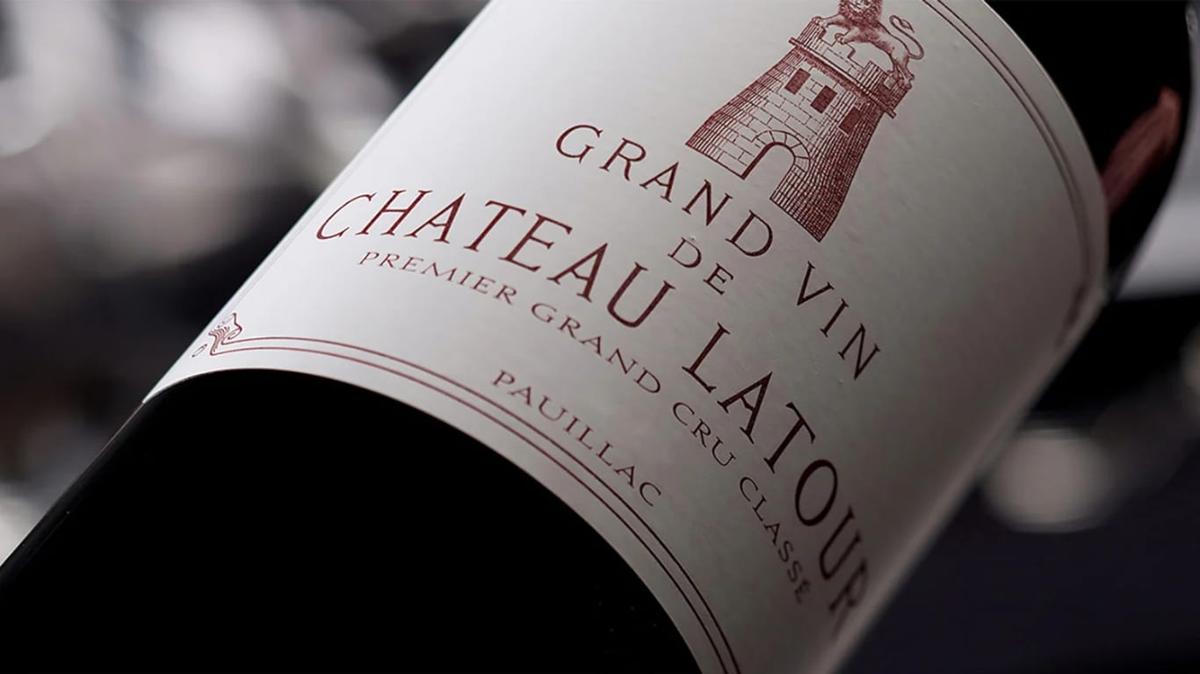
- The Left Bank, comprising the Medoc and Graves, anchors on Cabernet Sauvignon with First Growths Lafite, Latour, Margaux, Mouton, and Haut-Brion at the apex.
- The Right Bank, comprising Saint-Emilion and Pomerol, anchors on Merlot with Petrus and Le Pin defining the apex Pomerol tier.
- The Saint-Emilion grand cru tier, with Cheval Blanc and Ausone as structural references, provides the broader Right Bank apex depth.
- Production scale differs structurally, with Left Bank First Growths producing materially more wine annually than the apex Right Bank estates.
- For collectors the Left Bank rewards regional allocation strategies while the Right Bank concentrates on a tighter cluster of apex producers.
- Who is this for?
- Cellar builders working through Bordeaux architecture, particularly those weighting Left Bank Cabernet allocations against Right Bank Merlot apex positions.
- What is happening?
- We compare Left Bank and Right Bank Bordeaux as structural cellar positions, with the grape, producer, terroir, and market variables that distinguish each.
- When did this emerge?
- The piece reads the contemporary post-2020 market, with the modern Liv-ex Bordeaux 500 sub-indices and the recent Right Bank pricing dynamics as live context.
- Where is this happening?
- The Medoc and Graves on the Left Bank, plus Saint-Emilion and Pomerol on the Right Bank as the structural apex regions of Bordeaux.
- Why does it matter?
- Sizing Left Bank and Right Bank correctly is foundational for any serious Bordeaux cellar, and the structural decisions shape cellar performance across decades.
The Right Bank, Pomerol and Saint-Émilion, anchors on Merlot and Cabernet Franc with a fundamentally different stylistic register and producer structure.
Liv-ex tracks both banks actively, and the Liv-ex Bordeaux 500 includes meaningful allocations to Right Bank references (Pétrus, Le Pin, Cheval Blanc, Ausone) alongside the Left Bank First Growths. Auction houses including Sotheby's, Christie's, and Acker have built parallel collector calendars for both categories.
This is our read on Left Bank versus Right Bank Bordeaux as parallel cellar positions, and where each side earns its place in serious collecting.
Geography and the grape-blend question
The Left Bank sits west of the Gironde estuary and includes the Médoc (with its Pauillac, Saint-Julien, Saint-Estèphe, Margaux, and Listrac-Médoc appellations) and the Graves (with Pessac-Léognan at its top tier). The soils are dominated by gravel deposited by ancient glacial flows, which drains well and stores heat, ripening Cabernet Sauvignon meaningfully better than the clay-heavy Right Bank.
The Right Bank sits east of the Gironde across the Dordogne river, and includes Pomerol, Saint-Émilion, and the satellites (Lalande-de-Pomerol, Castillon-Côtes-de-Bordeaux, Fronsac). The soils run from limestone and clay (Saint-Émilion's plateau and slopes) to the famous iron-rich clay-with-gravel of Pomerol (the "Crasse de Fer" beneath Pétrus and Le Pin), which suits Merlot rather than Cabernet.
That soil distinction drives everything. Left Bank wines anchor on Cabernet Sauvignon typically blended at 60 to 85% with Merlot, Cabernet Franc, and Petit Verdot. Right Bank wines anchor on Merlot typically blended at 60 to 95% with Cabernet Franc and a small Cabernet Sauvignon component.
Producer structure and classification
The Left Bank operates under the 1855 Classification of Bordeaux Wines, which established the five Growths of the Médoc and Sauternes. The First Growths are Château Lafite Rothschild, Château Latour, Château Margaux, Château Haut-Brion (the only Graves First Growth), and Château Mouton Rothschild (elevated in 1973). The classification has held remarkably stable for nearly 170 years, with only the Mouton elevation breaking the original list.
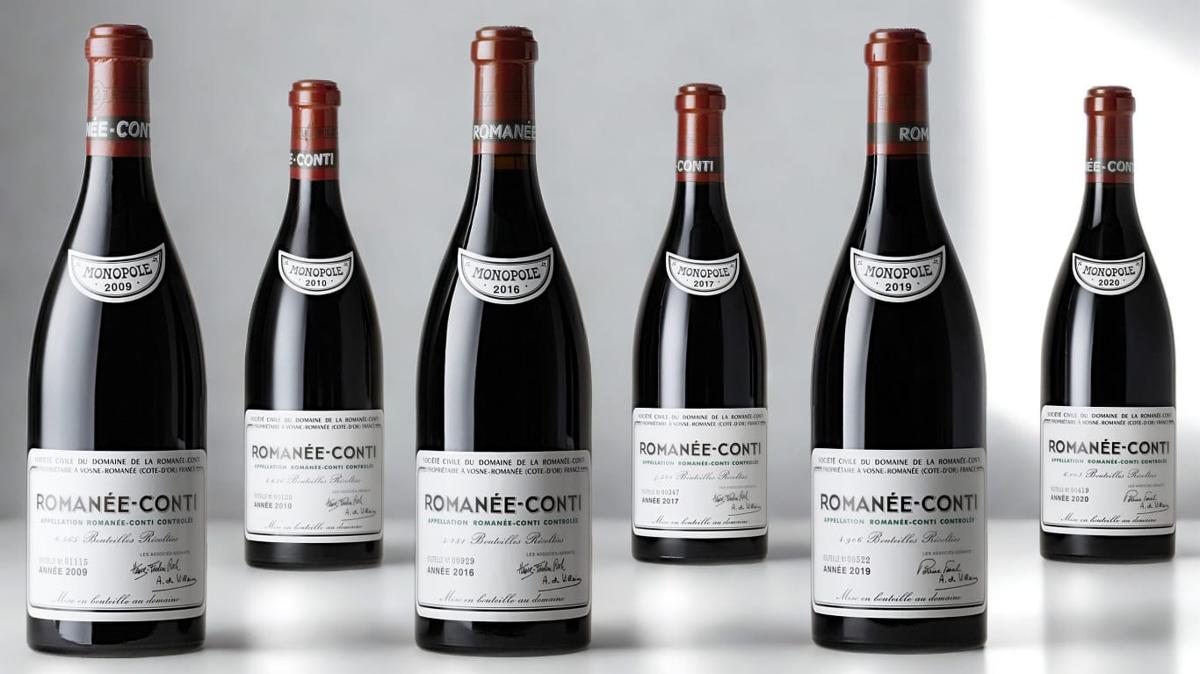
The Right Bank operates under a fundamentally different structure. Pomerol has no formal classification; the region's pricing is set entirely by market consensus on producer quality, with Pétrus and Le Pin anchoring the top tier and Trotanoy, Vieux Château Certan, Lafleur, L'Eglise-Clinet, and Clinet behind them. Saint-Émilion has its own classification (most recently revised in 2022) with Premier Grand Cru Classé A (Cheval Blanc, Ausone, Pavie, Angélus until 2022) and B tiers.
This structural difference matters for cellar planning. The Left Bank delivers a stable, classified reference set that has been the secondary market's anchor for over a century, while the Right Bank's market-driven pricing has produced some of the most explosive collector value compounding in Bordeaux history.
Pricing and the secondary market
Left Bank First Growth en primeur release pricing for the 2019 and 2020 vintages cleared roughly $500 to $800 per bottle (see our en primeur guide for the broader context). Mature vintages from the great years (1982, 1990, 2000, 2009, 2010, 2016) clear $1,000 to $5,000 at Sotheby's and Christie's depending on provenance, storage, and bottle condition.
Right Bank pricing at the top tier sits meaningfully above the Left Bank for comparable vintages. Pétrus current releases clear $4,000 to $5,000 per bottle, with mature vintages from the great years (1945, 1947, 1961, 1982) clearing $10,000 to $30,000+ at auction. Le Pin operates at similar pricing despite its tiny production (roughly 500 cases per year against Lafite's 20,000+ for grand vin).
The structural pricing differential reflects production scale and scarcity rather than absolute quality. Cheval Blanc and Ausone (the Saint-Émilion Premier Grand Cru Classé A houses) price between the Left Bank First Growths and the Pomerol top tier, typically $1,500 to $4,000 per current-release bottle.
Stylistic register and ageing trajectory
Left Bank Bordeaux from a strong vintage delivers structured Cabernet tannin, moderate alcohol (13 to 13.5%), and a long ageing curve typically running 30 to 60+ years. Mature First Growth from a great vintage develops the secondary and tertiary aromas (cedar, tobacco, leather, pencil shavings, dried herbs, forest floor) that define the classic Bordeaux register at full development.
Right Bank Bordeaux from a strong vintage leads with riper Merlot fruit, softer tannin structure, and a slightly more immediately accessible profile. The best Pomerol from the great years (1947 Pétrus, 1961 Pétrus, 1989 Pétrus, 1990 Pétrus, 2005 Pétrus) ages 40 to 70+ years comfortably and develops aromatic complexity that few wines can match at full maturity.
The ageing windows overlap meaningfully. Both banks compound across multiple decades, and the cellars that built First Growth and Pomerol positions in the great vintages of the past 30 years have been quietly proved right by Liv-ex's broad secondary market trajectory.
How to position both in a serious cellar
A working serious Bordeaux cellar typically anchors on the Left Bank at substantial depth, with the First Growths providing the structural reference and the Super-Seconds (Léoville Las Cases, Pichon Lalande, Pichon Baron, Cos d'Estournel, Montrose, Léoville Barton, Léoville Poyferré, Ducru-Beaucaillou) providing accessible depth across multiple vintages.
The Right Bank position is typically smaller in volume but anchors on the named Pomerol references (Pétrus, Le Pin, Trotanoy, Vieux Château Certan, Lafleur) and the Saint-Émilion Premier Grand Cru Classé houses.
The two banks complement rather than compete. The Left Bank delivers structured, long-ageing, classified depth, while the Right Bank delivers concentrated, market-driven, smaller-production positions that have been some of the most explosive value compounders in serious wine collecting.
What this means for collectors
Left Bank versus Right Bank isn't a binary cellar decision. The cellars that compound best are typically the ones holding meaningful positions in both, treating the Left Bank as the structural classified-growth reference and the Right Bank as the parallel category with its own pricing dynamics and ageing register.
The structural pricing differential between the two banks reflects production scale and market-driven scarcity rather than absolute quality. Both banks produce wines genuinely working at the top of the global wine quality tier, and the long-term direction of travel favours quality and provenance over regional positioning.
We last reviewed this analysis in May 2026.