Merlot has spent two decades being misunderstood. The grape that gives Pétrus and Le Pin their plush, almost decadent core is the same grape that, on the supermarket shelf, gets blamed for everything that went wrong with American red wine in the 1990s. Both readings are true, and both miss the more interesting story.
- Merlot lives a double life as the grape behind Petrus and Le Pin and the workhorse blamed for 1990s American supermarket reds.
- Right Bank Pomerol and Saint-Emilion drive almost all of the secondary-market interest, with the Liv-ex Bordeaux 500 leaning heavily on Pomerol allocations.
- On the Left Bank, Merlot remains the plush counterweight to Cabernet Sauvignon, never the headline but always the structural support.
- Beyond Bordeaux, only a tight cluster of Napa, Tuscan, and Washington producers have built real Merlot collectibility.
- Vintage variation matters more than for most varieties, since Merlot ripens early and is exposed to autumn rain.
- For collectors, the cellar case rests on a handful of named domaines rather than the grape itself.
- Who is this for?
- Serious collectors building or pruning a Bordeaux-weighted cellar, and readers trying to separate the apex Pomerol Merlots from the broader category.
- What is happening?
- We trace how Merlot performs as a collector grape, where the secondary market actually clears, and why Right Bank Bordeaux dominates the conversation.
- When did this emerge?
- The piece reads the contemporary market through the 2018 to 2024 Liv-ex Bordeaux 500 cycle and the post-2020 Right Bank correction.
- Where is this happening?
- Pomerol, Saint-Emilion, the Left Bank Bordeaux blends, plus the Napa, Tuscan, and Washington enclaves that anchor international Merlot.
- Why does it matter?
- Merlot is the grape that most rewards producer-led, not variety-led, collecting, and missing that distinction is the costliest mistake new collectors make in Bordeaux.
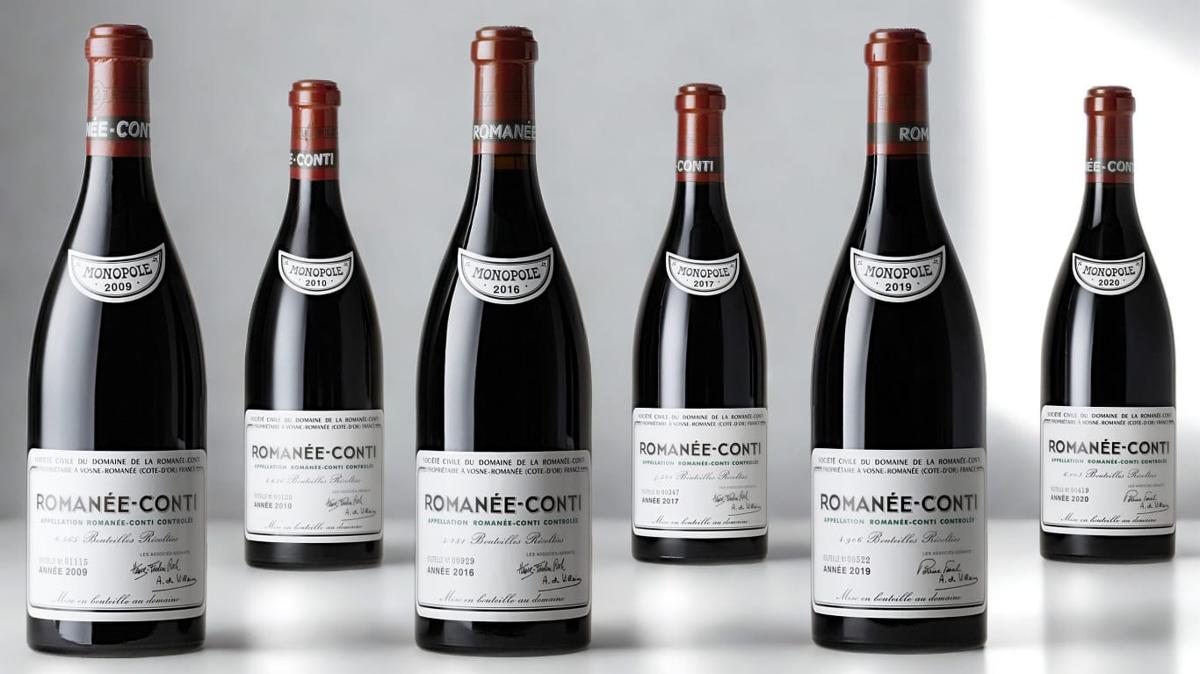
At the top of the pyramid, Merlot remains one of the most coveted varietals in the wine-collecting world. The gap between Right Bank Bordeaux and the rest of the category is one of the widest in the cellar. Liv-ex's Bordeaux 500 index has carried Pomerol on its shoulders through every soft Bordeaux year of the past decade, and the secondary market continues to treat Pétrus and Le Pin the way it treats DRC.
This is our field guide for collectors who want to understand what Merlot actually does. We will look at where it lives, how it ages, and why a serious cellar without at least one bottle of it is missing something the great Cabernet houses can't replicate.
What Merlot is, and what it isn't
Merlot is a thin-skinned, early-ripening red varietal native to Bordeaux. The name traces to merle, French for blackbird, a nod to the deep blue-black of ripe fruit on the vine. It produces wines of soft tannins, plush texture, and a medium-to-full body that sits somewhere between Pinot Noir's translucency and Cabernet Sauvignon's structure.
What collectors should understand first is that Merlot is two grapes in commercial terms. The bulk-production version, planted across California's Central Valley and parts of Chile and South Africa, makes the easy-drinking, fruit-forward bottles that earned the variety its dent in reputation. The serious version, anchored by Right Bank Bordeaux, Bolgheri, Walla Walla and the cooler hillsides of Napa, is one of the most ageworthy red wines in the world.
Pomerol's Pétrus and Le Pin are Merlot-dominant. Tuscany's Masseto is 100% Merlot. These are not entry points; they are reference wines that Wine Spectator, Decanter and Jancis Robinson have spent thirty years writing about as a separate tier of fine wine altogether.
The grape's early ripening makes it a natural fit for the cooler corners of Bordeaux's Right Bank, where late-season rains have historically threatened later-ripening Cabernet. That single agronomic fact is most of why Pomerol and Saint-Émilion are Merlot country and the Médoc isn't.
A short history of how Merlot got here
Merlot first appeared in Bordeaux records in the late 18th century. By the 19th century, it had become a cornerstone of Right Bank viticulture, where the cool, clay-rich soils of Pomerol and Saint-Émilion made it the dominant grape rather than a blending partner. The 20th century took it well beyond France, into California, Chile, Italy and Australia, and the post-war global wine boom turned it into one of the most-planted red varieties on the planet.
Then came the 1990s. California's commercial Merlot exploded, quality slipped, and by 2004 the variety had become the punch line in Sideways. Sales of supermarket Merlot in the U.S. dropped by double digits in the months following the film, while the fine-wine tier was untouched.
Pomerol vintages from the early 2000s have done some of the strongest secondary-market work in fine wine over the past two decades. Vinous and the Wine Advocate have both repeatedly singled out 2009 and 2010 Pomerol as benchmark vintages. The damage from the Sideways era was reputational, and entirely confined to the bottom of the pyramid.
The reappraisal that followed has been quiet but real. Decanter and Wine Spectator have given the variety renewed attention, and a generation of producers, particularly in Bolgheri and the cooler corners of Napa, have rebuilt the case for Merlot as a varietal worth collecting on its own terms.
The regions that matter for collectors
Merlot's responsiveness to terroir is one of the reasons it remains compelling for serious collectors. The hallmarks of soft tannins, plum, and plush mid-palate show up everywhere, but the surrounding character shifts dramatically with site.
Right Bank Bordeaux (France)
This is where the canonical wines live. Pomerol and Saint-Émilion sit on cool, clay-rich soils with a temperate maritime climate that lets Merlot ripen fully without losing freshness. The wines are defined by velvety tannins, plum and truffle aromas, and aging windows that can stretch 30 to 50 years for the top estates.
Château Pétrus, Château Le Pin, and Château Cheval Blanc are the references. Pétrus 1947 and 1961 remain the benchmark mature vintages, with magnums of either trading at Sotheby's Wine and Christie's Wine in the five-figure-per-bottle range in good provenance. A 2000 Pétrus released around $1,000 a bottle now changes hands well into the $5,000-plus range on Bordeaux Index and Berry Bros & Rudd's secondary lists.
Tuscany (Italy)
Bolgheri, on Tuscany's coast, has built its modern reputation on Merlot. The Super Tuscan movement of the 1970s and 1980s produced Masseto, the 100% Merlot from Tenuta dell'Ornellaia now widely treated as Italy's answer to Pétrus. Gravel and marine sedimentary soils, with cooling sea breezes, give the wines structure and savoury depth alongside the variety's signature plushness.
Masseto release prices regularly clear $800 a bottle, with mature vintages well above $1,500 at Acker and Zachys auctions. Wine Spectator has carried Masseto in its top 100 multiple times across the past decade.
Napa Valley and Sonoma (California)
California's serious Merlot lives in the cooler pockets. Carneros, Oakville benches, Pride Mountain, and the higher elevations of Spring Mountain produce volcanic and alluvial soil expressions with black cherry, mocha, and sweet spice. Pahlmeyer, Duckhorn (particularly the single-vineyard Three Palms), and Pride Mountain have built genuine collector followings.
The shadow cast by Cabernet remains long, but the pricing data on the top examples, particularly older library releases, tells its own story. Hart Davis Hart catalogues regularly include single-bottle Pahlmeyer Merlots from the 1990s clearing three-figure hammer prices that look modest only against Napa Cabernet.
Washington State
Walla Walla and the Columbia Valley sit on volcanic soils with a continental climate, and they produce some of the most structured Merlots in the New World. Dense fruit, firm tannins and a savoury finish are the through-lines. Leonetti Cellar and Northstar lead the serious tier, and the wines have started showing up in major American auction lots.
Washington Merlot doesn't carry the Bordeaux or Napa name recognition, and the secondary market is correspondingly thinner. That is part of why it is worth a collector's attention now rather than later.
Chile
Colchagua and the Maipo Valley produce Merlot with ripe red fruit, graphite, and herbal complexity, helped by a Mediterranean climate with significant diurnal temperature shifts. Granitic and clay soils preserve freshness through warm growing seasons. Premium Chilean Merlot remains underpriced relative to its quality, particularly from producers like Concha y Toro's Don Melchor program and the boutique end of Casa Lapostolle.
What Merlot tastes like
The variety leads with red and black fruit. Plum, black cherry, raspberry and blackberry sit at the centre of the profile. Warmer climates push the wine toward riper, fruit-forward expressions, often picking up chocolate, mocha, or sweet spice from oak.
Cooler-climate Merlots from Bordeaux or Washington shift toward dried herbs, tobacco, graphite, and subtle floral or mineral notes that add complexity and reward time in the cellar. Young Merlots tend to show red currants, cocoa, vanilla, and violets. Mature examples from top Bordeaux estates develop truffle, cedar, dried fig, and the kind of tertiary aromatic depth that is the whole point of cellaring serious red wine.
The texture is the variety's signature. Supple, round-tannined, moderate in acidity, with the kind of mouthfeel that distinguishes it from Cabernet Sauvignon's grip. Alcohol typically runs 13–15.
5%, with New World examples leaning fuller and Old World expressions tending toward elegance and restraint.
How to store it (the short version)
Merlot's storage requirements are the same as any serious red. Hold the cellar at 55°F to 58°F (13–14°C), keep humidity around 70% to preserve corks, lay bottles horizontally, minimise vibration, and rule out UV exposure. Temperature swings are the enemy because they expand and contract the wine inside the bottle, compromise the cork, and accelerate oxidation.
A dedicated cellar, a high-quality wine fridge, or a professional storage facility is non-negotiable for anything you intend to hold for more than a few years. Drink windows vary widely by tier. Entry-level Merlot is best within three to five years.
Mid-tier examples from Sonoma, Washington, or Chile typically reward eight to fifteen years. Premium Bordeaux and Super Tuscan Merlots can comfortably age 20 to 40 years from a strong vintage; a 2000 Pétrus or 2010 Masseto is only just entering its peak window now.
Provenance documentation matters more for these wines than almost any other category, and bottles with intact original wooden cases and verified storage history routinely command 15–25% premiums at Sotheby's Wine and Bordeaux Index over loosely sourced counterparts.
The price spectrum
Merlot offers one of the widest pricing spreads of any red varietal. At the entry tier, $10–$25 buys easy-drinking, fruit-forward bottles built for immediate consumption. These drive enormous global volume but aren't part of any serious collecting conversation.
The $30–$75 mid-tier brings real complexity and aging potential, with top Sonoma producers, the better Washington estates, and premium Chilean producers leading the band. Sotheby's Wine and Christie's Wine sales over the past two years have shown selected mid-tier vintages clearing 15–30% above release price within a few years, particularly when high critic scores meet limited production.
The premium and ultra-premium tier is dominated by Right Bank Bordeaux. Château Pétrus typically ranges $2,500 to over $6,000 a bottle depending on vintage and provenance, with rare older vintages clearing $50,000 at major auctions. Le Pin and Lafleur sit in the same neighbourhood, and Masseto's release prices regularly exceed $800 with mature vintages well above $1,500.
What this means for collectors
The case for Merlot in a collector's cellar isn't about chasing the hot vintage. It is about completeness. A cellar that holds great Cabernet but no Pétrus, no Le Pin, no Masseto is missing the entire plush, plum-forward register of red wine, the register that pairs differently, drinks differently, and rewards patience differently than its Cabernet-dominant neighbours.
Merlot at the top of the pyramid is one of the most coveted wines on earth. The collectors who recognised that during the variety's commercial trough have spent the past two decades being quietly proved right, and the Liv-ex 100 still carries Pétrus as one of its most resilient single names. We last reviewed this analysis in May 2026.