The fine wine market in 2026 reads quite differently from the one most collectors were watching three years ago. The Burgundy run that defined 2018–2022 has cooled materially, with the Liv-ex Burgundy 150 trading well below its peak. Bordeaux's First Growths have settled into the kind of quiet stability they spent the prior decade trying to recover from.
- The fine wine market in 2026 reads quite differently from the one most collectors were watching three years ago, with Burgundy cooled and Bordeaux soft.
- The Liv-ex Burgundy 150 trades well below its 2022 peak, and the broader Burgundy speculative cycle has clearly turned.
- Bordeaux's First Growths have held their structural floor, but the broader Liv-ex Bordeaux 500 remains soft on a multi-year view.
- Champagne has emerged as the structural relative outperformer, with the Liv-ex Champagne 50 carrying broad allocations through the wider market softness.
- The Rhone and Italy have quietly built collector momentum, with apex Barolo and Brunello tracking up as the broader market consolidates.
- For serious collectors the 2026 market rewards selective buying into the apex tiers, not broad index exposure.
- Who is this for?
- Active collectors trying to read the contemporary fine-wine market and position structurally for the second half of the 2020s.
- What is happening?
- We give our editorial read on the state of the fine-wine market in 2026, with the regional, producer, and structural variables that matter most.
- When did this emerge?
- The piece works from the early 2026 market state, with the post-2022 Burgundy correction and the broader Liv-ex Fine Wine 1000 trajectory as context.
- Where is this happening?
- The Liv-ex global market, with Bordeaux, Burgundy, Champagne, the Rhone, Tuscany, Piedmont, and Napa as the structural traded regions.
- Why does it matter?
- The market in 2026 is a structurally different environment from the 2018 to 2022 cycle, and reading it correctly is the difference between mistakes and opportunities.
Champagne, the breakout category of the late 2010s, has firmed but stopped dramatically outpacing the rest of the market. The picture, taken as a whole, is one of a market that has rebalanced, and one in which serious collectors are quietly buying. This is our editorial read on what the Liv-ex data and on-the-ground market signals say about the fine-wine landscape in 2026.
We will work through what the patterns mean for collectors thinking about depth across the canon over the long run. Wine Spectator, Decanter and the Wine Advocate have all converged on a similar reading of the period in their year-end market columns.
The indices: what the headline numbers actually show
The Liv-ex Fine Wine 100 is the most-referenced fine-wine market benchmark, trading at a level that puts it slightly below its 2022 peak, with the broader Liv-ex 1000 showing similar dynamics. The composition of the move matters more than the headline. The Burgundy 150 has corrected meaningfully from its 2022 high; the Bordeaux 500 has been remarkably stable; the Champagne 50 has firmed without dramatically extending.
The Italy 100 has been the quiet outperformer, with Piedmont in particular showing depth. What the Liv-ex numbers don't capture is the on-the-ground market: which producers are seeing tight allocations and growing waiting lists, which en primeur campaigns are clearing through merchant inventory, which auction lots are seeing competitive bidding versus quietly passing.
The on-the-ground picture in early 2026 reads as a more selective market than at any point in the past five years. Sotheby's Wine and Christie's Wine catalogues both show tighter bidding rings around the top single-bottle lots.
Burgundy: the correction was overdue
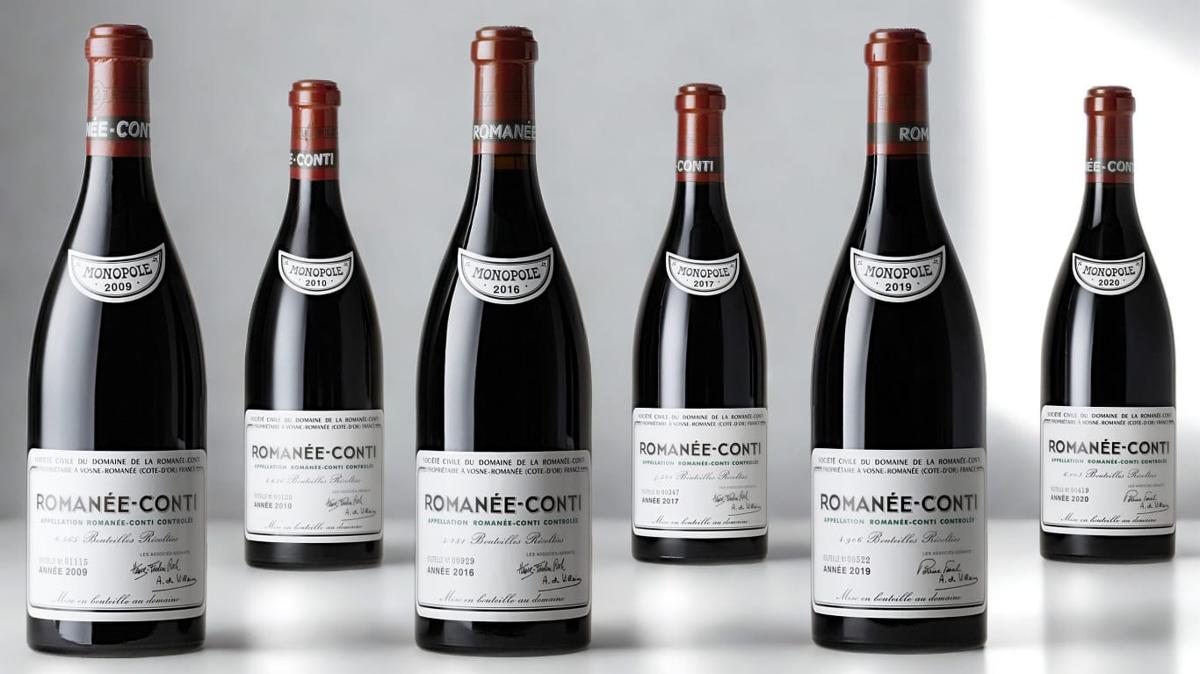
The Burgundy boom of 2018–2022 was extraordinary by any historical measure. Domaine de la Romanée-Conti's grand crus more than doubled at the secondary market across the period; Coche-Dury's whites ran similarly; the second-tier domaines (Mugnier, Roumier, Rousseau) extended their gains across the period. The boom drew in a wave of newer collectors and a substantial volume of speculative buying.
The 2023–2024 correction took the index down roughly 20% from its peak. The named domaines at the top (DRC, Leroy, Leflaive) held their levels meaningfully better than the broader category. The second-tier producers and the emerging-name speculation took the brunt of the move.
The serious collectors we have watched through this period have been quietly buying through the correction, particularly the wines from the strong 2017 and 2019 vintages that became more accessible at sensible bases. Vinous's Burgundy columns through 2024 and 2025 documented the rebalancing in detail.
Bordeaux: the quiet stability the category needed
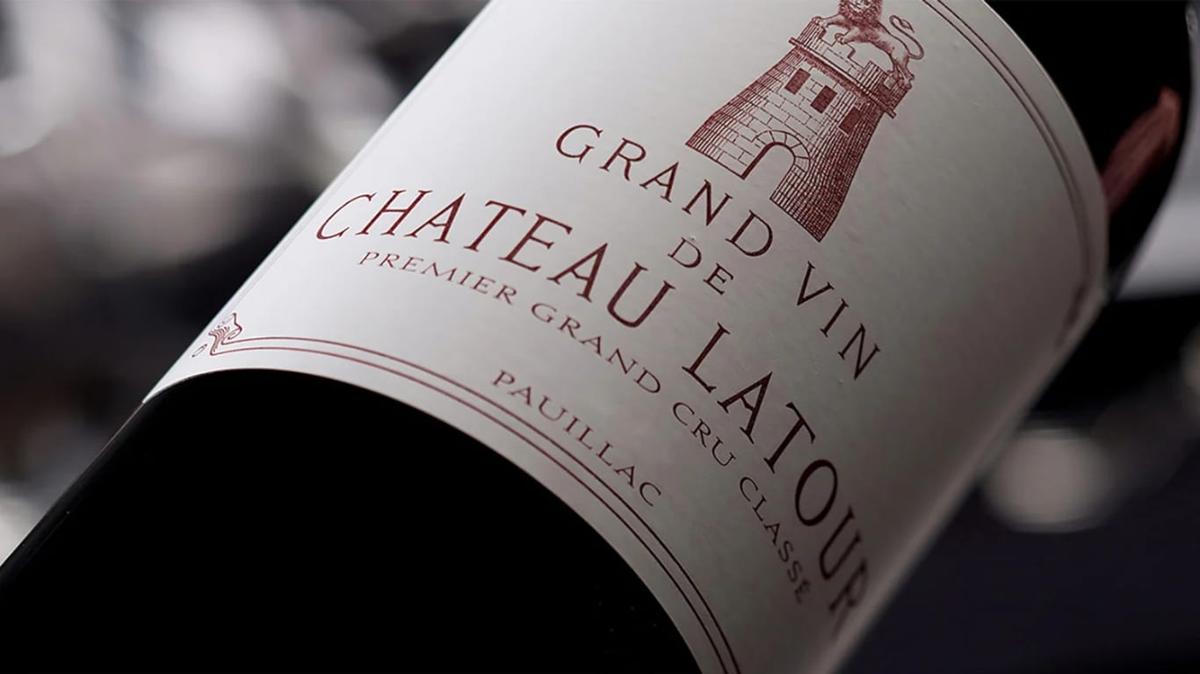
Bordeaux has spent the past five years recovering from the China pullback of 2014–2015 that wiped out much of the prior decade's run. The First Growths have been remarkably stable. Lafite, Latour, Margaux, Mouton, Haut-Brion all trading within reasonably tight ranges across the past three years.
The Right Bank icons (Pétrus, Le Pin, Cheval Blanc, Lafleur) have been similarly stable, with mature vintages clearing well into five figures at major auctions but the price discovery less dramatic than in earlier periods. Lafite 1869 remains the high-water reference at $233,972 (Sotheby's Hong Kong, 2010), and the modern First Growth market is calibrated against that history.
The 2024 en primeur campaign cleared more cleanly than any since 2019, with the strong vintage drawing genuine merchant and collector engagement. The 2018 vintage, now five years from release, is starting to show its drink-window potential, and demand has firmed accordingly. The pattern is one of a market that has settled into mature, predictable rhythms after a difficult decade.
Champagne: the run firmed but didn't extend
Champagne's run since 2018 was the most-watched move in fine wine, with vintage Krug, Cristal, and Salon all running dramatically. The 2024–2026 period has seen the category firm without dramatically extending. The named houses continue to clear their allocations at strong levels.
The grower-Champagne icons (Selosse, Egly-Ouriet, Larmandier-Bernier) have built parallel markets that increasingly rival the houses. The strong recent vintages (2008, 2012, 2013) continue to define the cellar's Champagne section. The 2018 vintage, when it arrives in volume, will be a key test of whether the category extends or holds steady at current levels.
Italy: the quiet outperformer
Italy has been the quiet outperformer of the past three years. Piedmont in particular has run materially: Giacomo Conterno's Monfortino, Bartolo Mascarello's Barolo, Bruno Giacosa's library releases, Roberto Voerzio's single-vineyards. The 2010, 2013, and 2016 Barolo vintages are all now firmly in the cellar's long-hold conversation.
Tuscany's Bolgheri icons (Sassicaia, Solaia, Tignanello, Masseto) have extended quietly. Brunello di Montalcino from the named producers has firmed meaningfully.
The case for Italy in 2026 is partly about value. The category remains underpriced relative to Burgundy and Bordeaux for comparable quality, and the secondary market depth has improved substantially over the past five years. Many of the serious collectors we know are weighting their current buying toward the Italian section, with Liv-ex's Italy 100 reflecting the move.
Napa and the New World: selective firming
The Napa First Growth equivalents (Screaming Eagle, Harlan Estate, Scarecrow, Schrader) have remained strong. The cult Cabernets continue to clear their tight allocations. Below the icon tier, the broader Napa market has been more selective, with the named producers from established programmes (Dominus, Opus One, Continuum, Quilceda Creek) holding their levels and the more speculative second-tier names struggling.
Australia's Penfolds Grange has continued its quiet upward trajectory. Henschke Hill of Grace has firmed. New Zealand's Felton Road and Argentina's Catena Zapata have built modest but credible secondary-market positions, and the Wine Advocate has tracked all three in detail across the past three vintages.
The historical context the headlines miss
The Liv-ex Fine Wine 100 has compounded at roughly 8% annually across the past two decades, a long-run trajectory consistent with the broader collector category and well in line with the wine market's historical performance across the past century. The boom-and-correction cycles within that long run are the texture, not the trend.
The 2008–2009 financial crisis took the index down sharply; the 2014–2015 China pullback wiped out a multi-year run-up; the 2018–2022 Burgundy boom; the 2023–2024 correction.
The long-run average absorbs all of them.
What this means for serious collectors is straightforward. The cellar built across the canon (Bordeaux, Burgundy, Champagne, the Rhône, Italy, the New World) across multiple vintages and multiple producers within each region is the cellar that has historically come through every cycle. The cellars that have struggled have been the ones built around concentrations in whatever was most fashionable at the moment of buying.
What's drawing serious buying in 2026
The patterns in serious-collector activity over the past 12 months that we have watched closely fall into a recognisable set.
Burgundy at the secondary tier. The correction has made wines from the strong 2017 and 2019 vintages from named-but-not-top-tier domaines accessible at sensible bases. Mugnier, Hudelot-Noëllat, Domaine Comte Armand, Domaine Hubert Lamy at the white side.
Italy across the board. The category remains underpriced relative to its quality, particularly Piedmont. The 2016 and 2019 Barolo vintages are drawing serious depth from collectors who had previously been weighted Burgundy.
The 2018 Bordeaux vintage at five years out. Now showing its drink-window potential, with merchant inventory clearing meaningfully and secondary-market activity firming at Berry Bros & Rudd and Bordeaux Index.
Vintage Port from the 2016 and 2017 declarations. The category has been quietly out of favour for over a decade and remains structurally underpriced relative to Bordeaux. The strong recent declarations are starting to draw collector attention.
Champagne 2008 at vintage maturity. The 2008 vintage, widely treated as one of the great Champagne years of the modern era, is now arriving at its drink window and clearing strongly at auction.
What this means for collectors
The fine wine market in 2026 is more selective, more mature, and more rewarding for careful buyers than it was at the height of the Burgundy run. The serious cellars being built right now are weighted across the canon, taking advantage of the rebalanced pricing in Burgundy, the value still available in Italy, the maturity of the 2018 Bordeaux, and the steady appeal of vintage Champagne and Port.
The collectors who treat this period as a buying window, rather than a moment to retreat, will look back on 2025–2026 as one of the better times to have built cellar depth in the past decade.
The wines remain the point. The market data exists to inform the decisions; the cellar exists for the bottles to be opened, enjoyed, and shared. The serious collectors who hold both perspectives in their heads at the same time tend to build the cellars that age best across the long run.
We last reviewed this analysis in May 2026.