

Merlot is one of those grapes that earns admiration from every angle. Its deep ruby color, supple tannins, and complex layers of dark fruit, chocolate, and spice have made it a fixture among the world’s most distinguished wines. But beyond the pleasure in the glass, Merlot holds a growing position in the investment wine market, offering both genuine prestige and promising returns for those who know where to look.
Over recent years, demand for high-quality Merlot has surged. Collectors seeking alternatives to Cabernet-heavy portfolios have pushed certain Merlot wine brands firmly into the spotlight. These are wines that sit at the absolute peak of craftsmanship and have a proven track record of climbing in value year after year. If you’ve been watching the fine wine investment space, you’ll know that not every bottle rewards patience. The right Merlot selections do.
As we move through 2026, identifying which Merlot wine brands offer the strongest investment opportunities calls for a sharper lens than simply picking a famous label. Terroir, vintage quality, rarity, and historical price performance all feed into a wine’s future value. This guide walks you through the most coveted Merlot wines for investment in 2026, covering their history, defining characteristics, price trends, and projected return on investment.
Table of Contents
Masseto Toscana IGT – Tuscany, Italy
Few wines command the prestige and investment appeal of Masseto. This ultra-premium Tuscan Merlot, produced in Bolgheri, is a direct challenger to Pomerol’s Château Pétrus and has consistently delivered exceptional returns for collectors willing to be patient. Four-figure price tags at auction are not the exception here. They’re the norm.
Masseto grows from a meticulous selection of Merlot vines planted in rare blue clay soils, giving the wine its rich, layered profile of dark fruit, mocha, and spice, all underpinned by remarkable structure and serious aging potential. Each vintage is released in extremely limited quantities, and that scarcity is a large part of what keeps the value climbing. According to Wine Spectator, Masseto consistently earns scores in the high 90s, cementing its reputation as one of Italy’s finest.
Masseto has a consistent track record of value appreciation that puts it among the most lucrative Merlot wines on the market. Prices for recent vintages typically start around $800 per bottle, while older, highly rated vintages push past $2,500 per bottle. At top-tier auctions and private sales, rare magnum editions have cleared $10,000.
Notable investment vintages include
- 2001 – A benchmark vintage, consistently appreciating in value.
- 2006 – Highly structured, with long-term aging potential.
- 2015 – A standout modern release, already commanding premium prices.
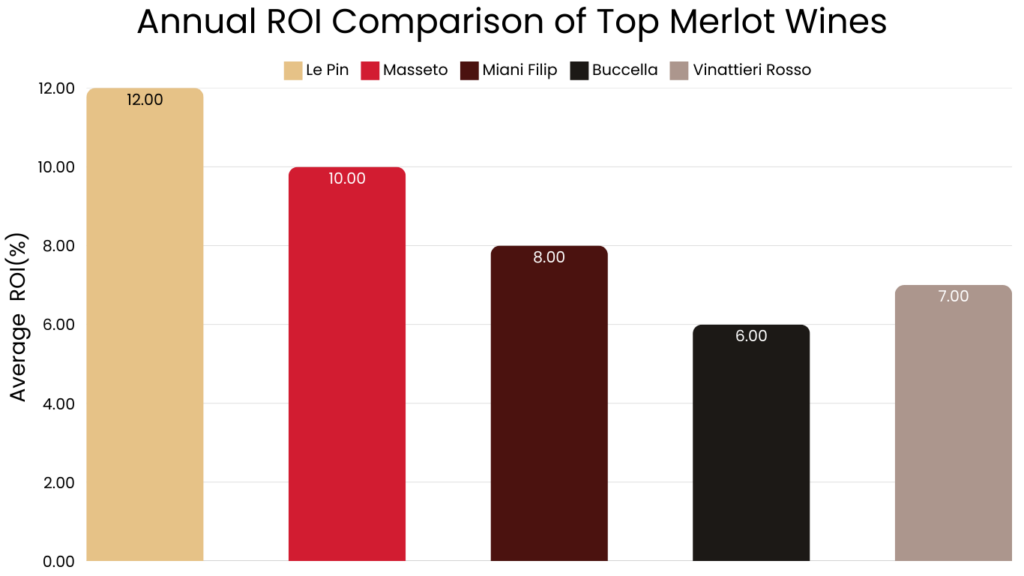
Over the past decade, Masseto’s annual ROI has averaged 10 to 12%, with select vintages performing even better in premium markets. Given its proven scarcity, rising global demand, and strong appreciation history, Masseto is a cornerstone for collectors who want both prestige and financial security in a single bottle.

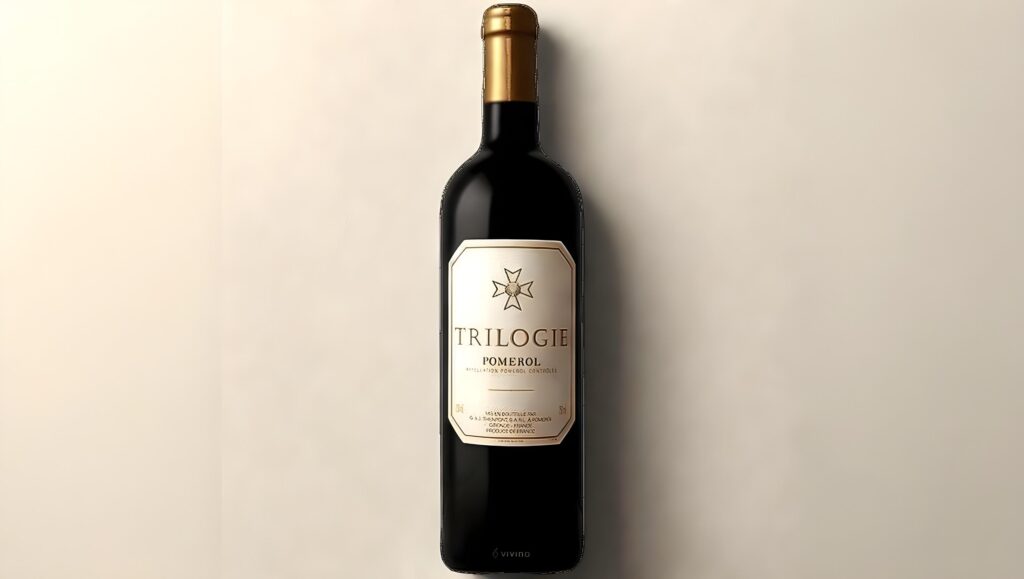
Trilogie de Le Pin – Pomerol, France
Among the rarest and most sought-after Merlot wine brands in existence, Le Pin has earned legendary status in the fine wine market. Produced in Pomerol, Bordeaux, this micro-estate crafts exceptionally small batches of Merlot-dominant wines. Every vintage is a rare and highly coveted asset almost before it’s even released.
Le Pin’s wines are celebrated for their silky texture, opulent fruit concentration, and remarkable balance. Unlike the structured, long-aging Bordeaux wines of the Left Bank, Le Pin has a more hedonistic, immediate appeal while still developing beautifully over decades. Its standing as a Bordeaux cult wine places it among the most prestigious and valuable bottles anywhere in the world. Decanter has repeatedly singled it out as one of Pomerol’s defining expressions.
Le Pin’s extreme rarity drives its market value relentlessly upward. Fewer than 600 cases are produced annually, which means demand far outstrips supply. Recent vintages typically command between $3,000 and $5,000 per bottle depending on provenance and storage conditions. Older, highly rated vintages such as the iconic 1982 and 1990 releases have sold for over $10,000 per bottle at auction.
Rare large-format bottles, including magnums and double magnums, command even steeper premiums. Private collectors and fine wine investors have paid over $30,000 for select vintages in limited-edition formats, reinforcing Le Pin’s position as one of the most lucrative fine wine investments you can make.
Notable investment vintages include
- 1982 – The most famous vintage, now a collector’s legend.
- 1990 – A peak investment vintage with proven long-term appreciation.
- 2009 – A modern classic, commanding steadily rising prices.
With annual value appreciation averaging 12 to 15%, Le Pin continues to outperform many traditional investment assets. Its Bordeaux pedigree, extreme scarcity, and rising global demand make it an essential addition to any serious wine investor’s portfolio. The upside is real, and so is the prestige.
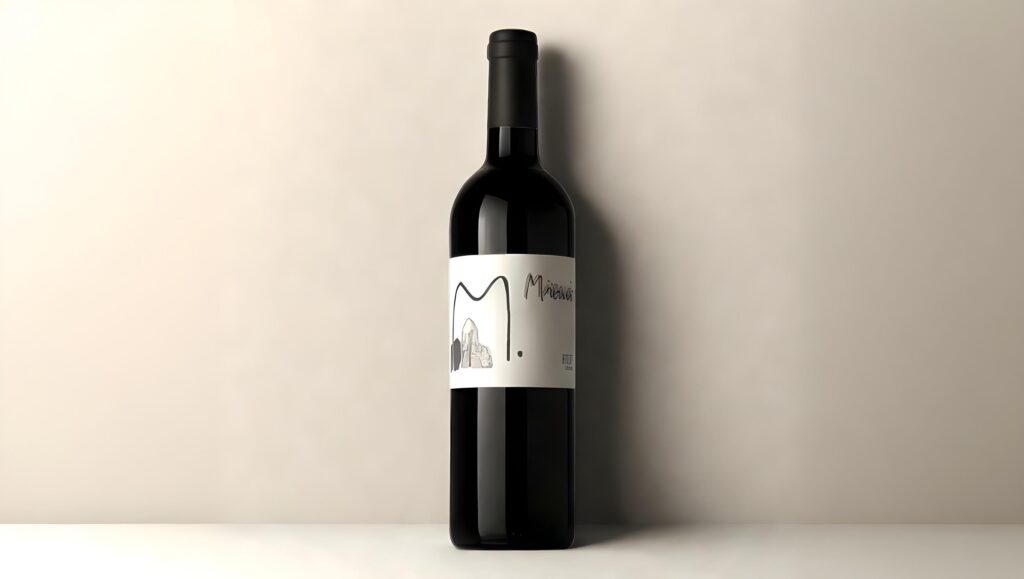
Miani Filip Colli Orientali del Friuli Merlot – Venezia, Italy
In the world of ultra-boutique Italian Merlots, Miani Filip stands as one of the most exclusive and sought-after wines you can acquire. Produced in the Friuli-Venezia Giulia region, it reflects the meticulous craftsmanship and obsessive attention to detail that define winemaker Enzo Pontoni’s philosophy. Quality over quantity is not just a marketing line here. It’s the entire operation.
The essence of Miani’s Merlot lies in its extraordinary concentration, purity, and depth. You’ll find ripe black fruit, violets, dark chocolate, and fine-grained tannins, with a structure that allows the wine to evolve gracefully over decades. Unlike Tuscany’s more famous Super Tuscans, Miani offers a more artisanal expression of Merlot, deeply connected to the terroir of northeastern Italy.
Miani Filip is among the most difficult Merlot wines to acquire, not because of overwhelming global demand but because of its extremely limited production. Only a few hundred cases are released each year, making it a rarity even in fine wine circles. A single bottle typically ranges from $500 to $1,200 depending on the vintage and market conditions.
Its investment trajectory has gained real momentum in recent years, as small-production wines with cult followings have become increasingly attractive to collectors. Miani’s Merlot has demonstrated a steady 8% annual ROI, with select vintages appreciating beyond expectations. As demand for exclusive, handcrafted wines grows, the scarcity factor ensures its market value will keep climbing. If you want to understand how alternative investments like this fit into a broader wealth strategy, it’s worth reading about how collectors are rethinking alternative asset allocation.
Notable investment vintages include
- 1999 – A vintage that showcases the winery’s signature elegance and complexity.
- 2006 – Renowned for its depth and aging potential, appealing to discerning collectors.
- 2012 – A harmonious vintage that balances power with finesse.
With its artisanal approach, minuscule production, and increasing recognition among serious collectors, Miani Filip is one of Italy’s most valuable hidden gems. The investment case is compelling, and the window to acquire at current prices may not stay open much longer.
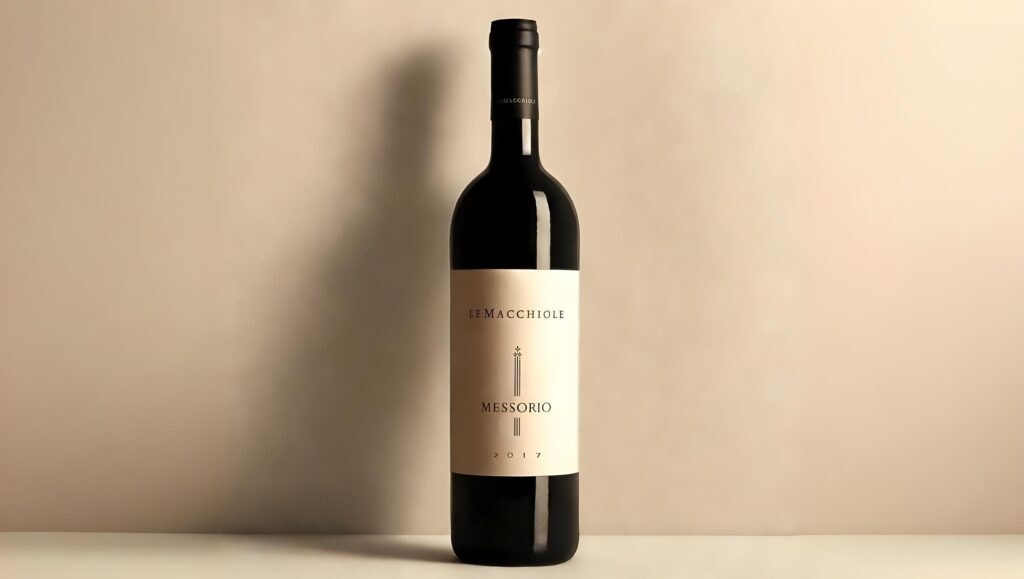
Le Macchiole Messorio Toscana IGT – Tuscany, Italy
Among Tuscany’s most revered Merlot wine brands, Le Macchiole Messorio has established itself as a benchmark for precision, elegance, and investment potential. This single-varietal Merlot, produced in the renowned Bolgheri region, sits alongside Italy’s finest wines and offers both remarkable craftsmanship and long-term value appreciation.
Unlike the opulent power of Masseto, Messorio takes a more refined and structured approach, balancing intensity with finesse. The wine unfolds with layers of ripe black cherry, graphite, espresso, and delicate spice, supported by silky tannins and a deep mineral backbone. With careful cellaring, Messorio evolves beautifully over 15 to 25 years, making it an excellent choice for both collectors and investors with a long horizon.
Messorio has seen a steady climb in market value as collectors recognize its exceptional quality and aging potential. Recent vintages typically range from $300 to $700 per bottle, while older, well-preserved releases have fetched considerably higher prices at auction. As demand for high-end Tuscan Merlot grows globally, Messorio has emerged as a strong competitor to Masseto and offers a more accessible entry point into top-tier Italian wine investment.
Over the past decade, Messorio’s annual ROI has averaged around 7%, with select vintages outperforming expectations in secondary markets. Its reputation for consistency, combined with Bolgheri’s increasing global prestige, means future price appreciation looks promising. The Financial Times has highlighted Bolgheri as one of the regions worth watching for fine wine investors.
Notable investment vintages include
- 2004 – A vintage that exemplifies depth and complexity, with excellent aging potential.
- 2007 – Known for its balance and elegance, appealing to collectors and investors.
- 2015 – A standout year, producing wines with remarkable structure and longevity.
With its pedigree, rising demand, and proven aging capacity, Messorio is an essential addition to any well-rounded wine portfolio. You get a compelling mix of prestige, drinkability, and genuine investment return.
Buccella Merlot – Napa Valley, USA
Founded in 2002, Buccella focuses on small-lot, meticulously crafted wines that prioritize concentration, depth, and opulence. Napa is known for its Cabernet dominance, but Buccella’s Merlot has redefined expectations and proven that California can produce Merlot of world-class caliber. If you’ve written off American Merlot, this wine will make you reconsider.
Buccella’s style is unapologetically bold. The wine showcases ripe blackberry, cassis, dark chocolate, and baking spice, supported by silky tannins and a lush, full-bodied mouthfeel. Approachable in its youth, proper aging of 10 to 15 years unlocks additional complexity, making it a desirable asset for collectors who think ahead.
Buccella’s limited production and increasing recognition have pushed its prices steadily upward. A single bottle of recent vintages sells for $150 to $300, while older, more established vintages command higher premiums. Napa Valley’s luxury wine market has shown strong appreciation across the board, and Buccella has followed suit with an average annual ROI of 6%, outperforming most other California Merlots.
As demand for top-tier Napa wines expands globally, Buccella is well-positioned to keep rising in value. Its limited allocations, cult-like following, and consistently high critic scores make it a compelling investment for anyone looking to diversify a wine portfolio beyond European selections. Robb Report has flagged Buccella among the standout American producers worth tracking for serious collectors.
Notable investment vintages include
- 2005 – A vintage that showcases the winery’s signature plushness and depth.
- 2012 – Renowned for its balance and aging potential, attracting both collectors and investors.
- 2016 – A year that produced wines with remarkable concentration and elegance.
With its rich texture, rising market demand, and strong critical acclaim, Buccella Merlot is one of the finest investment-worthy Merlots coming out of the United States. You get both indulgence and long-term value growth in the same bottle.
Vinattieri Rosso – Ticino, Switzerland
Switzerland may not be the first country you think of when building a fine wine investment portfolio. But Vinattieri Rosso has quietly positioned itself as one of the most exclusive and sought-after Merlot wines in Europe. Produced in Ticino, the Italian-speaking region of Switzerland, this wine is a remarkable expression of high-altitude winemaking, combining precision, elegance, and genuine long-term investment potential. If you’ve been following the surge in Swiss luxury demand, this wine fits perfectly into that broader story.
Vinattieri Rosso is known for its refined structure, deep concentration, and complex aromatics. You get layers of dark berries, cedar, and graphite, underscored by a distinct minerality drawn from Ticino’s unique alpine terroir. Aged meticulously in French oak, the wine develops impressive depth over time, with aging potential that stretches 15 to 20 years.
Despite its relatively low production volume, Vinattieri Rosso has steadily gained recognition in the fine wine market. A bottle typically ranges from $200 to $500, with select older vintages commanding higher values in European auctions and private sales. Growing interest in niche luxury wines from emerging regions has driven appreciation rates of 5 to 8% annually, positioning it as an underrated but genuinely promising investment.
Switzerland’s tight export restrictions and limited allocations ensure that only a select number of bottles reach international markets, which adds another layer of exclusivity. As collectors search for hidden gems outside the traditional powerhouses of France and Italy, Vinattieri Rosso’s scarcity and quality make it a compelling choice for investors seeking long-term appreciation.
Notable investment vintages include
- 2000 – A vintage that reflects the winery’s commitment to excellence and aging potential.
- 2008 – A well-balanced and structured release, showing steady appreciation in value.
- 2015 – A standout vintage with remarkable longevity and refinement.
With Swiss precision, genuine rarity, and increasing market value all working in its favor, Vinattieri Rosso offers a unique investment opportunity. It appeals to fine wine collectors and those looking to diversify a portfolio beyond the traditional wine regions in equal measure.

What Makes a Merlot Wine Good for Investment?
Investing in Merlot wine brands takes more than picking a well-known label off a list. The real value of any wine sits in its aging potential, rarity, market demand, and historical price performance. Understanding these factors is what separates investors who build wealth through wine from those who simply build a cellar. Getting your eye in on these fundamentals ensures you’re selecting bottles with the strongest likelihood of long-term appreciation and genuine financial return.
- Rarity and Limited Production – Wines with small production volumes, like Le Pin and Miani Filip, appreciate faster due to scarcity.
- Reputation and Critical Acclaim – High critic scores (95+ points) increase demand and resale value.
- Aging Potential – Wines that improve over 15-30 years see higher long-term appreciation.
- Historical Price Performance – Wines with a track record of steady growth, like Masseto, offer reliable investment returns.
- Market Demand and Global Reach – High-end Merlots with international appeal perform better in auctions and resale markets.
- Provenance and Storage – Professionally stored bottles with intact provenance sell for 30-50% more than poorly stored ones.
- Vintage Quality – Exceptional years (2001, 2006, 2015 for Masseto; 1982, 1990 for Le Pin) produce the highest-value wines.
FAQ
Why is Merlot a good wine for investment?
Merlot wines from top producers like Masseto, Le Pin, and Messorio offer strong market demand, aging potential, and historical price appreciation, making them valuable assets for collectors.
Which Merlot wines have the highest resale value?
Le Pin (Pomerol, France), Masseto (Tuscany, Italy), and Miani Filip (Venezia, Italy) are among the most sought-after, with some vintages selling for over $10,000 per bottle.
How long should I hold an investment-grade Merlot before selling?
Most fine Merlots reach peak value 10-30 years after release, with older, highly rated vintages commanding premium prices.
What factors determine the value of a Merlot wine?
Reputation, rarity, critic scores, provenance, aging potential, and global demand all influence the long-term value of a Merlot wine.
What’s the average ROI for top Merlot wines?
Investment-grade Merlots like Le Pin and Masseto have shown 10-15% annual appreciation, outperforming many traditional assets.
How do I know if a vintage is worth investing in?
Research vintage reports, critic scores (95+ points), and historical price trends before making a purchase.